Want smarter insights in your inbox? Sign up for our weekly newsletters to get only what matters to enterprise AI, data, and security leaders. Subscribe Now
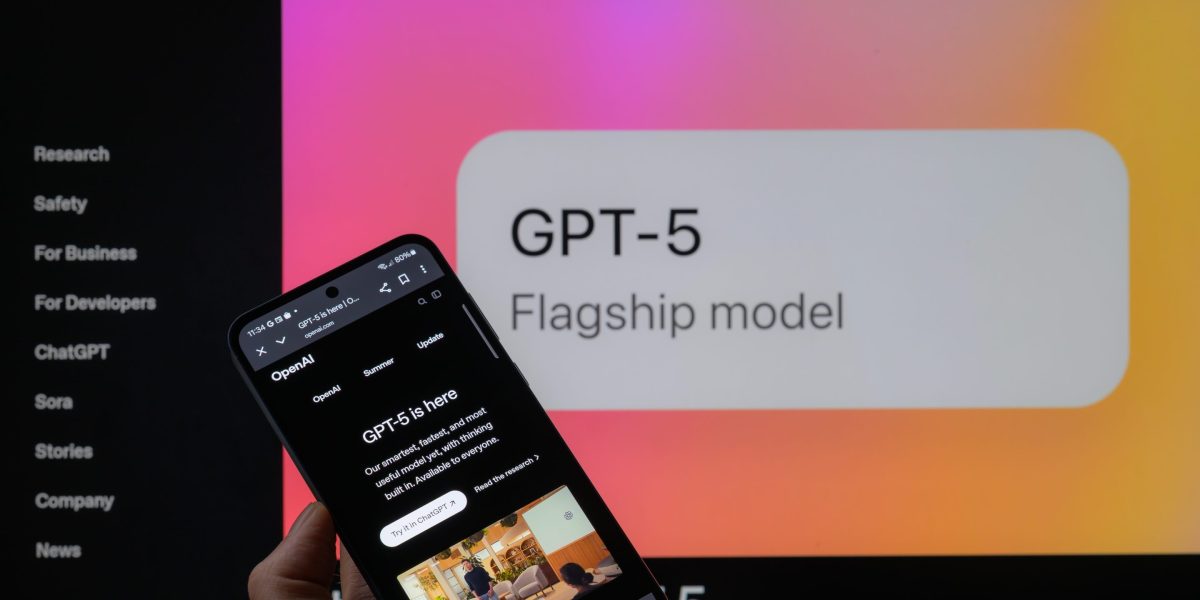
OpenAI’s launch of its most advanced AI model GPT-5 last week has been a stress test for the world’s most popular chatbot platform with 700 million weekly active users — and so far, OpenAI is openly struggling to keep users happy and its service running smoothly.
The new flagship model GPT-5 — available in four variants of different speed and intelligence (regular, mini, nano, and pro), alongside longer-response and more powerful “thinking” modes for at least three of these variants — was said to offer faster responses, more reasoning power, and stronger coding ability.
Visa’s $3.5B Bet on AI
Instead, it was greeted with frustration: some users were vocally dismayed by OpenAI’s decision to abruptly remove the older underlying AI models from ChatGPT — the ones users’ previously relied on, and in some cases, forged deep emotional fixations with — and by the apparent worse performance by GPT-5 than said older models on tasks in math, science, writing and other domains.