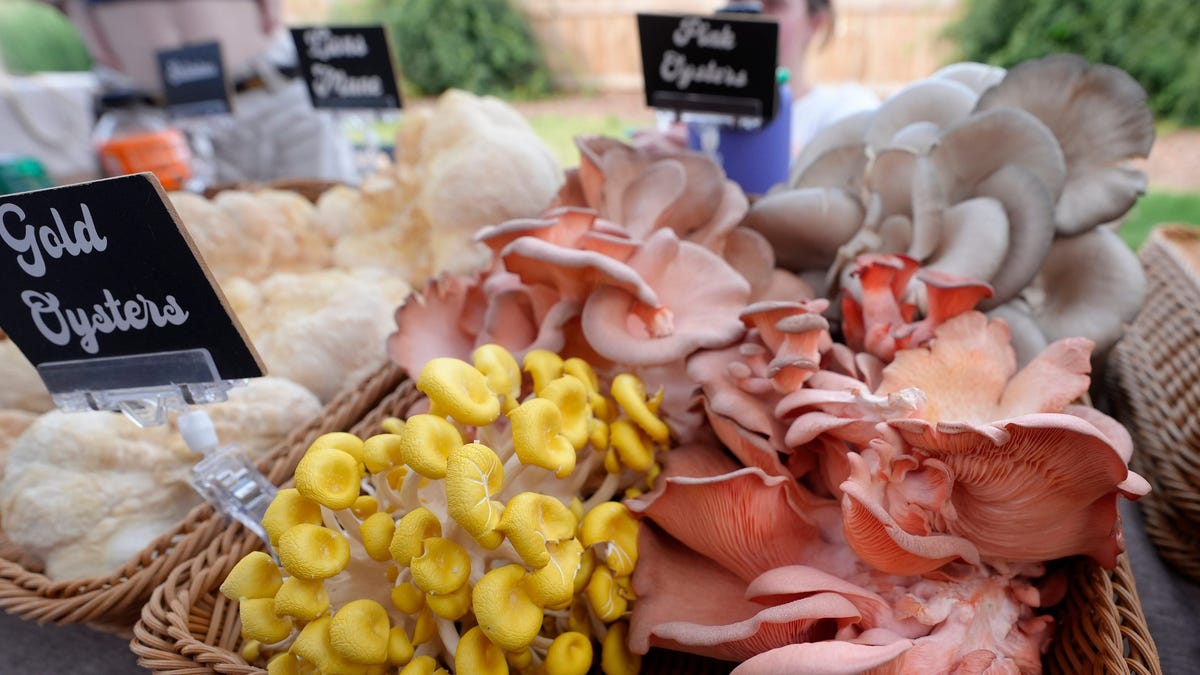
They’re bright yellow, easy to grow and have a mild, nutty flavor. They’re also threatening ecosystems across the United States.
Golden oyster mushrooms, first imported from Asia beginning in the early 2000s, have risen in popularity over the last two decades, as simple storebought and online kits have allowed people to plant the culinary treat at home.
Now, researchers say the non-native mushrooms are growing wild in 25 states, risking the biodiversity of the forests they’ve encroached on.
“Invasive golden oyster mushrooms, a wood decay fungus, can threaten forests’ fungal biodiversity and harm the health of ecosystems that are already vulnerable to climate change and habitat destruction,” said Aishwarya Veerabahu, a mycologist and graduate student at the University of Wisconsin-Madison who recently co-authored a study on the species.
The study, published in Current Biology, found the fungi may be stealing precious resources from native mushrooms in forests in the Midwest. Researchers discovered that areas where golden oyster mushrooms had sprouted had about half as many fungal species as areas without them.