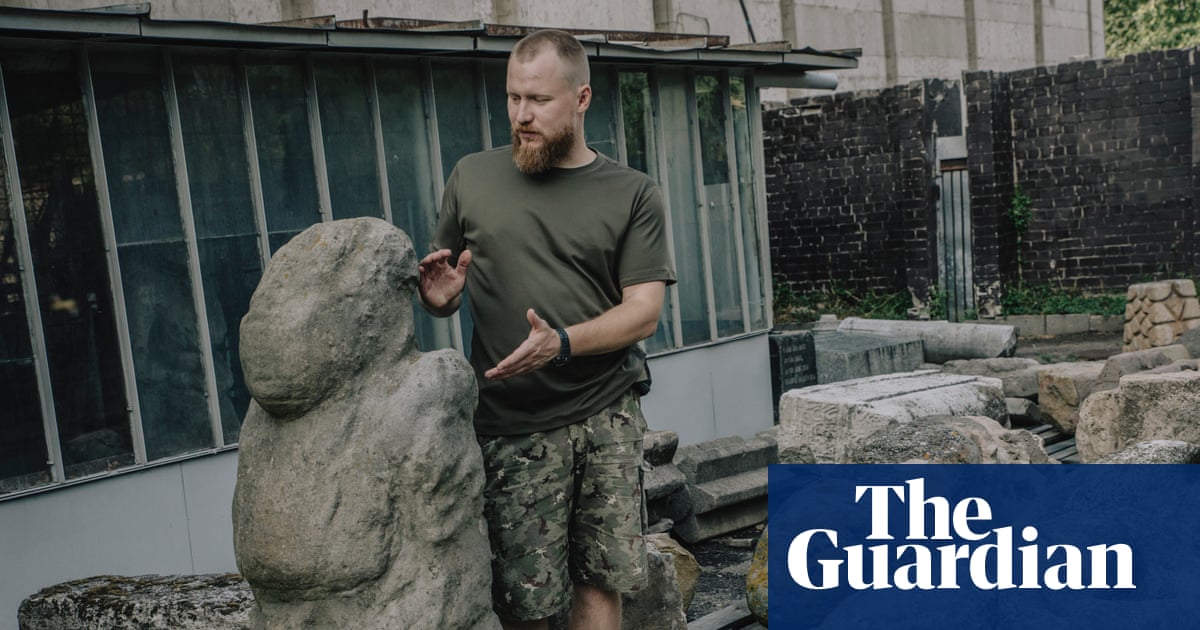
Operation has retrieved 11 babas from southern Ukraine, where Turkic nomadic people flourished in medieval times
A
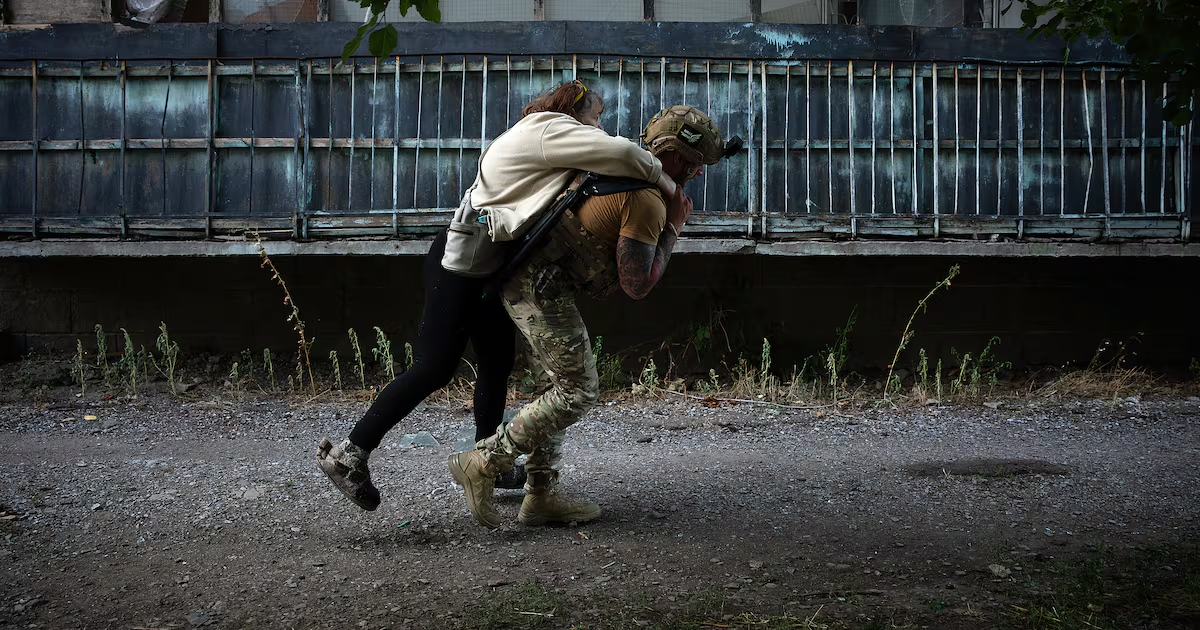
bearded expert and a group of Ukrainian soldiers arrived in the village of Slovianka on a special mission. Their goal did not involve shooting at invading Russian forces. Instead, they had come to rescue a unique piece of history before it could be swallowed up by war and a frontline creeping closer.
The soldiers placed a giant object a wooden pallet. It was a carved stone figure created about 800 years ago. The sculpture – of a woman holding a ceremonial pot, wearing a necklace and with tiny legs – was lifted gently on to a flatbed truck. “We didn’t think we would have to evacuate it. But we do. It’s sad,” Yurii Fanyhin, who coordinated the operation, explained.
Today Slovianka is a small farmland community, not far from the administrative border between Dnipropetrovsk and Donetsk oblasts. In the 11th and 13th centuries, however, it was at the centre of a vast steppe route. A Turkic nomadic people – known as the Cumans or Polovtsy – flourished here, north of the Black Sea. They were formidable and skilled warriors.