Study Mode helps students walk through topics rather than just giving them answers. But there’s a glaring problem.
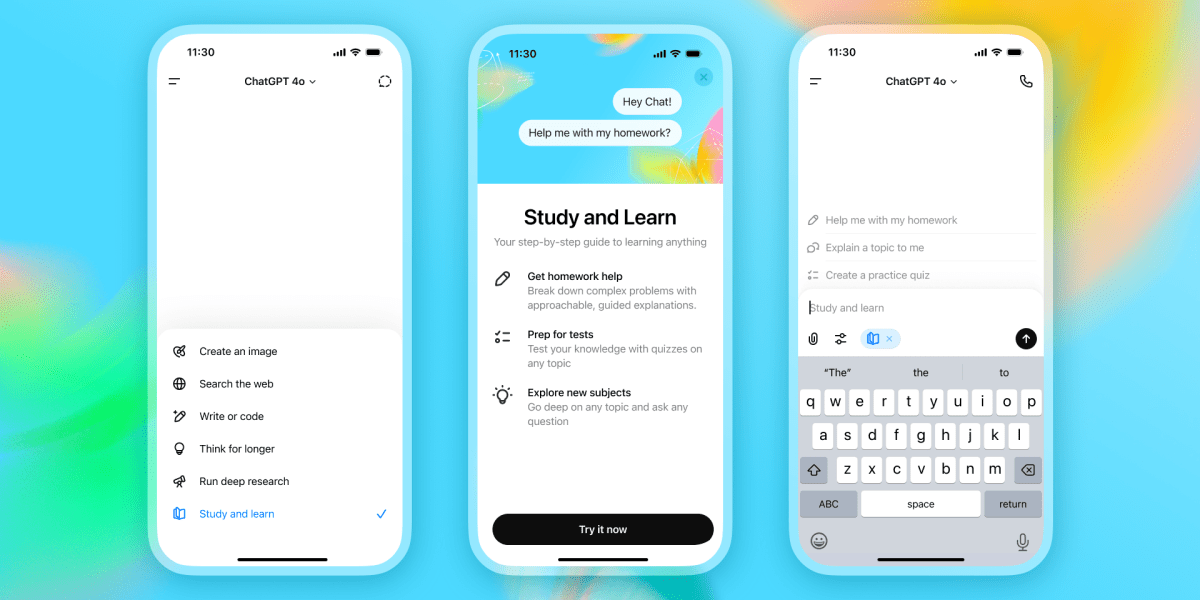
OpenAI is launching Study Mode, a version of ChatGPT for college students that it promises will act less like a lookup tool and more like a friendly, always-available tutor. It’s part of a wider push by the company to get AI more embedded into classrooms when the new academic year starts in September.
A demonstration for reporters from OpenAI showed what happens when a student asks Study Mode about an academic subject like game theory. The chatbot begins by asking what the student wants to know and then attempts to build an exchange, where the pair work methodically toward the answer together. OpenAI says the tool was built after consulting with pedagogy experts from over 40 institutions.
A handful of college students who were part of OpenAI’s testing cohort—hailing from Princeton, Wharton, and the University of Minnesota—shared positive reviews of Study Mode, saying it did a good job of checking their understanding and adapting to their pace.
The learning approaches that OpenAI has programmed into Study Mode, which are based partially on Socratic methods, appear sound, says Christopher Harris, an educator in New York who has created a curriculum aimed at AI literacy. They might grant educators more confidence about allowing, or even encouraging, their students to use AI. “Professors will see this as working with them in support of learning as opposed to just being a way for students to cheat on assignments,” he says.