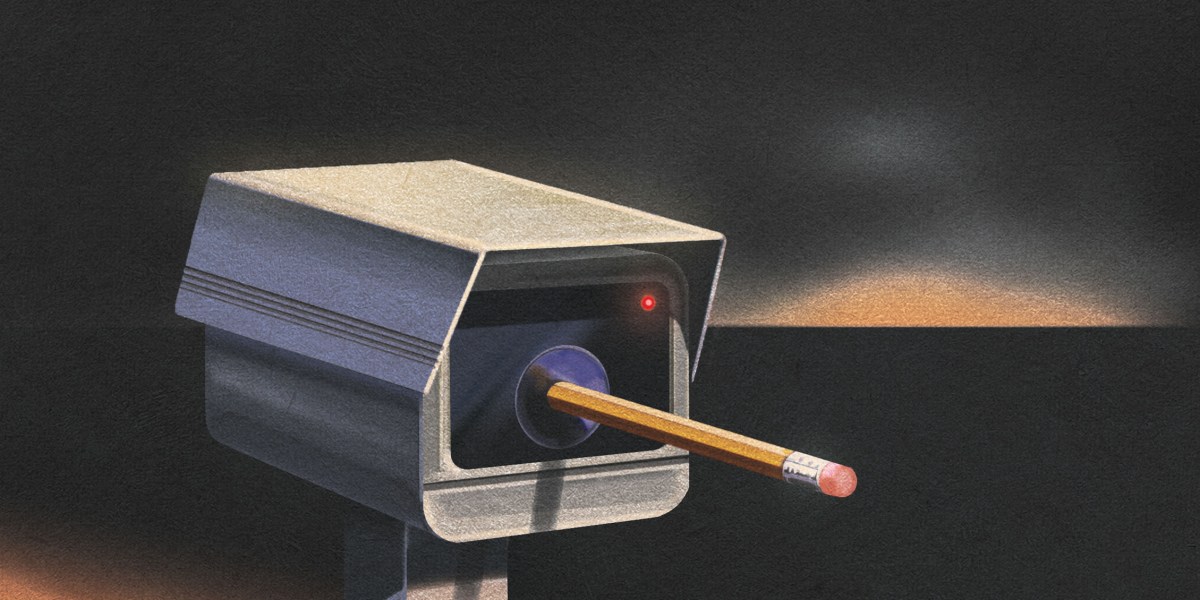
Three books examine the rise of the surveillance state, its infiltration of higher education, and why we need a new framework for thinking about privacy.
Privacy only matters to those with something to hide. So goes one of the more inane and disingenuous justifications for mass government and corporate surveillance. There are others, of course, but the “nothing to hide” argument remains a popular way to rationalize or excuse what’s become standard practice in our digital age: the widespread and invasive collection of vast amounts of personal data.
One common response to this line of reasoning is that everyone, in fact, has something to hide, whether they realize it or not. If you’re unsure of whether this holds true for you, I encourage you to read Means of Control by Byron Tau.
Midway through his book, Tau, an investigative journalist, recalls meeting with a disgruntled former employee of a data broker—a shady company that collects, bundles, and sells your personal data to other (often shadier) third parties, including the government. This ex-employee had managed to make off with several gigabytes of location data representing the precise movements of tens of thousands of people over the course of a few weeks. “What could I learn with this [data]—theoretically?” Tau asks the former employee. The answer includes a laundry list of possibilities that I suspect would make even the most enthusiastic oversharer uncomfortable.