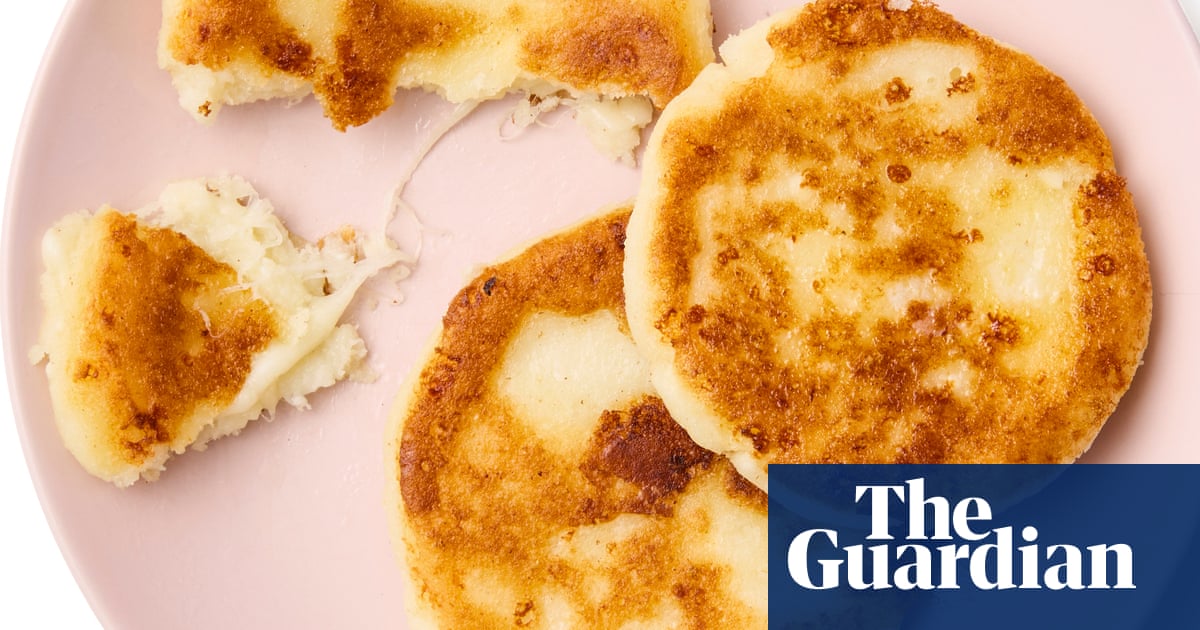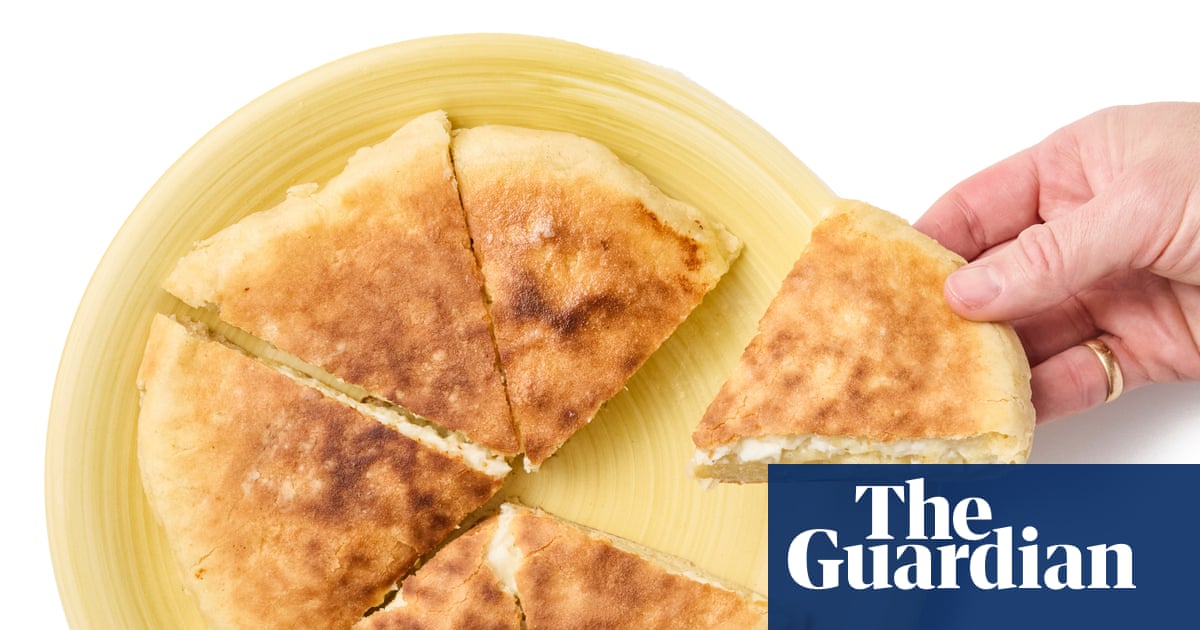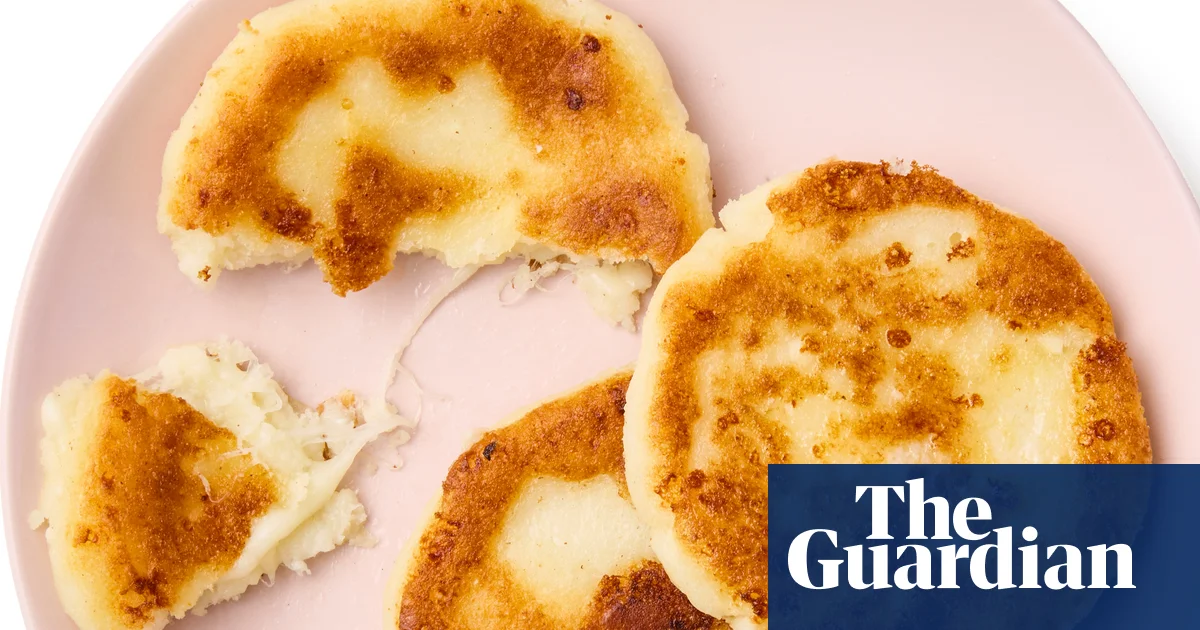
When I first came across arepas, at a food market in Williamsburg, New York, almost a decade ago, I was attracted mainly by the fact that these stuffed South American corn breads were, as the stall proclaimed in big letters: “110% gluten-free!” which meant I could share one with a coeliac friend. One bite later, I regretted my generosity: crunchy, buttery and filled with sweetcorn and salty, stringy cheese, I could easily have polished off the whole thing without any help.These, I later learned, were Colombian arepas de choclo, but arepas – flat, unleavened maize patties that pre-date European settlement – are found in many forms and flavours in many other countries, too, most notably Venezuela, but also Bolivia, Ecuador and parts of Central America. As J Kenji López-Alt notes on Serious Eats, to think of arepas like thick tortillas “is the equivalent of a Colombian native hearing about bread and saying: ‘Oh, it’s that European wheat cake, right?’” Within the first three days of his first visit to the country, he says he sampled more than a dozen different variations: “Arepas stuffed with cheese and baked on hot stones in coal-fired ovens. Arepas with sour milk cheese worked right into the dough. Arepas de choclo, made like a pancake with sweetcorn on a hot griddle. Arepas de huevo, golden yellow deep-fried puffy arepas split open and stuffed with an egg. Tiny arepitas eaten as a snack. Even packs of arepa-flavoured corn chips.”Ripping success: Felicity’s perfect cheese arepas. All thumbnails by Felicity Cloake.So much to eat, so little time, but here I’ve chosen to remain loyal to my first love and focus on the Colombian cheese-stuffed version. Even so, seeing as that country alone is estimated to have 75 kinds, this can only ever be a very partial survey. Still, it’s a good start, and an even better breakfast.The cornmealThis is likely to be the trickiest aspect of the whole process, because arepas are made from dried cooked cornmeal (these days sold ready-made), rather than the dried raw corn sold in the UK as cornmeal or polenta, or the masa harina used to make tortillas, which has been nixtamalised (treated with an alkali to remove the hull and make it easier to grind, as well as increasing its nutritional availability). As Sharon Glascoe of the Certified Pastry Aficionado blog notes with commendable firmness: “Masarepa is the most important ingredient. There is no substitute for the specific cornmeal used for arepas. If you’re unsure if you have the right kind, check the package. It should say what the flour can be used for. Also, most masarepa packages have an arepas recipe on the back, so if you see that, you got the right kind.”Though it comes in yellow, too, I’m assured that white masarepa is most commonly used for Colombian arepas. Those in major cities should be able to source it quite easily, but, it is also available online – the two major brands seem to be PAN and Goya.The liquidNaturally, the flour must be wetted to become a dough, and in such a simple recipe (the one on the back of the PAN packet is simply flour, water and salt), the ratio of dry to liquid ingredients is of primary importance. López-Alt’s dough is the driest, using two parts flour to one part water, “plus more as necessary”. Patricia McCausland-Gallo’s Secrets of Colombian Cooking, Erica Dinho’s blog My Colombian Recipes and Maricel Presilla in the New York Times all opt for equal parts. Others recommend using more liquid than flour – PAN most of all, with one and a half parts of water to every one of flour.PAN’s packet arepas turn out to be a little ‘austere’.López-Alt reckons that the “key is to use only as much moisture as is necessary to get a dough that doesn’t crack when you shape it. Too much water, and you’ll end up with dense, gummy arepas.” I obediently follow his lead and add another good splash of water, too. But, though the dough feels smooth and supple as instructed, it still cracks slightly on shaping, leading me to tend it anxiously with water as it cooks (which, an old eGullet thread claims actually helps to crisp up the outside, which is no bad thing).While López-Alt’s arepas are certainly crunchy rather than gummy, I find wetter doughs far easier to work with, especially given that the dough continues to solidify as the flour absorbs the water. Presilla rests hers for as long as 15 minutes, which I think is helpful, though an even better tip is heating up the liquid before use, which seems to make the resulting dough far more pliable and easy to work with. Glascoe suggests scalding it, but Presilla and Dinho’s lukewarm water does the trick fine, too.Glascoe is also the only one to employ milk in her dough; though not strictly necessary, it does make the arepas fluffier, with an almost crumpet-like interior, and slightly more flavourful, too, though you could just use the same amount of water if you prefer.The fatAccording to Sharon Glascoe, ‘masarepa is the most important ingredient. There is no substitute.’When I ask Sandra at Cafe Terrace, the Colombian cafe down the road from me, if she has any tips for arepas, she tells me to add butter to the dough, whether or not the recipe on the packet calls for it. Glascoe, Presilla and McCausland-Gallo agree, though López-Alt opts for vegetable oil instead, and the austere PAN packet recipe is fat-free, though its high moisture level means it’s still flexible, if rather less tasty than the rest. Because of the fat in the milk, I’ve decided to skip this step, too, in favour of buttering the arepas as soon as they come out of the pan. However, you might like to add a tablespoon or so, particularly if you’re not using milk, or adding cheese, of which more below.The fillings and flavouringsAs with any bread, salt is a must. Presilla includes a little sugar as well, which helps give his arepas a golden colour, but isn’t strictly necessary from a flavour perspective. You could leave it at that, but why would you when you could add cheese as well? The most common choice is queso fresco or blanco, which McCausland-Gallow says is “sold in large 30-pound blocks at the entrance of many supermarkets, fresh for people to buy as much as they want, or packaged in the dairy sections”. A British version can be bought online from Yorkshire Dama Cheese, though López-Alt suggests substituting Mexican cotija, Italian ricotta salata or (most easily accessible for most Brits) Greek feta or a similar white salty cheese; I used Turkish beyaz penir, but Balkan white cheese and so on would work just fine. López-Alt, Glascoe and Presilla knead this into the dough, which I’m very pro as a concept: the cheesier, the better as far as I’m concerned. (Vegans could easily adapt this recipe using plant milk or plain water and appropriate plant-based cheeses.)J Kenji López-Alt’s arepas are ‘delicious, but finicky for an amateur’.Sandra stuffs her arepas with mozzarella, a popular choice for that all-important stringy molten centre (the New York Times also mentions manchego or parmesan, and the comment section is predictably incredulous). Like Dinho, she splits them like a sandwich to fill them with cheese, while Glascoe folds the dough around it and Presilla grates it in with the white cheese. López-Alt makes my life difficult by forming his arepas like ravioli, covering one with cheese and sticking another on top – there’s so much cheese, in fact, that mine bulges like a flying saucer. Delicious, naturally, but finicky for an amateur; I’m going with Glascoe’s method, which feels a lot more forgiving.The shaping and cookingArepas, even cheese-stuffed ones, come in a range of thicknesses, as evidenced by those I try, which vary from Presilla’s chunky little discs to McCausland-Gallo’s almost pancake-like 6mm. If you’re intending to split and fill them, slightly thicker is preferable, but go for whatever thickness you like. The only thing to bear in mind is that thicker arepas will, of course, take longer to cook through; it should be only the cheese that’s gooey in the middle.Maricel Presilla grills her ‘chunky little discs’.The method by which you do so is similarly up to you and dependent on the equipment you have to hand. PAN, Glascoe and Dinho cook their arepas in a pan in the traditional fashion, López-Alt starts his in a pan, then transfers them to the oven to cook through fully, while Presilla grills them, which looks great, but involves a lot of careful work with a spatula to dislodge them from even a well-greased baking tray. The simplest option is a lightly greased pan: keep the heat medium-low and cover the pan for the first few minutes to help the arepas cook through before they burn on the outside – the crust should be crunchy and golden with charred spots, rather than charcoal. Finish with a generous helping of butter and eat hot, or freeze. (They can also be stored uncooked in the fridge under a damp cloth for a day or so.)Perfect cheese arepasPrep 10 min
How to make perfect cheese arepas – recipe | Felicity Cloake
Arepas are Latin American cornbreads of the most delicious kind. But there are so many variations, so let’s start with one that’s soft on the inside, crisp on the outside and oozing melted cheese…
1,843 words~8 min read