Supported by
A Times examination shows how a landmark case about gender-affirming care for minors was built on flawed politics and uncertain science.
By Nicholas Confessore
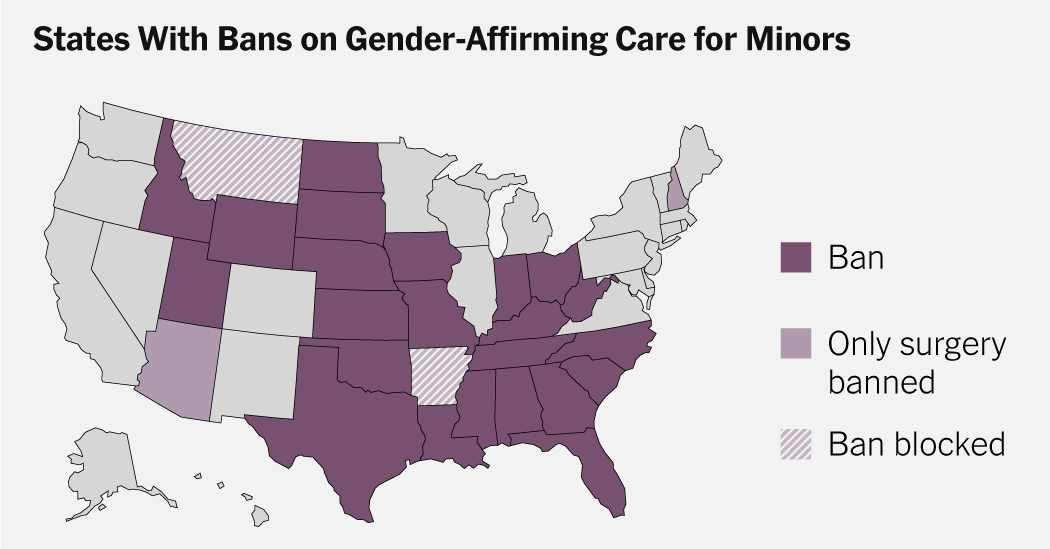
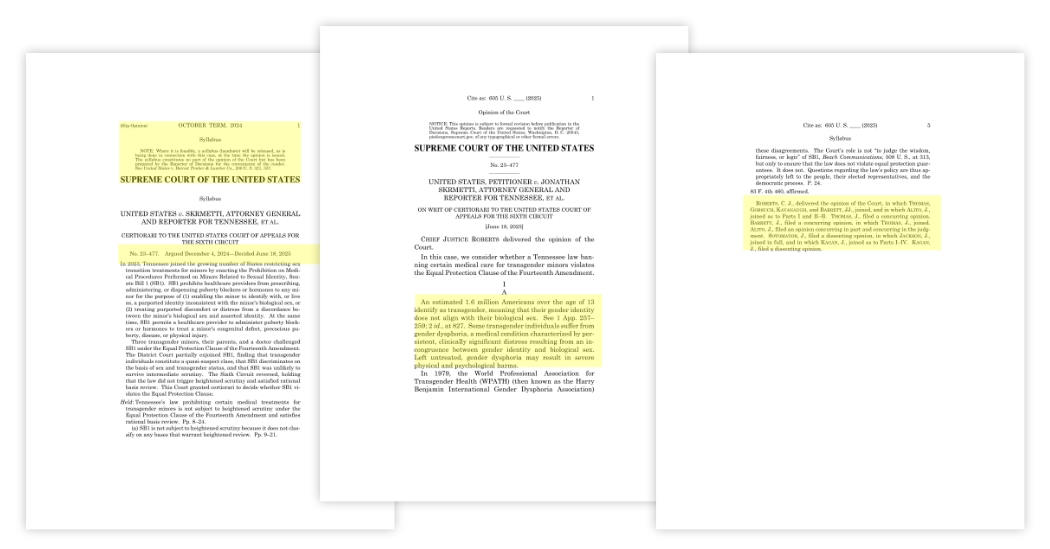
The Supreme Court’s decision on Wednesday allowing Tennessee and other states to ban gender-affirming care for minors was a crushing blow for the trans rights movement.
For some trans activists and their allies, the case, known as United States v. Skrmetti, was the culmination of a powerful Trump-era backlash against trans people, artfully stoked by right-wing politicians and abetted by biased media coverage. But some civil rights experts and veterans of the L.G.B.T.Q. movement view the Skrmetti case as a tragic gamble built on flawed politics and uncertain science.