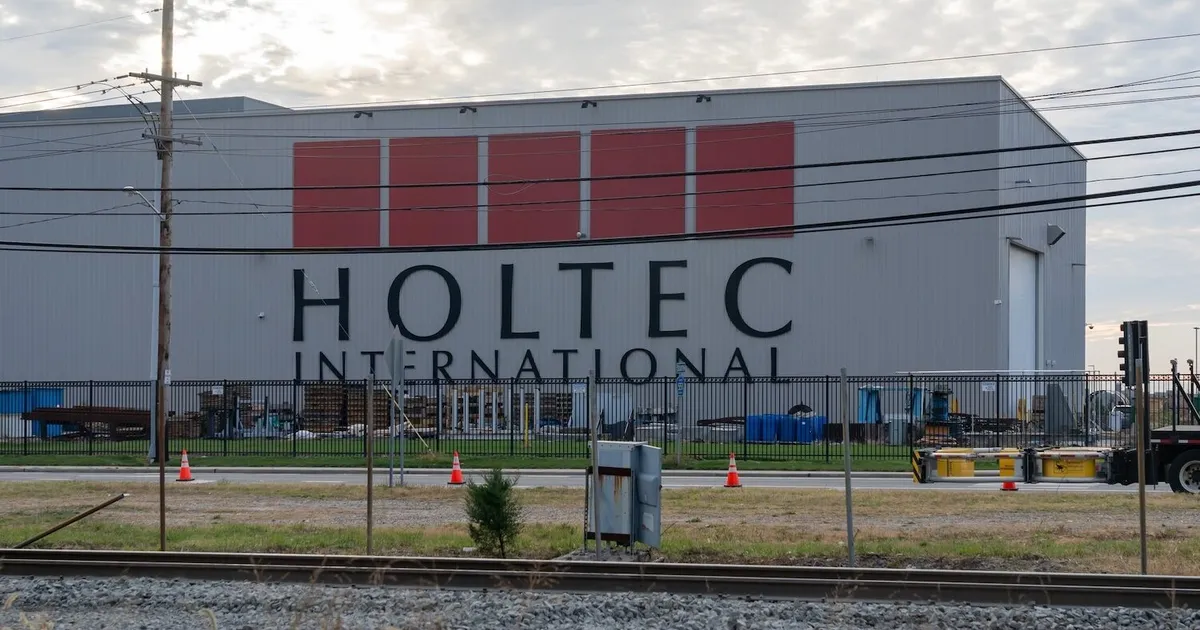
The world cannot meet climate targets and ensure reliable power supplies without the rapid deployment of nuclear energy, according to the president of Holtec International, a US company developing small modular reactors (SMRs) and reopening a large-scale nuclear plant in Michigan.
Kelly Trice says nuclear energy will be “indispensable” if countries are to meet the Paris Accord — the international treaty on climate change — because it provides the type of round-the-clock power needed to stabilise national grids at a time when electricity demand is surging.
He adds that intermittent power sources such as wind and solar on their own cannot meet the demands of artificial intelligence data centres and electric cars without the backup of nuclear, which is carbon-free and provides so-called baseload power — the minimum amount needed to meet demand at all times.
“Spain had the two-day blackout. A lot of people ascribe that to the over reliance on wind and solar, as well as the instability of the grid, as a result of the ups and downs of that kind of [renewable] power,” Trice says. “The demand for power is insatiable and the result is, you don’t have a choice. Nuclear is a very viable, strong component and is indispensable, as baseload power stabilises the grid.”