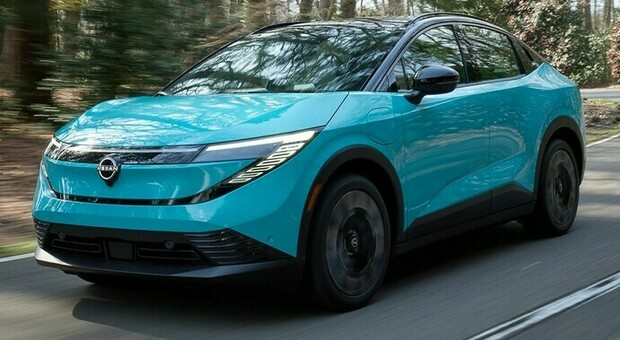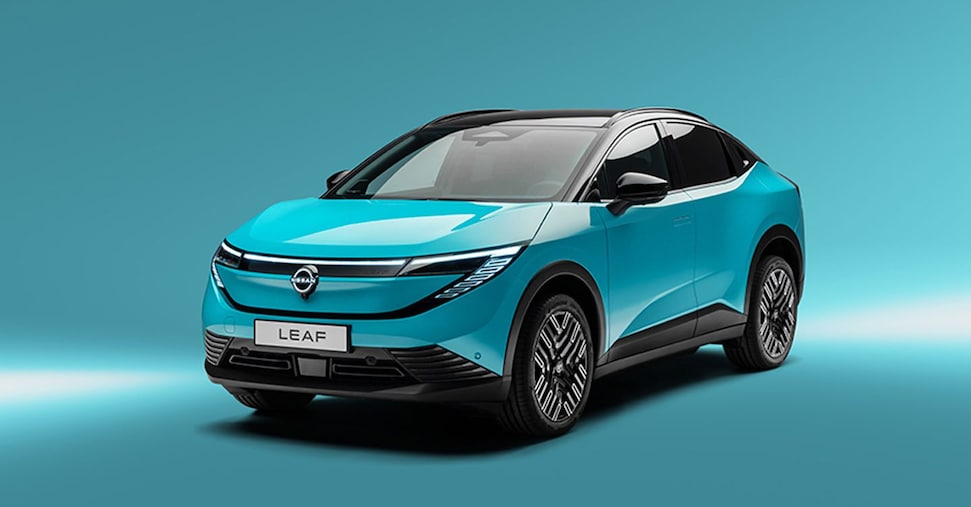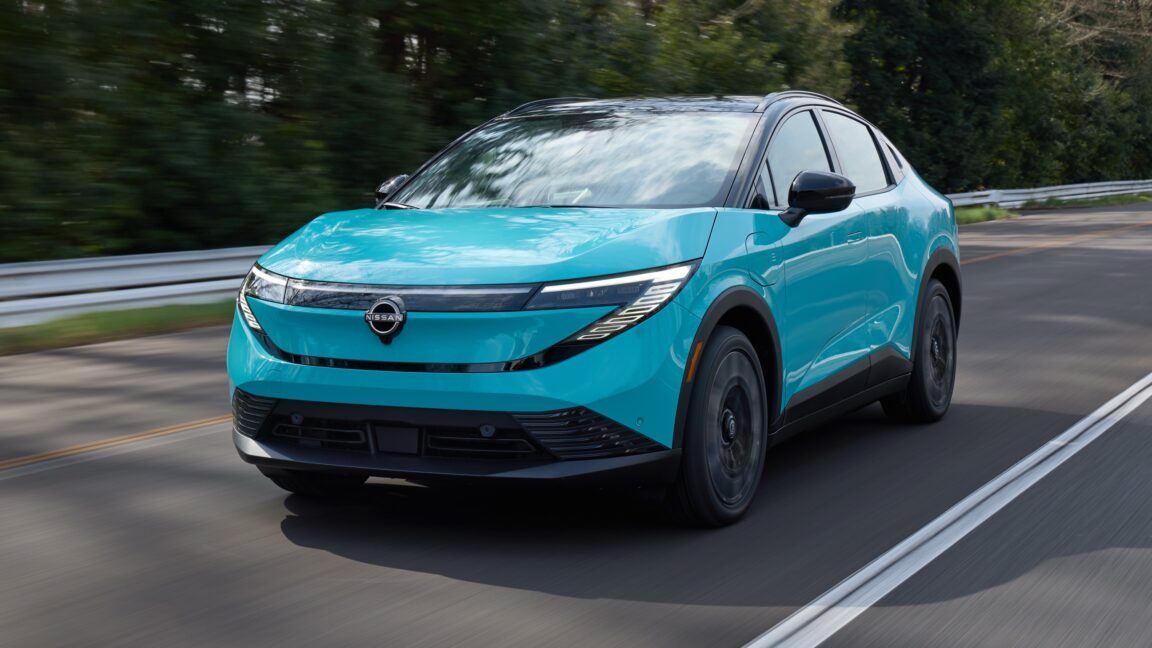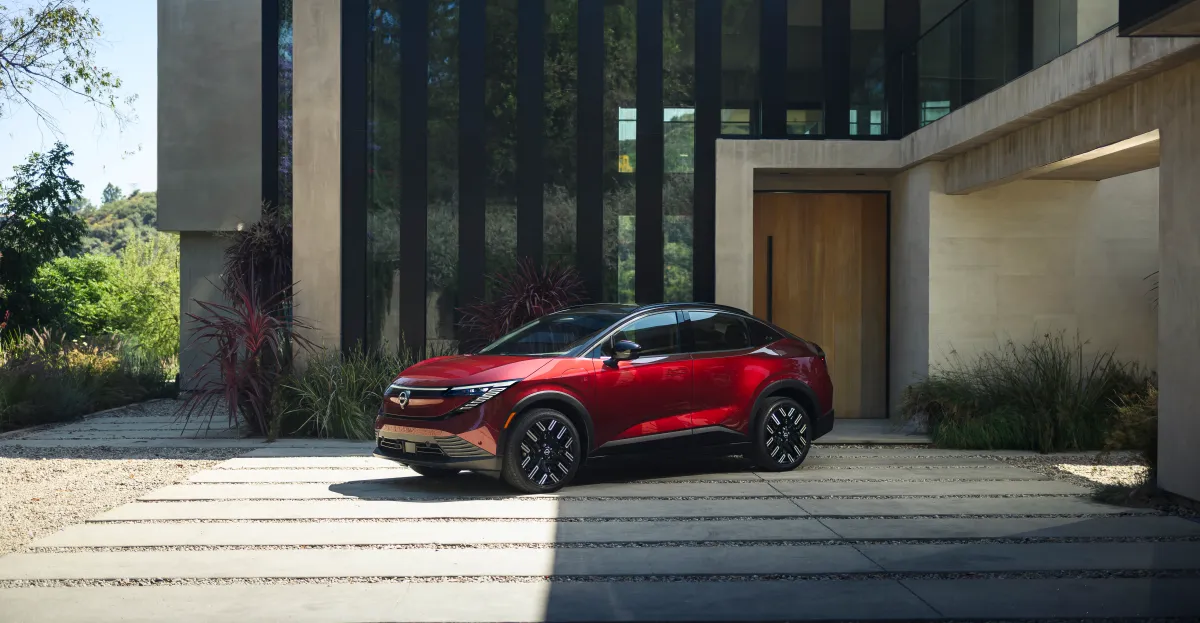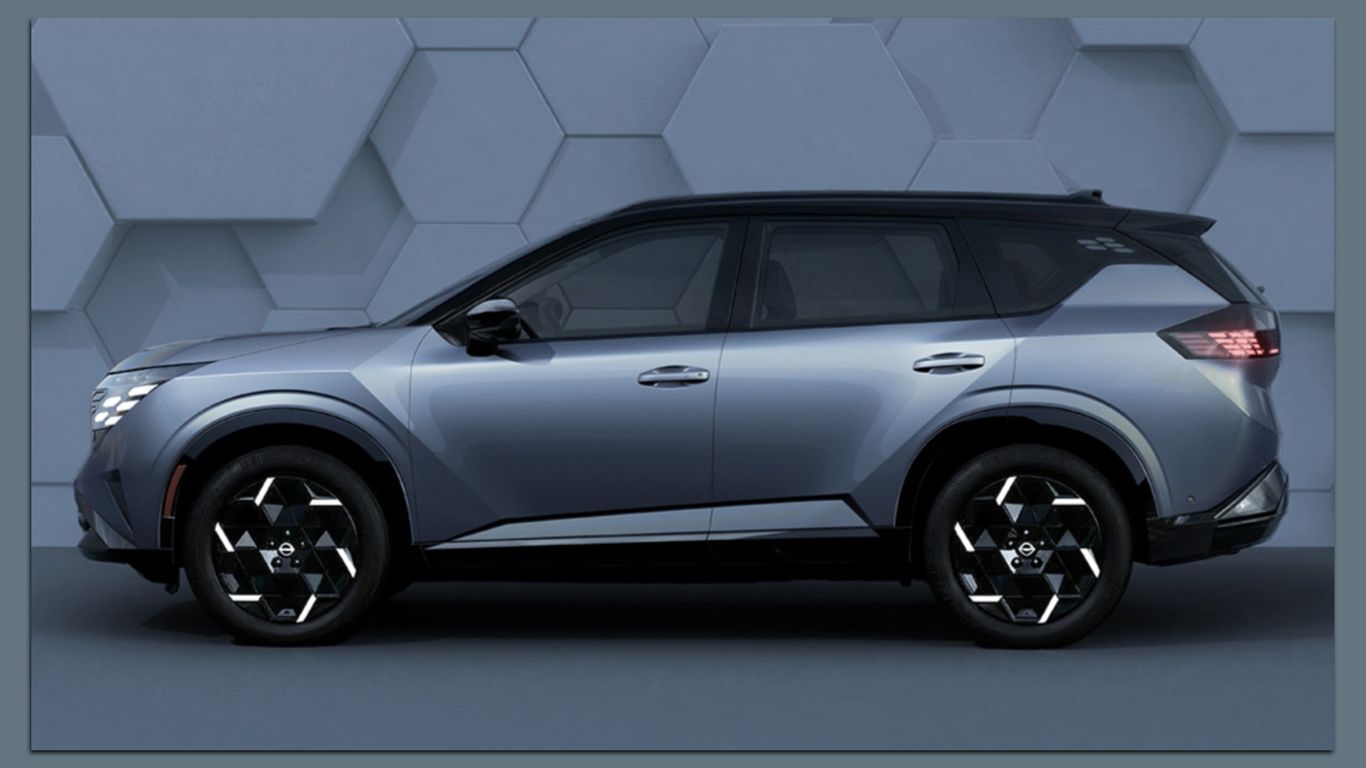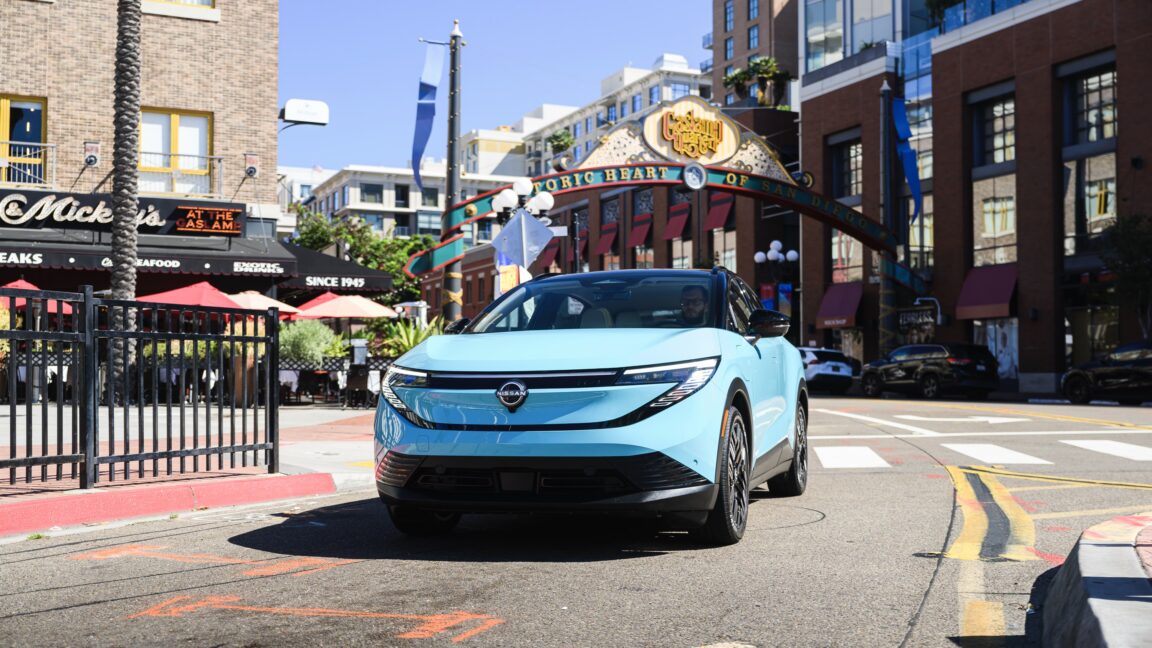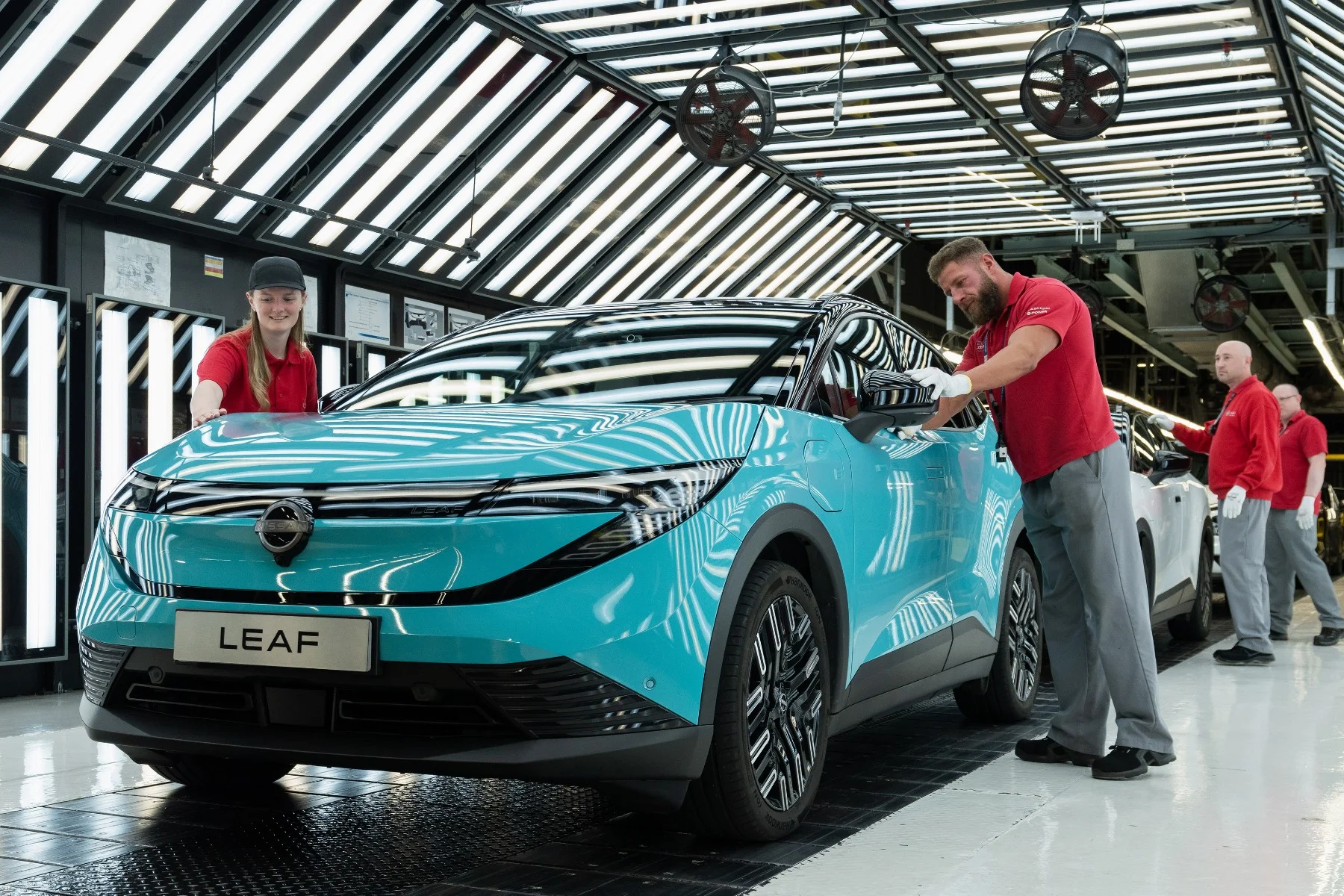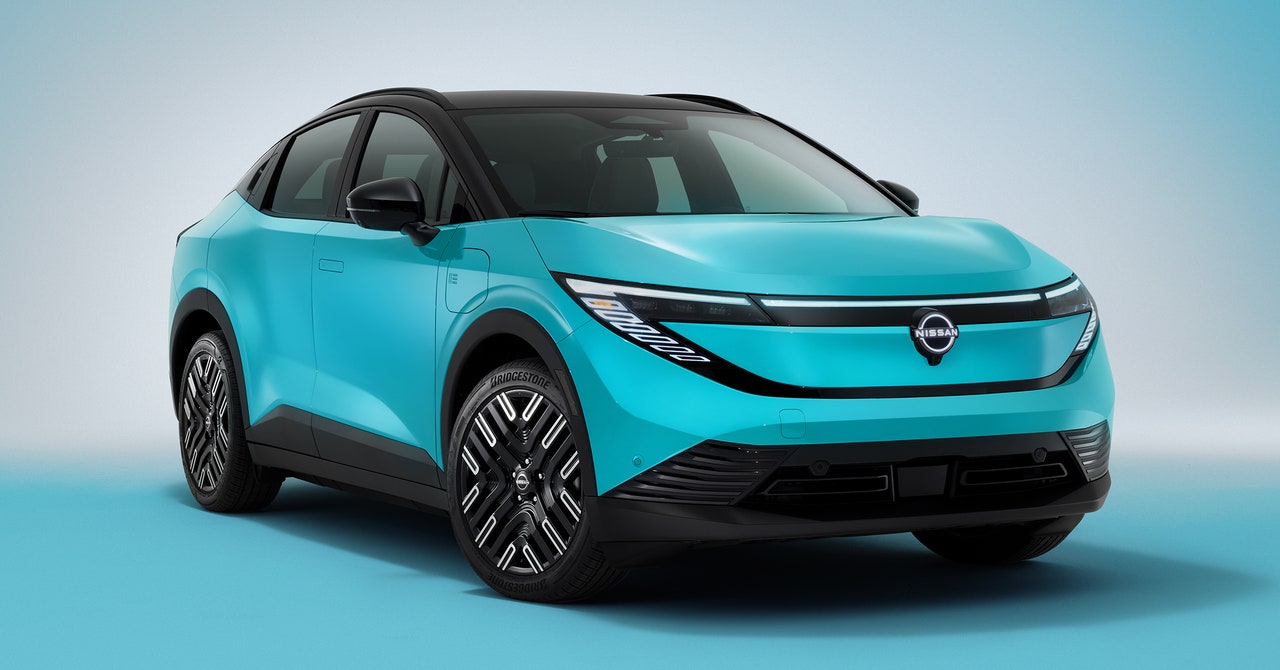
FINALLY, AFTER 15 years, we have a new 2026 Nissan Leaf coming. As befits the ‘truckification’ of global car markets, it’s no longer a compact hatchback. Now, it’s a compact SUV—or, more accurately, a crossover utility vehicle built on passenger-vehicle underpinnings.
The new Leaf will offer a range of up to 303 miles, Nissan says, from a 75-kilowatt-hour battery pack, powering a 160-kilowatt (214-horsepower) motor that produces 261 lb-ft (354 Newton-meters) of torque. That motor drives the front wheels, but despite its tall, utility appearance, all-wheel-drive isn’t on the table.
The 2026 Leaf can charge at up to 150 kW via a NACS (North American Charging Standard) port on the right-front fender, with fast-charging from 10 to 80 percent of battery capacity in 35 minutes under ideal conditions. Drivers will benefit from the standard Plug & Charge protocol that lets them to plug in the car and walk away, with validation and billing handled automatically, at capable charging networks. Notably, the AC charging port with a J-1772 socket is on the left-front fender; dual charge ports remain uncommon outside higher-end models like the Porsche Taycan.
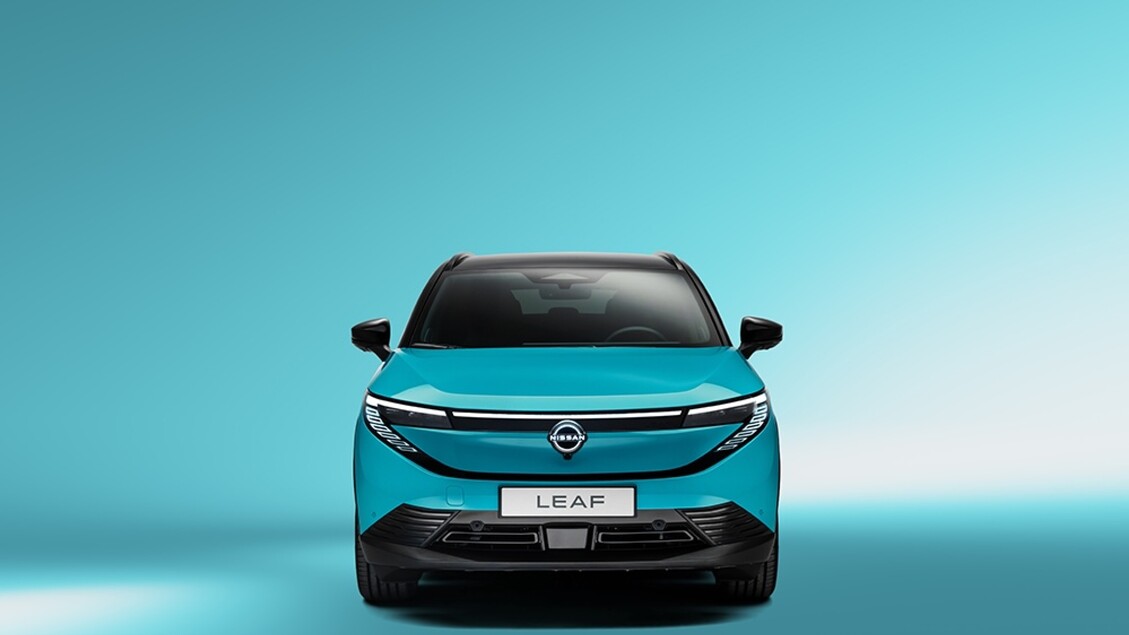
Stylistically, the Leaf resembles a smaller Nissan Ariya—the brand’s larger EV crossover. The new Leaf, however, is sleeker—Nissan quotes a drag coefficient of 0.26, down from the prior Leaf’s 0.29 and the Ariya’s 0.297—and uses such drag-reducing features as the company’s first powered, flush-fitting front door handles (the rears are scooped out of the roof pillar behind the rear doors). The very high tail provides a large cargo area, at up to 55.5 cubic feet (1.6 cubic meters) behind the rear seats.