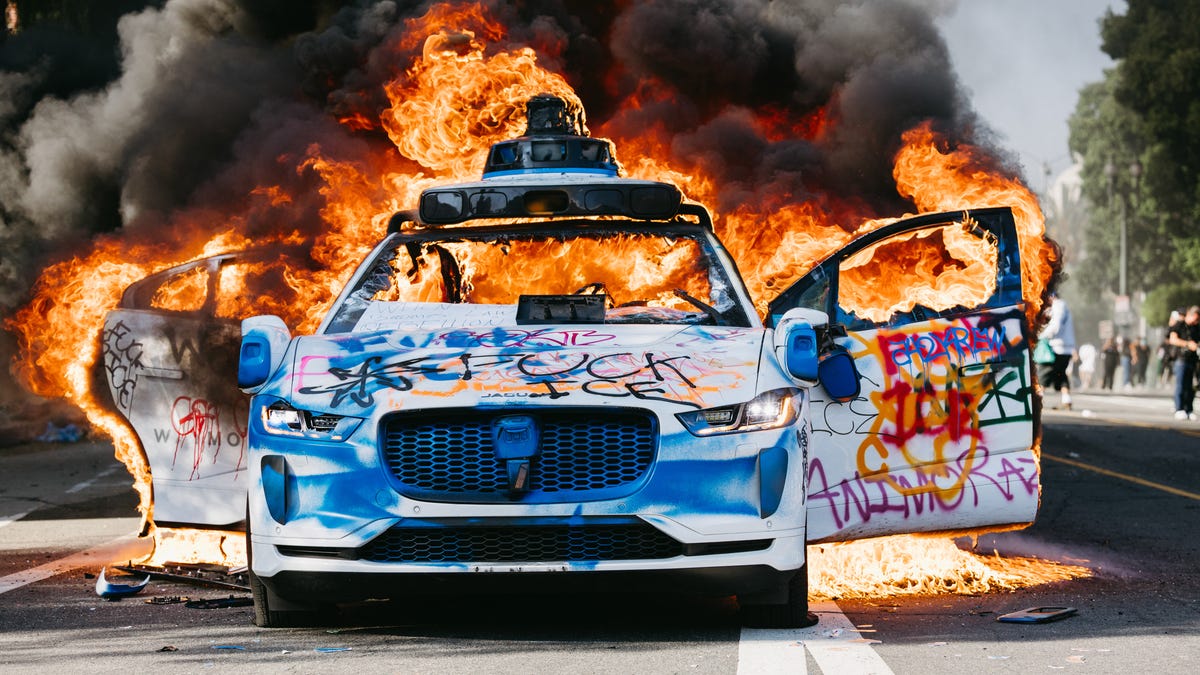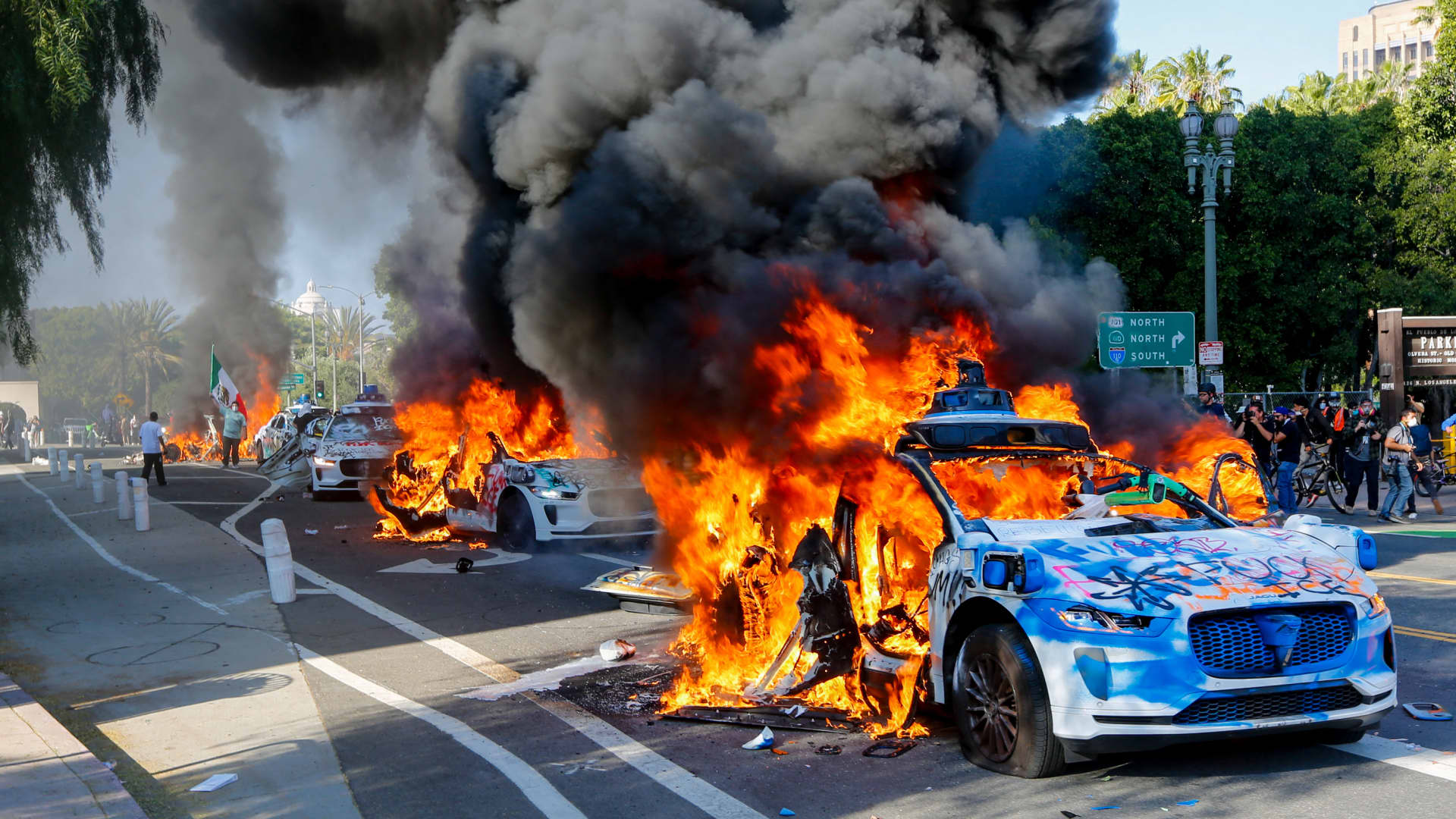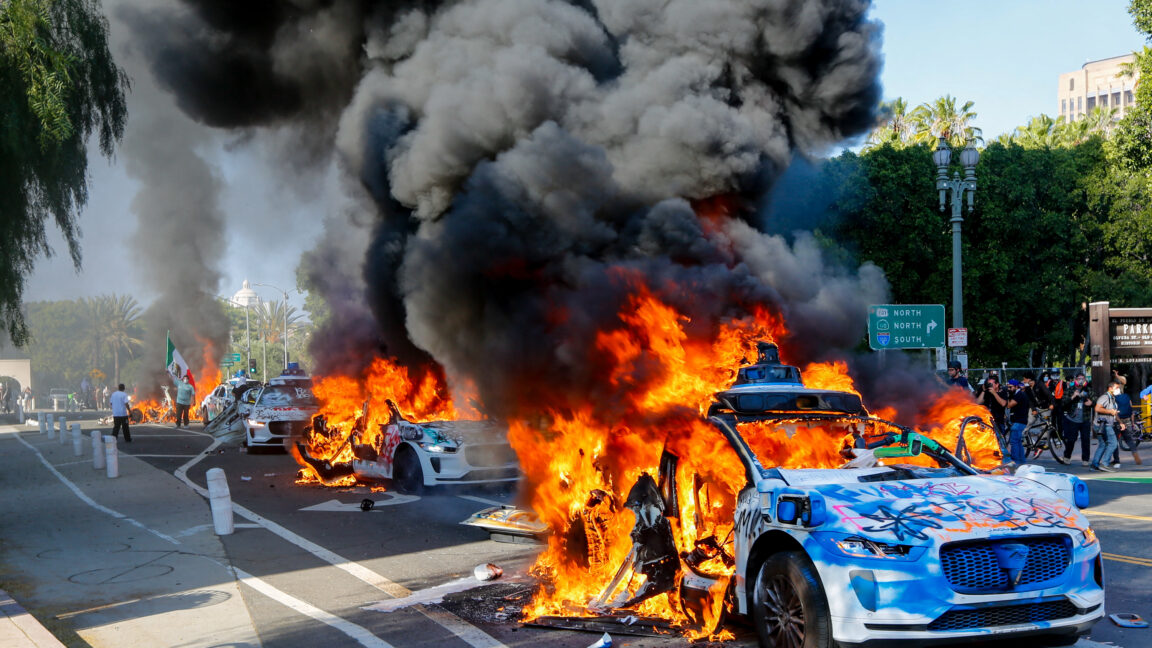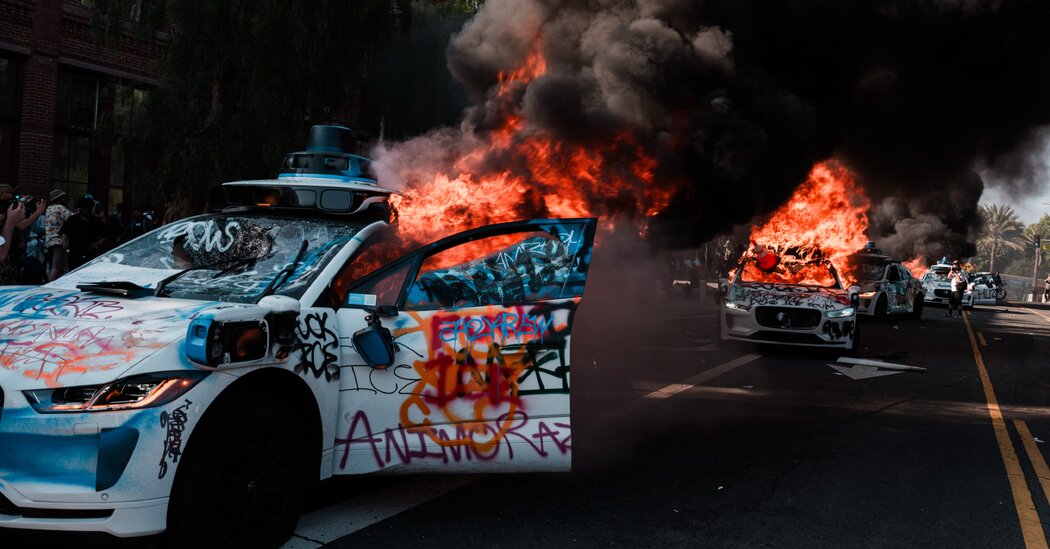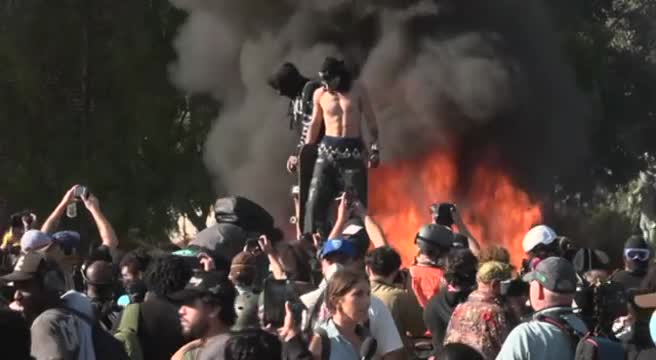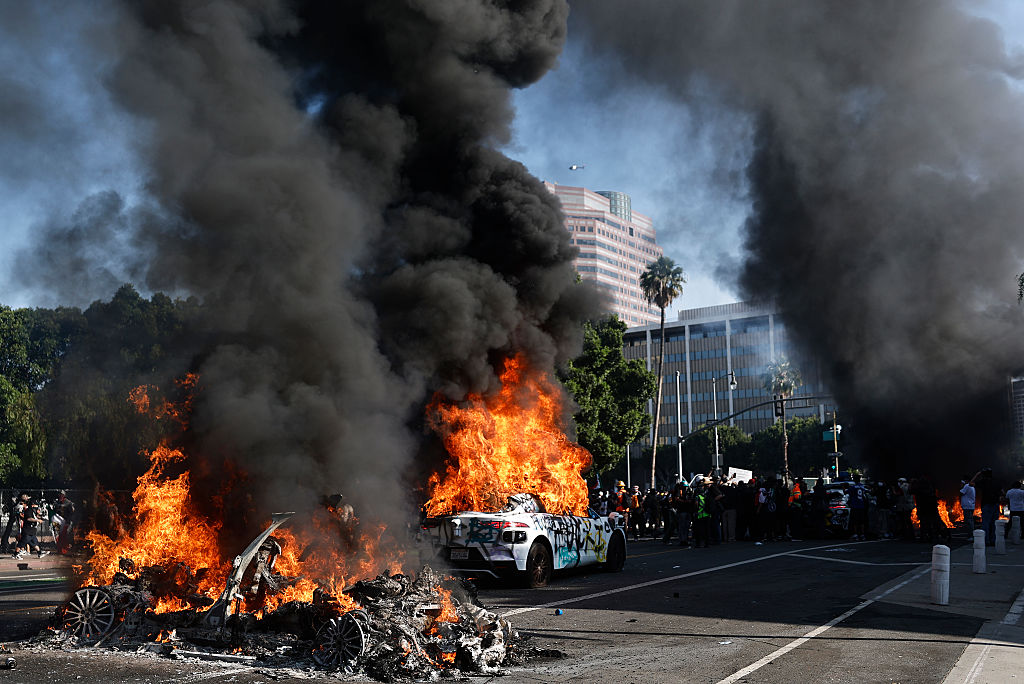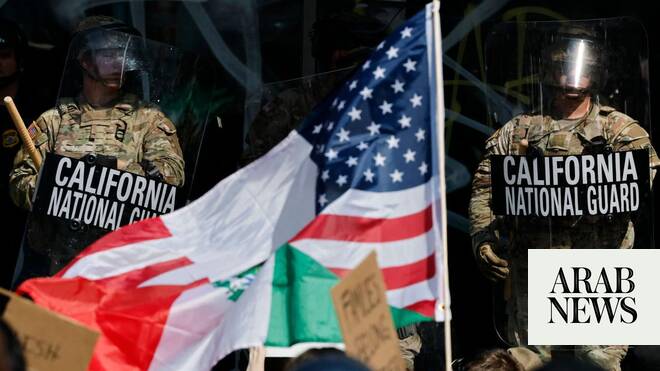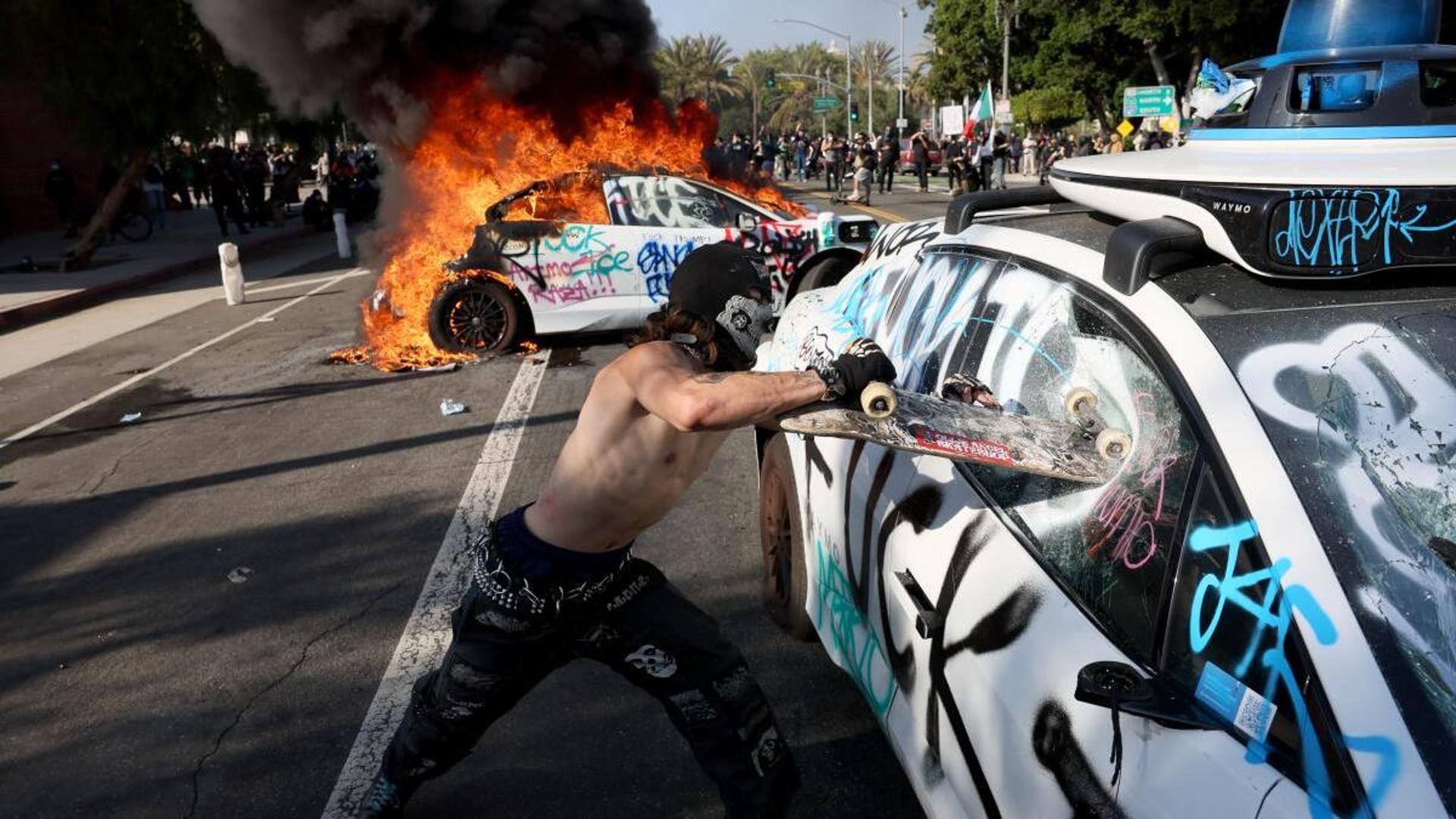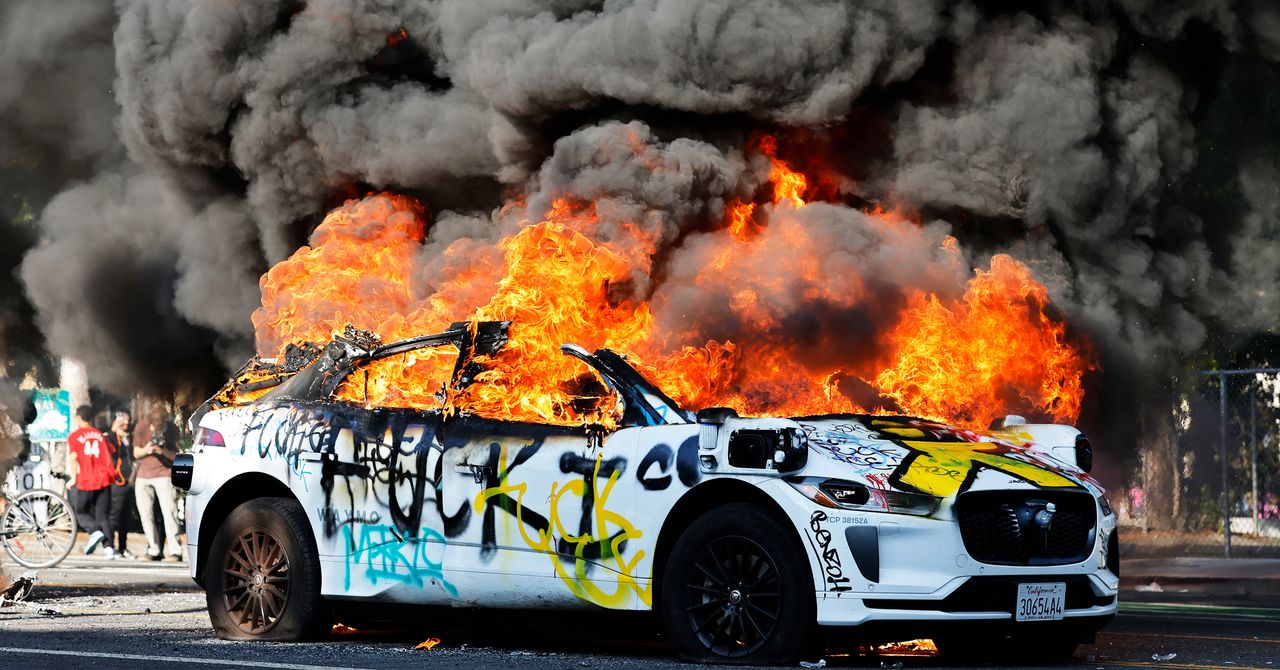
Thousands of people across the United States poured into the streets this week to protest the Trump administration’s immigration policies, joining a nationwide wave of resistance that began in Los Angeles. One of the most widely shared images from the city, where federal authorities have sent almost 5,000 active-duty Marines and National Guard members, is of five Waymo robotaxis that were vandalized and set on fire. The incident has become one of the most recognizable symbols of the demonstrations so far, and prompted Waymo to temporarily shut off service in several parts of the city as well as in San Francisco on Monday.
The charred Waymo cars have also raised fresh questions about what kinds of technology authorities can use to surveil protestors and potentially collect evidence to make arrests. According to Waymo’s website, its latest driverless cars have 29 external cameras, providing “a simultaneous 360° view around the vehicle,” as well as an unknown number of internal ones.
Over the last several years, Waymo has repeatedly shared video footage with police after receiving formal legal requests. But it’s not clear how often the self-driving company, which is owned by Google’s parent organization Alphabet, complies with these demands. Unlike Google, Waymo doesn’t disclose the number of legal requests it receives nor how it responds to them. When police do obtain footage, they could also combine it with other technology—like facial recognition, or nonbiometric tools for finding and tracking people in video clips—to identify possible criminal suspects.