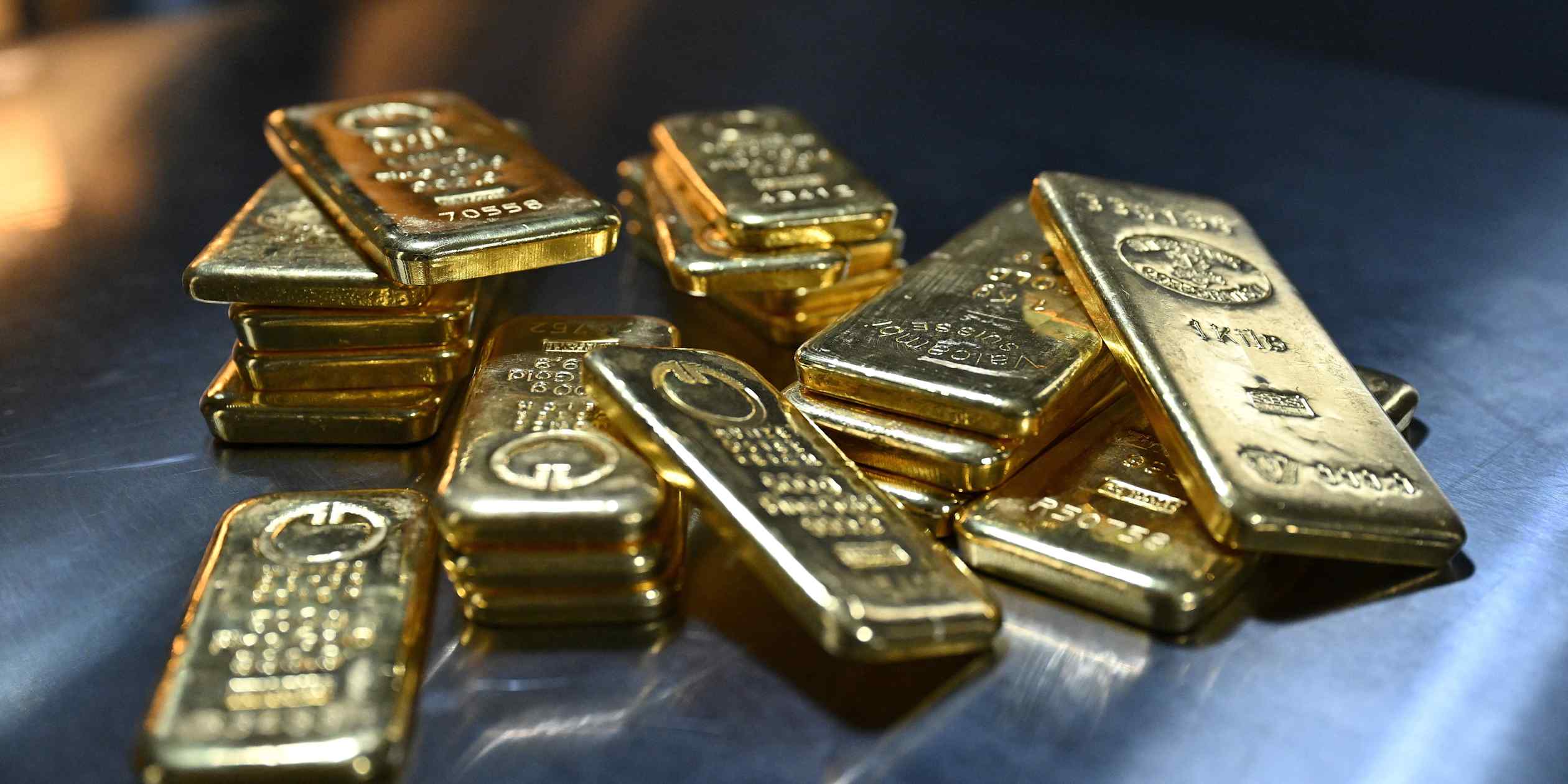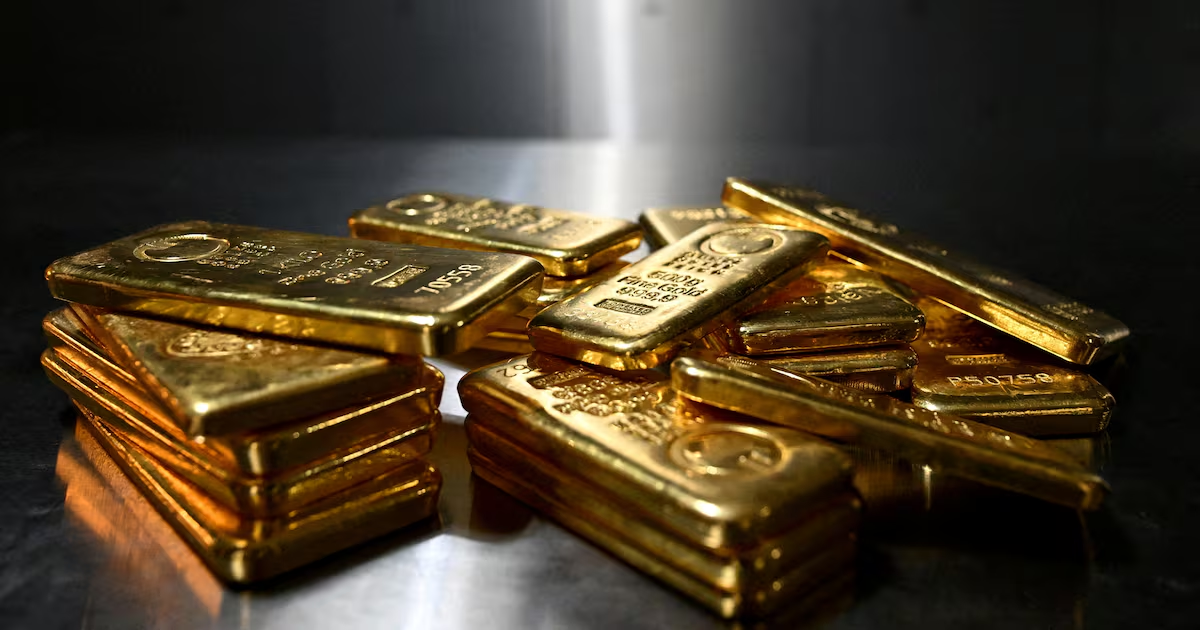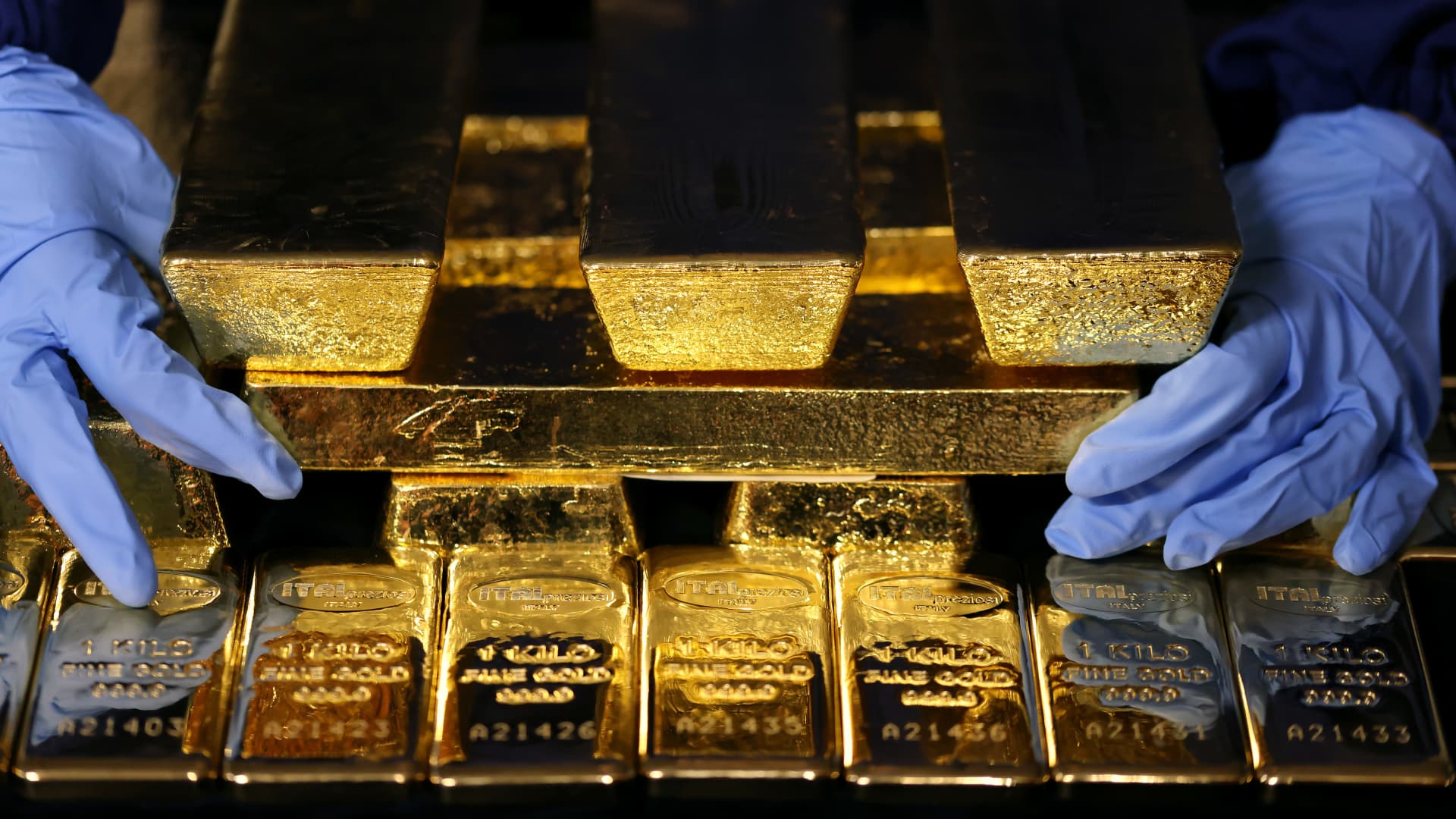
Central banks’ growing appetite for gold meant that the precious metal was the second-largest global reserve asset in 2024, according to a European Central Bank report out Wednesday — but analysts suggest some institutions may be nearing their fill.
Central banks’ gold stockpiles are close to levels last seen in the 1950s and 1960s. Combined with gold’s soaring price, it is now second only to the U.S. dollar as their biggest reserve holding in value terms, the ECB said in its analysis Wednesday.
In 2023, gold and the euro were roughly level at around 16.5% as a share of global official reserves on average, ECB data showed. In 2024, that shifted to 16% for the euro and 19% for gold — with the U.S. dollar accounting for 47%.
Central banks amass liquid assets such as foreign currencies and gold as a hedge against inflation and to diversify their holdings. It also allows them to sell these reserves to support their own currency in times of stress. Gold in particular is seen providing long-term value and resilience through volatility, and central banks now account for more than 20% of its global demand, up from around one-tenth in the 2010s.
The ECB said survey data found gold was increasingly attractive to emerging and developing countries concerned about sanctions and the potential erosion of the role of major currencies in the international monetary system.