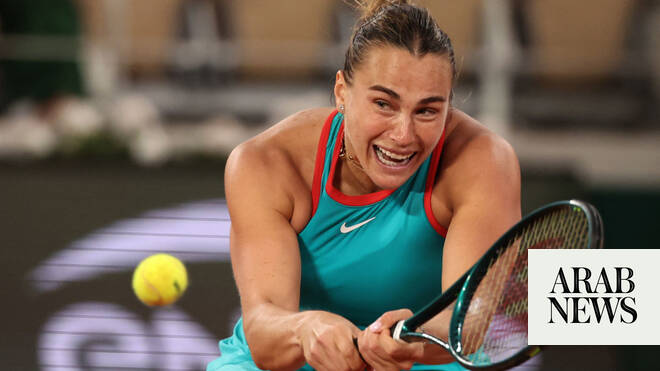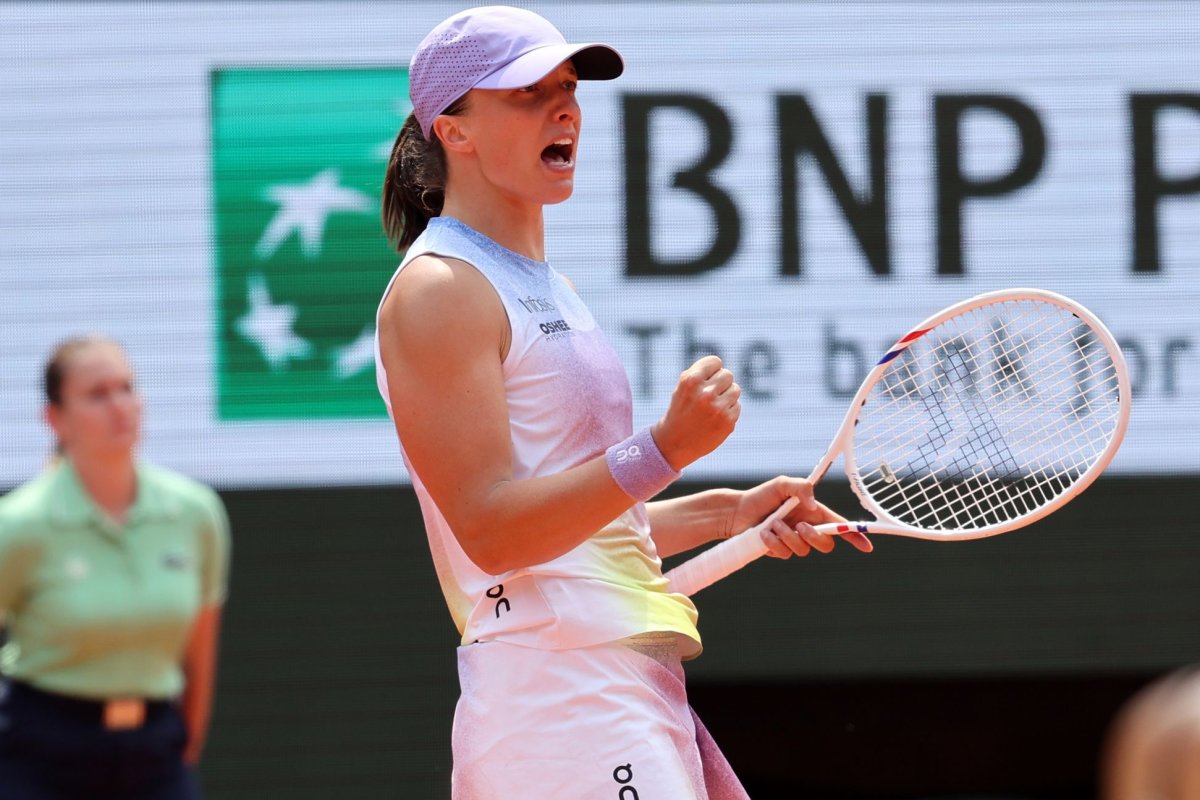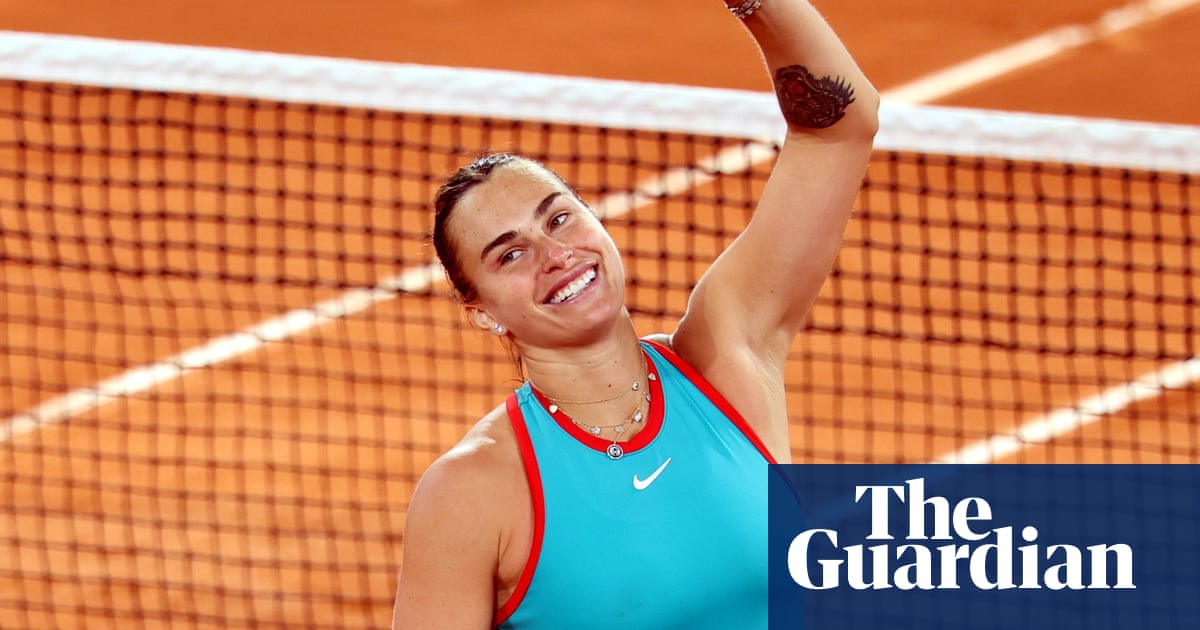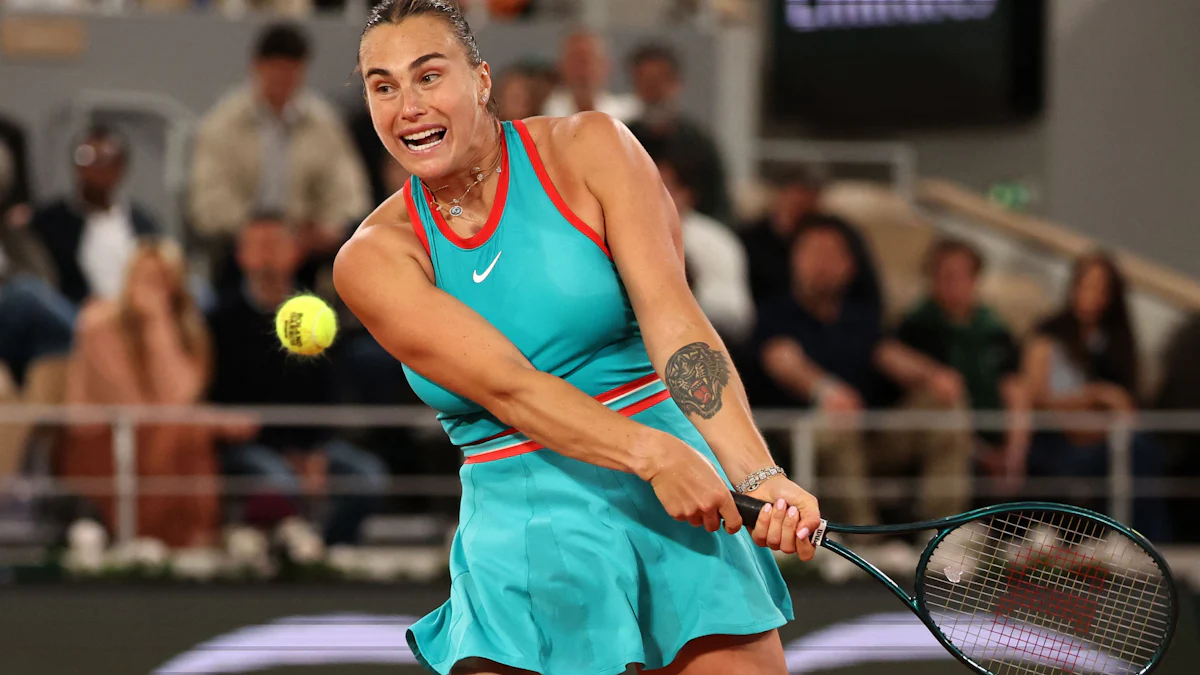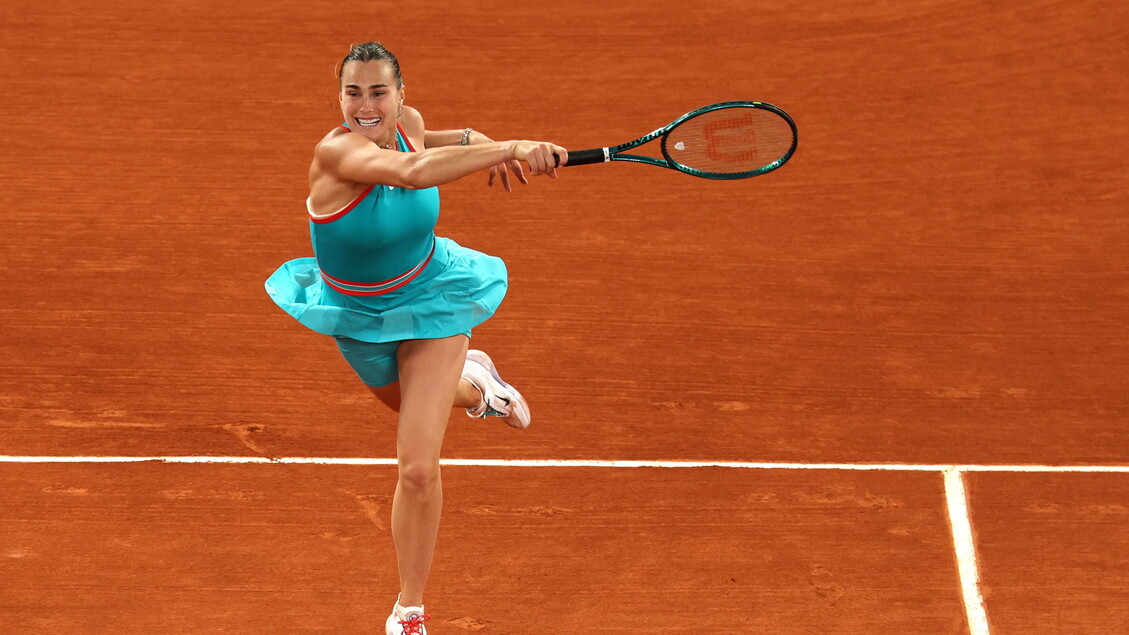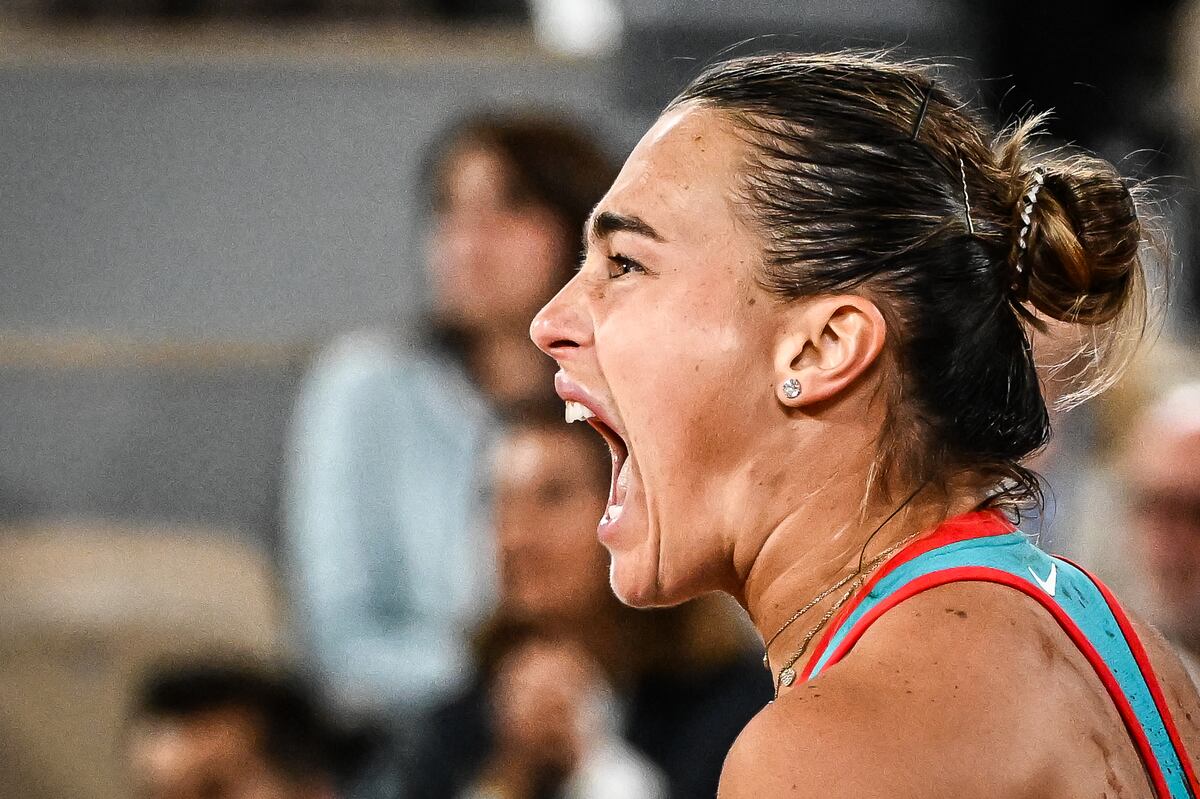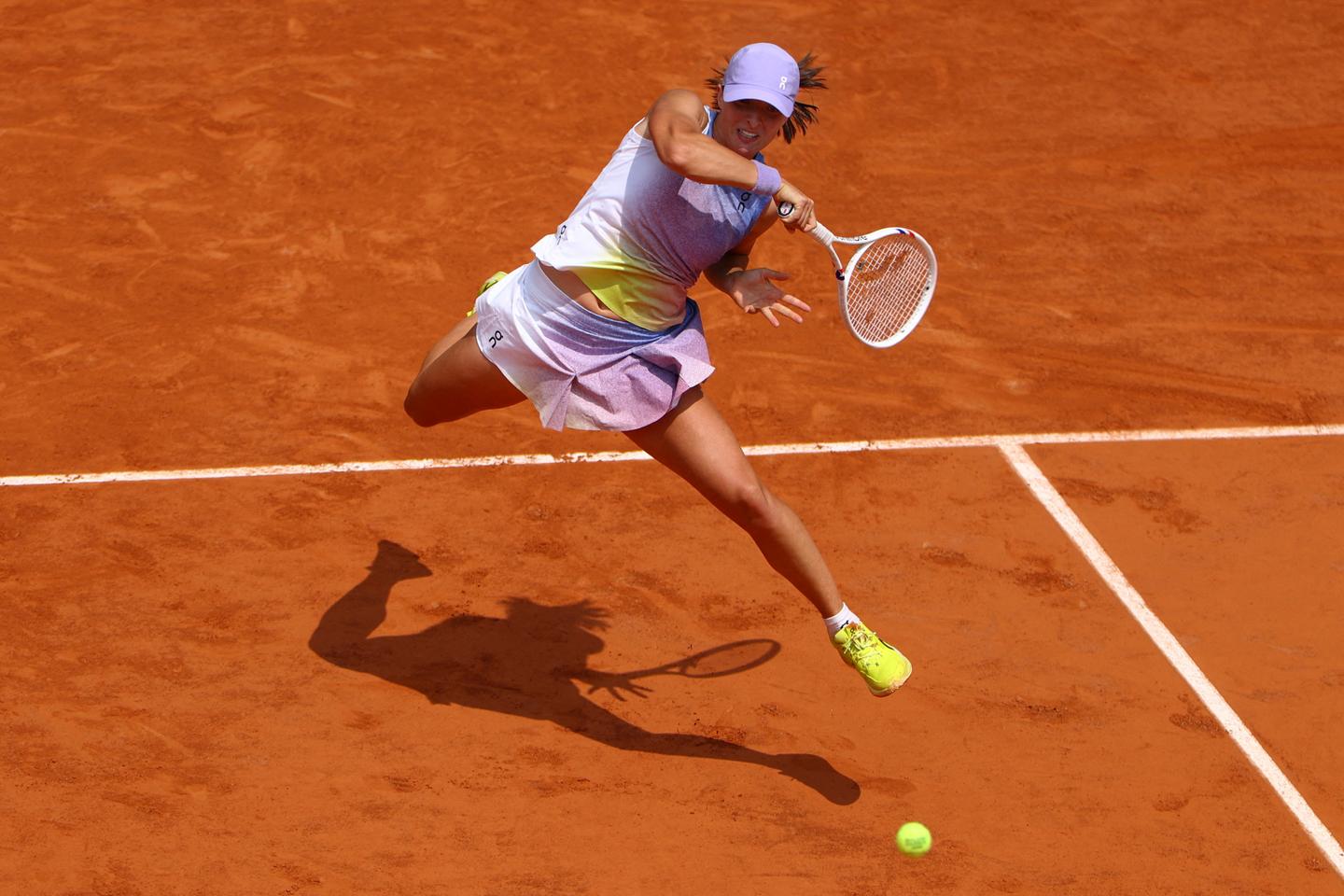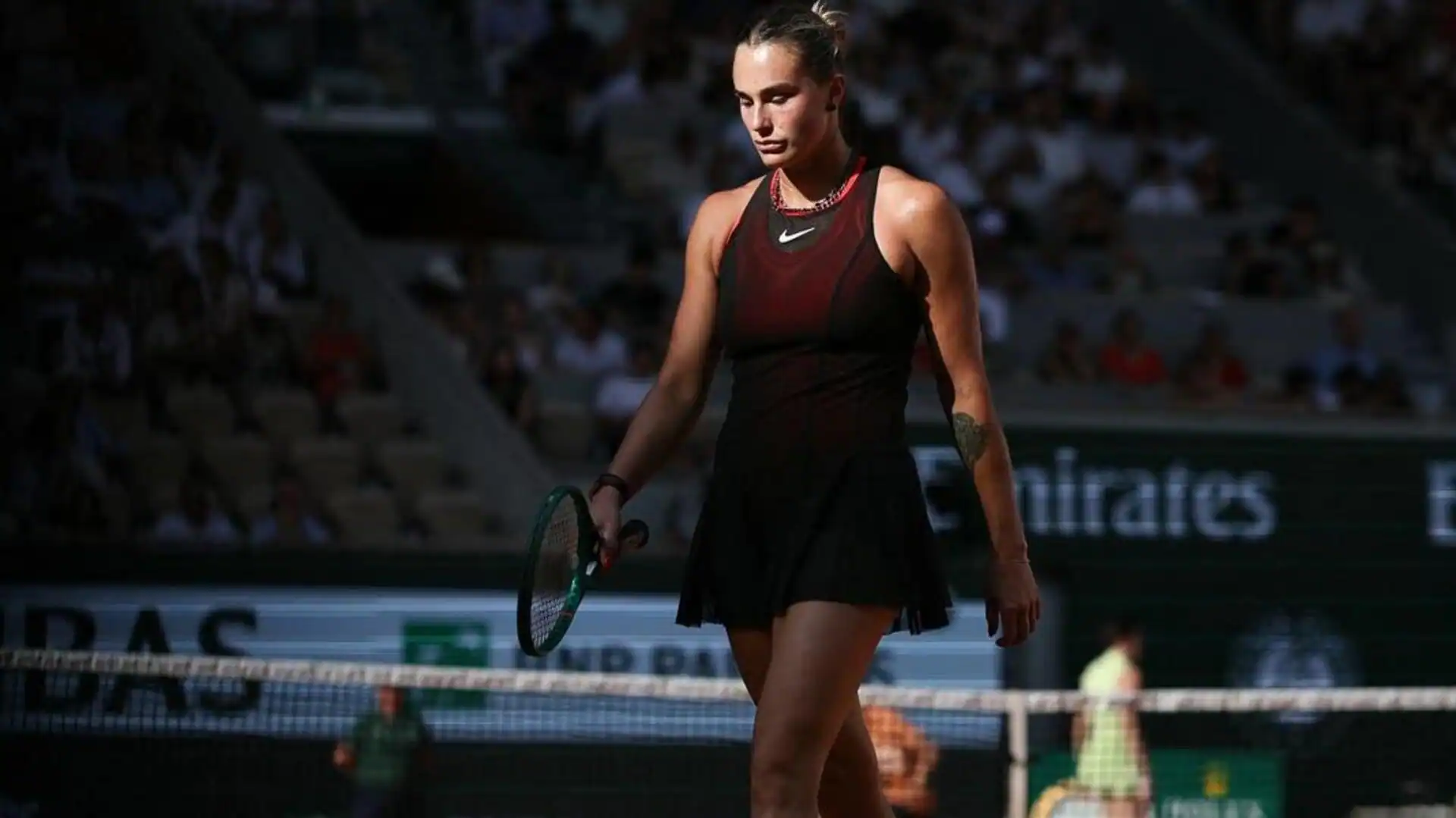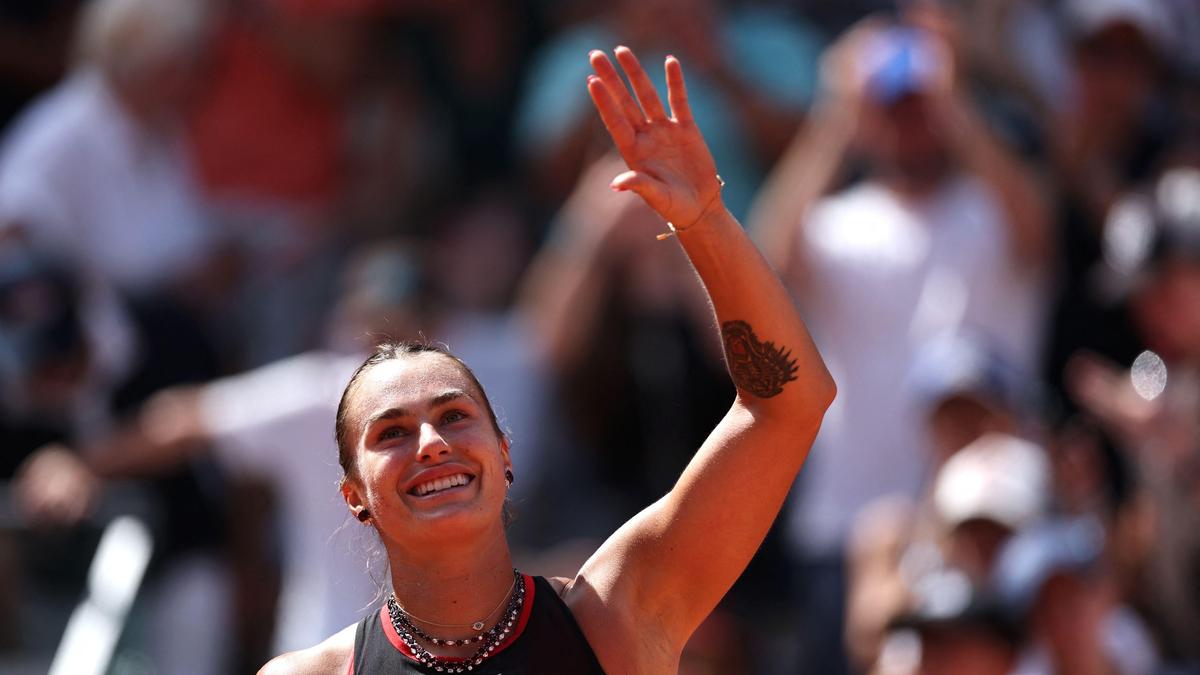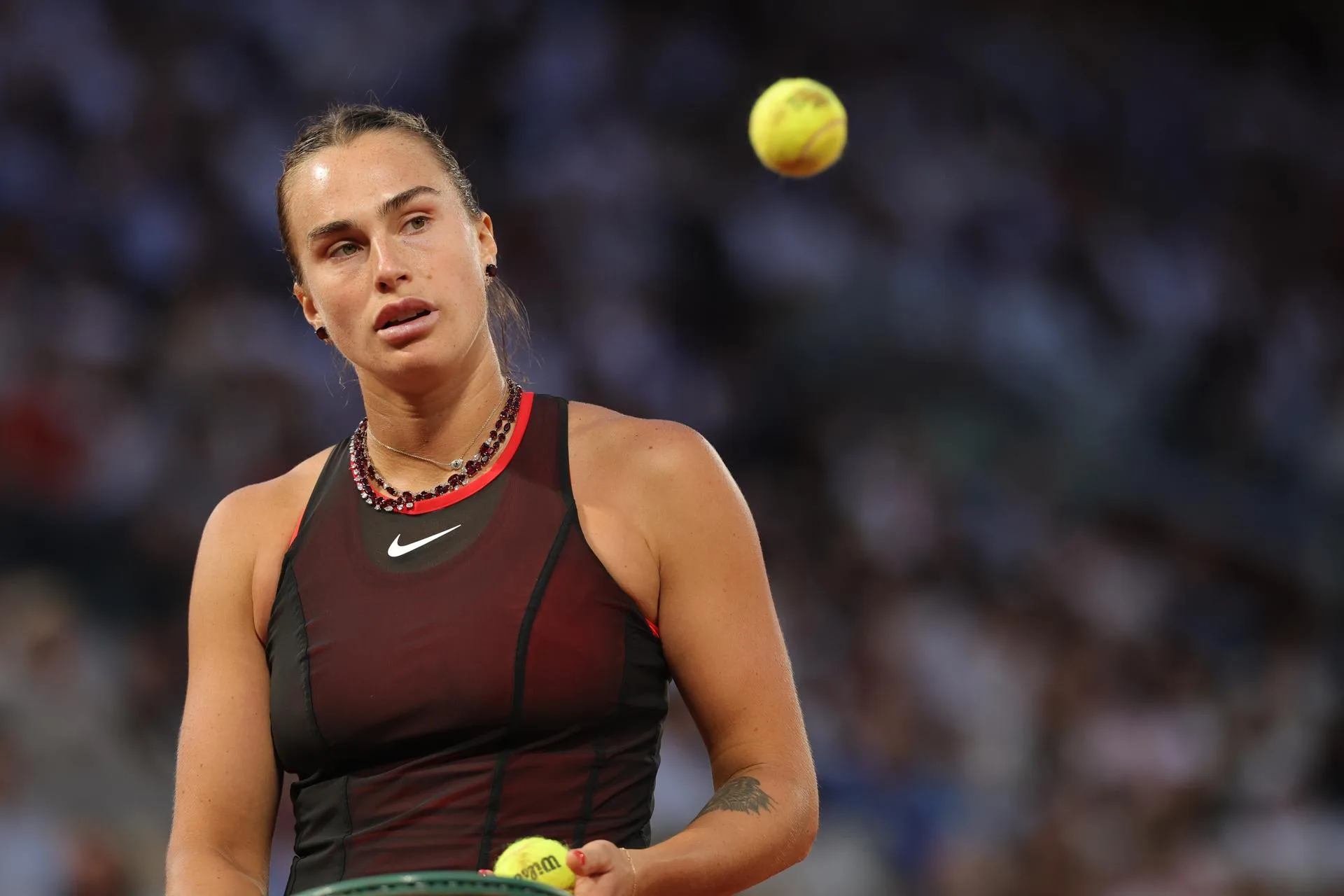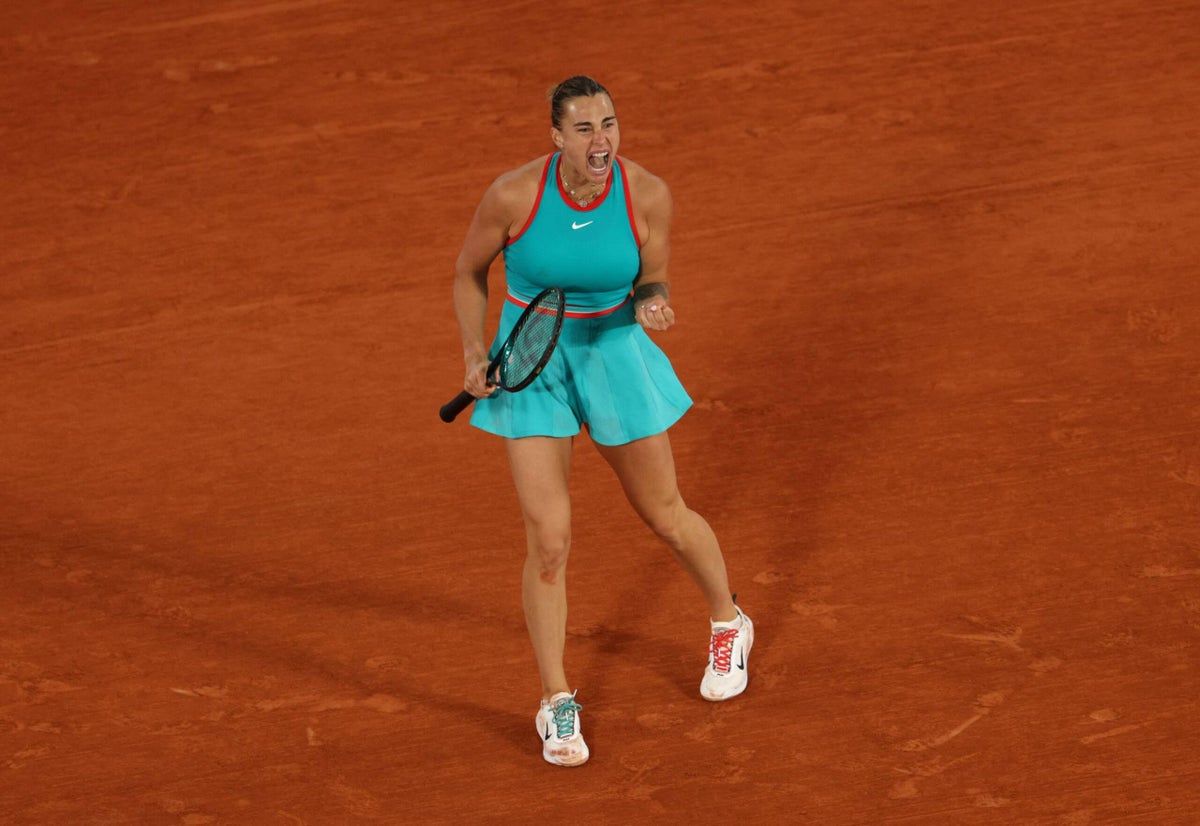
ROLAND GARROS, PARIS — In arguably the most anticipated women’s tennis match of the decade, Aryna Sabalenka defeated Iga Świątek Thursday to reach her first French Open final.This was only the second Grand Slam meeting between the defining WTA players of the 2020s, and after two extremely tight sets, Sabalenka surged past the four-time winner and defending champion 7-6(1), 4-6, 6-0, as Świątek faded in the deciding set after missing the opportunity to break Sabalenka in its opening game.This is Świątek’s first defeat at Roland Garros since 2021 and only her third loss at the French Open in her career. It rubberstamps Sabalenka’s position as the undisputed world No. 1, giving her the opportunity to win a first Roland Garros title Saturday, which would move her to four major titles, one behind Świątek. It also gives her the opportunity to win a first major away from hard courts.“Almost like my whole life I’ve been told clay is not my thing and then I didn’t have any confidence,” Sabalenka said in her post-match news conference.“In the past I don’t know how many years, we’ve been able to develop my game so much, so I feel really comfortable on this surface and actually enjoy playing on clay. If I’ll be able to get this trophy, it’s just going to mean the world for us.”She did it the hard way, after a scratchy, fiercely contested couple of sets and a swing in momentum that made it briefly look as if the match was Świątek’s to lose. But Sabalenka has become a master of finding her way through difficult matches, and she produced a dominant deciding set to end a match that she described as “streaky” in her on-court interview. Świątek felt she lost her intensity in the decider, and didn’t have the opportunity to mount a comeback like she had done in the first set.“I came back from, what, 4-1 in the first,” she said in a news conference. “Doing that a second time for sure would be hard, but she played, like she didn’t doubt. She just went for it, and that’s what I mean about intensity.”The first set was an undulating affair that Sabalenka took 70 minutes to win. She could have won it in half that time. The world No. 1 raced to a 3-0 lead and looked like she wanted to make a statement early. Her desire to streak away from Świątek in the opening exchanges was a double-edged sword, as Sabalenka grew frustrated whenever her opponent reeled her back in.Świątek is the finest clay-court player of her generation and on track to become the best in the history of women’s tennis, so it was inevitable she would find a response. She started stepping deeper inside the baseline and going for a bit more with her returns. Sabalenka had a couple of points for 5-1, but didn’t take them, and a few games later it was 4-4.Much of the crowd were with Świątek, and Sabalenka asked for some noise for herself after ripping an inside-in forehand winner at the business end of the set. Sabalenka broke for 6-5, but got broken straight back, which was the story of a set in which both players returned better than they served. Sabalenka won 39 percent of her second-serve points against Świątek’s 33 percent, and both of them barely made 50 percent of their first serves. Both were frequently hitting the first shot after serving off balance, the ball down by their shins, and Świątek in particular looked vulnerable whenever she stepped up to the line.To Sabalenka’s credit, she shrugged off the disappointment of not taking her chances by crushing Świątek in the tiebreak 7-1. Świątek was dominating the longer rallies, but anything short tended to go Sabalenka’s way.Maybe going for the quick kill wasn’t such a bad strategy. Świątek left the court for five minutes at the end of the set, and she was the sharper when they got back under way. Her lack of variety cost her in the first set, including at a critical moment at 3-1 down in the tiebreak when rather than going for a drop shot off a short, slow ball at the net she pushed a backhand wide.She found great feel at the start of the second, holding for 3-1 with a half-volley drop shot and then a beautifully controlled forehand slice that floated over for a winner off a big Sabalenka forehand. Those sorts of shots were a feature of her first win here five years ago, and to a lesser extent in 2022, but have largely evaporated since. Świątek has spoken about playing with more shape and spin, and doing so helped her wrestle back the initiative here.She was moving better too, the familiar sound of her trainers squeaking reverberated around Court Philippe-Chatrier as she got up quickly to a couple of forehands to hold for 5-3. And the greater feel was evident when she won a volley battle with both players at the net in an important moment serving for the set. Świątek’s serve was also much improved in the second set, her first-serve points won percentage jumping to 71, from 43 in the opener.It was Sabalenka who struck first in the decider though, pummeling away at Świątek’s forehand and drawing an error to break for 2-0. She raced through the next few games too, dropping just two more points as she surged to a 6-0 bagel, which has been her opponent’s speciality on this clay for so long. It was the first Świątek had suffered here since 2019.“Probably it wasn’t a bad tournament,” a sanguine Świątek said afterwards. “I love playing here, so for sure I’m happy that I was fortunate enough to play so many great tournaments here. Even this one I feel like I played better than weeks before.”Świątek said she would have a few days off and then head somewhere in Europe for a “decent little pre-season on grass.” Świątek, who will be ranked No. 7 when the standings update on Monday, has never been beyond the quarterfinals at Wimbledon.Sabalenka’s opponent in Saturday’s final will be the No. 2 seed Coco Gauff, who trounced French wildcard 6-1, 6-2 Loïs Boisson in Thursday’s second semifinal. “I’m ready,” Sabalenka said. “I’m ready to go out, and I’m ready to fight. And I’m ready to do everything it’s going to take to get the win.”(Photo: Adam Pretty / Getty Images)
Aryna Sabalenka beats Iga Swiatek, the reigning champion, to reach French Open final
Sabalenka staved off Świątek's momentum in the deciding set to reach her first Roland Garros final.
1,069 words~5 min read