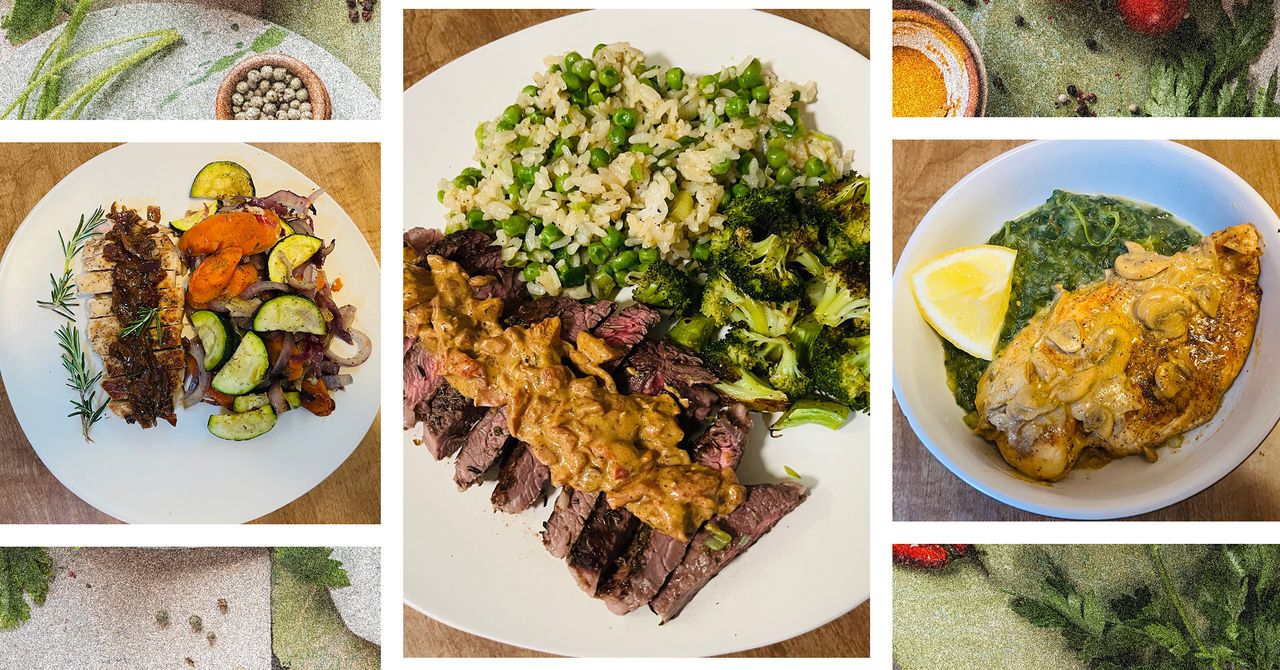
DESPITE ALL APPEARANCES, meal kit companies don’t really sell food. What meal kits offer, instead, is logistics.
A single meal kit box at your doorstep from HelloFresh (7/10, WIRED Recommends) or Marley Spoon (8/10, WIRED Recommends) is a convergence of growers and purveyors and saucemakers from all over the country and globe, with each ingredient portioned individually and kitted out to suit your weekly culinary whims. The one-sheet recipes that arrive with each box, detailing how to make scratch ramen or mushroom Dijon chicken, are far less complicated than the process that got those ingredients to your door. A meal kit is a wonder of modern technology, convenience, and maybe global capitalism. Spalding Gray might pray over it. This, as much as anything, is why WIRED devotes so much coverage to meal kits—and why I keep reviewing so many of them to maintain our complete guide to the best meal kits.
The standard knock, of course, is that meal kits are expensive: anywhere from $7 to $14 a portion, less than a restaurant meal but more than most food budgets. Are meal kits worth it? I set an experiment for myself. Armed only with meal kit recipe cards, I went to my local grocery store to see if I could make the meals for less. Reader, it wasn't easy.