Home
Storia in 1 fonti
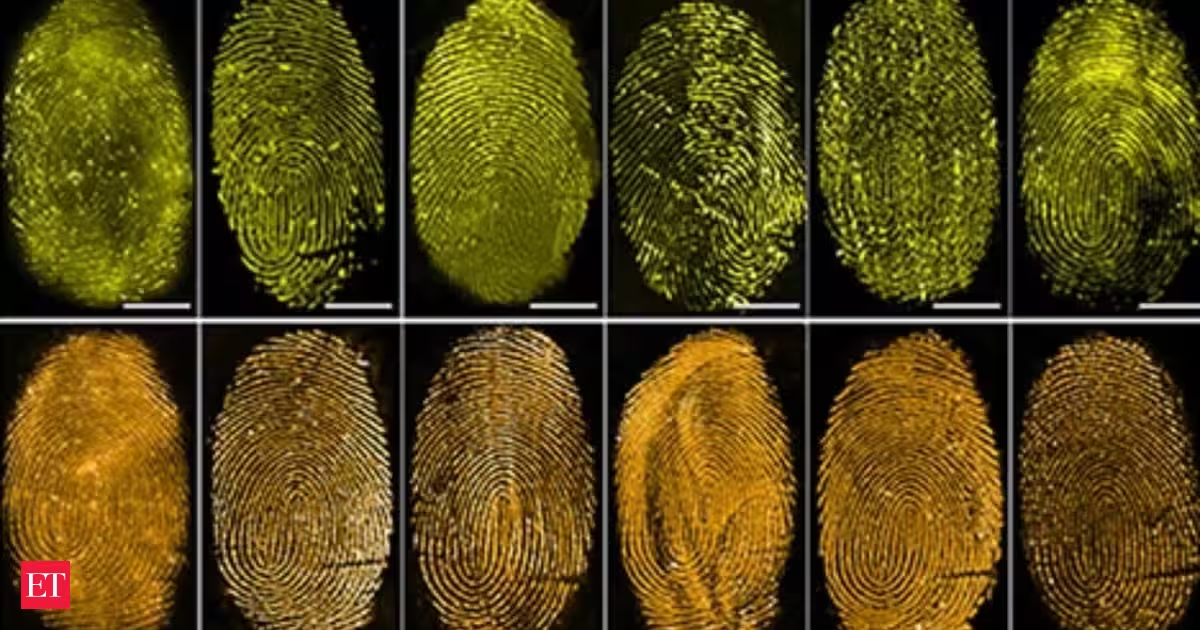
In 1997, Sandia won $393,000 to make fingerprints and other organic evidence blink under flashing light. Decades later, the idea remains an example of using fluorescence to find hidden clues
In 1997, Sandia National Laboratories secured $393,000 to solve background glare on physical crime scene evidence. By modulating light at high speeds, researchers forced organic fingerprints to pulse while surrounding materials remained steady, enabling digital sensors to filter out visual background noise. Decades later, this time-gated fluorescence technique remains foundational across forensic optics, allowing investigators to extract crisp ridge patterns from complex surfaces without ever altering delicate biological trace samples.
Raccontata da economictimes.indiatimes.com