Home
Storia in 1 fonti
In 1997, Carnegie and Russian scientists turned sulfur into a superconductor at 93 GPa. 29 years later, the discovery still helps physicists understand materials that can conduct electricity without resistance
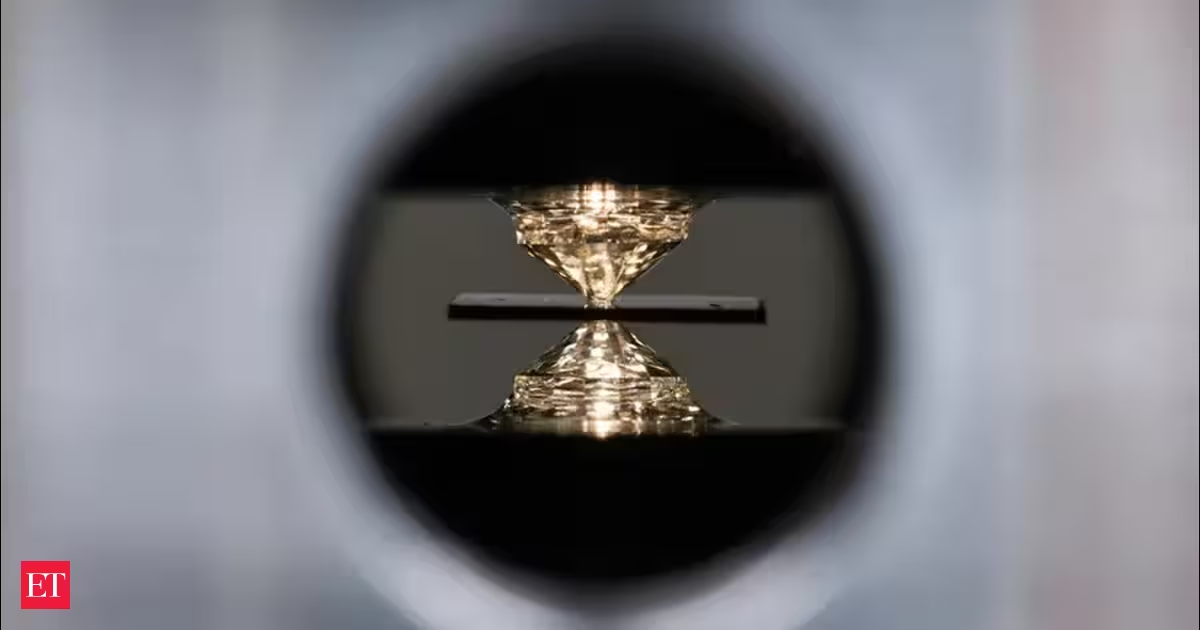
Sulfur is an ordinary element, familiar from minerals, volcanic deposits and industrial materials. Yet under extreme pressure, it can behave in ways that seem completely unexpected. In 1997, scientists at Carnegie Institution and their Russian collaborators found that compressed sulfur could become superconducting at about 93 gigapascals. That pressure, nearly a million times atmospheric pressure, transformed an otherwise familiar material into a remarkable subject for studying superconductivity.
Raccontata da economictimes.indiatimes.com