Home
Storia in 1 fonti
How to decipher smells like a fruit fly
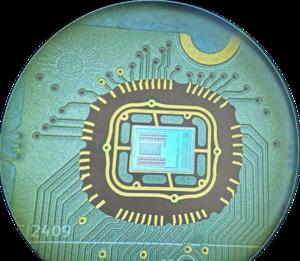
In the animal kingdom, energy conservation is essential for survival. That’s why our brains have evolved to be extremely energy and resource efficient at storing and processing information. Since the 1980s, computational scientists have tried to mimic brain structure and function, but have not yet succeeded in creating functional, low-memory solutions that work in real-world scenarios. Published in Neuromorphic Computing & Engineering, a new fly brain-inspired algorithm developed by researchers at the Okinawa Institute of Science and Technology (OIST) demonstrates promise for achieving practical applications under realistic constraints.
Raccontata da eurekalert.org