HomeAI · summaries
Storia in 2 fonti
How Hi3D is turning AI creators into manufacturing entrepreneurs
Platforms like Hi3D are automating the hardest parts of 3D printing, allowing creators, students and small business owners to launch physical product businesses without learning CAD or industrial design.As AI automates the hardest parts of manufacturing, a new generation of entrepreneurs may be able to build physical product businesses without ever touching CAD software.For the past three years, AI has dramatically lowered the barriers to entrepreneurship.A solo creator can use ChatGPT to write content, Midjourney to create visuals, Cursor to build software, and Shopify to launch an online store. Tasks that once required entire teams can now be handled by a single person with a laptop and an internet connection.Yet one category has remained surprisingly difficult to democratize: manufacturing.While AI has transformed content creation, software development, and digital design, turning an idea into a physical product still requires specialized knowledge. That complexity can discourage aspiring entrepreneurs from entering personalized manufacturing, particularly in 3D printing, where turning a digital concept into a production-ready object often requires specialized modeling, repair, and print-preparation skills.Image source: Hi3DDemand for customized products continues to grow. Consumers are increasingly willing to pay premiums for personalized collectibles, gaming figures, cosplay props, desk toys, pet sculptures, and one-of-a-kind gifts. In theory, 3D printing should be the perfect business model: low inventory, on-demand production, and the ability to serve global niche markets.In practice, however, most people never get started.The reason isn't the hardware.It's the workflow.The real cost of running a 3D printing businessDesktop 3D printers have become remarkably affordable. A capable machine now costs a fraction of what it did just a few years ago.The real challenge begins after a customer places an order.Imagine a customer wants a custom figurine based on a photograph. Before printing can begin, someone must create or modify a 3D model, repair mesh errors, make the model watertight, split oversized parts, design connection structures, calculate assembly tolerances, optimize print orientation, configure slicer settings, and prepare files for production.For experienced makers, these are routine tasks.For newcomers, they represent a steep learning curve involving Blender, CAD software, Meshmixer, Netfabb, and multiple slicing tools.Many aspiring entrepreneurs don't fail because they lack creativity or customers. They fail because manufacturing workflows remain too technical.This is where a new generation of AI-powered tools is beginning to change the equation.From AI generation to AI manufacturingMost AI 3D platforms have spent the past year competing on model quality. Better geometry, higher resolution, and more realistic textures have become the industry's primary benchmarks.But generating a model is only the first step.The more important question is whether that model can actually be manufactured.Hi3D, an All-in-One AI 3D Maker Platform, has taken a different approach. Rather than focusing exclusively on model generation, the company has expanded AI automation across the entire 3D printing workflow.The platform combines image-to-3D generation with automated mesh repair, intelligent model splitting, joint generation, multi-color optimization, print preparation, and direct export to major slicing ecosystems.The goal is simple: transform a digital concept into a physical product with as little manual intervention as possible.For entrepreneurs, that shift may be more important than another incremental improvement in model quality.Because what businesses need is not necessarily a better model.They need a faster path from idea to revenue.Why automation matters to small businessesFor small businesses producing custom collectibles and other personalized products, labor can represent a substantial share of operating costs.Customer requests often involve modifications such as resizing a figure, adding articulation, separating components for printing, or refining surface details. Each adjustment may require manual modeling, mesh repair, tolerance testing, and print preparation before production can begin.This is where workflow automation becomes valuable.Hi3D's automated character-splitting system, for example, can identify different regions of a model and divide them into printable components. The platform can also generate connection mechanisms such as peg joints, mortise-and-tenon structures, and articulated ball joints.Integrated tolerance calculations help ensure parts fit together after printing without requiring extensive post-processing.Tasks that previously consumed hours can often be completed in minutes.The hidden economics of print farmsThe same logic applies to larger-scale operations.Those hours rarely generate additional revenue. They simply represent operational overhead.By automating mesh repair, model optimization, and print preparation, AI platforms can significantly reduce those hidden costs.For businesses processing dozens or hundreds of orders each month, even small improvements in workflow efficiency can have meaningful financial impact.The opportunity isn't just faster production.It's eliminating work that never should have been manual in the first place.Multi-Color printing and the next wave of custom productsAnother area where AI is beginning to influence economics is multi-color printing.As systems such as the Bambu Lab AMS make multi-material printing more accessible, creators and small businesses have more practical options for producing colorful collectibles and personalized products.However, multi-color printing introduces new challenges. Poorly optimized color regions often lead to excessive material changes, longer production times, and significant waste.Hi3D's Color-to-Print workflow addresses this by automatically analyzing textures and model structures to generate print-friendly color segmentation. The system can consolidate fragmented color regions and optimize material transitions before printing begins.The result may be lower material consumption, reduced waste, and shorter production cycles.For entrepreneurs selling custom figurines, fan merchandise, or personalized gifts, these efficiency gains may help improve profitability.A new category of entrepreneurPerhaps the most interesting development isn't technological.It's economic.Historically, manufacturing required specialized expertise. Designers designed. Engineers engineered. Manufacturers manufactured.AI is beginning to blur those boundaries.Hi3D's Maker Template system reflects this shift. Rather than requiring users to learn prompting techniques or 3D software, the platform allows them to upload photographs and generate printable products such as stylized figurines, pet sculptures, keycaps, refrigerator magnets, and personalized keepsakes.For consumers, these products may deliver emotional value.For entrepreneurs, they may create new business opportunities.Someone running an Etsy store, operating a social media brand, or launching a side hustle no longer needs years of design experience to participate in physical product creation.They simply need customer demand and the right workflow.The future of AI-powered manufacturingThe broader significance of this trend extends beyond 3D printing.Just as AI lowered barriers in content creation and software development, it is now beginning to lower barriers in manufacturing.The most valuable AI tools may not be those that generate the most impressive outputs. They may be the ones that eliminate specialized knowledge altogether.For years, entering manufacturing required mastering a complex stack of technical skills.Today, those skills are increasingly being embedded into software.That doesn't mean expertise disappears. It means expertise becomes accessible.As platforms like Hi3D continue to automate modeling, repair, splitting, color preparation, and print optimization, physical product creation starts to look less like traditional manufacturing and more like a modern software workflow.And that could create an entirely new category of entrepreneur: people who understand customers, communities, and product ideas—but never needed to become professional designers or engineers.In the AI era, the next wave of creators may not just publish content or launch apps.They may manufacture products.And increasingly, they'll do it with AI handling much of the complexity behind the scenes.Hi3D offers new users 300 complimentary credits to explore its AI-to-3D-print workflow, from concept generation to the creation of printable 3MF files.VentureBeat newsroom and editorial staff were not involved in the creation of this content.
Confronto fonti
2 prospettive sulla stessa storiaTimeline cronologica
- ·
venturebeat.com
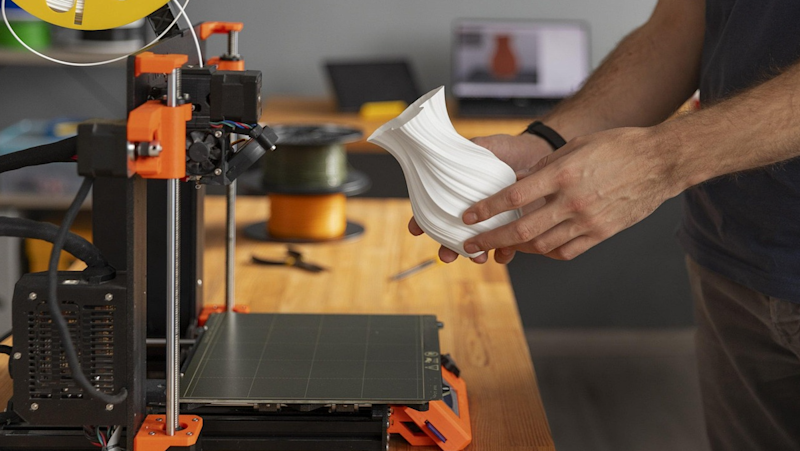
How Hi3D is turning AI creators into manufacturing entrepreneurs
Platforms like Hi3D are automating the hardest parts of 3D printing, allowing creators, students and small business owners to launch physical product businesses without learning…
- ·
tomshardware.com
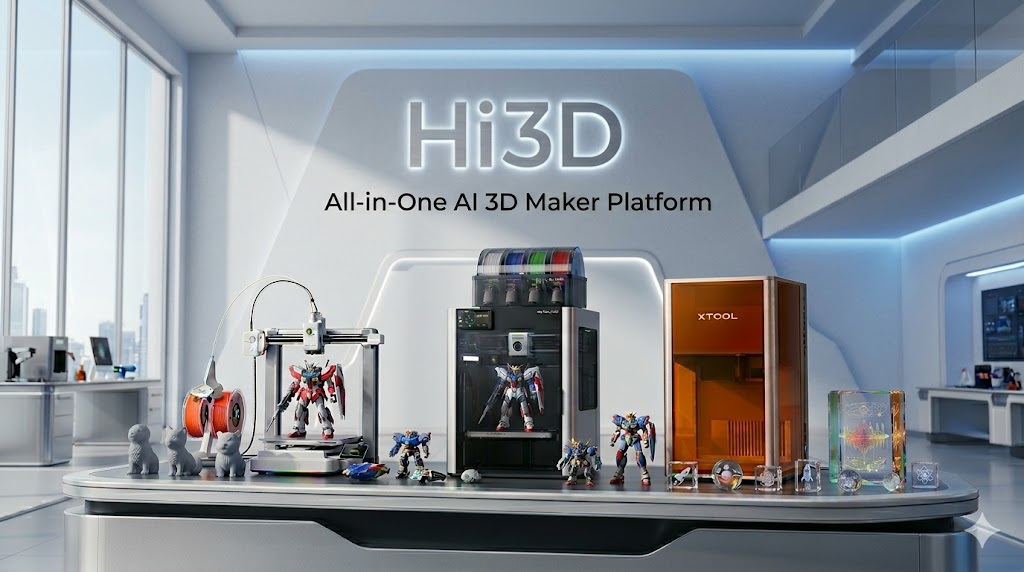
If You Own a 3D Printer, You Absolutely Need to Try Hi3D
Let AI Handle Every Tedious Slicing Step in One Click