Home
Storia in 1 fonti
During the 1980s drought, a Burkina Faso farmer revived an ancient zai farming technique that turned barren land into a 40-hectare forest and inspired land restoration across the Sahel
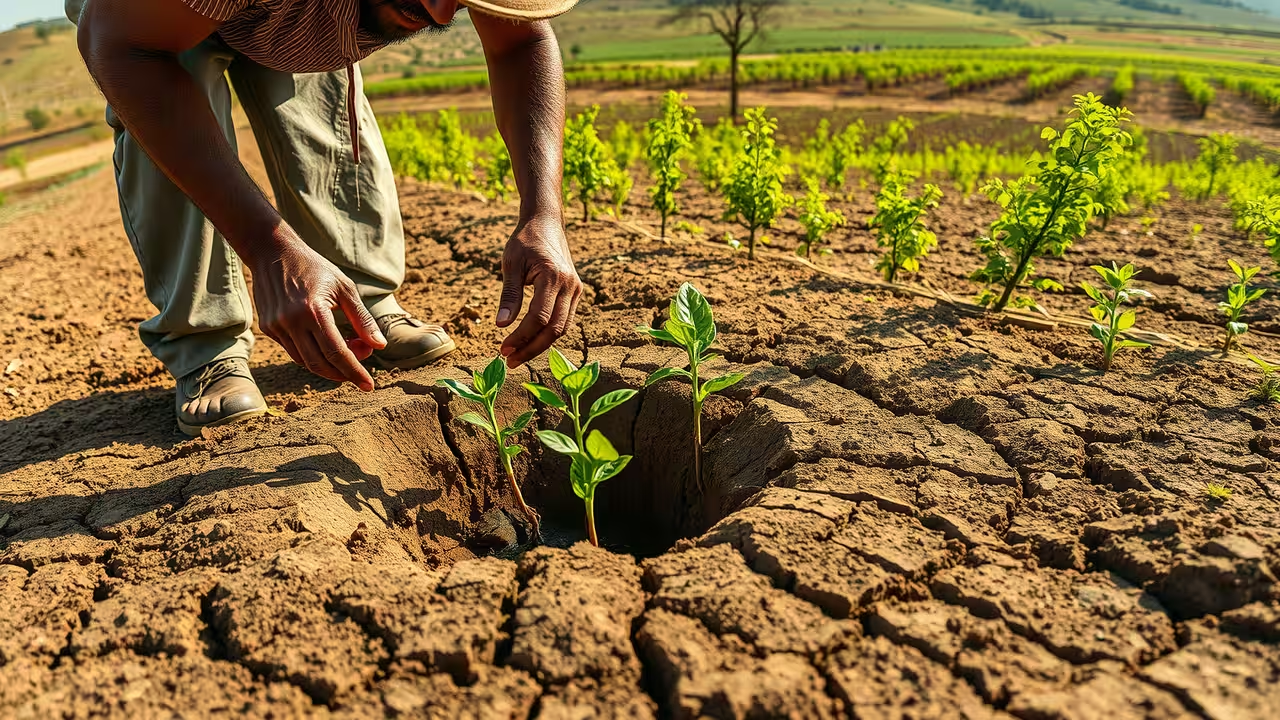
In the early 1980s, as a severe drought gripped the Sahel region of West Africa, a farmer in northern Burkina Faso named Yacouba Sawadogo began quietly reviving an old, largely abandoned farming technique on land near his village that many considered too degraded to ever grow anything again. The technique, known locally as zai, involves digging small pits into hardened, barren soil and filling them with manure and organic matter to trap what little rainfall the region receives, concentrating both water and nutrients exactly where a seed or sapling needs them most.
Raccontata da timesofindia.indiatimes.com