Home
Storia in 1 fonti
Camouflaging snails change color in the rain
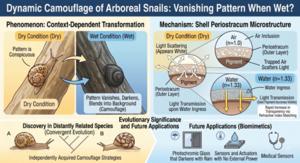
How does a stripy tree snail hide from hungry birds? The Hypselostyla camelopardalis from the Philippines and Reinia variegata from Japan have both evolved a form of dynamic camouflage to survive. Their light-colored patterns vanish in the rain and the shell turns dark brown, similar to damp tree bark. Researchers from the University Museum at the University of Tokyo have uncovered the mechanism behind this rare molluscan transformation. The outmost layer of the snails’ shell is porous like a sponge. When water fills the holes, it changes how light bounces off, making a second darker layer of shell beneath more visible. This has potential applications for smart sensors and materials that react to humidity, without the need for external power.
Raccontata da eurekalert.org