WARPTECHNEWS · LAB
HomeAIBusinessTechArchive
WARPTECH LAB NEWS

Warptech Lab News aggrega le notizie più rilevanti da oltre 700 fonti internazionali, con classificazione AI, TL;DR sintetici e timeline cluster su singole storie.

Navigazione

  • Home
  • Archivio
  • Editor's Brief
  • Cerca
  • Il tuo account
  • Newsletter tech/AI

Informazioni legali

  • Privacy Policy
  • Termini di servizio
  • Cookie Policy

© 2026 Sparktech S.R.L. — Tutti i diritti riservati. Sito gestito e manutenuto da Sparktech S.R.L.

Sede legale: Corso Libertà 55, 13100 Vercelli (VC), Italia · P.IVA / C.F. 02835910023 · Contatti: admin@warptechlab.com

Home
Storia in 2 fonti

Is Automation “Distorting” History of Scientific Research?

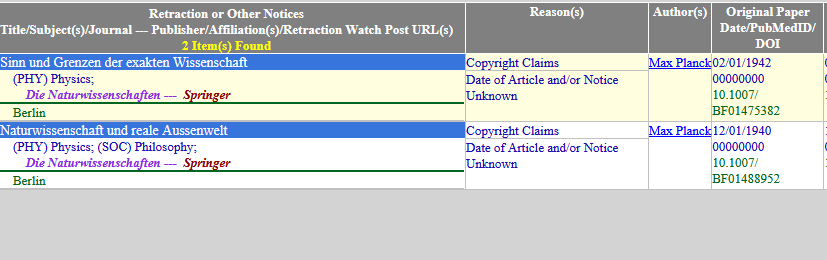
Automation might be to blame for Springer Nature’s retraction of two papers that a Nobel Prize winner published more than a century ago.

Raccontata dainsidehighered.comhackaday.com

Confronto fonti

2 prospettive sulla stessa storia
AI · summaries
insidehighered.comStai leggendo3 g fa

Is Automation “Distorting” History of Scientific Research?

Automation might be to blame for Springer Nature’s retraction of two papers that a Nobel Prize winner published more than a century ago.

originale
hackaday.com3 g fa

The Terrifying 2011-Era Case Of Max Planck’s Retracted Papers

In the world of scientific publishing there are many reasons why a paper can be retracted, but generally there is an obvious and clearly communicated reason for doing so. Thus when [Yves Gingras] &…

Leggi questa versione → originale

Timeline cronologica

  1. lunedì 29 giugno 2026·insidehighered.com

    Is Automation “Distorting” History of Scientific Research?

    Automation might be to blame for Springer Nature’s retraction of two papers that a Nobel Prize winner published more than a century ago.

  2. martedì 30 giugno 2026·hackaday.com

    The Terrifying 2011-Era Case Of Max Planck’s Retracted Papers

    In the world of scientific publishing there are many reasons why a paper can be retracted, but generally there is an obvious and clearly communicated reason for doing so. Thus…