Home
Storia in 1 fonti
Computer vision in retail: Use cases, and faster time-to-value with W&B
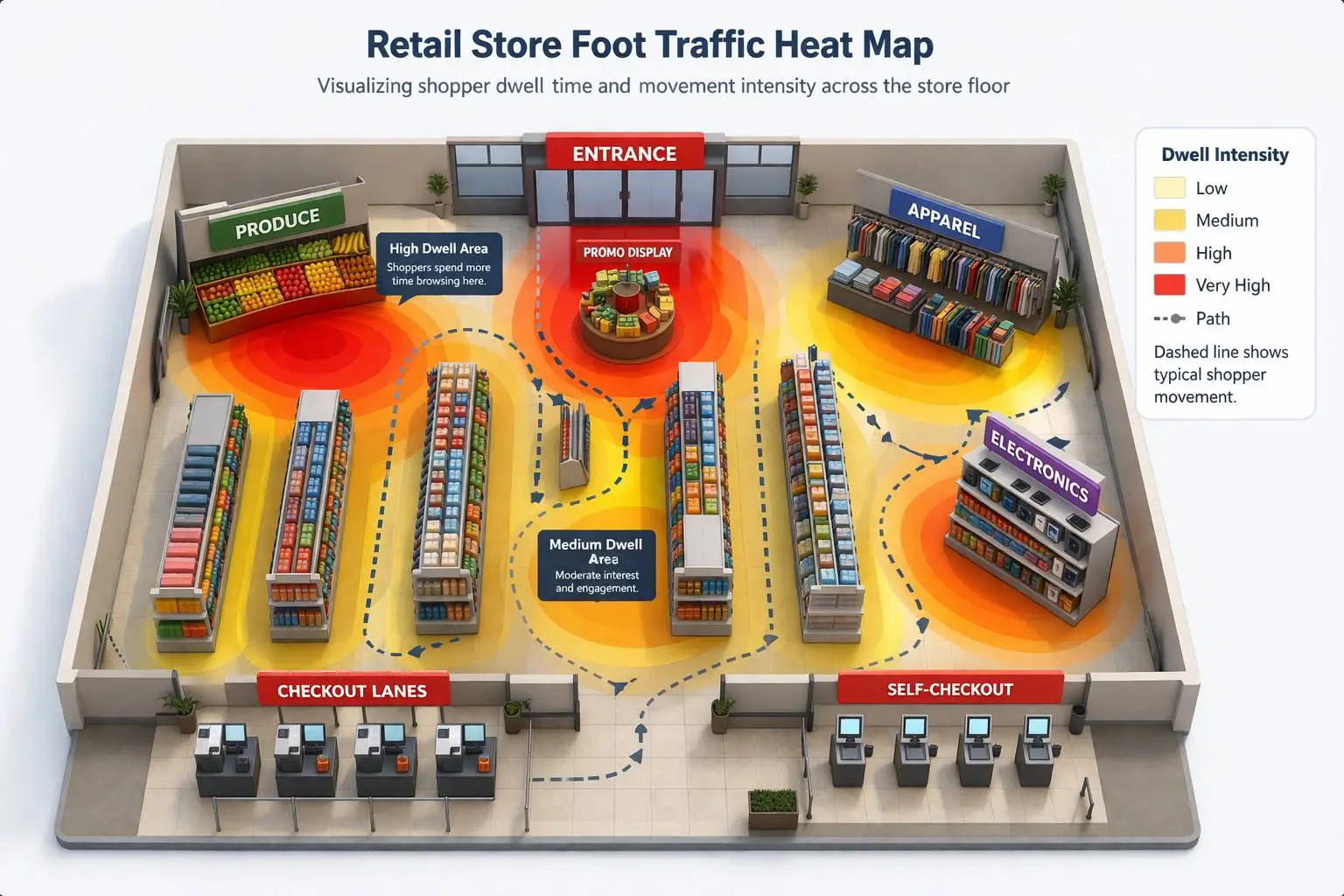
Retail use cases that matter mostThe most mature use cases usually fall into four groups: operations, customer experience, marketing, and risk. The strongest programs rarely stop at a single use case because the same cameras, data flows, and governance model can often support multiple applications.That is why the better question is not “Should we do computer vision?” It is “Which use cases fit our strategy, pain points, and data readiness right now?”Foot traffic analysis, heat maps, and crowd analyticsFoot traffic analysis shows how shoppers move through a store, where they stop, and where congestion builds. Heat maps turn that movement into something merchandising, staffing, and operations teams can actually use.The value is practical. Teams can test display placement, adjust staffing to real demand, monitor bottlenecks, and compare how the same format performs across locations, times of day, or seasons.Figure 3. A simple store heat map shows high-dwell, medium, and low-traffic zones without identifying individual shoppers.The point of a figure like this is to make the business case tangible. Movement data becomes something store teams can act on, not just something analysts talk about.Inventory automation and shelf monitoringShelf monitoring is one of the clearest examples of retail computer vision creating value. Cameras can spot empty facings, misplaced items, and planogram problems far more often than manual store walks can.That matters because shelf execution directly affects sales. A product sitting in the back room is still unavailable to the customer if the shelf is empty. When computer vision is tied into inventory and replenishment workflows, stores can react faster and more consistently.This is also a strong fit for W&B because teams often need to improve product recognition across different assortments, lighting conditions, store formats, and regions. Faster iteration matters here.Loss prevention and shrink reductionLoss prevention gets so much attention because the business case is easy to understand. Computer vision can help flag patterns such as unpaid merchandise leaving the store, suspicious point-of-sale behavior, or unusual movement in restricted areas.But this is also where governance matters most. The goal should not be blanket surveillance. The goal should be better triage, so teams focus attention where risk is highest while keeping interventions proportionate and defensible.That is why model traceability matters. Teams need to know which model was deployed, which data trained it, how it performed, and whether it behaves consistently across locations. W&B helps with that audit trail.Cashierless stores and better checkoutCashierless stores are one of the most ambitious computer vision ideas in retail. They depend on dense camera coverage, strong tracking, event attribution, and reliable payment logic.For most retailers, the better near-term opportunity is simpler: smarter self-checkout, queue monitoring, dynamic lane opening, better item recognition, and less front-end friction. Those use cases fit more store formats and still improve wait time, labor use, and abandonment.Where fully cashierless concepts do make sense, experimentation discipline becomes critical. Detection, tracking, and event attribution have to be tuned until the system is reliable enough for the real world.Personalized marketing and customer behavior analyticsComputer vision can also help retailers understand how shoppers respond to displays, which zones attract attention, and which experiences drive interest without leading to a purchase.That can improve promotions, display design, and coordination between in-store and digital marketing. The strongest programs usually emphasize aggregate, anonymized insights rather than identity-heavy tracking.In other words, computer vision can support personalization, but the best programs use it with restraint so value does not come at the cost of trust.Virtual try-on and shopper-facing experiencesVirtual try-on is one of the most visible uses of computer vision because shoppers experience it directly. Apparel, beauty, and eyewear brands use it in apps, websites, kiosks, and mirrors.The value is not just novelty. Better visualization can increase confidence, improve conversion, and reduce returns. It can also create smoother movement between mobile, store, and web experiences.
Raccontata da wandb.ai