WARPTECHNEWS · LAB
HomeAIBusinessTechArchive
WARPTECH LAB NEWS

Warptech Lab News aggrega le notizie più rilevanti da oltre 700 fonti internazionali, con classificazione AI, TL;DR sintetici e timeline cluster su singole storie.

Navigazione

  • Home
  • Archivio
  • Editor's Brief
  • Cerca
  • Il tuo account
  • Newsletter tech/AI

Informazioni legali

  • Privacy Policy
  • Termini di servizio
  • Cookie Policy

© 2026 Sparktech S.R.L. — Tutti i diritti riservati. Sito gestito e manutenuto da Sparktech S.R.L.

Sede legale: Corso Libertà 55, 13100 Vercelli (VC), Italia · P.IVA / C.F. 02835910023 · Contatti: admin@warptechlab.com

Home
Storia in 2 fonti

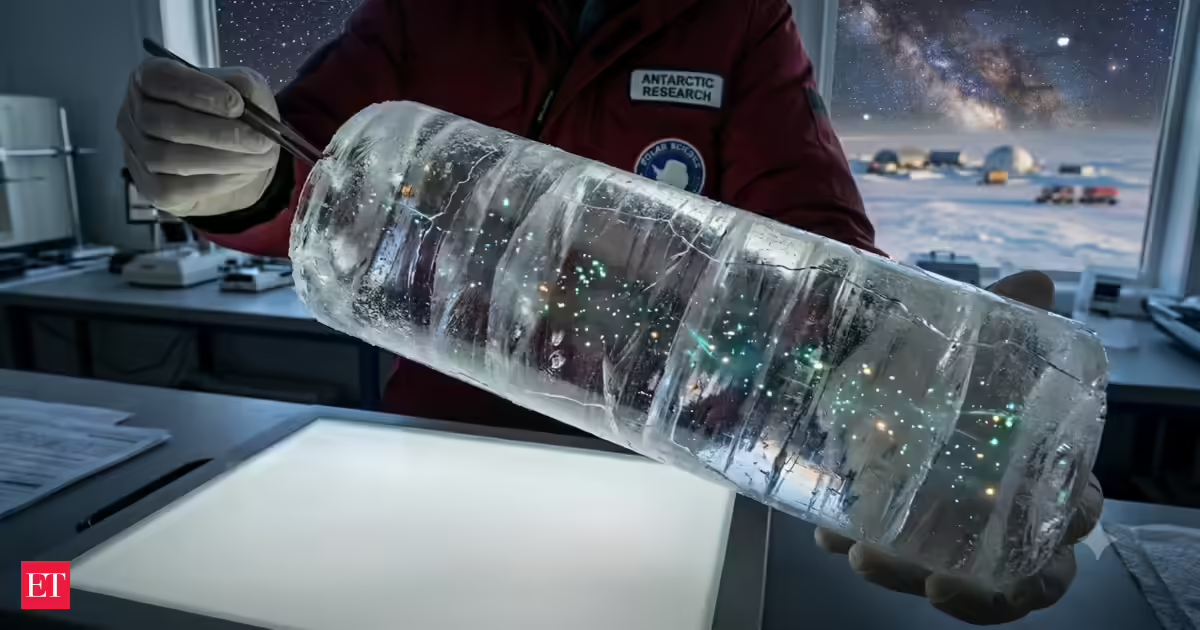
80,000-year-old Antarctic ice reveals radioactive stardust still falling on Earth. Is it dangerous?

Scientists have detected iron-60, a radioactive isotope from ancient supernova explosions, in Antarctic ice up to 80,000 years old. This discovery indicates that Earth is still being showered by debris from stellar explosions that occurred millions of years ago. The findings suggest our planet is traveling through a cloud of cosmic dust left by these long-dead stars.

Raccontata dasciencealert.comeconomictimes.indiatimes.com

Confronto fonti

2 prospettive sulla stessa storia
AI · summaries
economictimes.indiatimes.comStai leggendo21 g fa

80,000-year-old Antarctic ice reveals radioactive stardust still falling on Earth. Is it dangerous?

Scientists have detected iron-60, a radioactive isotope from ancient supernova explosions, in Antarctic ice up to 80,000 years old. This discovery indicates that Earth is still being showered by debris from stellar…

originale
sciencealert.com21 g fa

Radioactive Stardust From an Ancient Cosmic Blast Is Still Raining on Earth

A sprinkling of radioactive plutonium atoms hidden in the ocean floor may trace back to a cosmic cataclysm more than 100 million years ago.

Leggi questa versione → originale

Timeline cronologica

  1. martedì 16 giugno 2026·sciencealert.com

    Radioactive Stardust From an Ancient Cosmic Blast Is Still Raining on Earth

    A sprinkling of radioactive plutonium atoms hidden in the ocean floor may trace back to a cosmic cataclysm more than 100 million years ago.

  2. martedì 16 giugno 2026·economictimes.indiatimes.com

    80,000-year-old Antarctic ice reveals radioactive stardust still falling on Earth. Is it dangerous?

    Scientists have detected iron-60, a radioactive isotope from ancient supernova explosions, in Antarctic ice up to 80,000 years old. This discovery indicates that Earth is still…
  3. giovedì 18 giugno 2026·economictimes.indiatimes.com

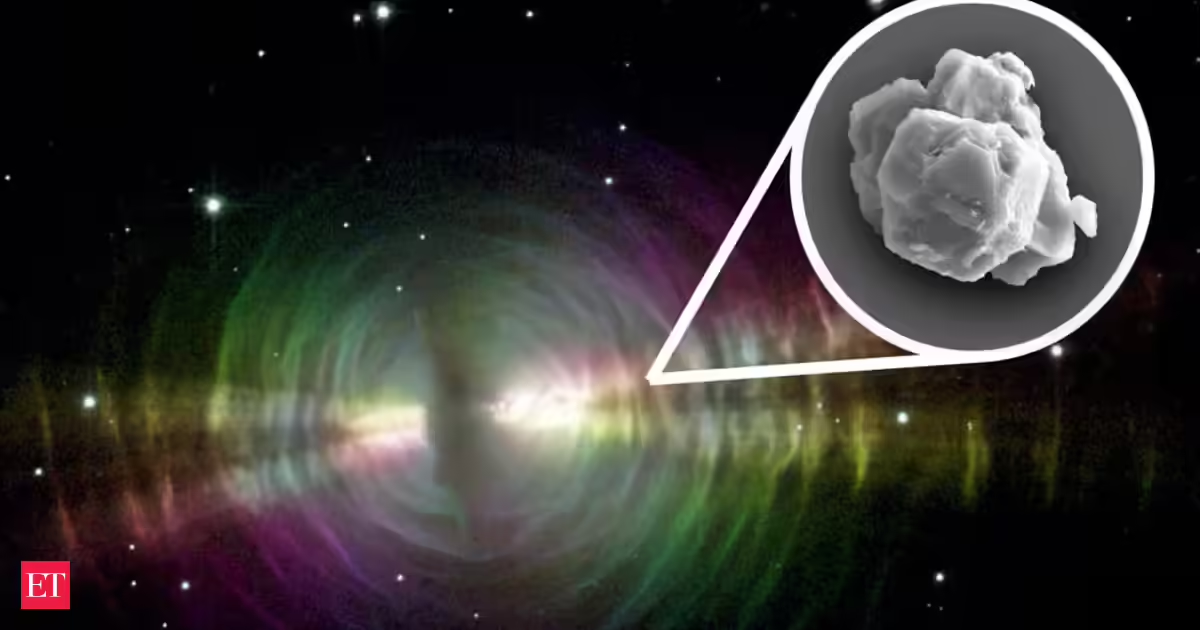
    Scientists discover radioactive stardust still falling on Earth from an ancient cosmic blast

    Scientists often look to distant galaxies for answers, but sometimes those clues are hidden beneath Earths oceans. In a stunning discovery, researchers found radioactive stardust…