Home
Storia in 1 fonti
SURF Grant Powers Research Into the Genetics of Bipolar Disorder
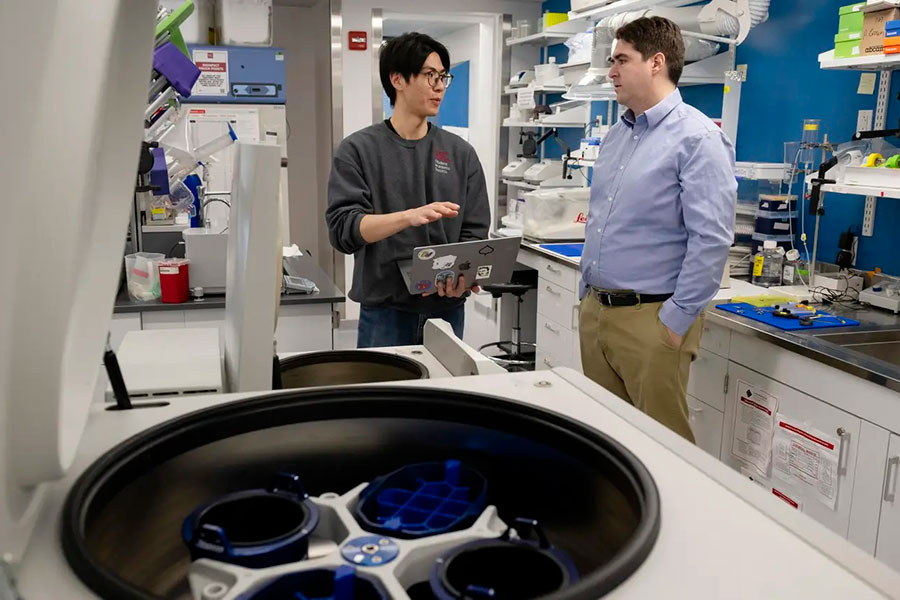
A research team in Carnegie Mellon University's Ray and Stephanie Lane Computational Biology Department is working to better understand the role that genetic on and off switches play in activating symptoms of bipolar disorder.By determining the underlying mechanisms driving the disorder's development, Associate Professor Andreas Pfenning and researchers in his Neurogenomics Lab hope to uncover therapies that are more effective and less prone to side effects, revolutionizing how bipolar disorder is addressed.The work is embedded in the study of epigenetics, or how environmental factors influence the expression of genes. But it's also rooted in decades of student ingenuity supported by CMU's Summer Undergraduate Research Fellowship (SURF) program. Offered through the Office of Undergraduate Research and Scholar Development, SURF provides students with a stipend to conduct eight to ten weeks of full-time study on campus.Computational biology researchers are working to better understand the role that genes play in bipolar disorder — work that's deeply rooted in decades of student ingenuity supported by the Summer Undergraduate Research Fellowship program.Stephen Wu, who recently graduated from the School of Computer Science with a degree in computational biology, joined the Neurogenomics Lab during the fall semester of his junior year and was assigned to Pfenning's project, which was focused on the expression, or genetically informed activity, of these cells.Wu collaborated with Sarah Ross of the University of Pittsburgh's Department of Neurobiology to study two sets of data: RNA sequencing data from single cells, and a sequencing dataset used to measure structures inside cells known as chromatin. The ultimate goal of their computational analyses was to determine the specific cell type or group responsible for triggering bipolar disorder."If we can figure out these underlying mechanisms, we can design new gene therapies that target these genetic pathways, that will be really effective and have less side effects," Wu said.Wu follows a long tradition of undergraduate research at CMU, including the work of Pfenning himself, who participated in the SURF and Small Undergraduate Research Grant programs from 2002 to 2006. Today, Pfenning hopes to encourage students to embrace research in a similar way, not only as a potential career, but as a way to explore their skills and interests."Just like the mentors that I had when I was an undergrad motivated me for a career in research, I wanted to have the same impact on undergrads like Stephen and myself by mentoring them in research," Pfenning said.Learn more about Wu's research in the full story on the CMU News website.
Raccontata da cs.cmu.edu