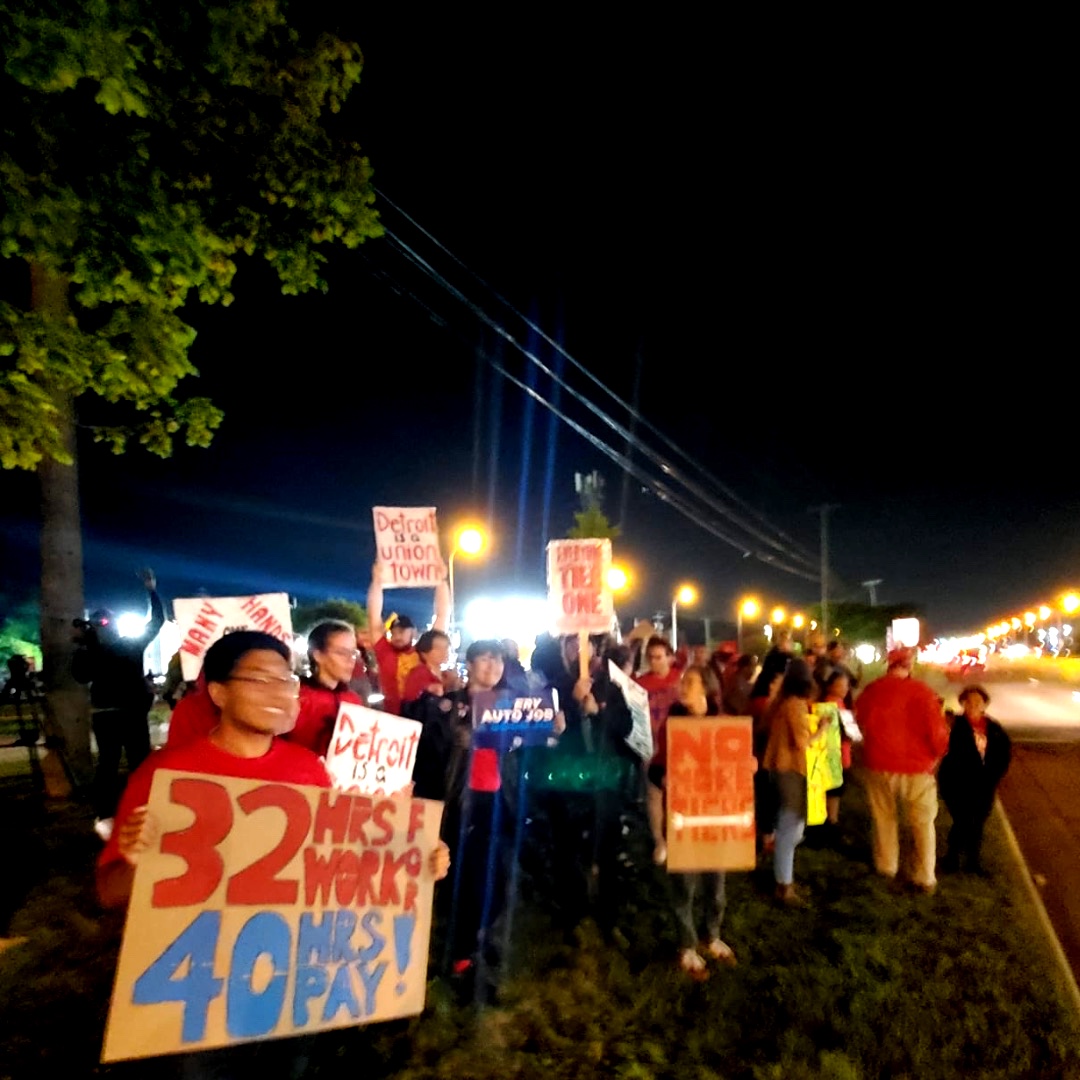
The United Auto Workers' strike against General Motors, Ford and Stellantis is well into its fourth day, with no deal in sight. The strike comes as all three automakers have made aggressive moves to retool existing factories to build electric vehicles. Delays could set back production and delivery of current and future EV models, while also raising prices for consumers.
Nearly 13,000 workers began picketing Friday at midnight after a deal wasn't reached by the UAW's deadline. UAW president Shawn Fain on Monday evening set a new deadline for September 22.
The UAW isn't striking all of its 150,000 members at once. In a tactic Fain is calling a "stand up strike," the union is targeting specific factories at a time. The first were GM's truck and van plant in Wentzville, Missouri; Ford’s Ranger pickup and Bronco SUV plant in Wayne, Michigan; and Stellantis’ Jeep Wrangler and Gladiator plant in Toledo, Ohio.
On Monday, Unifor, the union that represents autoworkers in Canada, also said it would strike against Ford at midnight if a deal isn't reached. The strike in Canada could affect Ford operations at some of its U.S. plants.
At the center of the fight is the shift to electric vehicles. EVs require fewer parts, and thus fewer workers to assemble vehicles, so union members are fighting to secure their livelihoods in addition to better working conditions. Traditional OEMs are pumping money into electrifying their production lines and are anxious to keep costs down so they don't lose market share to Tesla. Tesla is already producing EVs profitably via its non-unionized workforce.