M
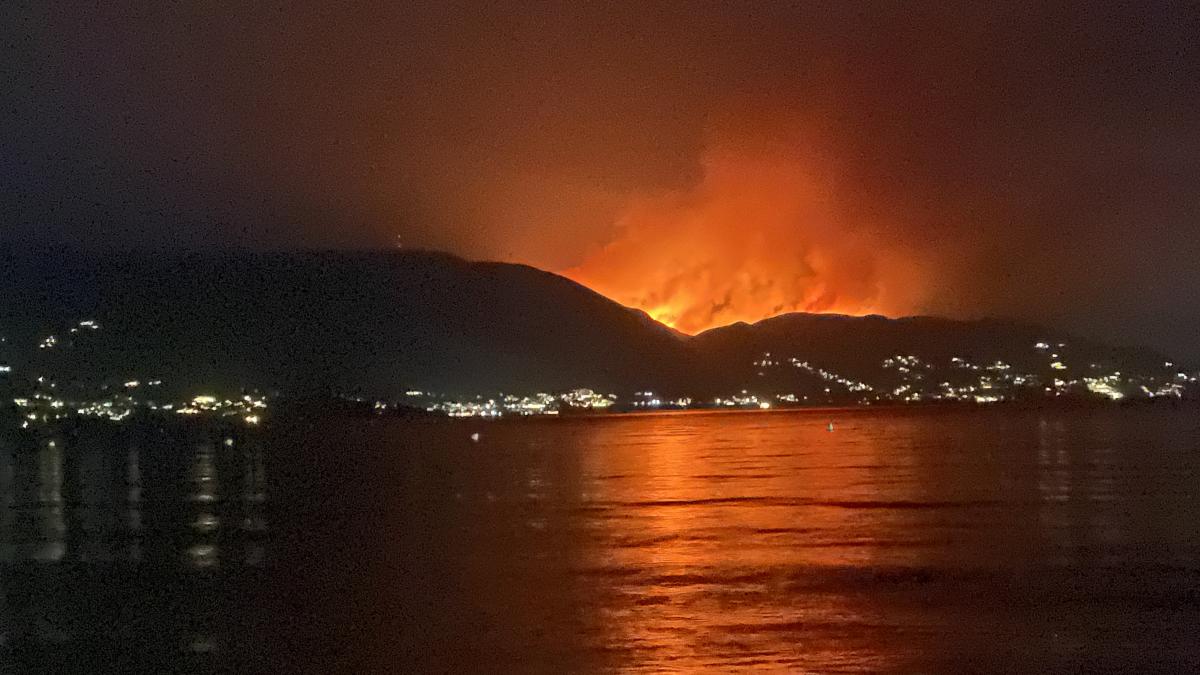
y 11-year-old son first saw the smoke coming from the hills across the bay at 7.20pm on Sunday night — a narrow plume of white and grey billowing up from the forests in Corfu’s mountainous north. He thought nothing of it, but by 9.30pm that smoke had become a line of orange flame gilding the horizon. “It’s like lava coming down from the mountains,” he told us. He, his 13-year-old sister and their friends had halted from playing on the terrace of the Grecotel, Daphnila Bay, to alert us, dragging us from dinner on what was the first night of our two-week break.
Knowing about the devastation in Rhodes — more than 800km southeast of Corfu — our two families ran to find out what was happening. In Rhodes, temperatures have hit 40C, but here in more verdant Corfu, which is adjacent to Albania, we had been enjoying the early 30s and a sea breeze. Could the same thing really be happening here?
From the beach, we could see the night sky lit up red, reflected in the gentle ripples of the Ionian sea below. The flames seemed to be progressing down the valleys about 20 miles away from us. Then the government texts started to arrive. My wife’s phone pinged first: “Emergency Alert: if you are in Santa, Megoulades, Porta, Palea Peritheia and Sinies, evacuate now to Kassiopi. Wildfires in the area.”