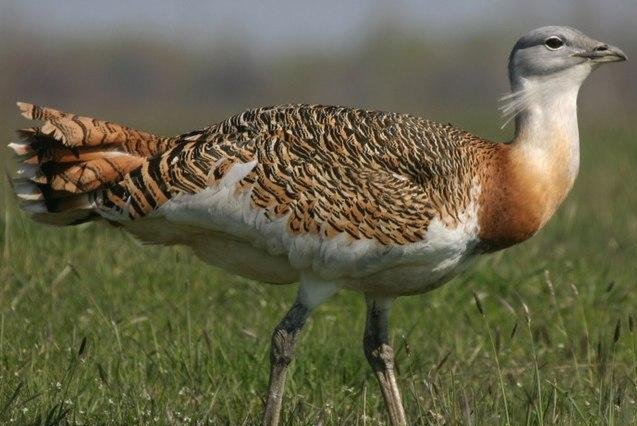
Nov. 23 (UPI) -- The great bustard actively seeks out medicinal plants that can kill pathogens, according to a study published Wednesday in Frontiers in Ecology and Evolution.
The study published in the journal Frontiers suggests the large bird could be a rare example of birds that use plants to self-medicate.
"Here we show that great bustards prefer to eat plants with chemical compounds with anti-parasitic effects in vitro," said study first author Dr. Luis M Bautista-Sopelana, of the National Museum of Natural Sciences in Madrid.
"We show here that plants in the diet of bustards are also active against laboratory models of pathogens. We present the anti-parasitic results for two plant species as an example. Although the toxicity of P. rhoeas and E. plantagineum differs, great bustards show a marked preference for both plants during the mating season," the study said.
Great Bustards to be released in Britain