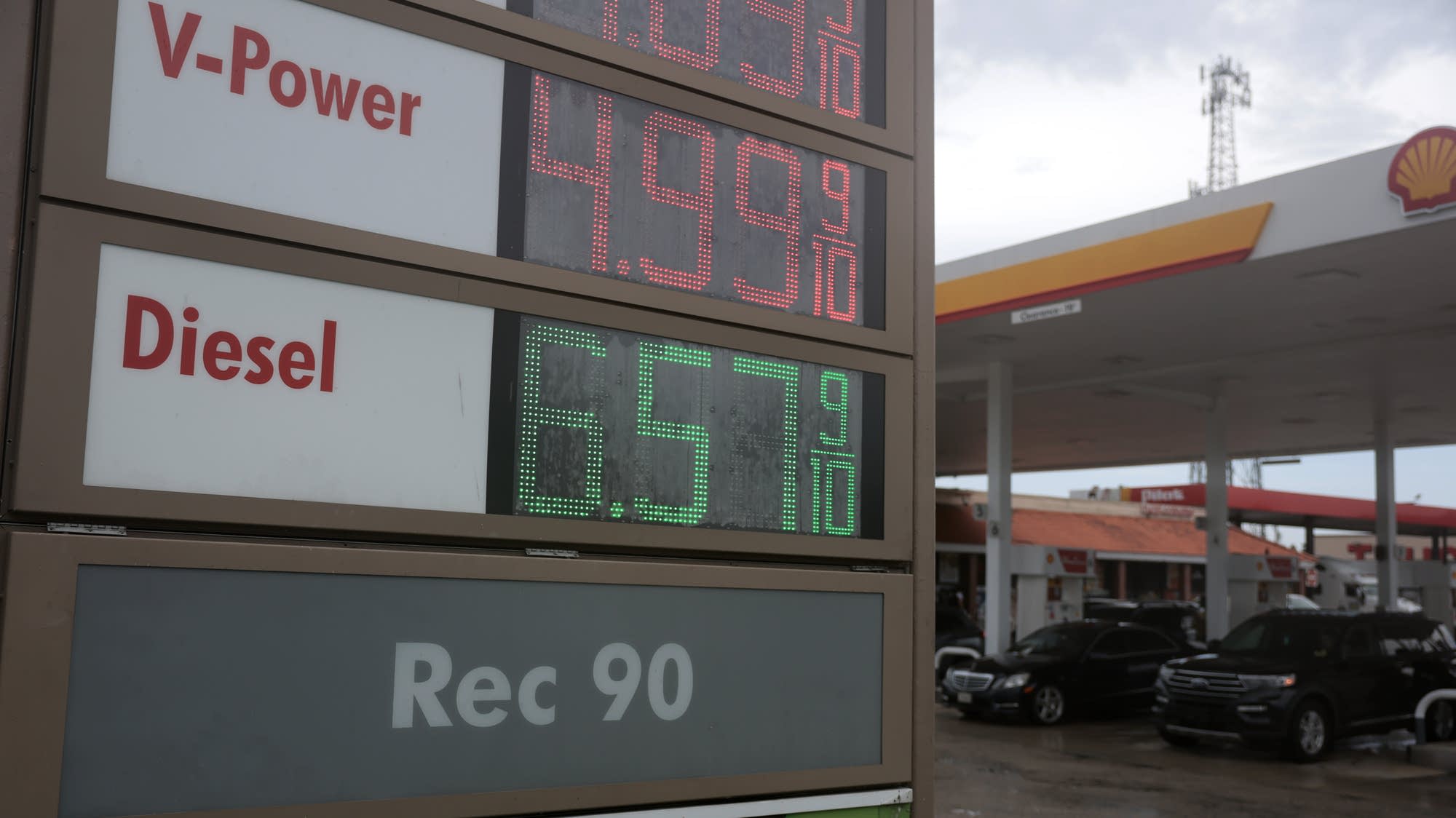
Mid-September is the start of fall agricultural season, when commodities like corn and soybeans need to be harvested and transported around the globe. The diesel necessary for that work is in short supply right now, in large part because of refinery outages caused by war in the Middle East and Russia. It shouldn’t come as a surprise then that diesel prices hit their highest-ever average price Monday: $6.23 a gallon, according to AAA. We know when prices go up, demand tends to go down. But is there a point at which people stop buying diesel altogether?Once gas prices hit a certain high number, consumers respond. “We can consolidate our trips to the grocery. We can carpool. We can purchase more economical vehicles,” said Ed Hirs, an energy economist at University of Houston. But diesel is different. “With diesel, there's less flexibility on the demand side to respond to higher prices, and so … typically the higher price of diesel is passed along to the consumer very quickly,” Hirs said.Crops still need to be harvested and widgets still need to be shipped. “Seventy percent of that diesel is consumed in transportation, and there really aren't any significant scalable substitutes outside of rail, which has its limitations,” said Will O’Neil, energy analyst at S&P Global Energy.He said even in other segments, like agriculture and heating oil, “it's difficult to get a snap ability to shift those to non-diesel consumption.”The reality is, diesel doesn’t have great alternatives. Susan Bell at Rystad Energy said we’ll all be paying for it. “You'll be paying in everything: bananas, oranges, strawberries,” she said, because diesel acts as an inflationary factor for consumers. “They reduce consumption because their household budgets don't go as far … And if you have to buy your groceries, you may reduce consumption elsewhere.” That could mean cutting demand for any number of things. Gulf Oil analyst Tom Kloza calls the diesel situation an inflation problem that can’t be cured by higher interest rates. Though there is something that could bring down diesel demand, he said: a recession.Which is something we probably don’t want to be rooting for.
Diesel fuel hit a record high. Unlike gas, using less of it is not an option
Analysts say record diesel prices will flow through quickly to consumer goods prices across the board.
354 words~2 min read