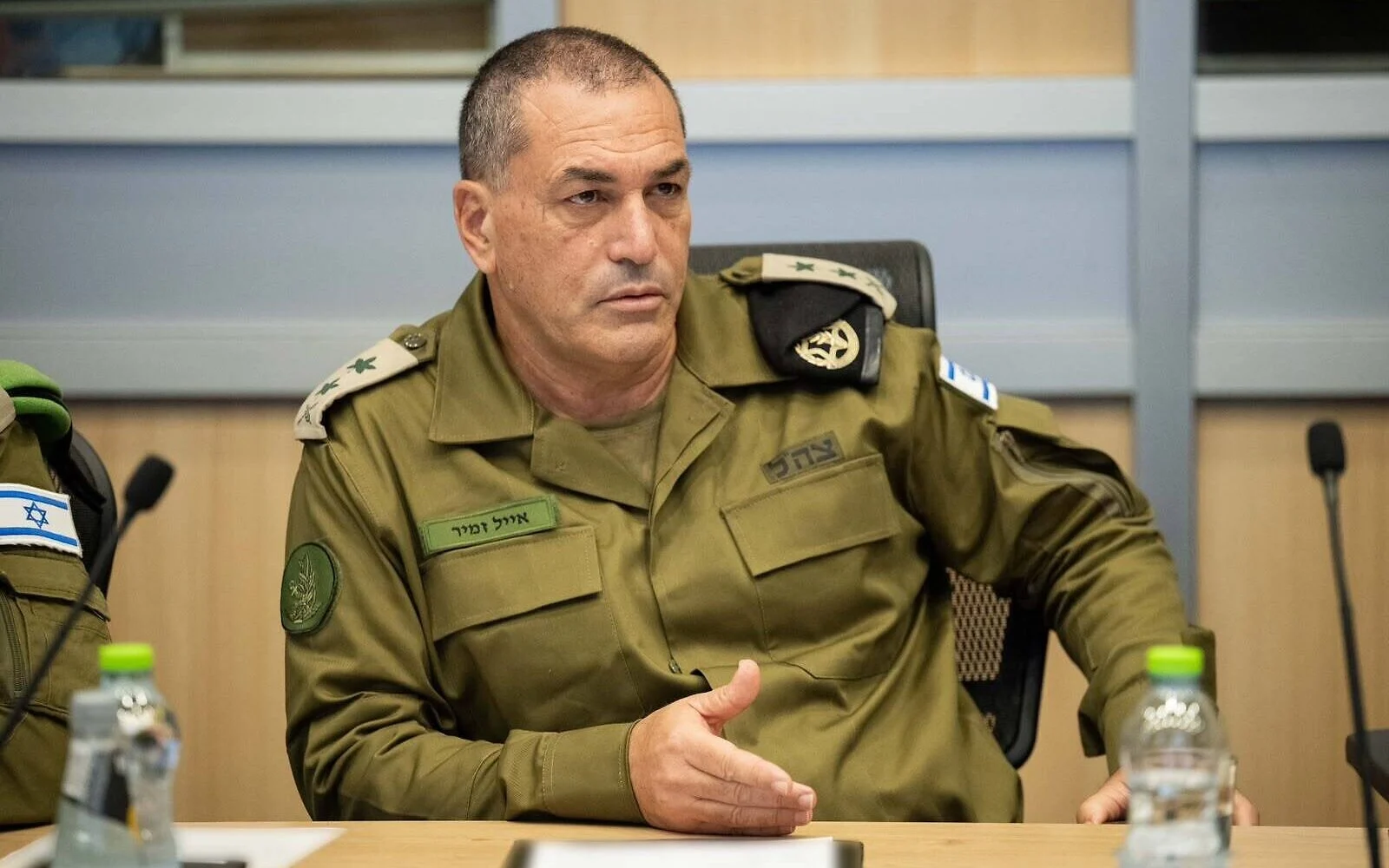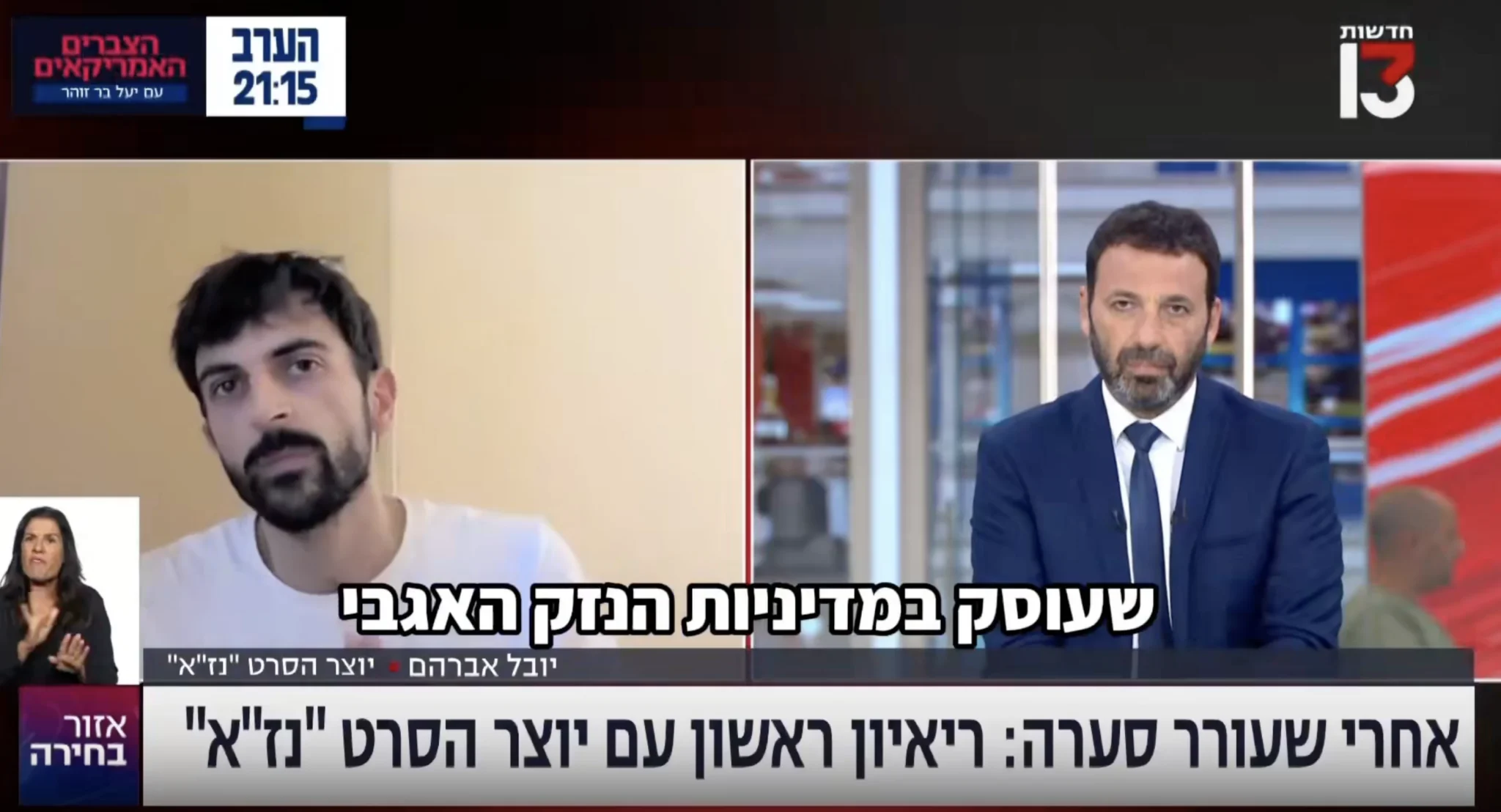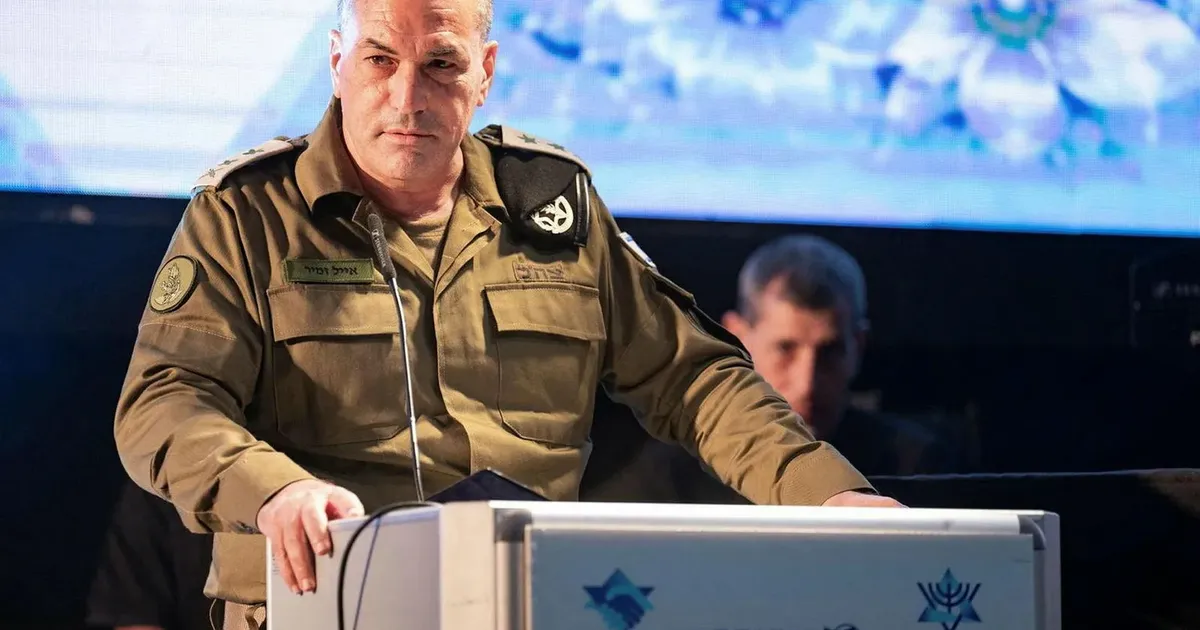
ByYONAH JEREMY BOBSEPTEMBER 14, 2026 19:43Movies are always sensationalized and simplified. Anonymous accusations are always problematic. But no one should understate the legal and ethical harm that Israel and the IDF now face following the launch of the NAZA film, which frames the 2023-2025 war in Gaza as a genocide.It is not the first video footage or set of detailed, specific accusations against Israel. Those have been pouring in since nearly the start of the war.And Breaking the Silence, 972 Magazine, the New York Times, and other media have occasionally gotten Israeli soldiers on the record making accusations against the IDF.But here are 24 (presumed) Israeli soldiers on camera (even if anonymous) from a variety of different roles, especially relating to artificial intelligence (AI) and targeting, making genocide and war crimes accusations in a film made by two Israelis.There are Israel-haters and anti-Semites who could care less about facts and are dead set on labeling Israel for genocide to try to tear it down and prevent the IDF from exercising self-defense.83rd Venice International Film Festival Saturday, 12th September 2026, 22:15 (credit: REUTERS/YARA NARDI)Separately, there are naïve, well-meaning persons who are clueless about the scope of systematic human shields Hamas has used, from schools to UN facilities to mosques to hospitals.These accusers in the NAZA film know all or many of these facts and are still making the accusations, and that is why they are so problematic for Israel legally and ethically.Going after the IDF accusers legally will not solve any problems, because they are just adding credibility to already seriously researched allegations.An April 2024 report by 972 Magazine and a December 2024 report by the New York Times put some of the targeting and AI issues NAZA raises (even without specifics) into clear contrast.Past Israeli commission set a high threshold for proportionality Simply stated: assuming Hamas systematically uses human shields and that the Israeli military was going to have to kill far more Gazans in this war than in prior ones in order to decisively beat Hamas militarily after the terror group’s October 7 slaughter of around 1,200 Israelis and its taking of 250 hostages: when does the ratio of terrorists to civilians in a particular attack, and as a matter of policy, violate even the most extreme interpretation of proportionality?Can killing 100 civilians (as claimed by past media reports) or 500 civilians (as claimed by NAZA) be justified to kill even the most senior single terrorist? Can Israel say it is justified to kill 20 civilians "merely" to kill mid-level terrorists?A prior Israeli judicial commission about 15 years ago found that an IDF assassination of Hamas military leader Saleh Shehada in 2002, which killed 13 civilians, including his wife and minor daughter, was not a war crime. Yet, the commission found the attack to be borderline, meaning some of the numbers critics have accused Israel of in this war, if true, would likely violate proportionality limits.The 2024 New York Times report contended that the IDF assassination of senior Hamas terrorist, Jabalya Central Battalion Commander Ibrahim Biari in late October 2023, had a 100-to-1 ratio.972 Magazine's 2024 report asserted that the December 2, 2023 bombing of Hamas Shejaia Battalion commander Wisam Farhat endorsed a 100-to-1 ratio.According to reports – no Israeli government or IDF officials have yet been allowed to see the film – the NAZA film, without identifying a specific date or incident, sends the ratio up to the stratosphere of 500 to 1.Here, the problem is less the film, which makes an amorphous allegation that cannot be checked, but the fact that the IDF never really responded to the seriously researched New York Times and 972 stories which came out with similar allegations nearly two years ago and more than two years ago.IDF needs clearer communication regarding AI-targeting The IDF needs to respond to the AI-targeting accusations with much more transparency, both in general and on the specific incidents prior reports raised, which the NAZA films merely dramatized.In fact, shockingly, the IDF did not put out its first report responding to specific war crimes allegation files until August 19 of this year – nearly three years after the start of the war.Some of the problematic delay came from former IDF military advocate general Yifat Tomer Yerushalmi resigning in October 2025, leaving her predecessor, current IDF MAG Maj. Gen. Itay Offir to start picking up the pieces in November 2025.But countries and militaries do not come down to single individuals.The fact is that the Post has received repeated messages throughout the Israeli legal establishment that there was pressure from Israeli government officials to delay the publication of many of the decisions.Some of this pressure was due to the fear of government officials that portions of their constituency would hold them partially accountable for probing and prosecuting IDF soldiers, something which is very unpopular domestically.Another source of pressure was the self-defeating concern that publicizing details of probing and prosecuting IDF officials would be used against soldiers by the International Criminal Court (ICC) and the International Court of Justice (ICJ).Meanwhile, as former deputy attorney-general for international affairs Roy Schondorf already pointed out in May 2024, the delay in publicizing details of the probes and prosecutions is exactly one of the mistakes Israel made, which allowed the ICC and ICJ to jump forward, wrongfully claiming that Israel was not probing or prosecuting anyone.There have been other technical reasons for the delays: that the war kept continuing, leading to opening more news cases being opened; that there are over 3,000 review cases being checked and over 150 criminal probes being checked, which far exceeded the resources that the IDF legal division had to move forward promptly (the number of criminal cases is five times the number opened in 2014, and the number of review cases is six times more)But this issue became clear within a few months, such that had the government and IDF prioritized the issue, the resources issue probably could have been resolved by mid-2024.In December 2024, the Post learned from off-record IDF sources that there are no set ratios and that the IDF viewed the New York Times report's message at the time that these ratios are essentially part of a factory-style free-for-all, blow-everyone-up strategy as inaccurate.Rather, the Post understands that the IDF's view is that the New York Times report confused various minimal parameters that may exist for setting what level of senior-ranked IDF officials are mandated to sign off on certain strikes with the end of the process of approving or not approving a strike.For example, the IDF revealed in April 2024 that only an IDF brigadier-general-level officer had the authority to approve a strike on a Hamas fighter who was taking actions near a humanitarian food delivery caravan.An unanswered question is whether the IDF really lived up to these standards as much at the start of the war in October-November 2023. The Post learned in December 2024 that the IDF would acknowledge it had less time and fewer resources to evaluate each target during that period than in other periods.However, the IDF would still contend that it properly checked its targets for civilian casualties, including with multiple tools.This last point leads into the various reports which have also raised questions about the IDF’s target bank and AI warfare methods for incriminating some Gazans and for estimating how many civilians are nearby.Hamas is responsible for using its people as human shields and so has probably committed tens of thousands of war crimes against its own people during this war.But does this excuse the IDF from catching a repeat error in estimating civilians where – according to the reports – it was estimating civilians sometimes from cell phone use or from old records – without using drones or forces on the ground to double-check changes?On November 16, 2023, the IDF allegedly killed dozens of members of the Malaka family, including a number of women and minors. According to the 2024 New York Times report, the IDF’s estimate of civilian harm was around 16 based on cell phone use and former records.Yet cell phone use was out, and dozens more people had come to shelter in the same area because there were no other non-bombed areas to take shelter in. Unlike earlier wars, the report said the IDF did not invest in localized resources to check if its civilian estimates were correct.If the IDF misestimated civilians by the dozens not only this time, but many times, at one point does such an error carry a new level of responsibility, potentially even criminal?Airwars, a London-based conflict monitor, documented 136 IDF strikes that it said each killed at least 15 people in October 2023 alone.Presumably, a certain number of these people were Hamas terrorists, and the Airwars numbers may have other deficiencies, but until now, the IDF has only addressed five controversial cases with specific decisions and details, and only on August 19.The Post has learned that the IDF's view is that overgeneralizations that it was overly reliant on AI and cell phone tracking to determine potential civilian harm are inaccurate. But even now the IDF has continued the mistake of refusing to publicize what its other tools have been for checking potential civilian casualties.Previously, the Post has reported that drones are regularly used to follow the status of civilians in a target area and that there have been hundreds, if not thousands, of cases where the IDF called off an attack when the drones revealed that too many civilians were in an area about to be struck. Maybe that has been the tool which has been used to check for civilians, maybe Palestinian collaborators or pro-Israeli gangs who were revealed in 2025, maybe Israeli special forces on the ground. But the impact that these charges are having on national security already far exceeds whatever tactical losses might come from revealing some of Israel's techniques for reducing civilian harm.Viewers who applauded the NAZA film for 25 minutes at its opening probably won't take the time to review Israel's detailed rebuttal. Most probably presumed Israel committed genocide before the film started.But many fair-minded Americans and Europeans still will, and Israel and the IDF need to go into overdrive putting out detailed responses to two- and three-year-old allegations before even those fence-sitters shut off any willingness to hear the other side of the story.AI targeting is not only under new scrutiny in Israel, but worldwide.And Israelis, after three years of militarily defeating and clobbering enemies on all fronts, should also be ready for an honest look at instances in which individual soldiers departed from the open fire rules. Even if most soldiers followed the rules, some will need to pay a legal price for their actions, both because that is the IDF's value and because such accountability may yet save the Jewish state as a whole.Follow us on Google
The ethical war NAZA highlights and Israel ignores | The Jerusalem Post
Even if most soldiers followed the rules, some would need to pay a legal price for their actions, both because that is the IDF's value and because such accountability may yet save the Jewish state.
1,805 words~8 min read