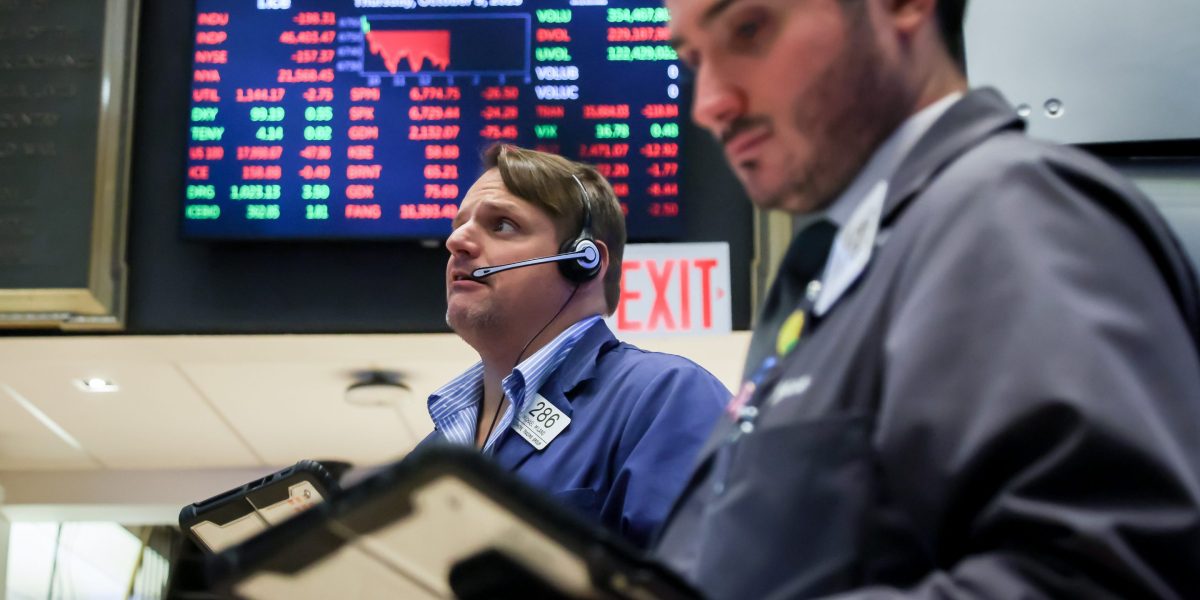
Wall Street analysts are describing the current moment as “crazy days” and “silly season” even as one of its most bearish forecasters warns of a “late-stage” AI bubble—and now the Federal Reserve may be about to do the one thing that has historically ended booms like this, over the objections of two of its own governors.
London-based forecaster Capital Economics has spent the past several months building the most detailed public case yet that the AI trade is a “late-stage bubble.” In a September 10 report, senior markets economist James Reilly screened eight categories of market indicators and found most sitting at or near levels that have historically preceded major peaks—a warning serious enough that the firm now forecasts the S&P 500 will start cracking next year, eventually falling by at least 30% from its high, one of the seven worst crashes in the past century.
The market’s own behavior lately makes that warning easier to believe and harder to parse at the same time. On July 30, Microsoft’s market value rose by $450 billion in a single day. The next day, Apple’s fell by $360 billion while Amazon gained $388 billion and Meta dropped $102 billion the day before. All four moves were large enough that they prompted Owen Lamont, a behavioral economist and portfolio manager at Acadian Asset Management, to look for real-world comparisons to make them legible. Microsoft’s one-day gain, he wrote, was equivalent to “1.04 Houstons” in assessed property value. Apple’s loss matched 3.6 Hurricane Sandys.