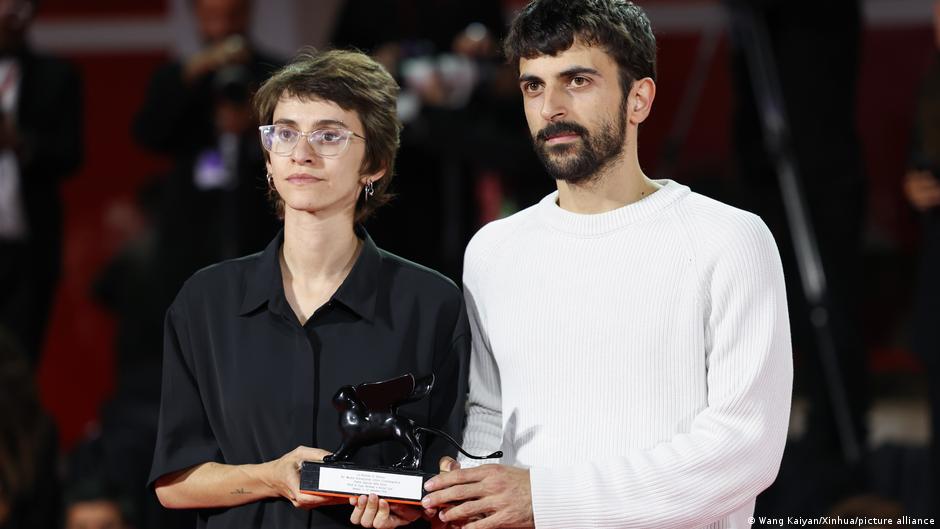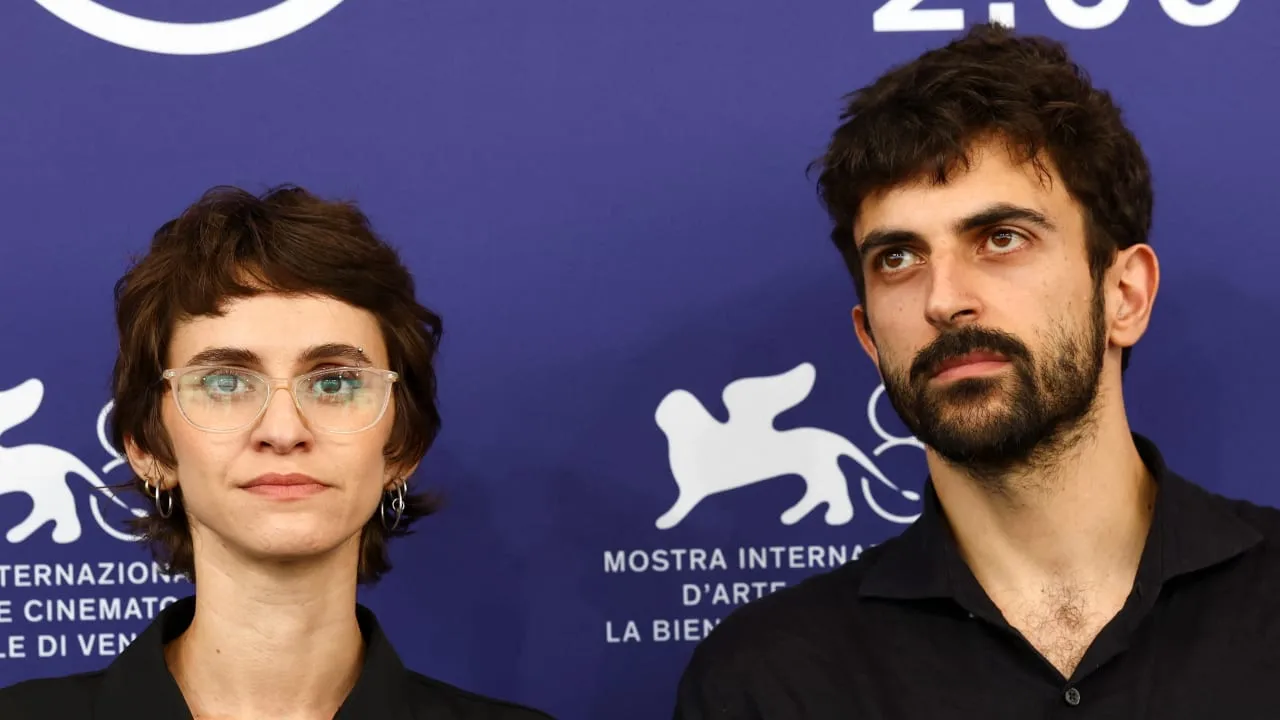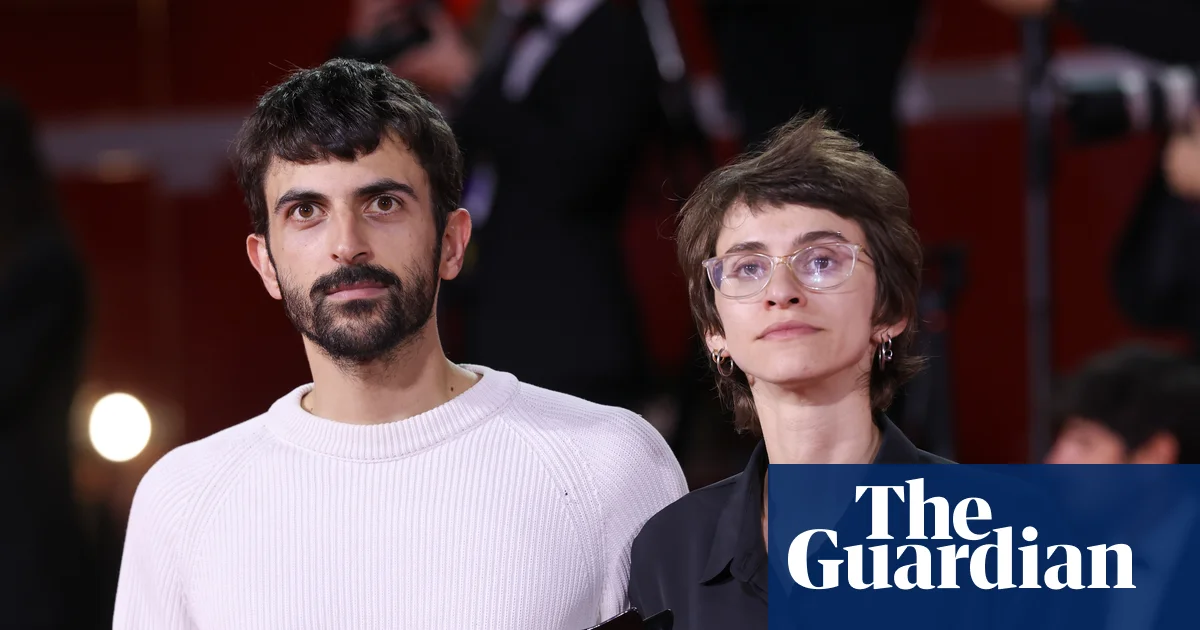
The IDF, Foreign Ministry and National Public Diplomacy Directorate are preparing a campaign challenging allegations in the Israeli-made film; diplomats warn its Venice prize and testimony attributed to soldiers could increase pressure even on friendly governmentsIsrael’s National Public Diplomacy Directorate, Foreign Ministry and IDF Spokesperson’s Unit are holding intensive discussions on a broad international campaign to counter claims made in NAZA, the Israeli film that won the Jury Prize at the closing ceremony of the 83rd Venice Film Festival.GalleryYuval Abraham and Rachel Szor after winning at the Venice Film Festival (Photo: Stefano Rellandini / AFP)“We’re deep in this,” senior public diplomacy officials said after the IDF issued a response to one of the scenes featured in the film.“The idea is that, ultimately, in an Israeli democracy there are people who lie, distort and do everything possible to create a picture that is the opposite of reality,” the officials said. “There is no genocide in Gaza, and anyone who says otherwise is lying or does not know what genocide is.”The officials argued that the film’s treatment of military operations ignores efforts by the IDF to minimize harm to civilians while striking Hamas and other terrorists.“The entire concept of ‘collateral damage’ is about how to reduce harm,” they said, contrasting that with Hamas, which Israel accuses of deliberately targeting civilians and operating from within the civilian population.Despite those circumstances, they said, the IDF seeks to reduce harm to uninvolved civilians as much as possible.“There are blatant lies in this film, such as the reference to the 500 civilians,” the officials said, referring to a claim the IDF has denied. “We asked the IDF Spokesperson to issue as many official responses as possible. The Foreign Ministry will also publish material. Everything is being coordinated between the relevant bodies.”“The bottom line is that we are deep in this, and activity to push back against and refute the lies is already beginning.”Israeli diplomats say the impact may extend well beyond the public relations arena.The film has returned international attention to the destruction and deaths in Gaza, not only to civilian casualties described as collateral damage from the fighting. Diplomats say that is proving difficult even for supporters of Israel.‘Freedom of expression is not a license to betray the country.’ Culture and Sports Minister Miki Zohar (Photo: Miki Schmidt)One Israeli diplomat stationed in a European capital said NAZA was among the topics discussed at a holiday dinner with senior figures in the city’s Jewish community.At the diplomatic level, officials believe even governments considered friendly toward Israel may face growing pressure to ask whether, after three years of war, there is another way to address the challenge posed by Gaza.Those leaders are sensitive to domestic public opinion, and some are already under criticism for their positions on the war.Diplomats warn the film could intensify that pressure because its creators are Israeli and it relies on what it presents as testimony from Israeli soldiers and officers involved in military activity in Gaza.That, they say, makes it harder to dismiss the allegations simply as the product of hostile foreign media.Israeli ambassadors abroad are recommending that Jerusalem launch a major campaign as quickly as possible, presenting documented cases in which the IDF canceled or delayed strikes because of concerns about civilian casualties.In June 2024, for example, the IDF said it twice postponed an attack on Hamas and Palestinian Islamic Jihad terrorists operating from three classrooms in an UNRWA school compound in Nuseirat after civilians were identified nearby.In February of that year, the military publicized three additional cases: a munition diverted after an ambulance was detected, an attack canceled because civilians unexpectedly entered the target area and another strike postponed until uninvolved civilians had left.Israeli diplomats say the response to NAZA should include as many official spokespeople as possible, detailed answers to individual allegations, paid campaigns targeting relevant audiences and briefings for opinion leaders on IDF operating procedures.Zohar calls for action against filmmakersMeanwhile, Culture and Sports Minister Miki Zohar has called for severe measures against the film’s creators.“Anyone who acts against the State of Israel during wartime cannot continue to hold Israeli citizenship,” Zohar wrote on X.He said he had asked the directors general of the Population and Immigration Authority and the Interior Ministry to examine revoking the filmmakers’ citizenship for what he described as a breach of loyalty and cooperation with the enemy, and to investigate how the material used in the film was obtained.“Freedom of expression is not a license to betray the country,” Zohar wrote. “Anyone who acts against Israel during wartime should know there will be a price.”Former IDF chief of staff Gadi Eisenkot, chairman of Yashar!, also condemned the film.“IDF soldiers and commanders have been fighting for nearly three years in an extraordinarily difficult and just war against a brutal enemy that massacred, raped and abducted children, women and men on the morning of October 7,” Eisenkot said.“The decision by Israeli creators to stand on an international stage, present a distorted and one-sided picture and cast a moral stain on the soldiers protecting our home is moral blindness, detachment from reality and harm to the State of Israel at a difficult time.”“Criticism is legitimate in a democratic society,” he added, “but there is an enormous distance between criticism and defaming our soldiers in order to win applause at festivals abroad.”What NAZA allegesNAZA was filmed on rooftops in Tel Aviv during the Gaza war and includes interviews with 24 men and women who the film says served in the IDF’s Unit 8200.The interviewees make serious allegations regarding the IDF’s collateral-damage policies, bombardments and targeted killings in Gaza.Among the issues raised is the alleged use of artificial intelligence by Unit 8200 personnel to recommend targets based on intercepted phone communications, including in cases where, according to interviewees, attacks could also kill family members.The film also alleges that the IDF deliberately killed uninvolved civilians in Gaza, an accusation Israeli officials strongly reject.
Israel plans global pushback against Venice-winning Gaza film NAZA as diplomats warn of fallout
The IDF, Foreign Ministry and National Public Diplomacy Directorate are preparing a campaign challenging allegations in the Israeli-made film; diplomats warn its Venice prize and testimony attributed to soldiers could increase pressure even on friendly governments
983 words~4 min read