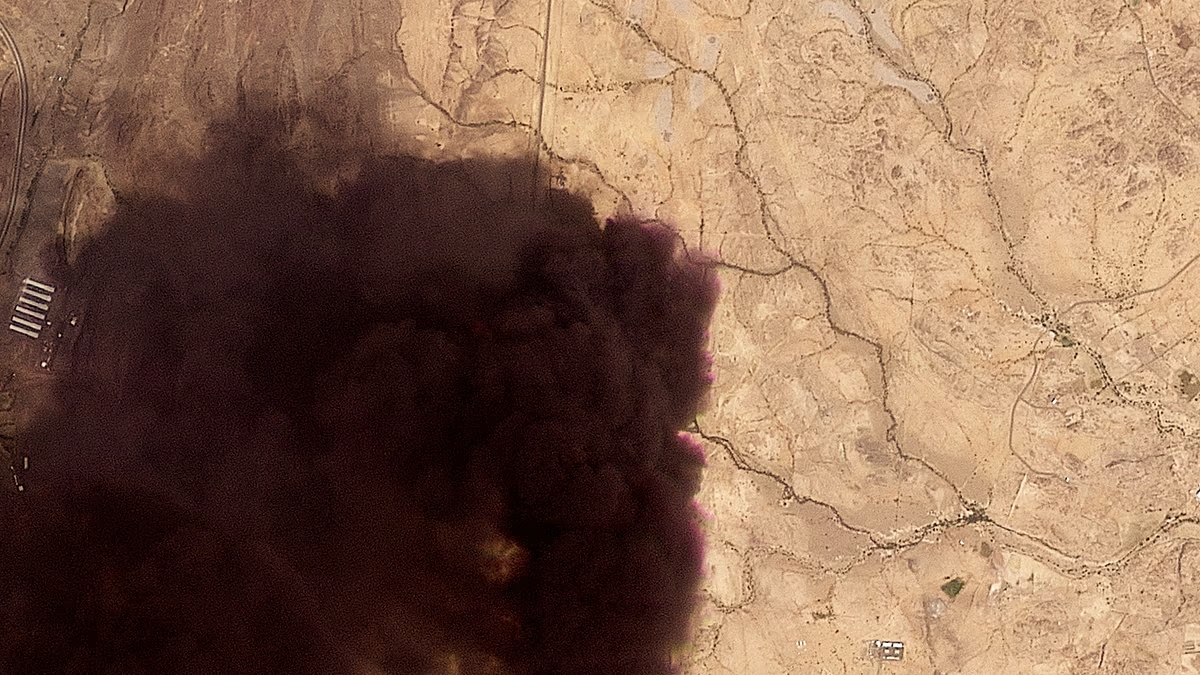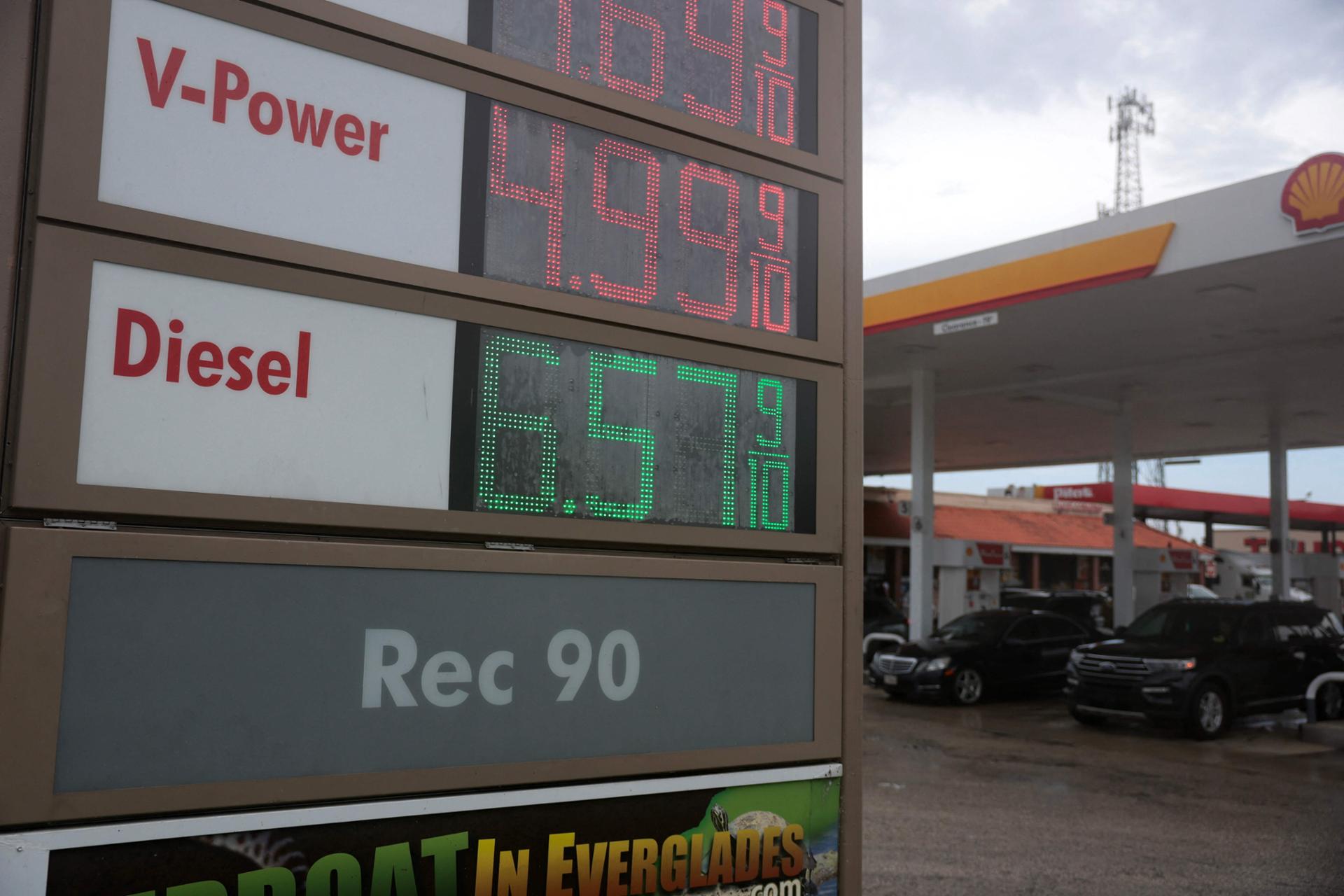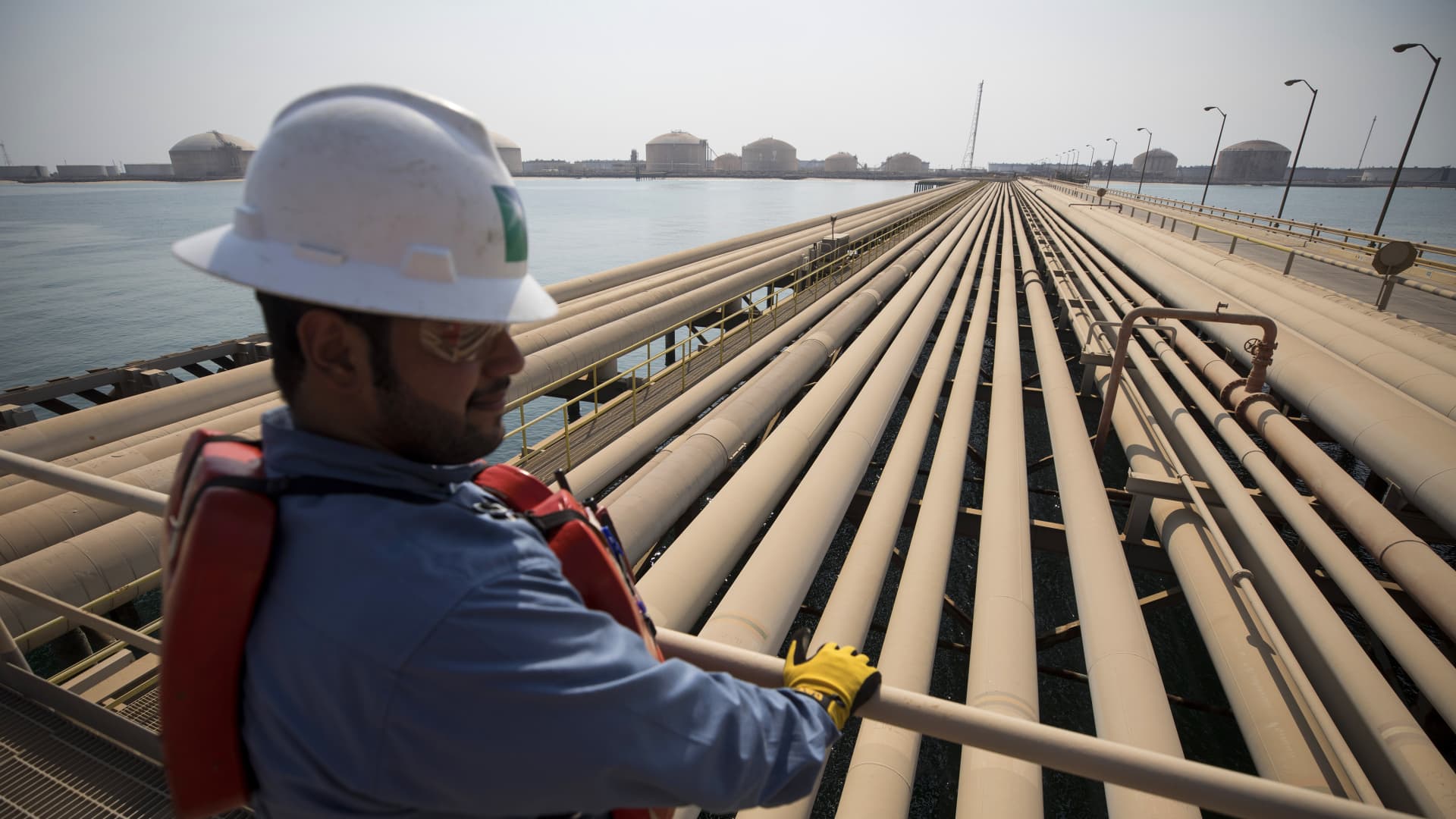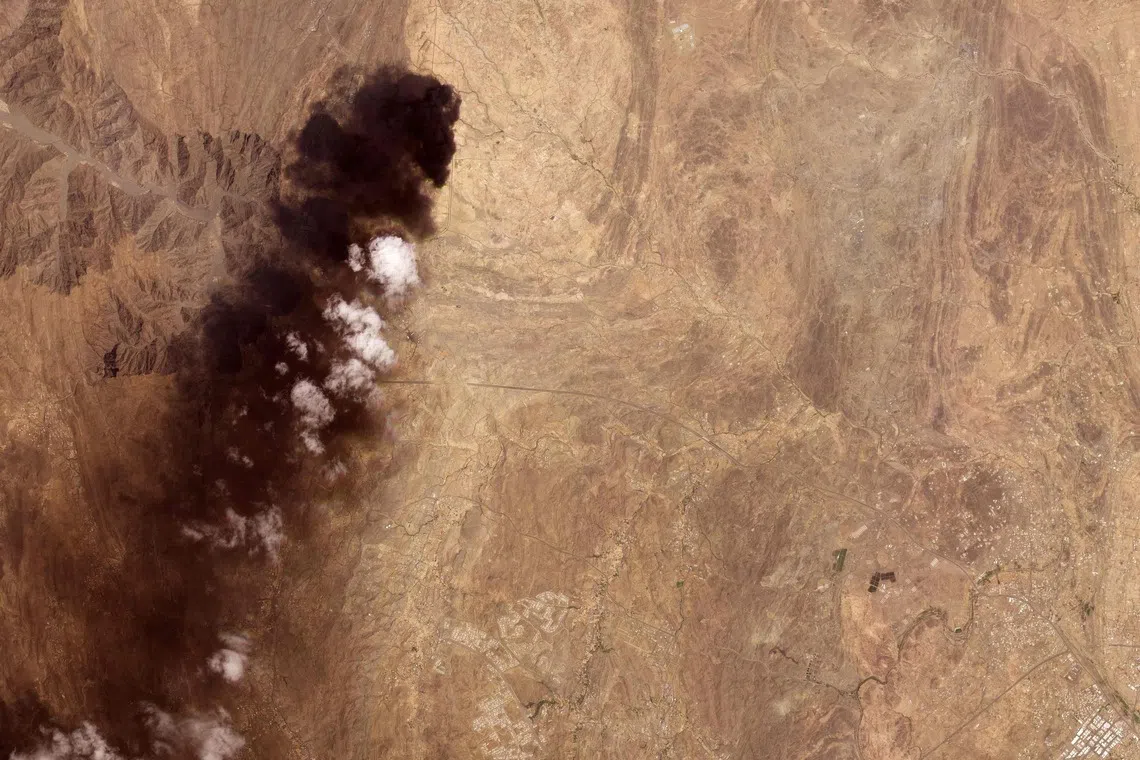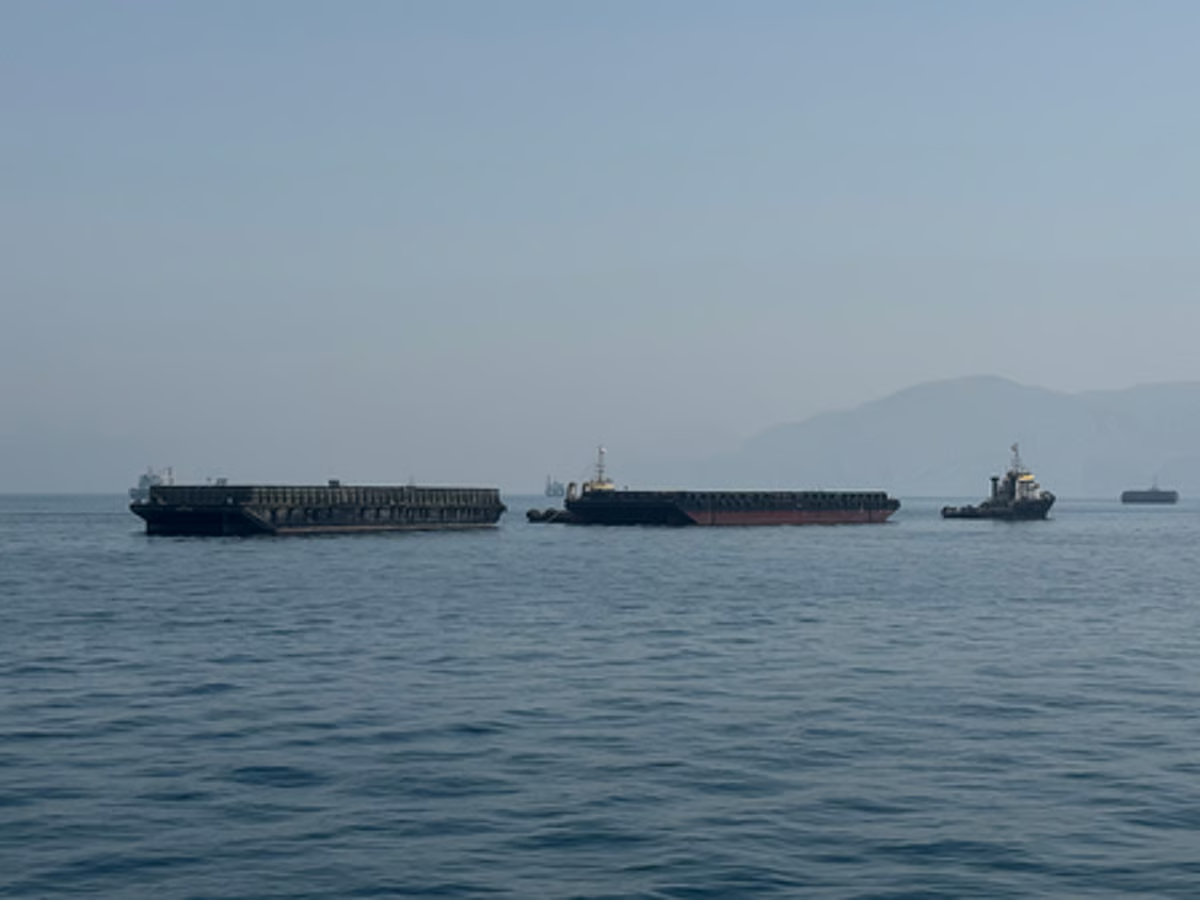
LONDON — Oil prices continued their surge, rising more than 3% on Monday, after new strikes on Saudi Arabian energy infrastructure and attacks on ships in the Strait of Hormuz compounded supply concerns.Brent crude futures climbed $3.43, or 3.3%, to $108.04 per barrel on Monday morning after a merchant vessel was struck in the Strait of Hormuz, renewing fears that Middle East supply routes are closing.The US benchmark WTI for October rose 2.3% to around $102, both extending last week's advance after each reclaimed the $100 threshold.Prices moved following Saudi Arabia's announcement that its East-West pipeline is temporarily closed after drone attacks.The line carries crude across the Kingdom to Red Sea ports, allowing oil to reach export terminals without passing through the Strait of Hormuz, so its loss removes the main alternative at the moment the strait itself is most dangerous.That danger was also demonstrated on Sunday, when a merchant vessel was hit in the strait, killing one person and injuring three others, according to Iranian authorities.Passage through the waterway now works very differently from before the war.Vessels must obtain Iranian permission to transit, and Tehran is weighing a mechanism to charge service fees. Ships that fail to comply are routinely targeted, while US forces periodically bomb the Iranian coastline to contest Tehran's claim to control the strait.Diplomatic efforts have stalled too.Oman has postponed planned talks between Iran and Gulf states on the future of the waterway, which carries a large share of the world's seaborne oil trade.The consequences are extremely visible at American pumps.The US national average price of diesel crossed $6 a gallon on Friday for the first time in history, up from around $5.85 a week earlier and roughly 60% above the $3.71 drivers paid a year ago.Petrol is also averaging $4.22 after setting records over the Labor Day weekend.US President Donald Trump has pointed the finger elsewhere.Speaking to reporters in Ireland on Sunday, where he was attending the Irish Open at his Doonbeg golf resort, Trump stated Ukrainian President Volodymyr Zelensky "has to stop knocking out diesel fuel in Russia.""Let him go after targets, but not diesel fuel, because he's causing a shortage of diesel fuel," Trump added.Ukraine has struck more than 20 Russian refinery targets this summer, prompting Moscow to ban diesel exports.On the flight back from his state visit to Ireland this weekend, Trump reiterated the claim.However, the supply arithmetic suggests otherwise.Analysts attribute roughly 800,000 barrels a day of lost diesel supply to Russia's export ban, against about 1.2 million from disruption around the Strait of Hormuz, according to Lipow Oil Associates.The wider picture is more lopsided still as crude flows through the strait have fallen from around 20 million barrels a day before the war to about 7 million.A vessel in the Strait of Hormuz was struck by a projectile, causing a fire and forcing the crew to evacuate, the British maritime security agency UKMTO said on Sunday.Iran said one person was killed and four crew wounded aboard an Iranian commercial vessel struck off its coast.Between them, the two wars have also shut refineries representing around 5 million barrels a day of capacity."Short of stopping both oil price affecting wars and curing the global refinery (capacity) problem, our fraternity is wondering where an inoculation against $120 Brent can be found," said PVM analyst John Evans, pointing to Russian refinery outages and falling stockpiles.
Oil surges past $108 as Hormuz attack and Saudi pipeline shutdown rattle markets
Oil prices continued their surge, rising more than 3% on Monday, after new strikes on Saudi Arabian energy infrastructure and attacks on ships in the Strait of Hormuz compounded supply concerns.
560 words~3 min read