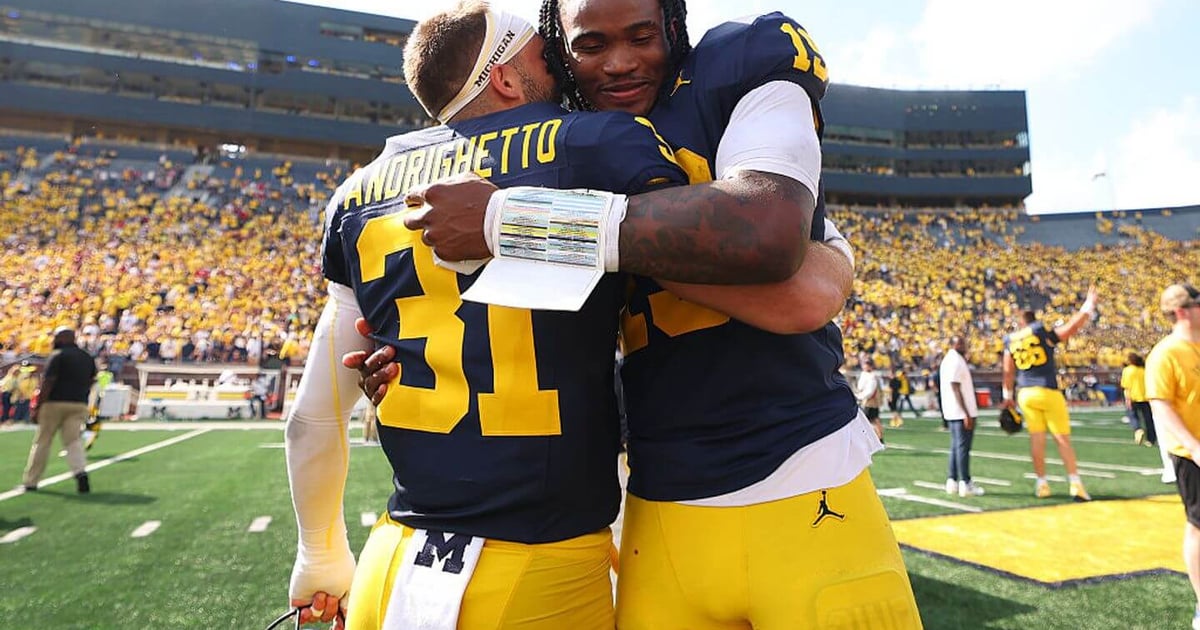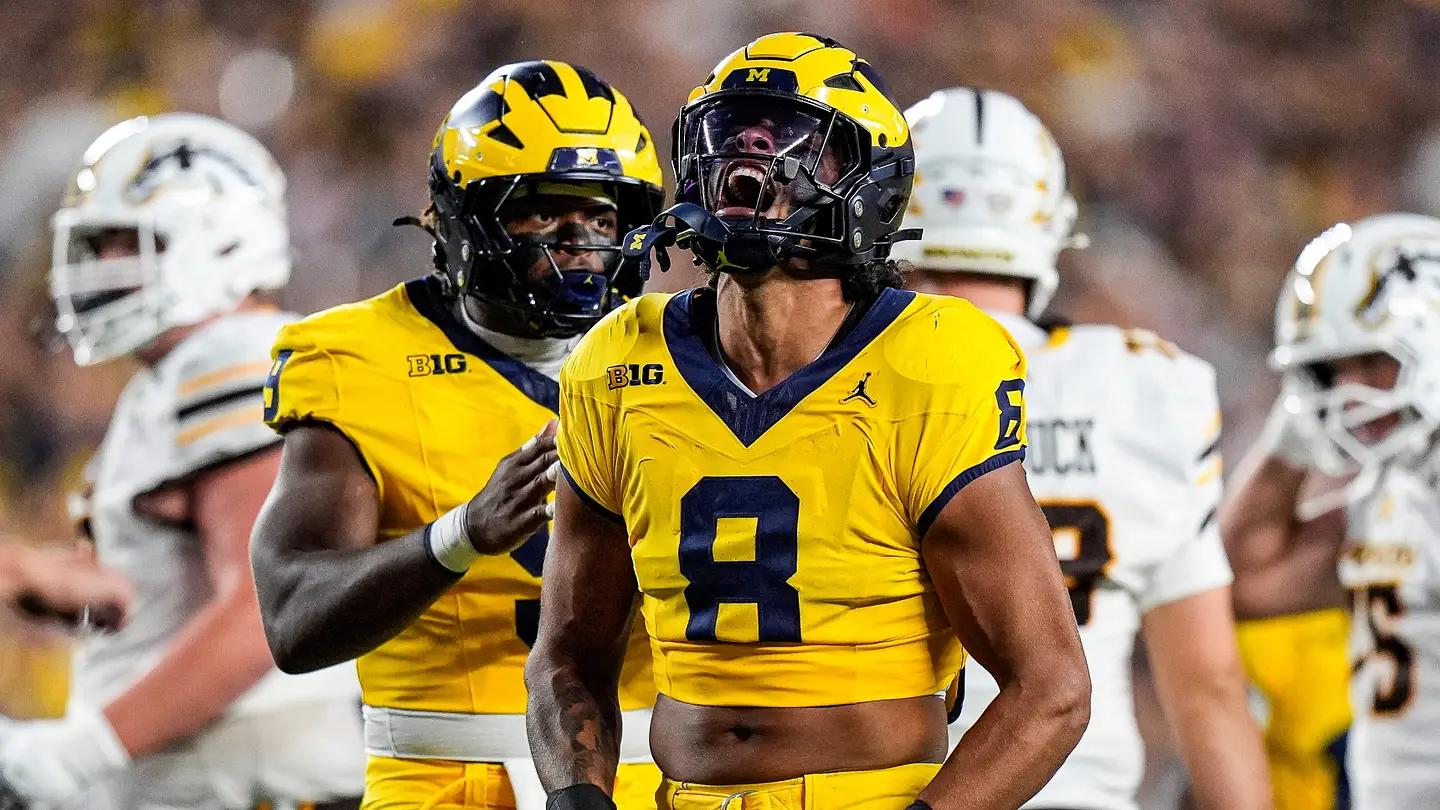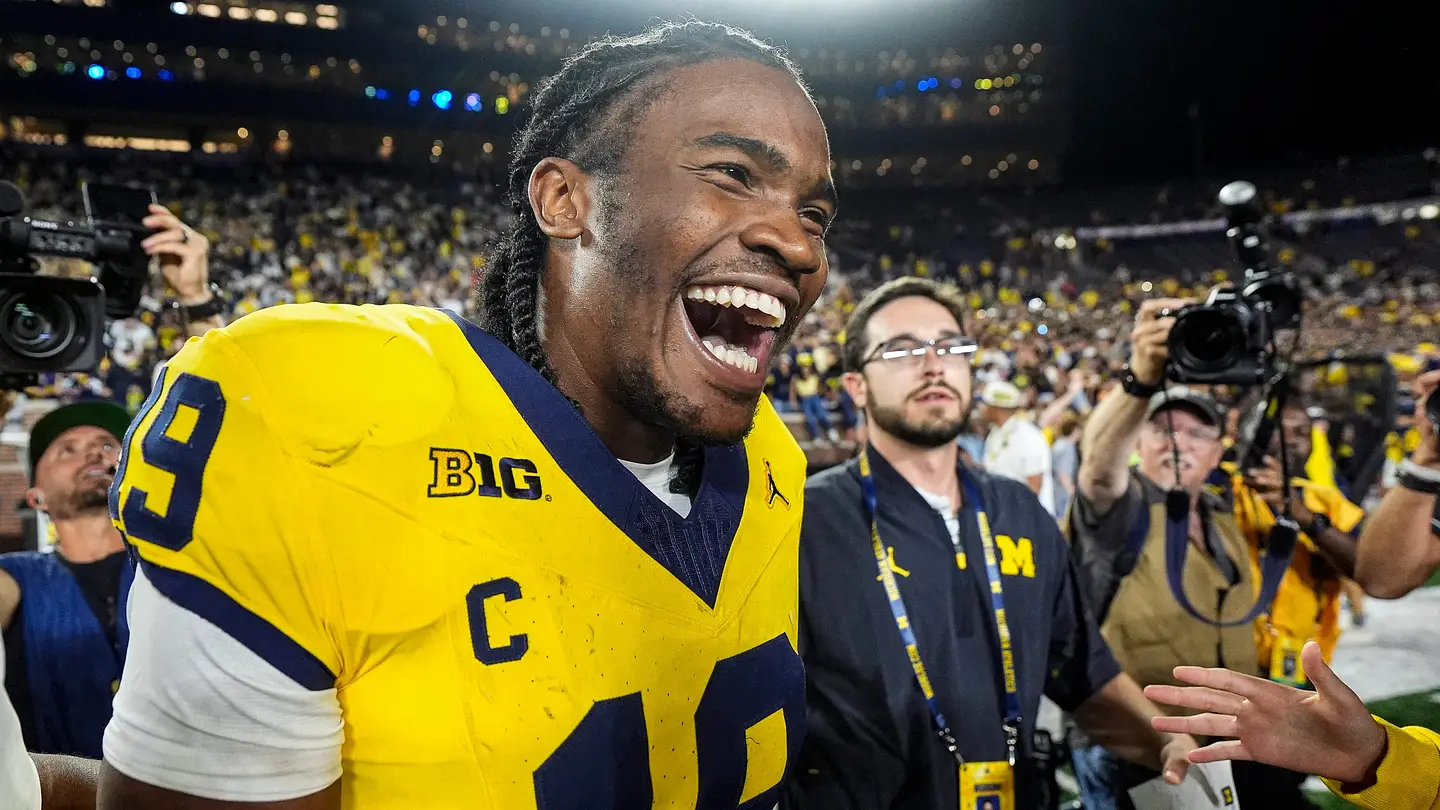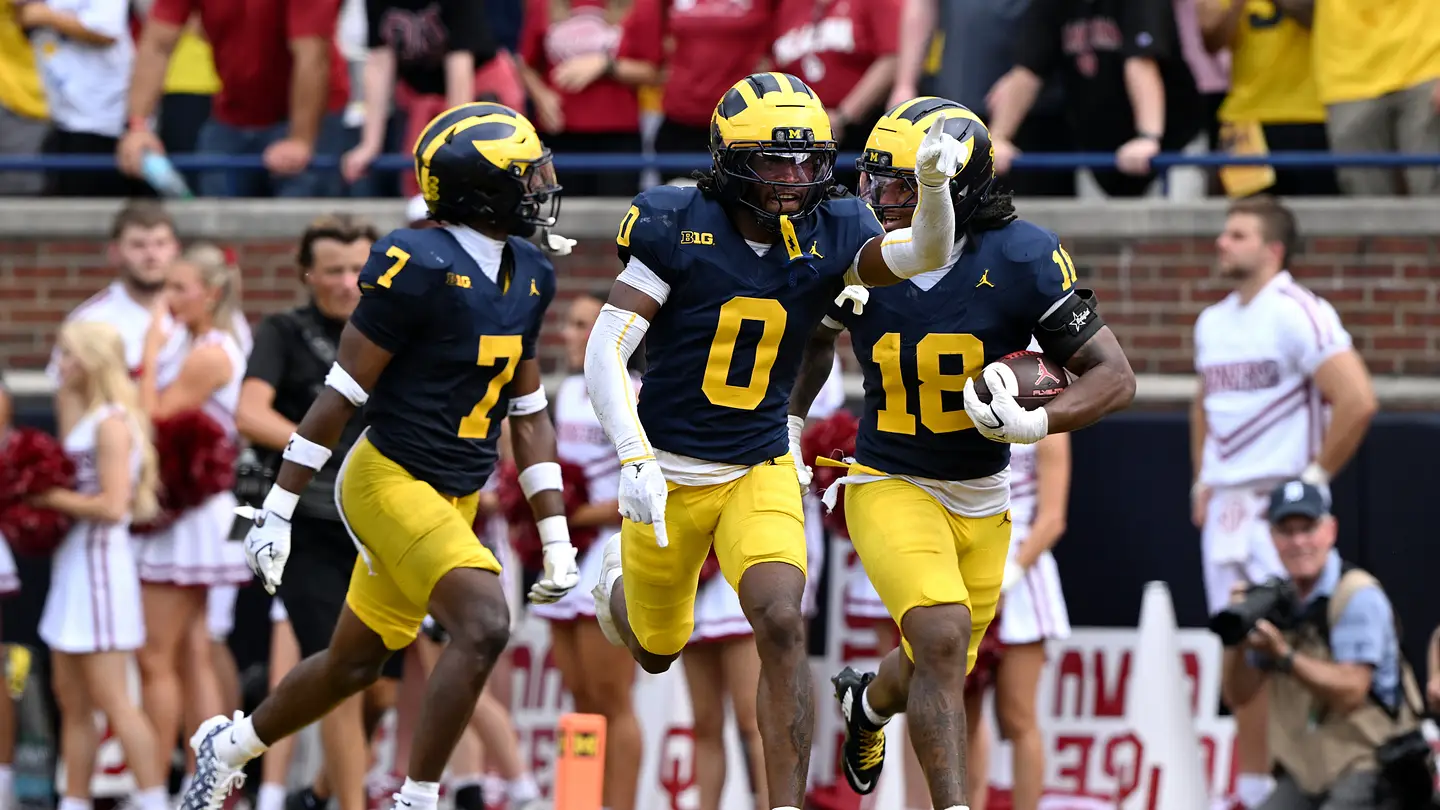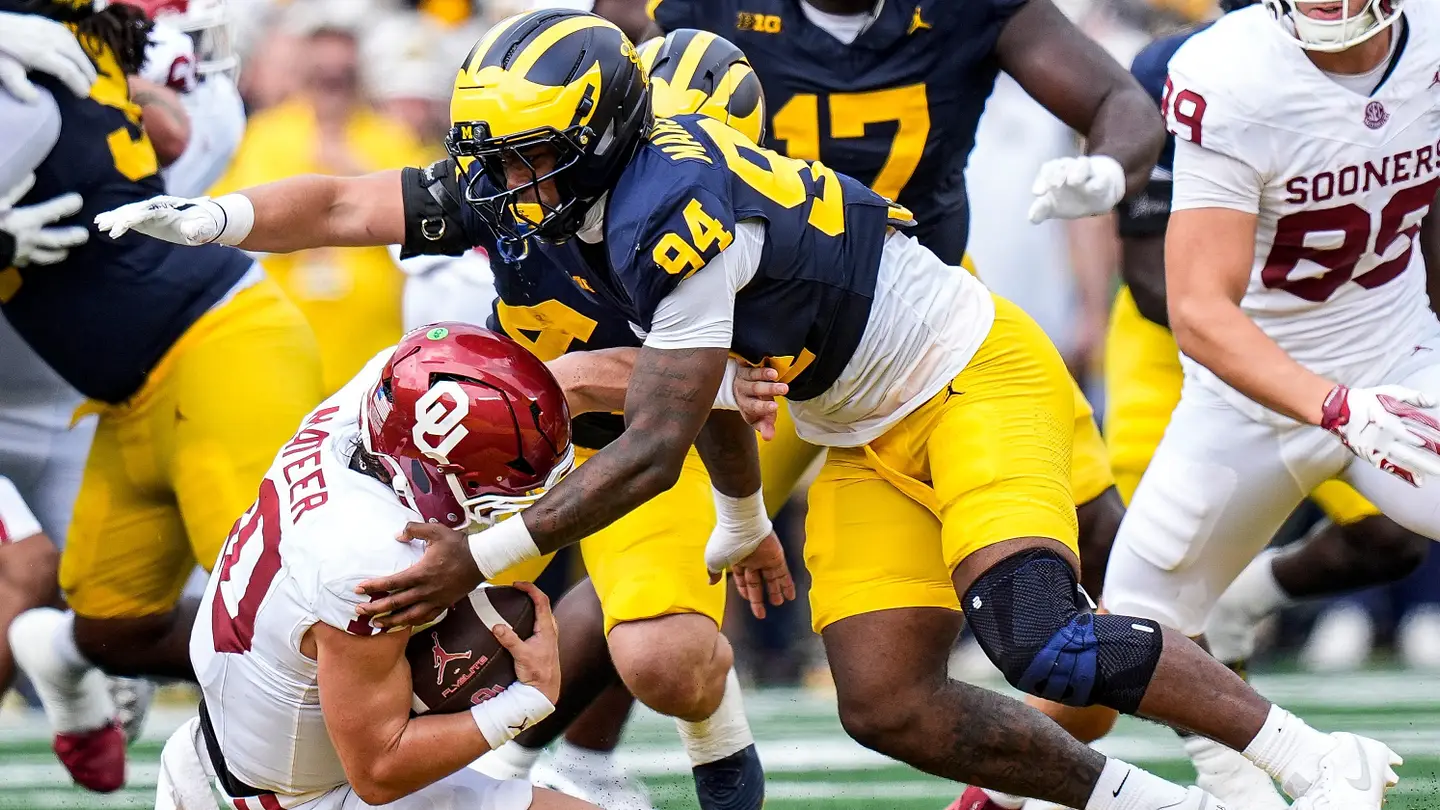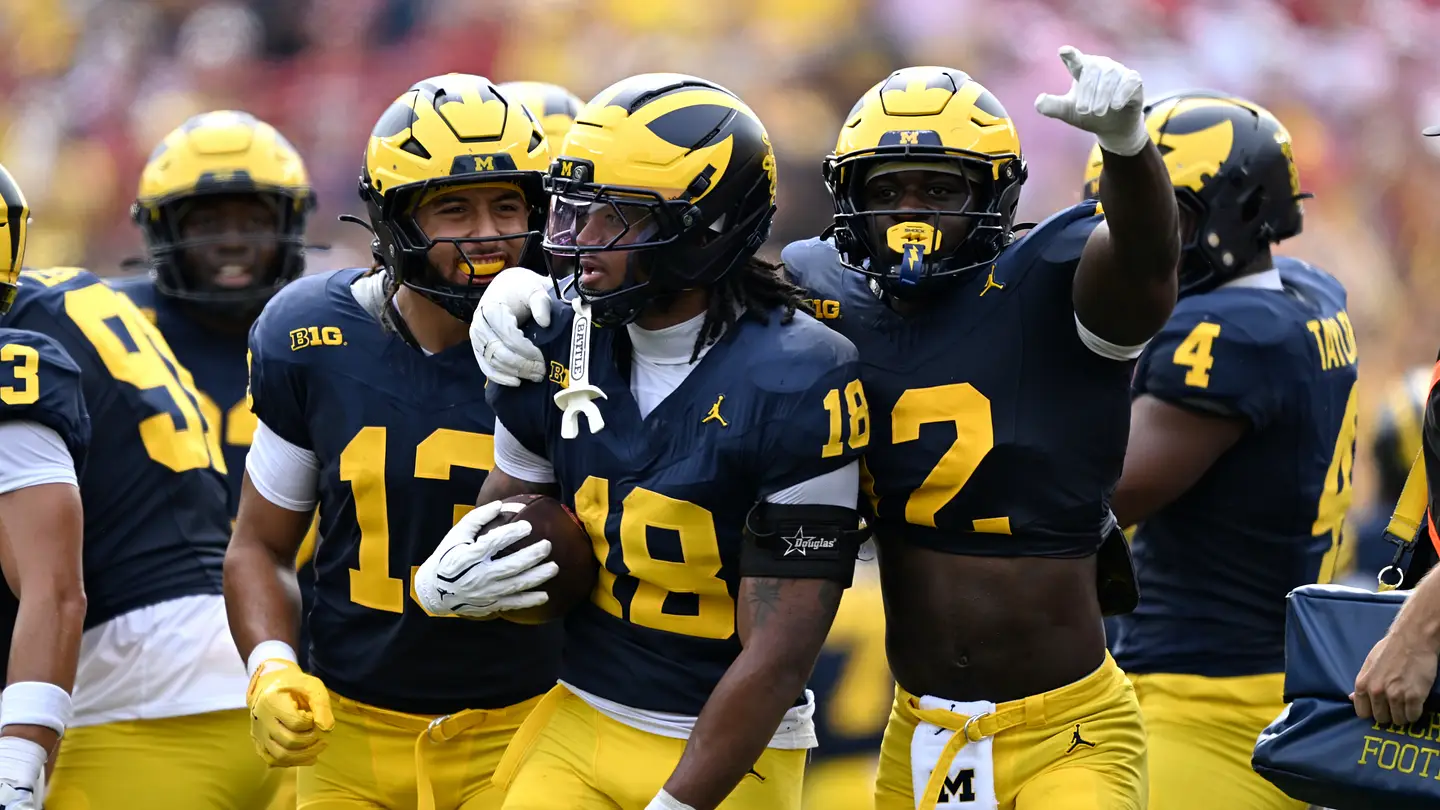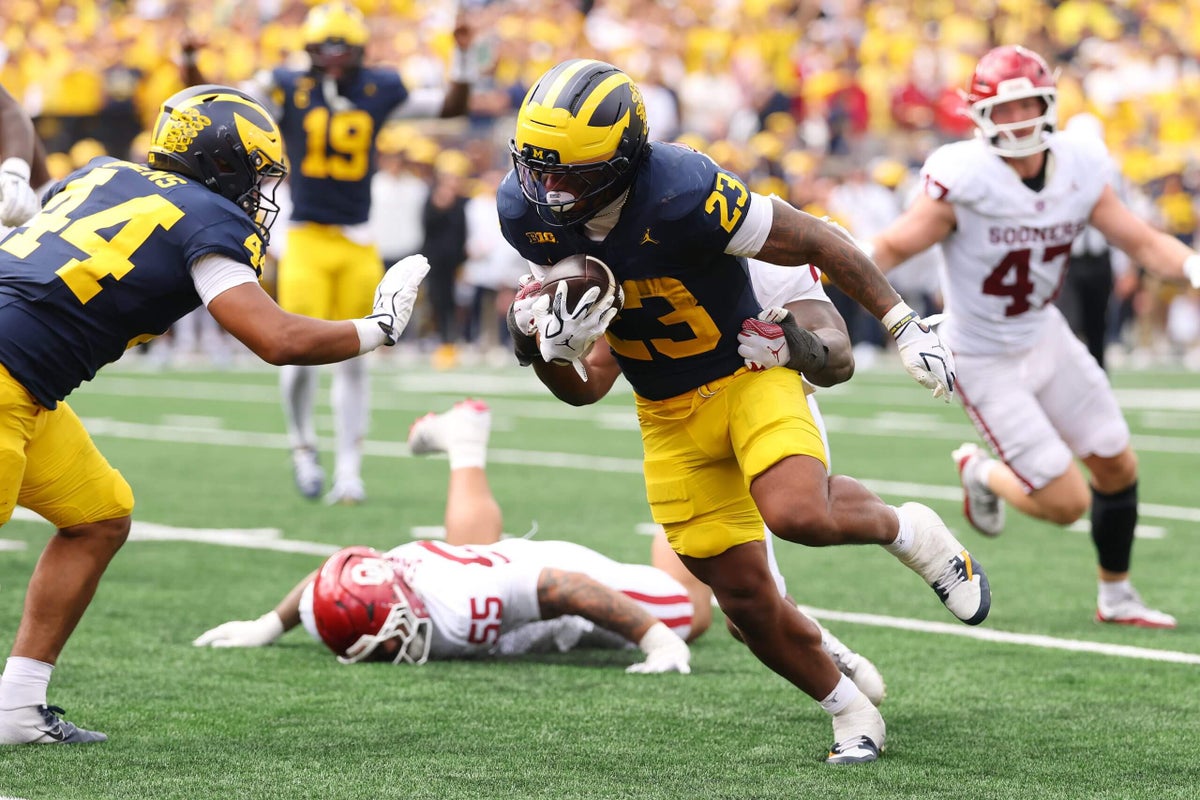
ANN ARBOR, Mich. — Eleven undefeated teams remain in the Big Ten through two weeks. The list doesn’t include Oregon or Ohio State, two of the league’s perceived national title contenders. It does include Michigan, which needed a miracle to beat Western Michigan in Week 1.Michigan (2-0) plummeted out of the Top 25 after its narrow escape over the Broncos and climbed back to No. 19 after Saturday’s 17-10 victory against Oklahoma. It’s hard to know what to make of the Wolverines through two games, but a few trends have emerged during the wild ride from near-disaster to quasi-redemption.Which players and position groups are on the rise, and which are slipping? Here’s a deeper look.Oklahoma's offense struggles in loss to MichiganAustin MeekRisingSecondaryMichigan’s secondary was overshadowed a bit by the defensive front in the preseason, but no one should be sleeping on the defensive backs. They swallowed up Oklahoma’s Isaiah Sategna III on Saturday and are allowing opponents an average of just 139 passing yards through two games.Cornerback Jyaire Hill, one of the top NFL prospects on Michigan’s roster, shadowed Sategna and limited him to two catches for nine yards. Hill also made the biggest play of the game, snagging the fourth-quarter interception that set up a short touchdown drive.“I didn’t think he was going to throw it, but you gotta capitalize on the ball in the air,” Hill said.Hill is playing like a true No. 1 cornerback, and Utah transfer Smith Snowden is showing he can play on the outside and at nickel. The secondary is good enough that Zeke Berry, a starter last year on the outside, has become the third corner.At safety, Chris Bracy looks like the torpedo coaches thought he could be, and Rod Moore appears healthy for the first time in more than two years. Depth is still a question, but this is a strong unit if it stays healthy.Pass rushJohn Henry Daley had a quiet debut, but his second game back from an Achilles injury showed why he was considered one of the top defensive players in the transfer portal. Daley had eight tackles, three tackles for a loss and a sack that came when he spun through a double team and dragged down John Mateer.“I’m still getting the rust off a little bit, but I’m so grateful to be out there,” Daley said.Dom Nichols has been a menace at the other defensive end spot and brings frenetic energy to the defense. Sophomore Nate Marshall, a player who came on strong at the end of preseason camp, had a sack of Mateer to seal the game. Those three players are separating themselves as pass rushers.John Henry Daley made an impact in the pass rush against Oklahoma. (Junfu Han / USA Today via Reuters Connect)Bryce Underwood’s legsMichigan needs a way to move the ball that doesn’t depend on a high-volume passing attack. That means giving quarterback Bryce Underwood as many carries as he can handle and forcing defenses to deal with his size and speed.Michigan called a variety of designed runs for Underwood against Oklahoma, including the speed option that he cut back for a 38-yard touchdown. Underwood and Michigan’s running backs are still ironing out issues with the pitches and reads, but Saturday showed the potential of an offense built around Underwood’s athleticism.Through two games, Underwood is averaging 5 yards per carry and leads the team with 134 rushing yards.“My team was the main reason behind the 18 carries,” Underwood said, noting that he needs to work on his ball security. “My guys trusted me to run the ball.”Punter Cam BrownBrown, an Australian native who transferred from UNLV, could be a weapon, especially if the Wolverines’ offensive limitations forces them to play for field position.Michigan punted three times from its own side of the field against Oklahoma. That’s not ideal, but Brown made those calls look good by twice pinning the Sooners at their 1-yard line. If defense and special teams is the formula, a punter who can flip the field is a major plus.“The pressure and the stage is never too big for him,” coach Kyle Whittingham said. “Through two games, he is outstanding in those pooch punts.”FallingRunning backsThe buzz entering the season was that Jordan Marshall and Savion Hiter could form one of the top running back tandems in the Big Ten, if not all of college football.Against Western Michigan and Oklahoma, Marshall and Hiter combined to average 48.5 yards and 2.8 yards per carry. That’s not just on the running backs — the offensive line hasn’t been as dominant as expected, and the running backs haven’t had much space to operate. Marshall and Hiter also seem to be missing holes and leaving yards on the field.Marshall averaged 6.2 yards per rush last season while running behind a lot of the same blockers. This isn’t a talent issue. It may just take some time for the running backs to get a feel for Jason Beck’s offense.Tight endsTight ends who feature in the passing game have been a fixture at Michigan, from Luke Schoonmaker to Colston Loveland to Marlin Klein. The de-emphasis on that role in favor of other personnel groupings has meant fewer opportunities for the tight ends on Michigan’s roster.Hogan Hansen has been injured, and there hasn’t been many snaps for Deakon Tonielli and others in that position group. Jalen Hoffman is the only tight end with a reception thus far, though freshman Mason Bonner had a target against Oklahoma.Michigan has been using a sixth offensive lineman, known as the rhino, in place of a tight end on a significant percentage of its snaps. That tradeoff means more mass at the line of scrimmage and less versatility in the passing game. Whittingham suggested Michigan might have leaned too heavily on the rhino against Western Michigan, but that position is going to be a staple of Beck’s offense, meaning targets for tight ends might be more of a rarity.Underwood’s passingUnderwood is completing 53.8 percent of his passes, which ranks 17th among 17 Big Ten quarterbacks with enough attempts to qualify. Trying to turn him into a dropback passer isn’t a high-percentage strategy at this stage of his career. From Week 1 to Week 2, Michigan’s adjustment was to simplify the passing attack, roll Underwood out of the pocket and give him easier reads.That strategy worked reasonably well against Oklahoma, and it could work against other teams on Michigan’s schedule, too. Whittingham is willing to say what Sherrone Moore was reluctant to admit last year: Michigan will need more from its passing attack to be a contender in the Big Ten.“We still understand that we need to get the throw game into higher gear and get more production there,” Whittingham said.The rest of the Big TenThe Big Ten did some well-deserved chest-thumping after winning three consecutive national championships, but its claim as the best conference has taken a hit over the first two weeks of the season.Ohio State blew a 20-point fourth-quarter lead and lost at Texas. Oregon suffered a stunning upset at Oklahoma State. Illinois lost to Duke, Minnesota lost to Mississippi State and Rutgers is 0-2 with two abysmal losses. Michigan’s win against Oklahoma stands out as the Big Ten’s most impressive nonconference conquest so far.Indiana is still a machine, and Ohio State’s loss to Texas doesn’t eliminate the Buckeyes from anything. Top to bottom, however, the Big Ten might be a bit more mediocre than expected. A team like Michigan — tough and talented, but dealing with some obvious limitations — could have a path to contend if the schedule breaks right.
What do we know about Michigan after Oklahoma? Here’s who’s rising and falling
At 2-0, Michigan is one of 11 undefeated teams in the Big Ten. But the team's identity remains something of an unknown.
1,261 words~6 min read