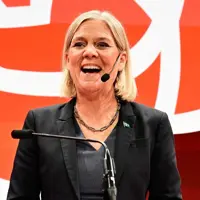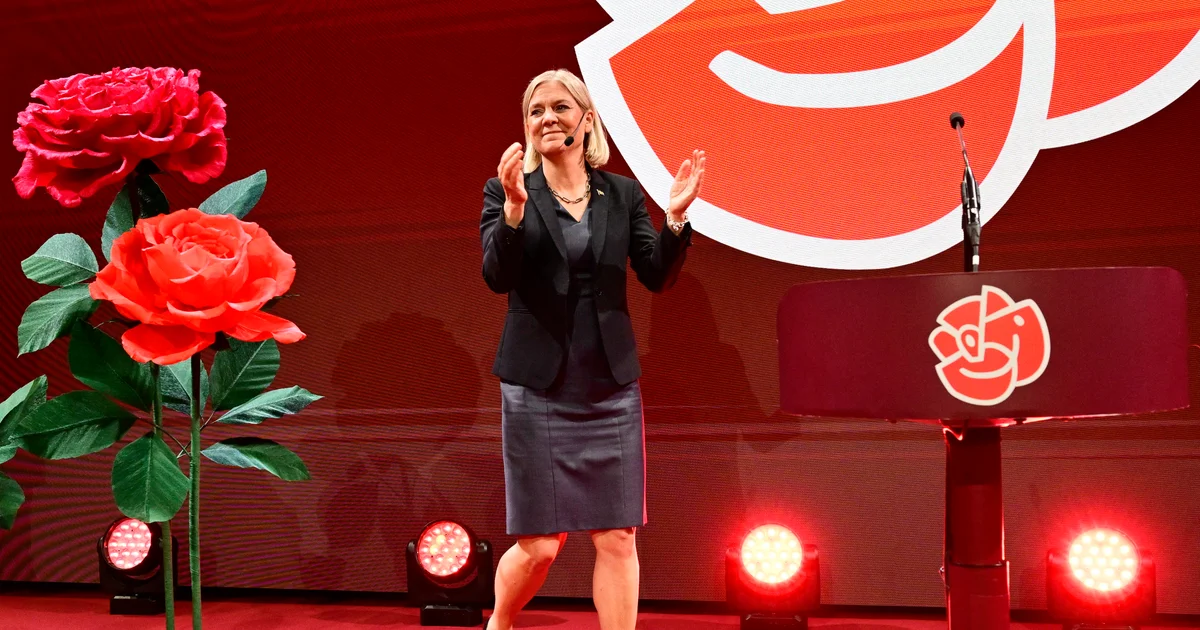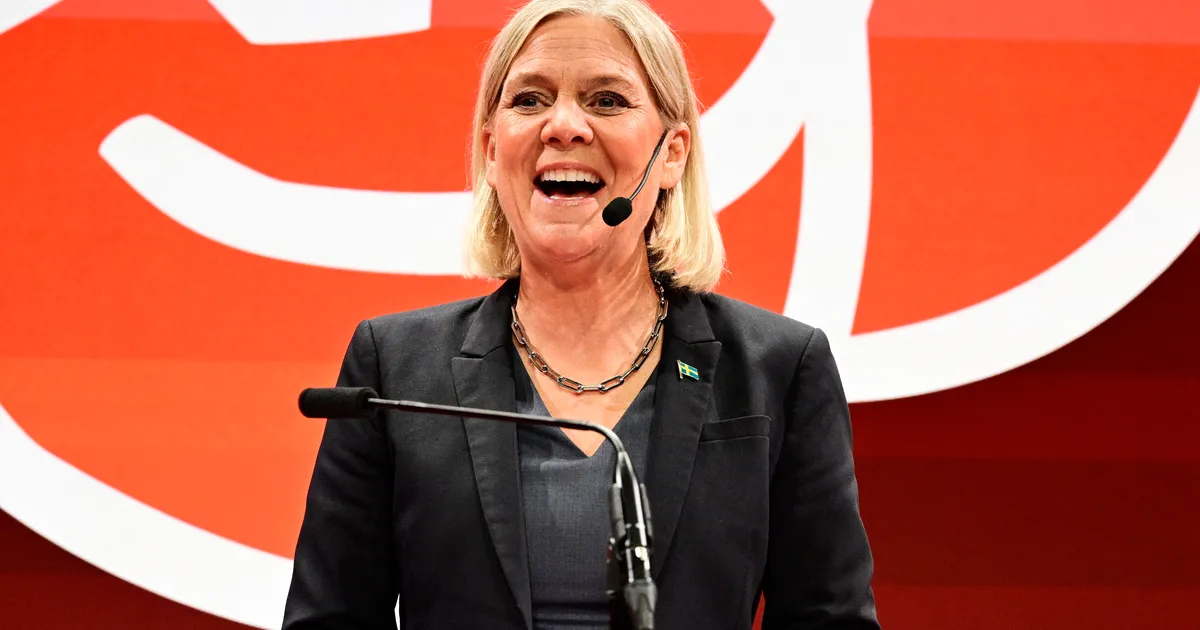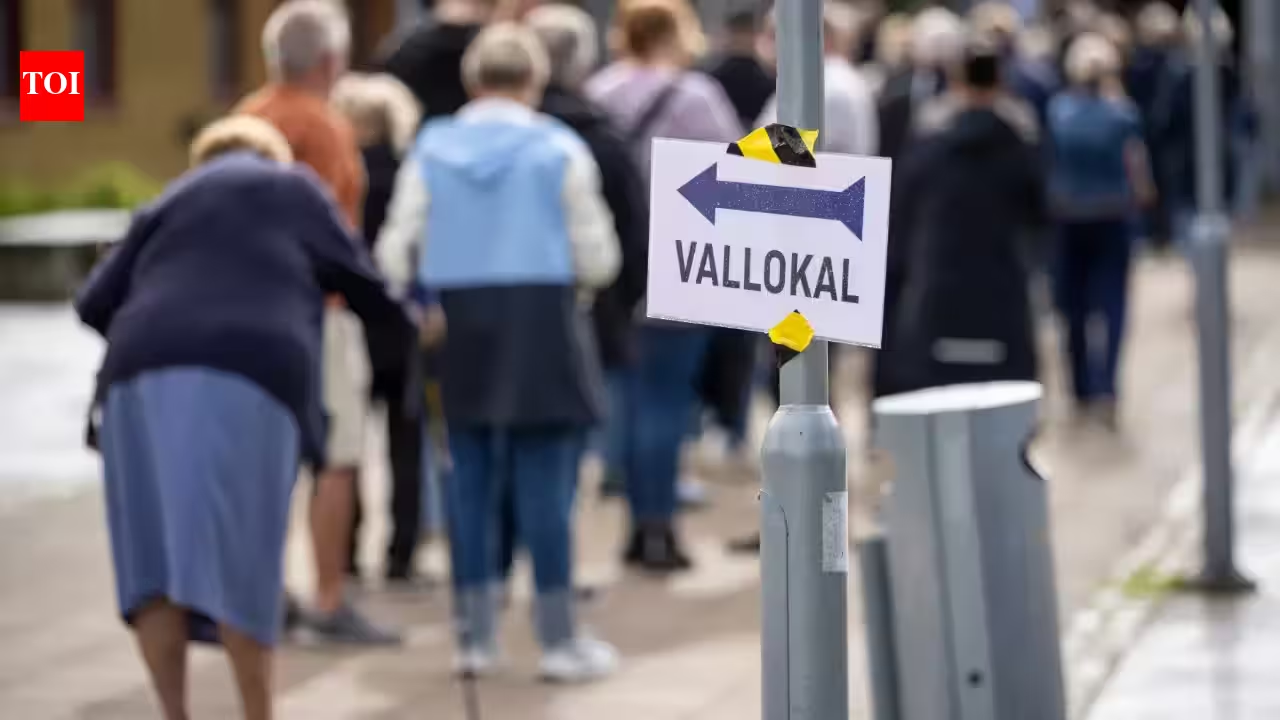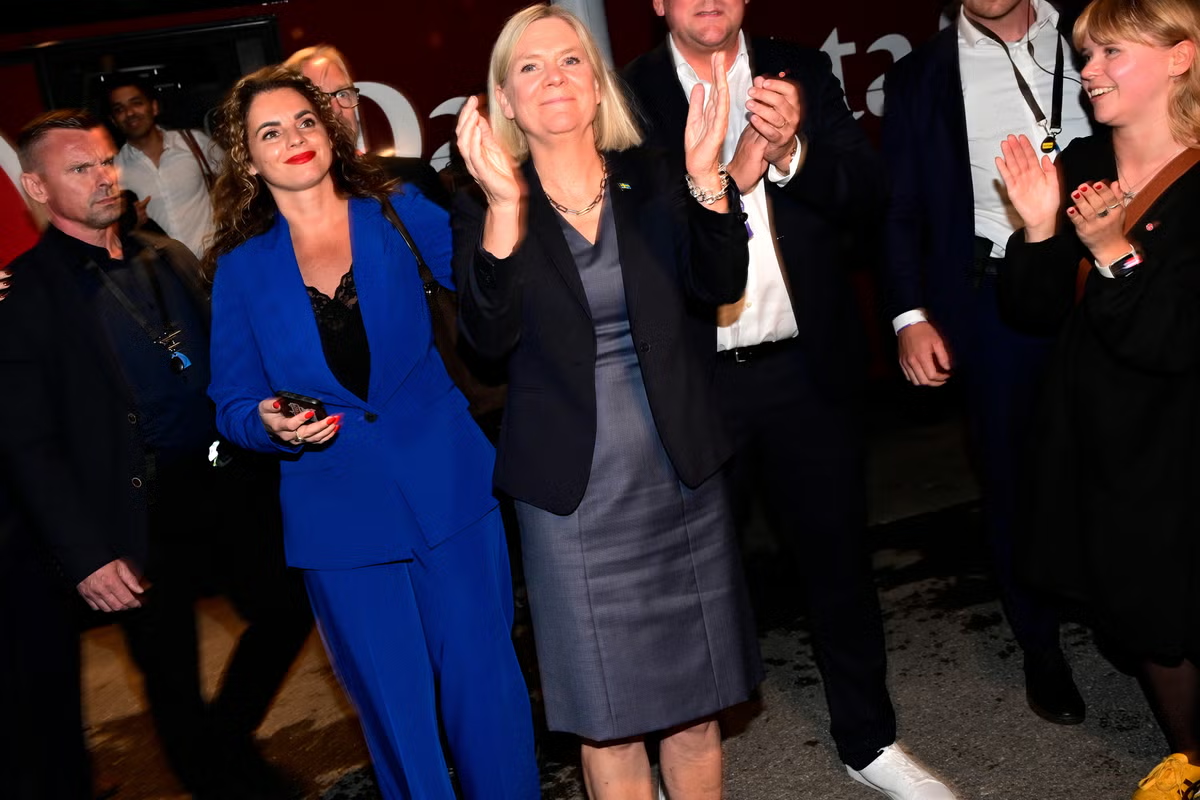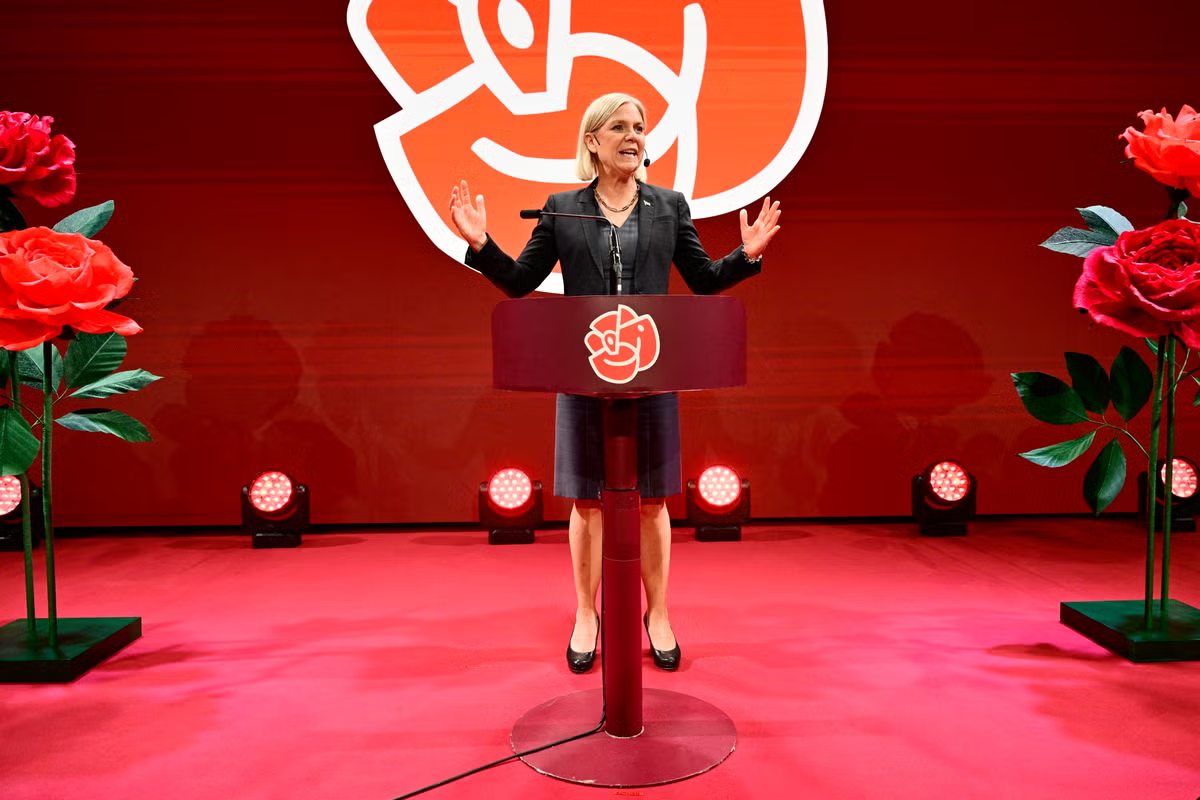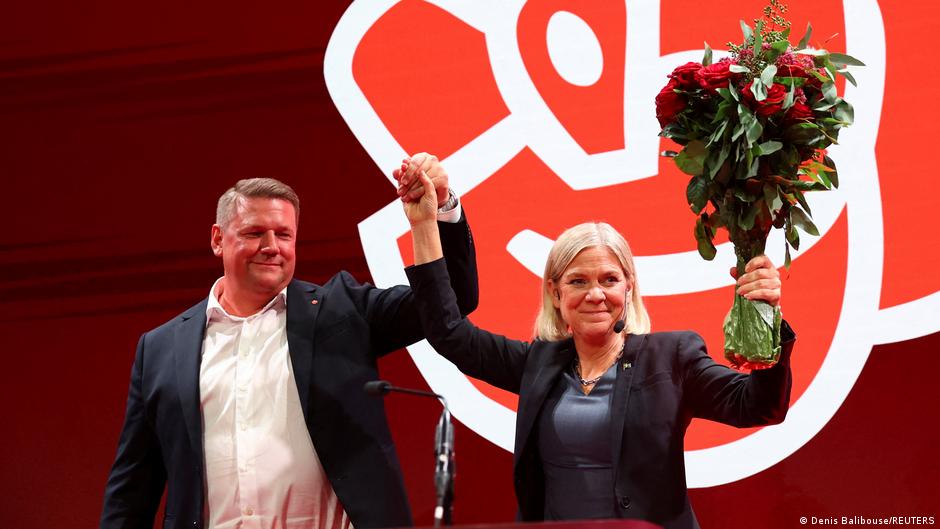
Sunday's election also served up a surprise setback to the far-right Sweden Democrats, who lost ground for the first time since entering parliament 16 years ago.The leader of the left-wing opposition, Magdalena Andersson of the Social Democrats, and outgoing conservative Prime Minister Ulf Kristersson have each said they want to explore coalition options to secure power, but both would have to make major concessions to obtain a majority.While the left-wing held a slim lead, the bloc was expected to face thorny negotiations to form a government, with the talks expected to drag on for several weeks.Parliament can vote on a new prime minister on September 29 at the earliest.After the 2022 election, it took 37 days to form a government, much shorter than the 134 days it took to do so in 2018.Political analyst Mats Knutson at public broadcaster SVT said both blocs were likely to end up in a "stalemate that paves the way for a long and troublesome process of forming a government, which could end in a snap election.""One or several parties may have to abandon their 'red lines'," he said.With 95 percent of votes counted on Monday, the four opposition parties held a three-seat majority in the 349-seat parliament over Prime Minister Kristersson's right-wing alliance, which includes the anti-immigration far right.But observers warned that those results could still change, with some votes only due to be counted as of Wednesday."The situation is really tight, and it's been more and more polarised in Sweden the last years," 48-year-old construction worker Mikko Duvaldt told AFP on Monday."It's going to be a tough situation for each side to form a government."- Fractured - If the left-wing majority is confirmed, Andersson, a staunch defender of Sweden's welfare state, will attempt to form a government with the three other parties on the left: the Greens, the left and the centre.But the bloc is fractured by deep ideological differences.The centre has said it would refuse to support any government including the left, and the left has said it would not support any government of which it is not a member.Outgoing Prime Minister Kristersson is meanwhile expected to court the Centre Party -- which until 2019 had been part of the right-wing bloc -- to try to build a majority on his side."I will therefore, even if tonight's result stands, examine whether there are any possibilities within this non-socialist parliamentary majority to find some workable government constellation," Kristersson told his supporters on election night.Annika Freden, associate professor in political science at Lund University, said Kristersson could expect to get the cold shoulder from the centre. "Kristersson reaching out to the centre is expected, but the centre is fundamentally opposed to entering into an alliance with the far right so nothing will come of it," she said.She told AFP she thought the parties would do everything in their power to avoid a new vote.The negotiations on the left will be about "how much they can get through and will determine if and when the red lines are relaxed"."In Sweden we have a culture of negotiation, and there is a strong reluctance to call a snap election."Far right slipsThe anti-immigration Sweden Democrats party fell to 17.6 percent from more than 20 percent four years ago, relegating it to third place behind the Social Democrats and Kristersson's Moderates.Observers attributed the drop to the fact that strict policies on migration and crime had now become part of mainstream politics."Migration issues were strongest in 2015-2016 and now many parties are in favour of a restrictive policy, and the Sweden Democrats haven't succeeded in being strong on other issues," Freden told AFP.cbw-po/jll/yad
Sweden faces political uncertainty after election thriller
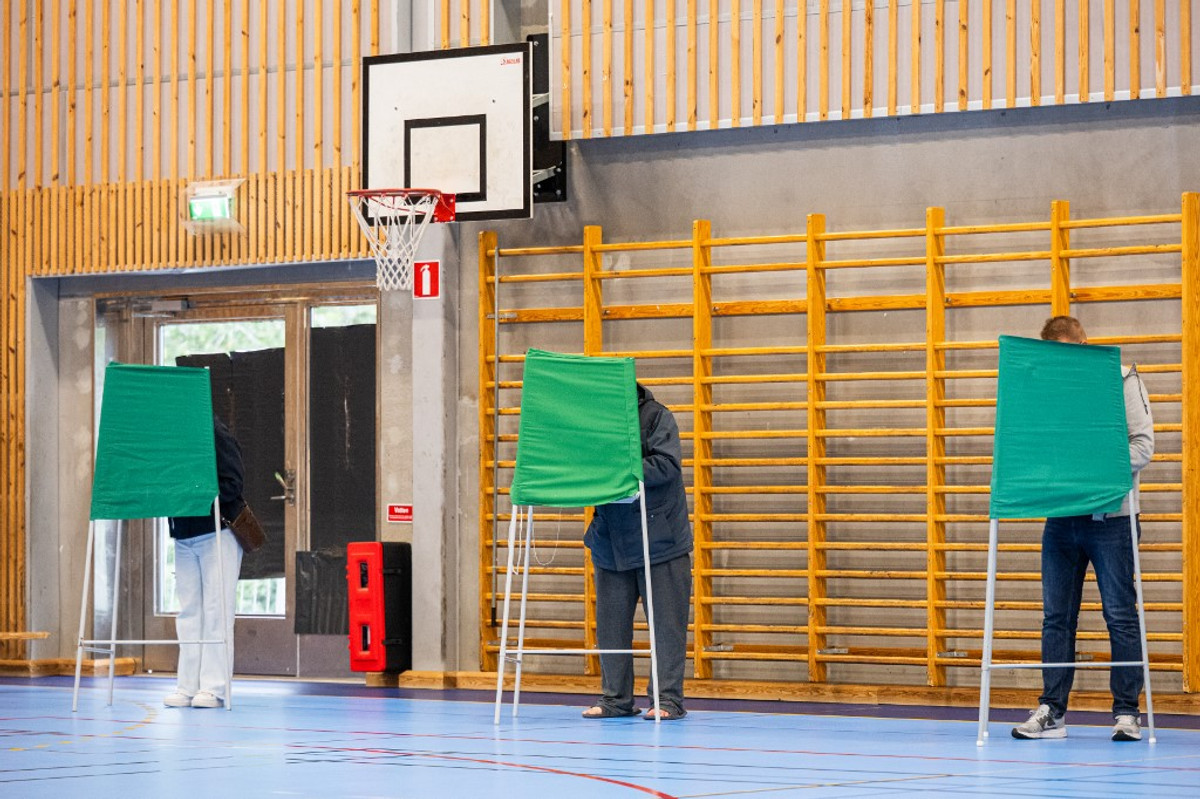
Sweden faced political uncertainty on Monday, after an election thriller that saw the leftwing opposition holding a slim lead with votes still left to count.
603 words~3 min read