Undergraduate organizers of an AI math event at Caltech resisted calls to cancel the event this week. They say it's never been more important to figure out how humans and AI can work together in mathematics.
Christina House/Los Angeles Times via Getty Images
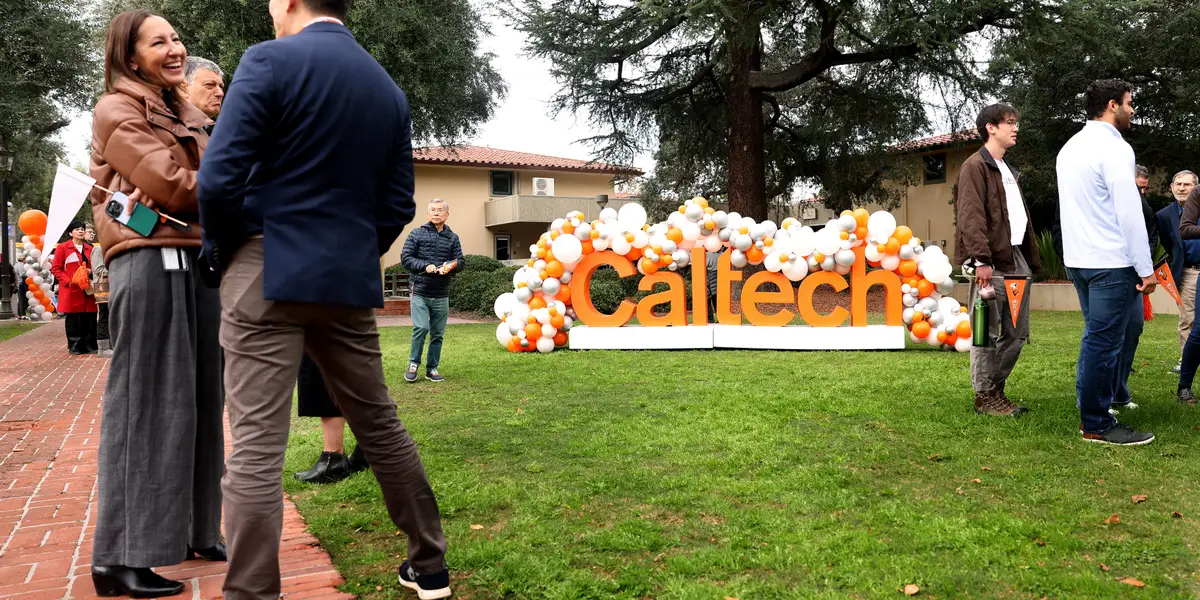
Caiman Moreno-Earle, a math major at Caltech, was wary after watching AI companies rapidly solve mathematical theorems that had stumped his professors for years."It got kind of demoralizing," he told Business Insider.So the 19-year-old sophomore decided to bring together other students and hold a "mathathon," where participants could use AI to solve some of the world's hardest theoretical problems in a single multi-day session.About a month later, Moreno-Earle's idea became a nationwide flash point after more than 700 academics and students signed an open letter denouncing the event as promoting AI "slop," prompting OpenAI, one of its sponsors, to back out.Though the event is set to continue, with some slight alterations, Moreno-Earle and other organizers said they never intended to cause a stir. In their view, they're only trying to ensure that humans remain relevant in a field AI is rapidly uprooting."As young mathematicians, we don't necessarily have some of the same luxuries that these older mathematicians do," Moreno-Earle said. "We look to the future, and we don't even know if there's going to be grad school open positions by the time we get to Ph.D."The split between pioneering undergraduates and tenured professors over the use of AI is not limited to the math field, but the Caltech clash is especially relevant as American academia wrestles with technology that threatens to put them out of work.Math professors, for their part, told Business Insider that despite the alluring headlines, AI's work in math is often quick and dirty and requires hours of human-led research to make sense of the solutions."If the machine understands something new, then there is no progress," said Álvaro Lozano-Robledo, a professor at the University of Connecticut. "The actual progress is when human knowledge advances."