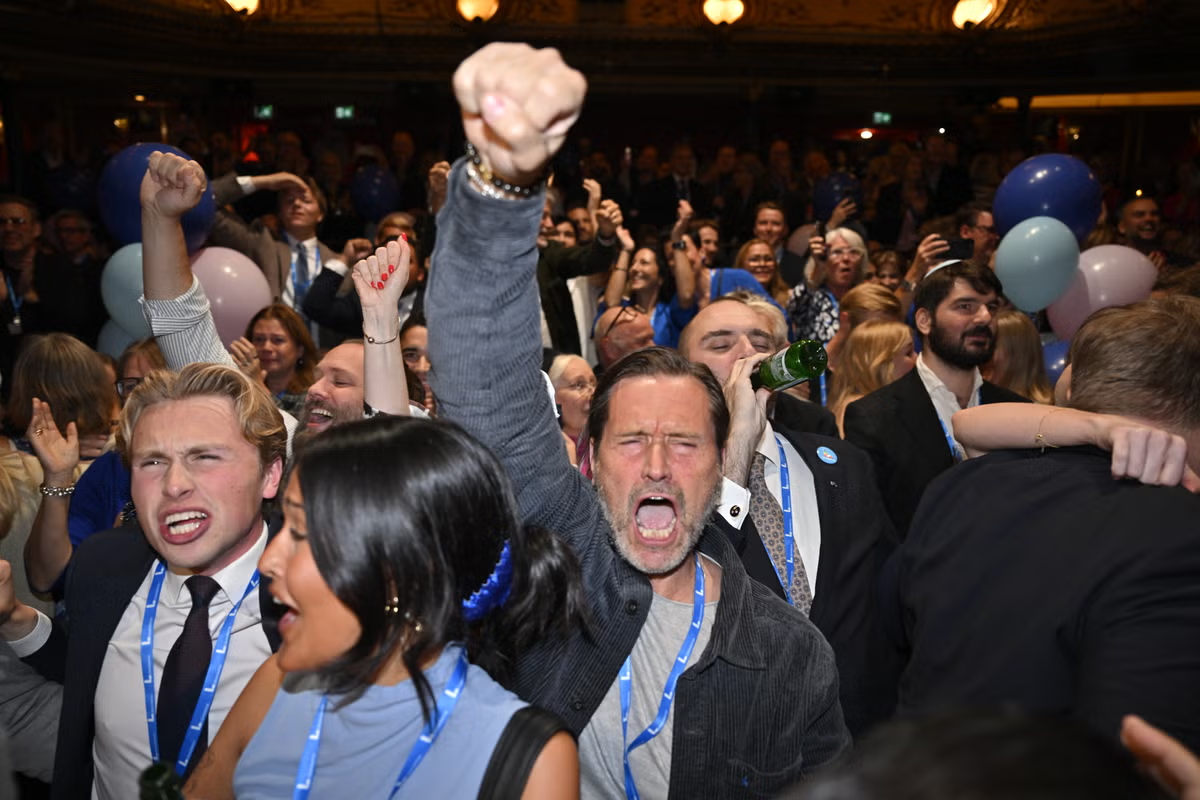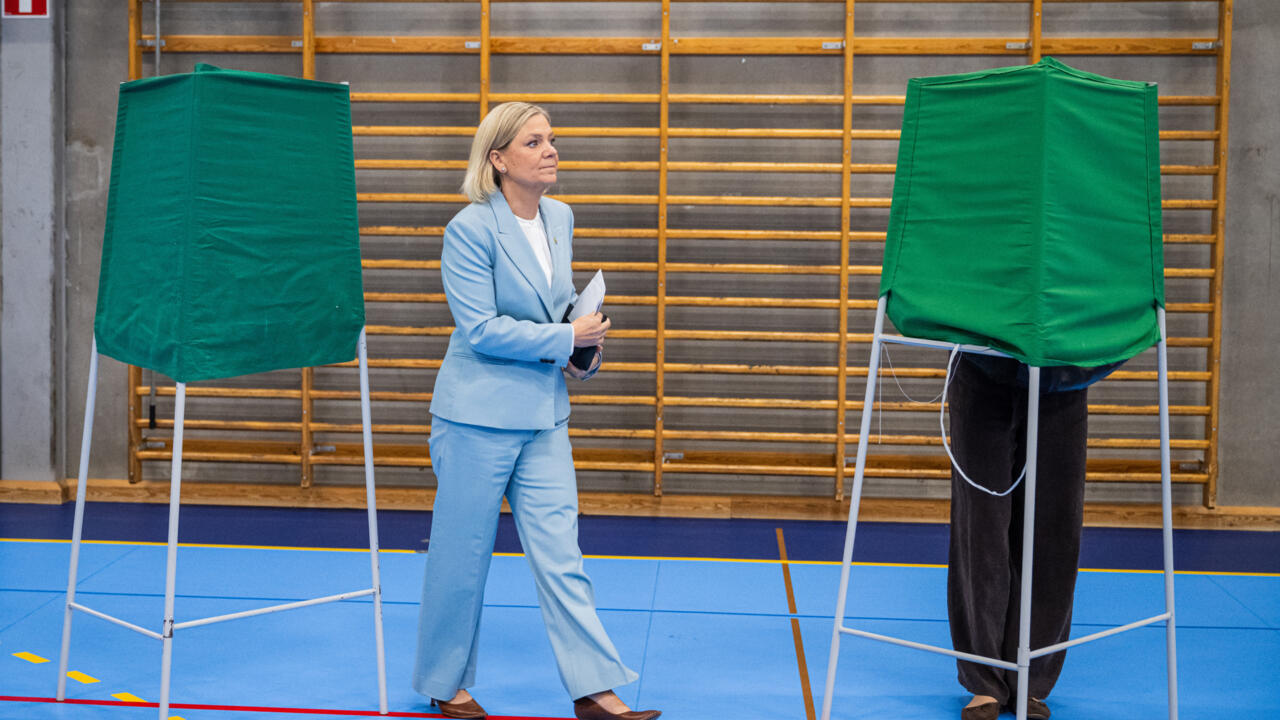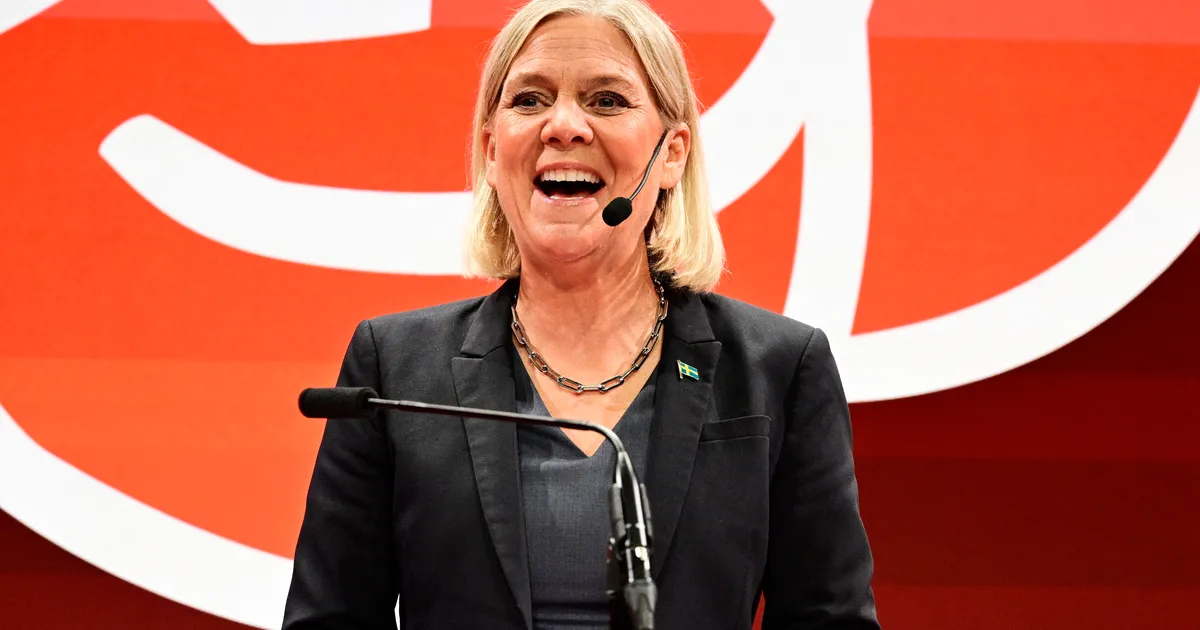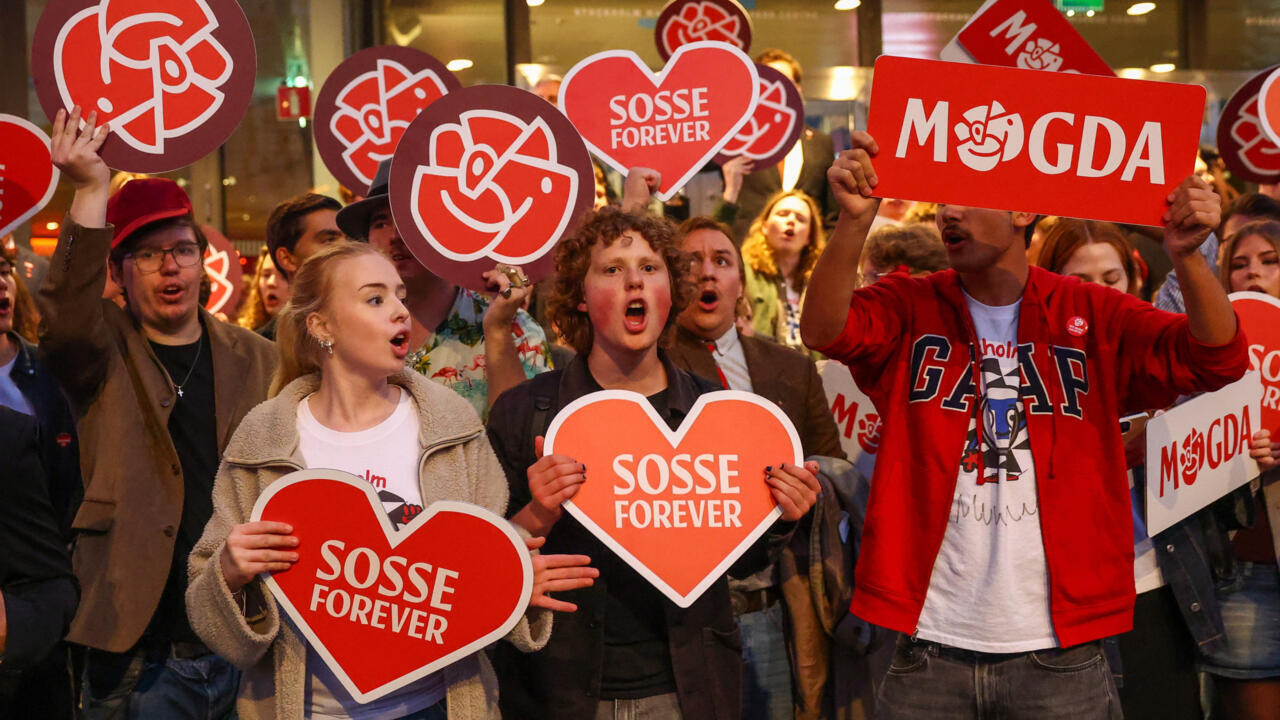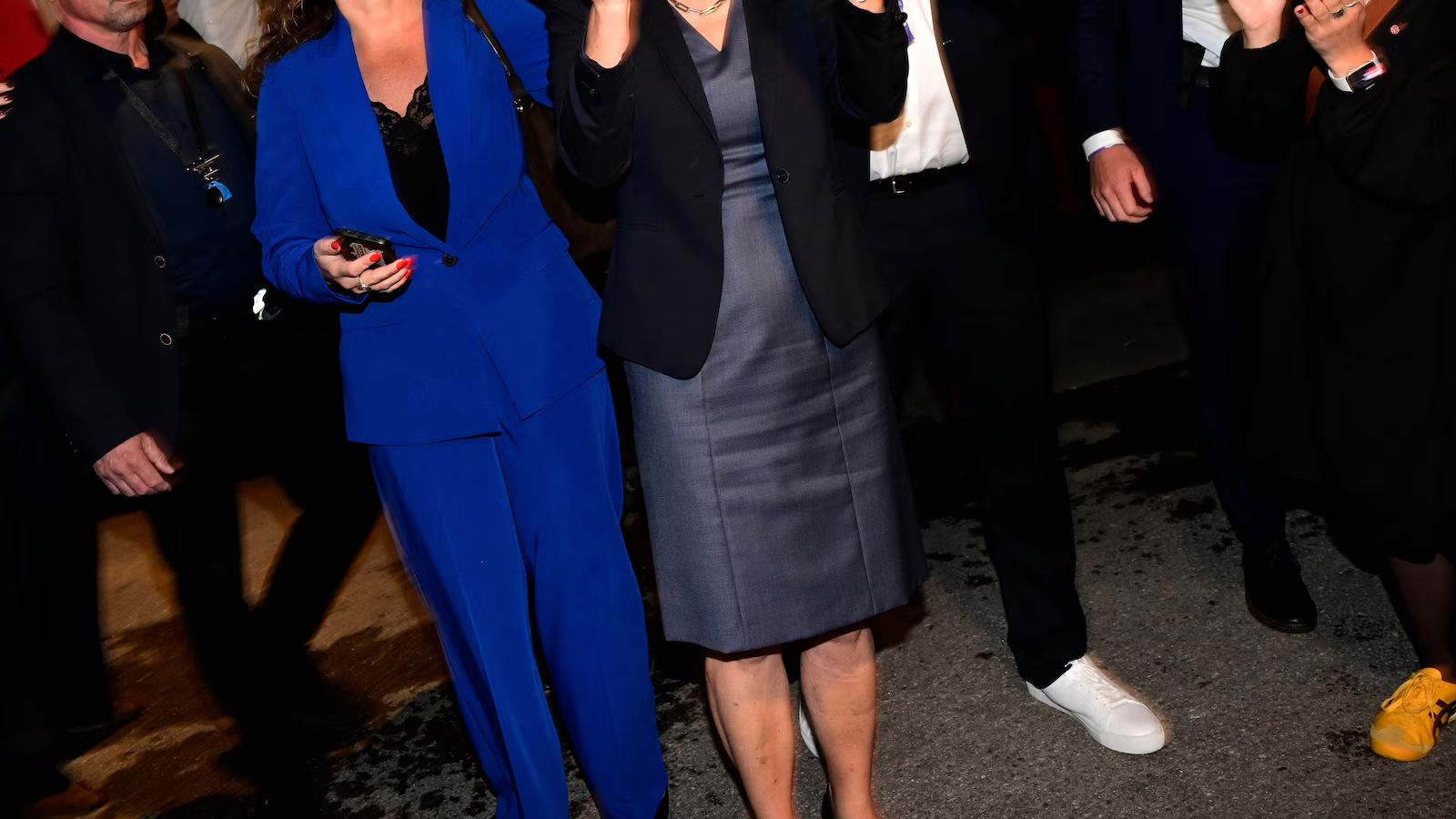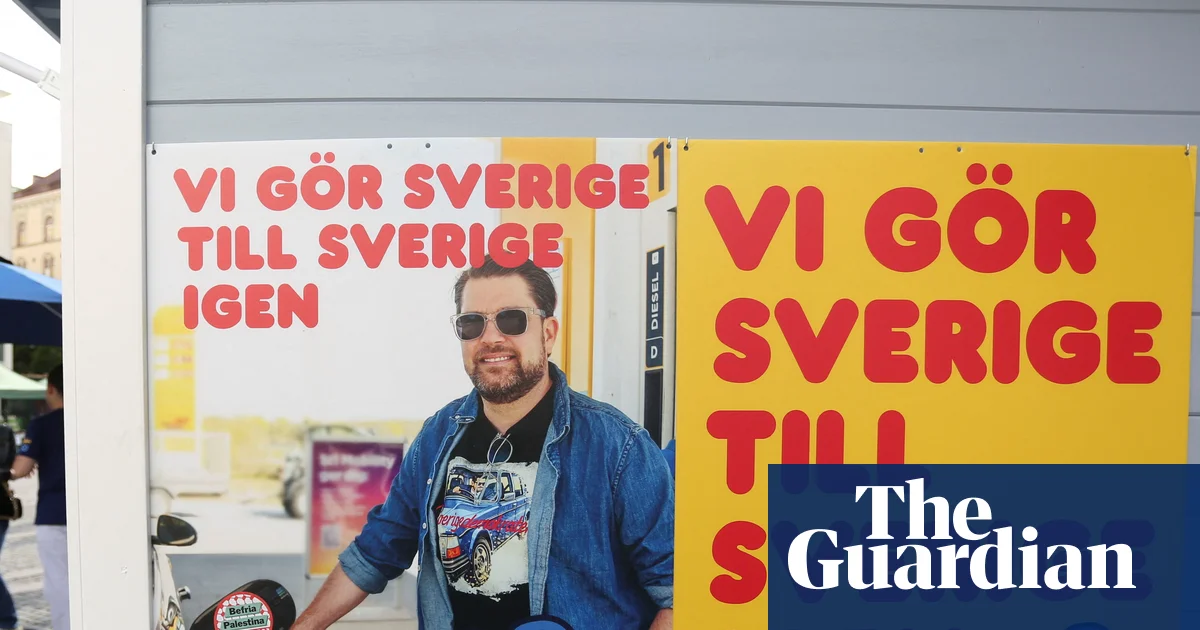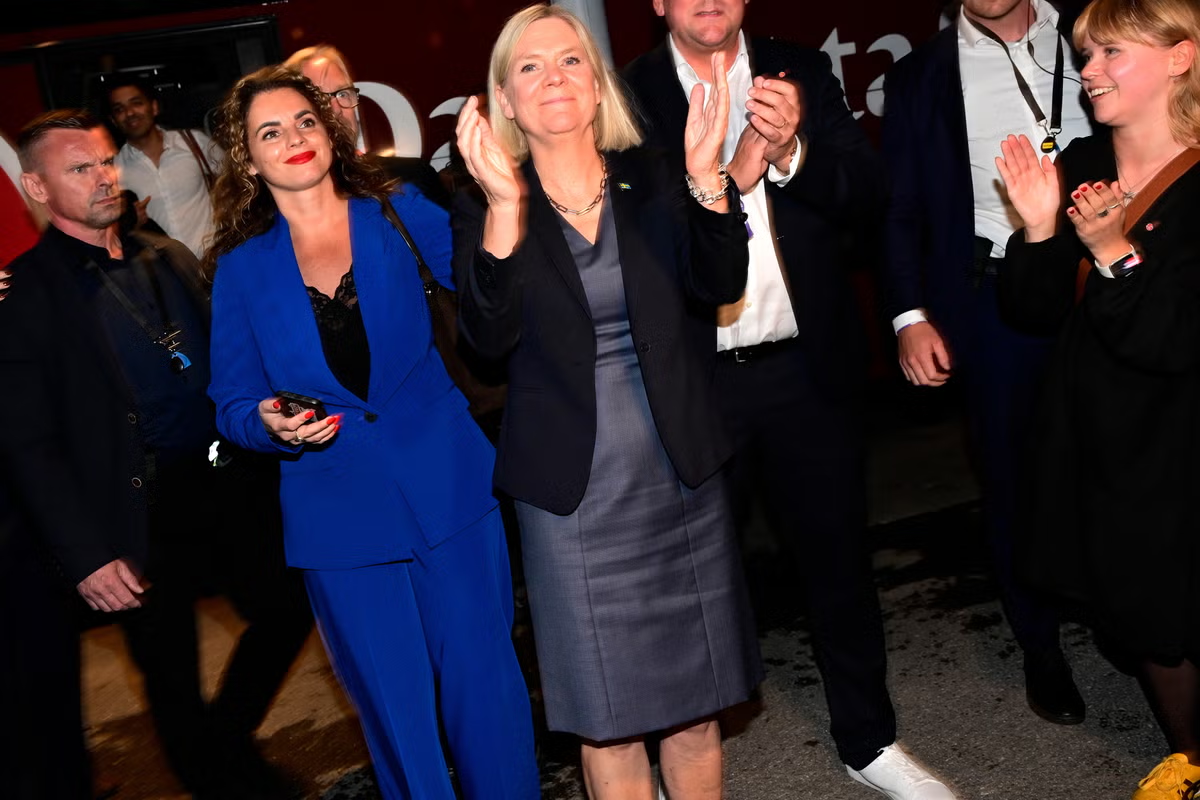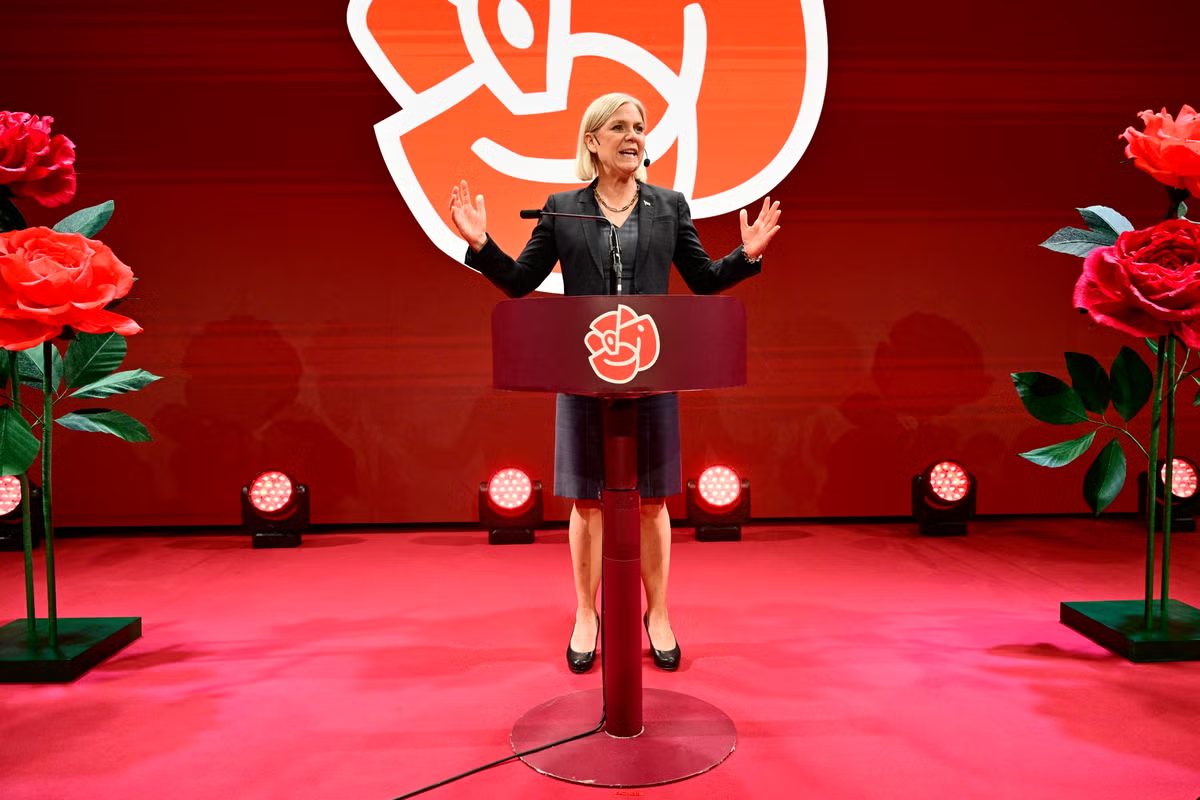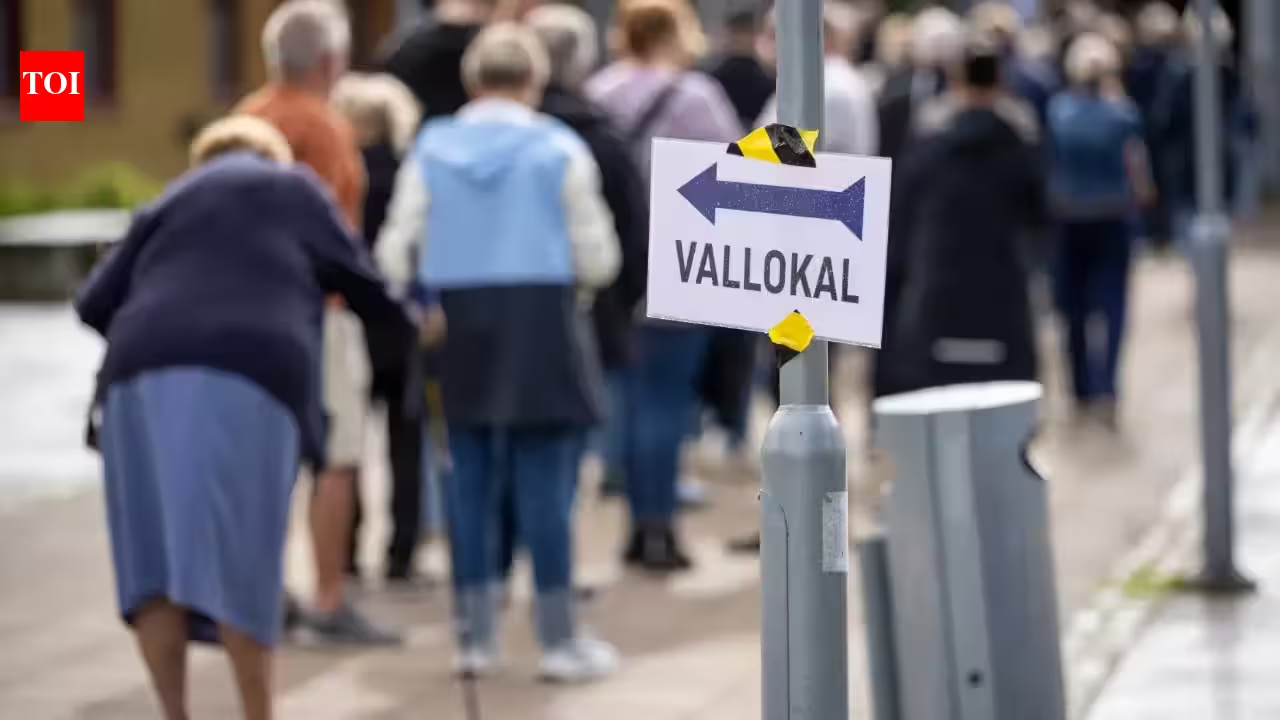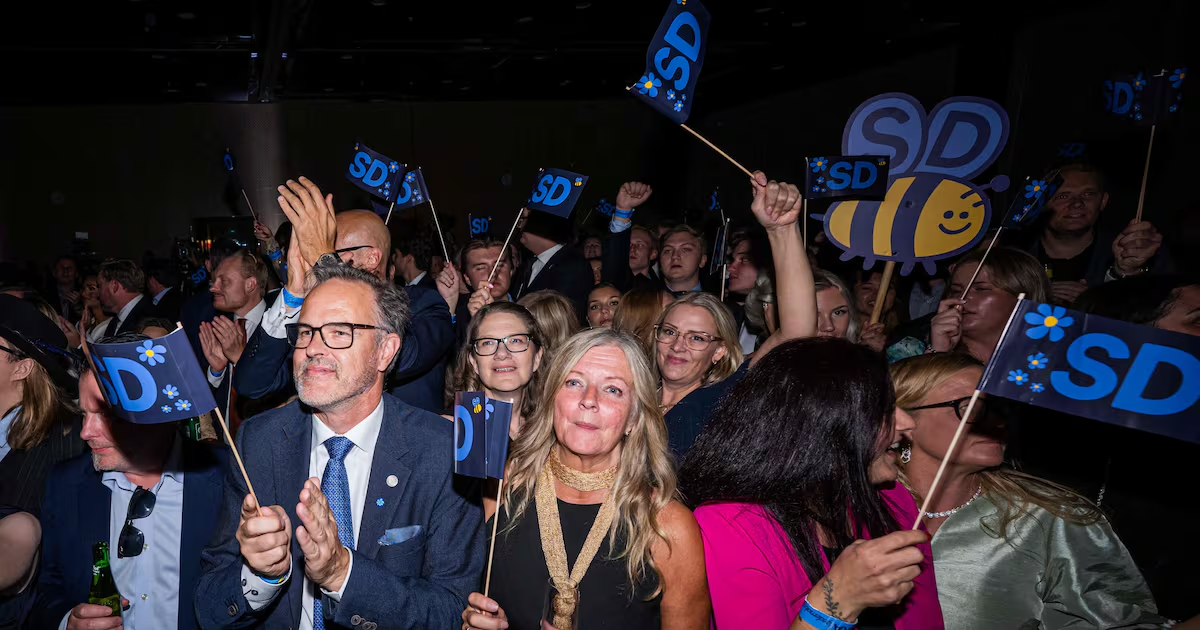
Sweden's national election results showed a slender lead early on Monday for the centre-left opposition over the right-wing government.The left-leaning bloc, headed by the Social Democrats' leader Magdalena Andersson, is expected to win 176 seats in the 349-seat parliament, the Riksdag, based on votes from 6,195 of Sweden's 6,312 election districts, the election authority said.The right-wing governing bloc of Prime Minister Ulf Kristersson is projected to win 173 seats, with ballot-counting continuing and a final result expected on Wednesday at the earliest. According to a projection by national broadcaster SVT, the result will be 175 versus 174 seats.The election, while unlikely to change the course of Sweden's pro-western and pro-Ukraine stance, could decide whether Mr Kristersson's push towards a hard-right clampdown on migration continues, or even accelerates.Given the closeness of the race, the winner may not be known for several days, after all overseas ballots have been counted.In a pre-election pledge, Mr Kristersson broke a long-standing taboo by saying he would bring into government the Sweden Democrats, a far-right party with roots in the neo-Nazi fringe, as he aims to create a majority-right coalition.Christian Democrats leader Ebba Busch looking happy during an election night party in Stockholm. AFPShow caption: Christian Democrats leader Ebba Busch looking happy during a…Many voters on the right say a win would amount to an endorsement of policies that have helped to curb gang violence and cut immigration dramatically.But some in the Nordic nation of 10.6 million have expressed wariness, saying Mr Kristersson's invitation to the far right is a step too far. Critics of the Prime Minister also say his immigration policies – with incentives and penalties that pressure migrants either to conform to Swedish cultural norms or leave the country – are undermining civil liberties.Mr Kristersson has trailed in opinion polls throughout his four years in office but had been catching up in the last weeks of campaigning, while Ms Andersson and her Social Democrats lost ground.Sweden's Prime Minister Ulf Kristersson, leader of the conservative Moderates, speaks to the press on election night in Stockholm. AFPShow caption: Sweden's Prime Minister Ulf Kristersson, leader of the conse…ConstellationHours after voting had ended, Mr Kristersson said he hopes to still cobble together a majority among the eight political groups that secured seats in the Riksdag, saying his party's economic policies were more popular than the opposition's.“Even if tonight's results hold, I will explore whether it's possible to find a viable government constellation … capable of securing support for the fiscal policy Swedish voters have voted for,” he said.Ms Andersson's bloc is split over issues such as migration – with the party leader favouring a more restrictive line than some of her partners – and a tax on billionaires and construction of new nuclear reactors.Her budget plans may also struggle to find support given that the Left Party, Sweden's former Communist party, and the Centre Party, which favours free-market policies, do not see eye-to-eye on many economic issues.Electoral success for the Sweden Democrats would be welcomed by Europe's ascendant far-right parties, which were bolstered by the anti-immigrant Alternative for Germany's win in a German state election last week.The far right hopes for gains in imminent elections across Europe, with the National Rally's campaign for the French presidency next year potentially its biggest prize.While voting on Saturday in Rinkeby, near Stockholm, the Sweden Democrats' long-standing leader Jimmie Akesson said the suburb, home to one of the country's biggest Swedish-Somali populations, “doesn't look like Sweden”.Sweden was long one of Europe's most welcoming countries for immigrants until Mr Kristersson came to power four years ago. His government abolished permanent residency for refugees, tightened welfare rules and stepped up expulsions of those without an official right to stay.The Sweden Democrats acknowledge the party was founded in part by neo-Nazis and white supremacists in the 1980s, but say they have eliminated such extremists from their ranks and apologised for their past.They have said that, if in government, they would try to ban women from wearing face coverings in public and defund all projects related to the integration of newcomers.In the latest election results, however, the group is set for a reduction in both parliamentary seats and vote percentage for the first time in Mr Akesson's more than two decades as party leader.
Sweden’s general election on a knife-edge as far-right trails by narrow margin | The National
Final results could take until Wednesday in contest focused on migration, crime and Ukraine
709 words~3 min read