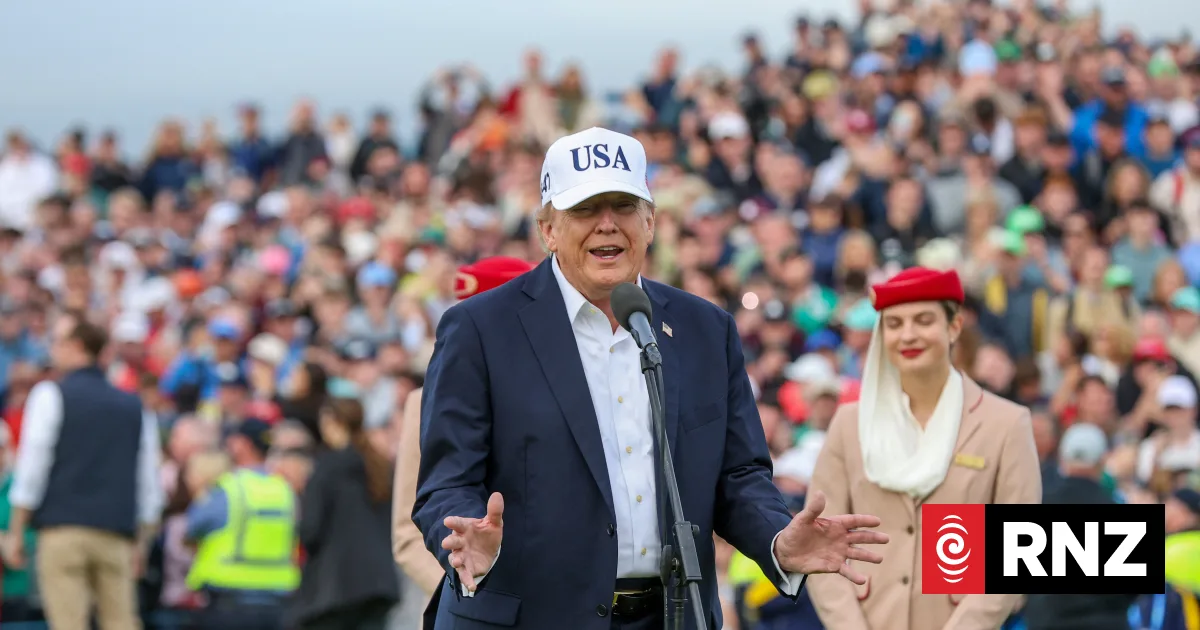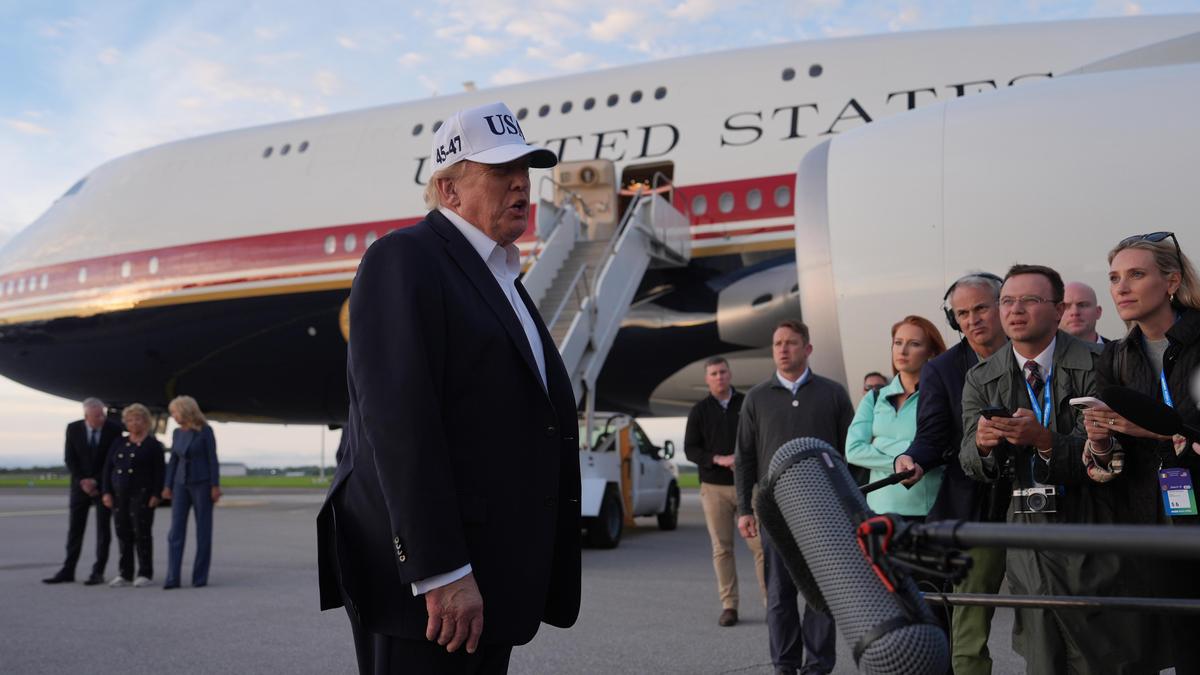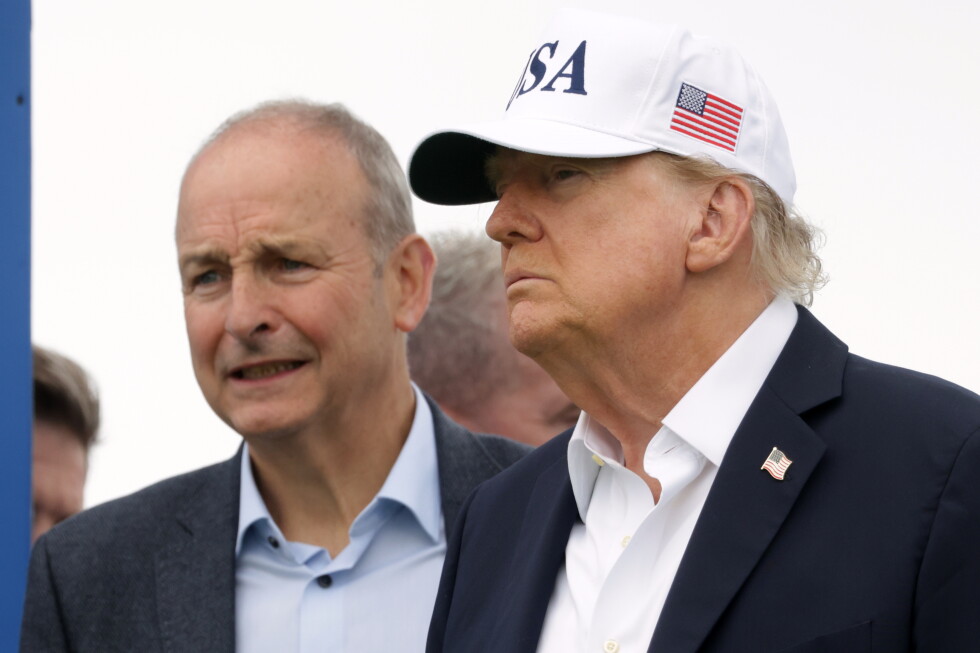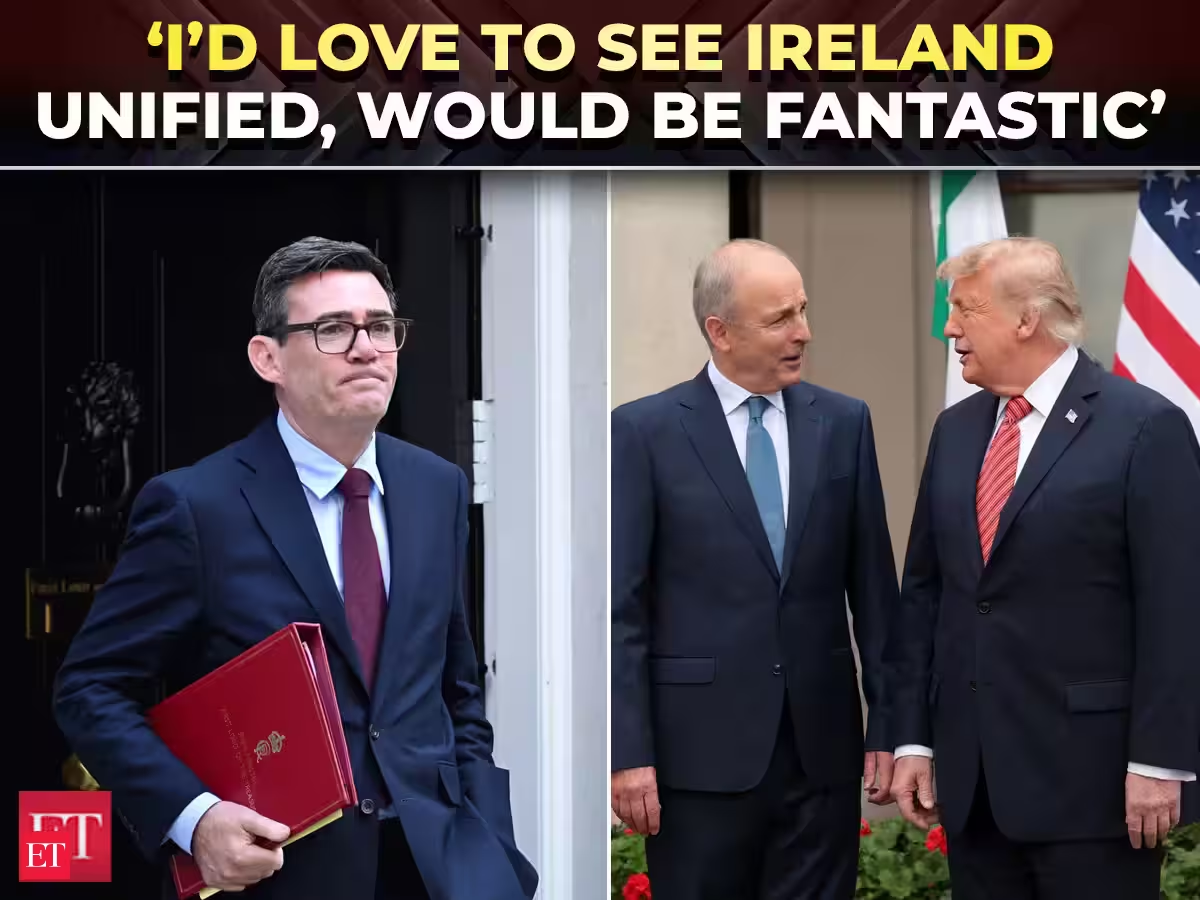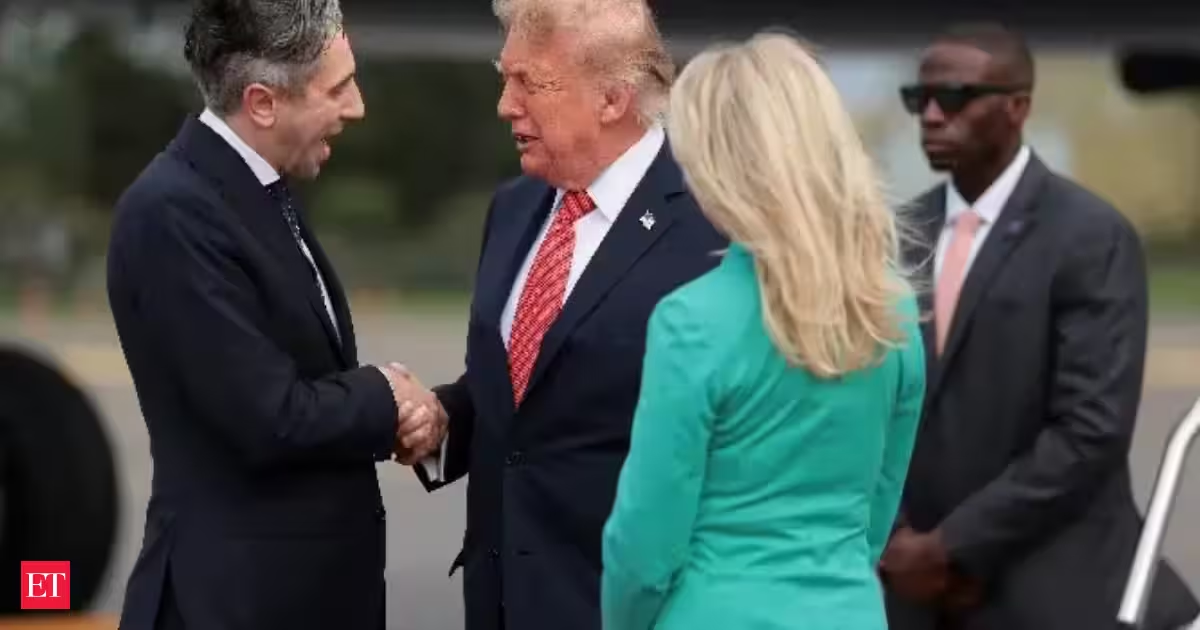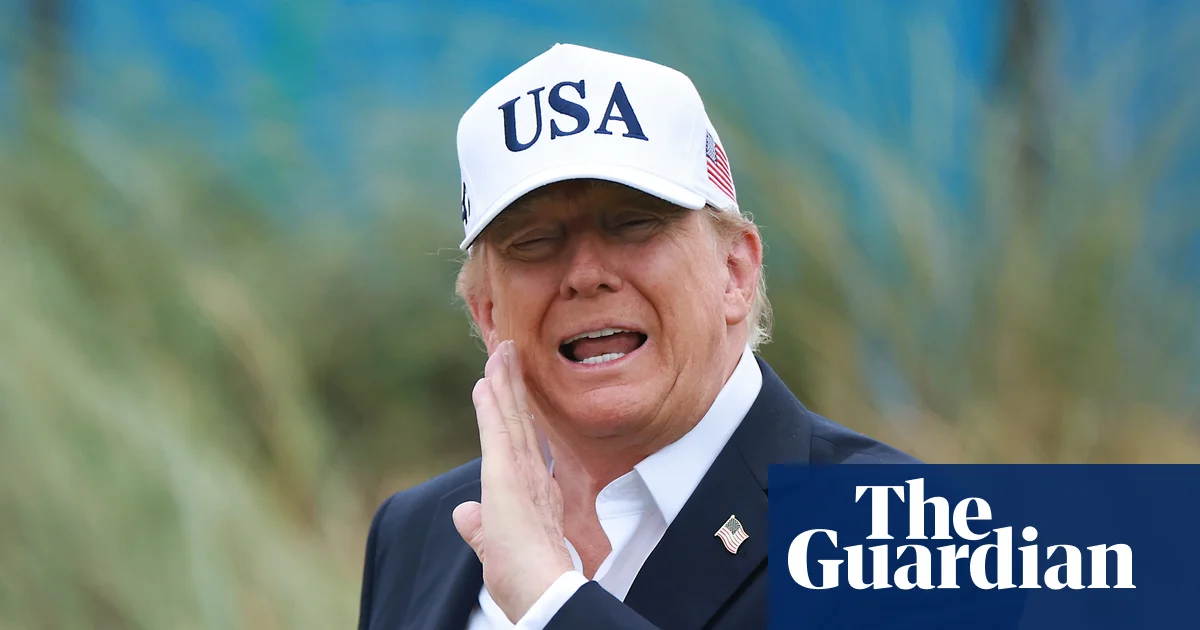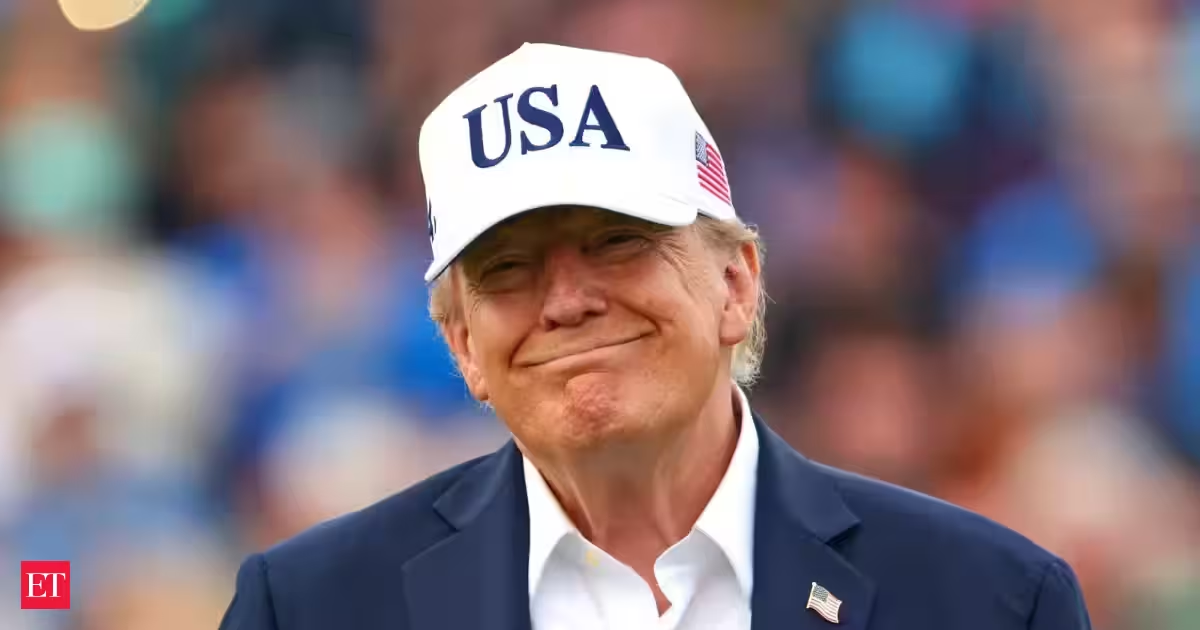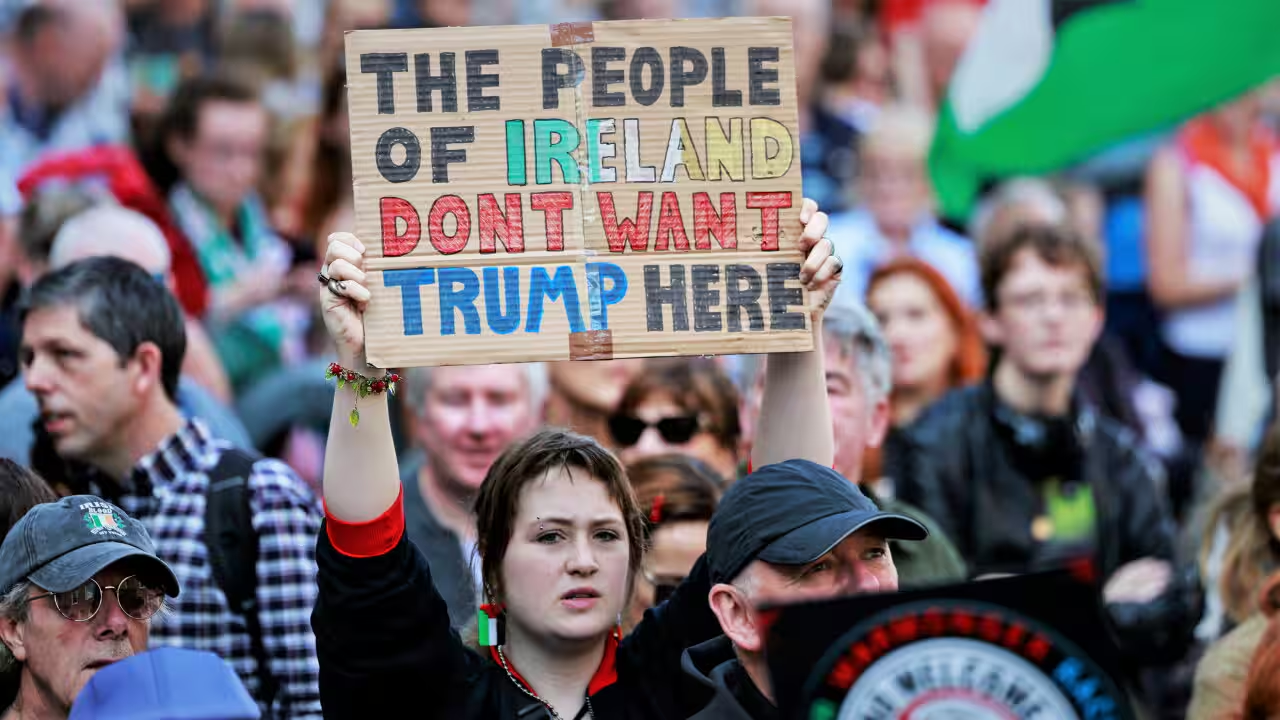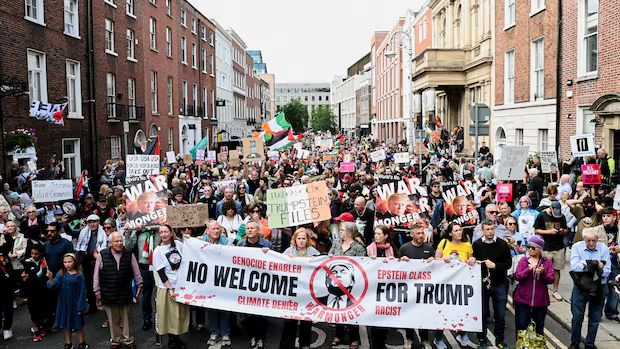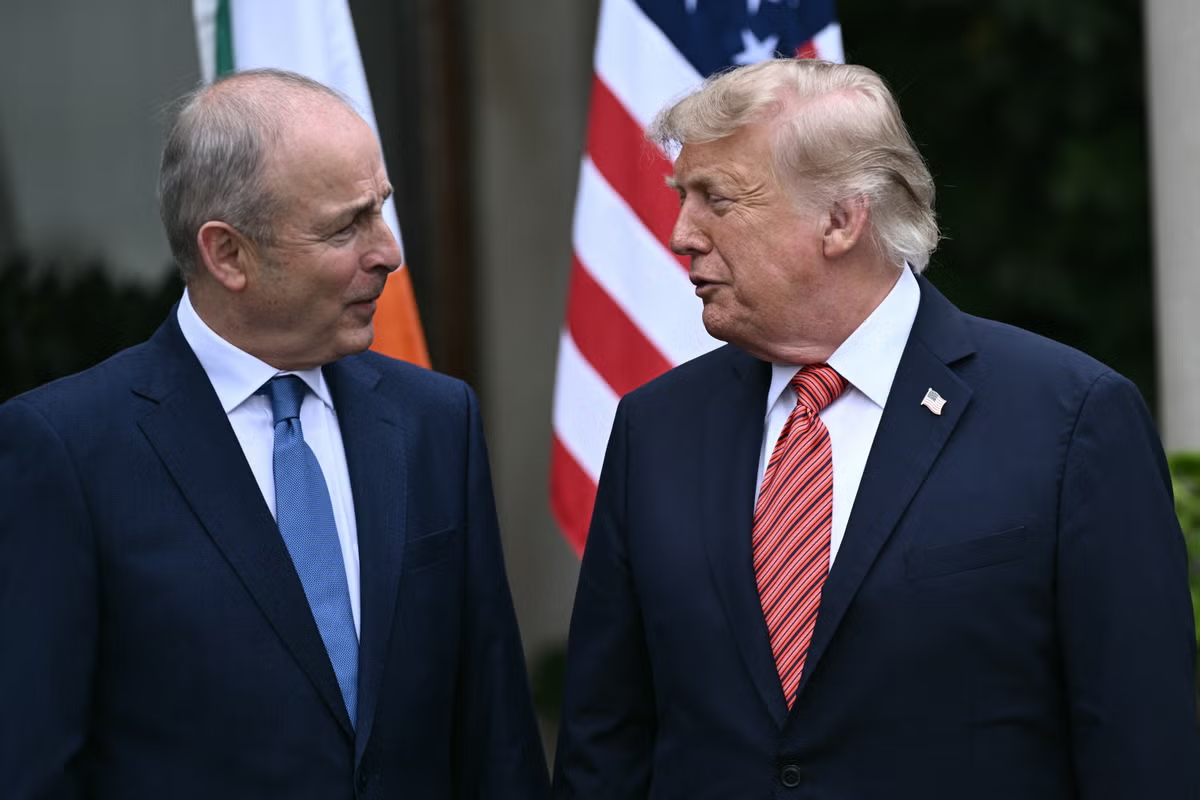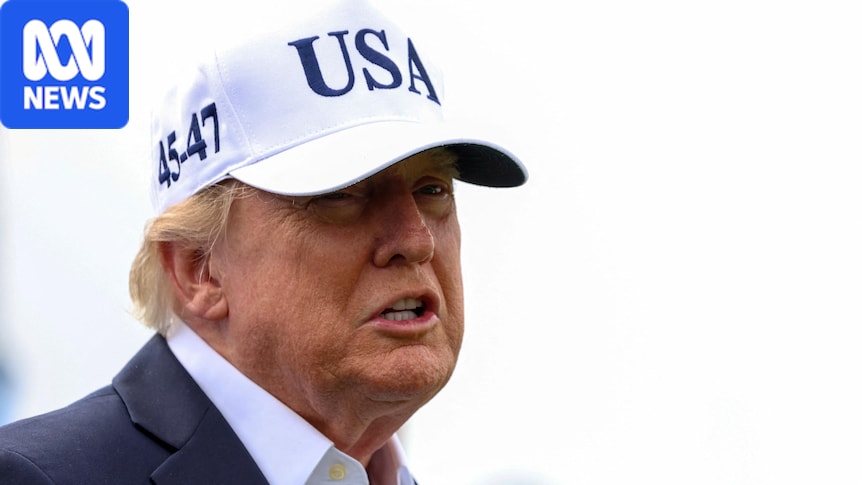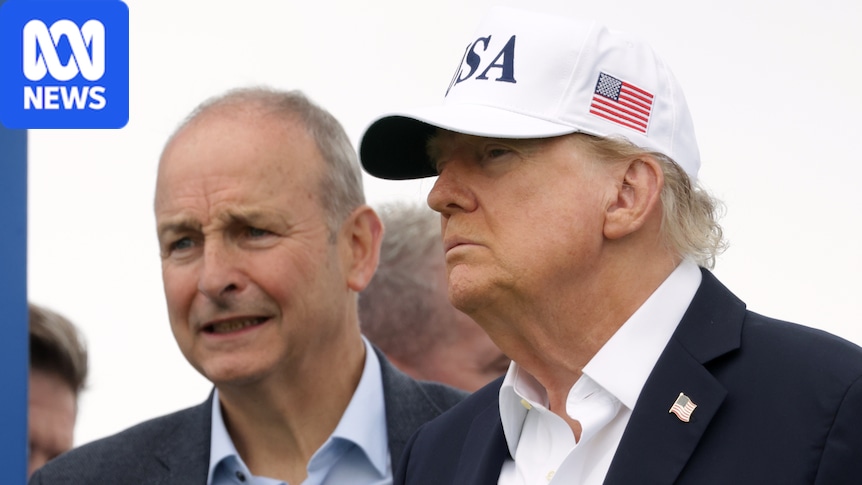
US President Donald Trump has caused a stir by stating his support for a unified Ireland.The comments, made during a weekend trip to the Republic of Ireland, were striking because previous US presidents — even those with Irish roots, like Joe Biden — have avoided commenting directly on the subject of unification.The issue remains a flashpoint within the UK and Ireland 28 years since the end of The Troubles, a period of civil unrest and violence over the status of Northern Ireland.Here's what you need to know.Trump makes his point, three timesOn Saturday, local time, Donald Trump had a meeting with Irish Prime Minister Micheál Martin in Dublin, and said they discussed various topics including trade.Mr Trump afterwards said he backed Irish unity."Well, I don't want to cause any problems, but I will tell you, I'd love to see it unified," Mr Trump said."It's going to happen eventually … I think it would be a fantastic thing."Now the UK will have something to say about it … but I think it would be a great thing."Mr Trump said later on Saturday that there "was no good answer" to the question on Irish unity but repeated that he thought it would be "a very cool thing".Donald Trump's visit to Ireland combined both politics and golf. (Reuters: Cathal McNaughton)On Sunday, Mr Trump attended the Irish Open at his golf course in Doonbeg, western Ireland, and repeated his comments."You have Northern Ireland and you have Ireland and it would seem to me that one of the 'naturals' of all time is to put them together," Mr Trump said.Why have the comments sparked controversy?After centuries of colonial rule, most of Ireland won independence from Britain a century ago in the Irish War of Independence, becoming a self-governing Roman Catholic-majority country.Under the Anglo-Irish Treaty, the United Kingdom maintained rule over Northern Ireland, which was split between two main communities: nationalists — most of them Catholic — who desired unification with the rest of Ireland, and largely Protestant unionists, who wanted to stay British.Protesters with balloons demonstrate against the visit of Donald Trump in Dublin on Saturday. (AP: Kin Cheung)In the late 1960s, tensions exploded into The Troubles, three decades of violence involving republican and loyalist paramilitary groups as well as British troops and security services.Over 3,500 people died, many civilians, in a series of bombings in Ireland and the UK, while British troops carried out violent enforcement, including the Bloody Sunday massacre.Mr Trump's comments come weeks after new British Prime Minister Andy Burnham said a referendum on Northern Ireland leaving the United Kingdom was "off the table", a position Downing Street on Saturday said remained unchanged.Under the terms of the 1998 Good Friday Agreement, the accord that largely ended 30 years of conflict, a referendum can be held only at the discretion of the British government.How have politicians reacted?Gavin Robinson, the leader of the Democratic Unionist Party, Northern Ireland's largest party advocating continued union with Britain, wrote on X:"Northern Ireland's constitutional future will be decided by the people of Northern Ireland, not by commentary in London, Dublin or Washington."Northern Ireland is part of the United Kingdom because that is the settled democratic will of its people."Sinn Féin, a political party that supports the unification of Ireland, said it approved of Mr Trump's comments, although the left-leaning party has little in common with him politically.Gerry Adams who was Sinn Féin leader when the Good Friday accord was signed, said:The "remarks by President Trump on the issue of Irish unity are welcome, even though we profoundly differ with him on many other matters."Andy Burnham's office pointed back to his statement last week that he was "100 per cent" behind the Good Friday accord and that the UK would only consider allowing a referendum "when public opinion has changed to the point where the call has to be considered".Andy Burnham says a unity referendum is "off the table". (AP: Kin Cheung)Opposition UK Conservative Party leader Kemi Badenoch said Mr Trump was "shooting from the hip as usual, just like he did with Greenland and Canada becoming the 51st state". "This sort of loose talk about the future of democratic countries is deeply unhelpful and creates unnecessary tension."Donald Trump has repeatedly spoken of plans to make Canada the "51st state" of the US, and angered authorities in Greenland by suggesting he could launch a takeover of the country.Will Trump weigh in on Scotland next?Mr Trump was asked on Sunday about independence for Scotland."You asked about Scotland. That one I won't talk about yet. I'll save that for another day," he said.Scotland held a referendum in 2014 in which the population narrowly voted to remain part of Britain. Governments since have ruled out an immediate re-run.In a separate development, the leaders of the main Scottish, Welsh and Northern Irish separatist parties announced in a statement that they were to hold talks in Cardiff on Monday, local time, aiming to advance their campaigns to break away from Britain.ABC/Wires
Donald Trump reiterates support for united Ireland, won't talk about Scotland 'yet'
Donald Trump reiterates his support for Northern Ireland breaking from the United Kingdom to unify with the Republic of Ireland.
827 words~4 min read