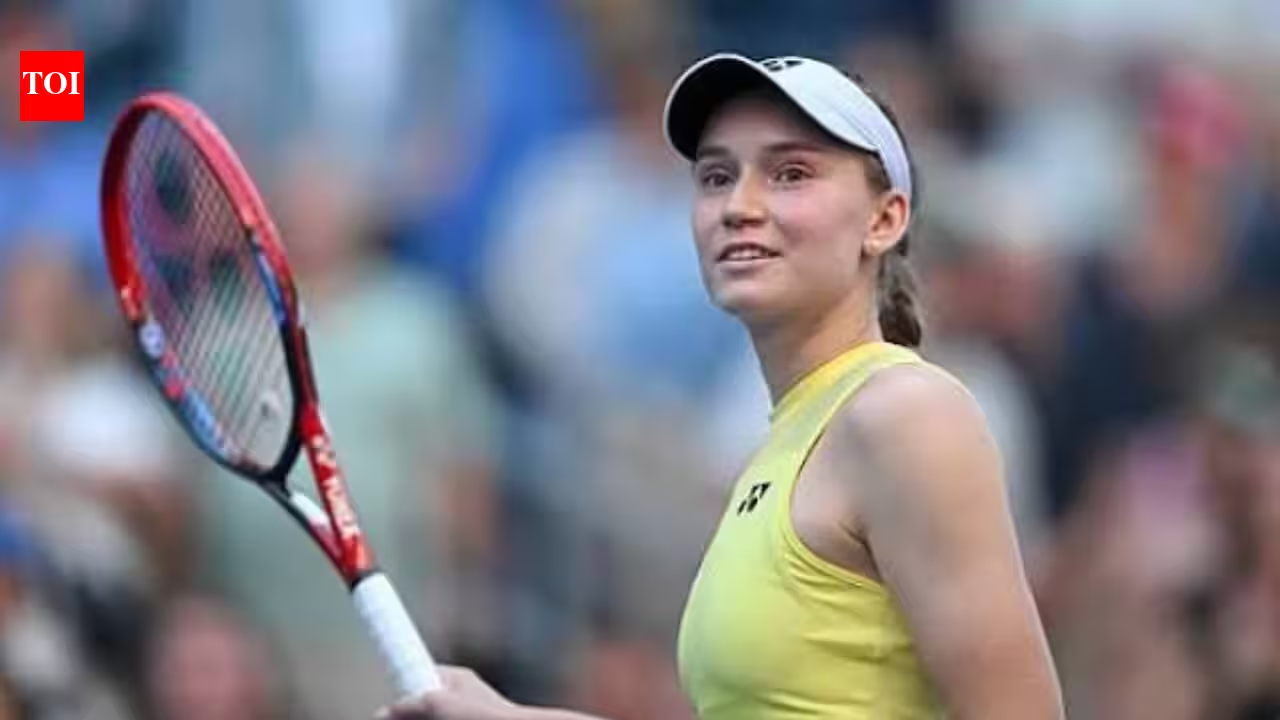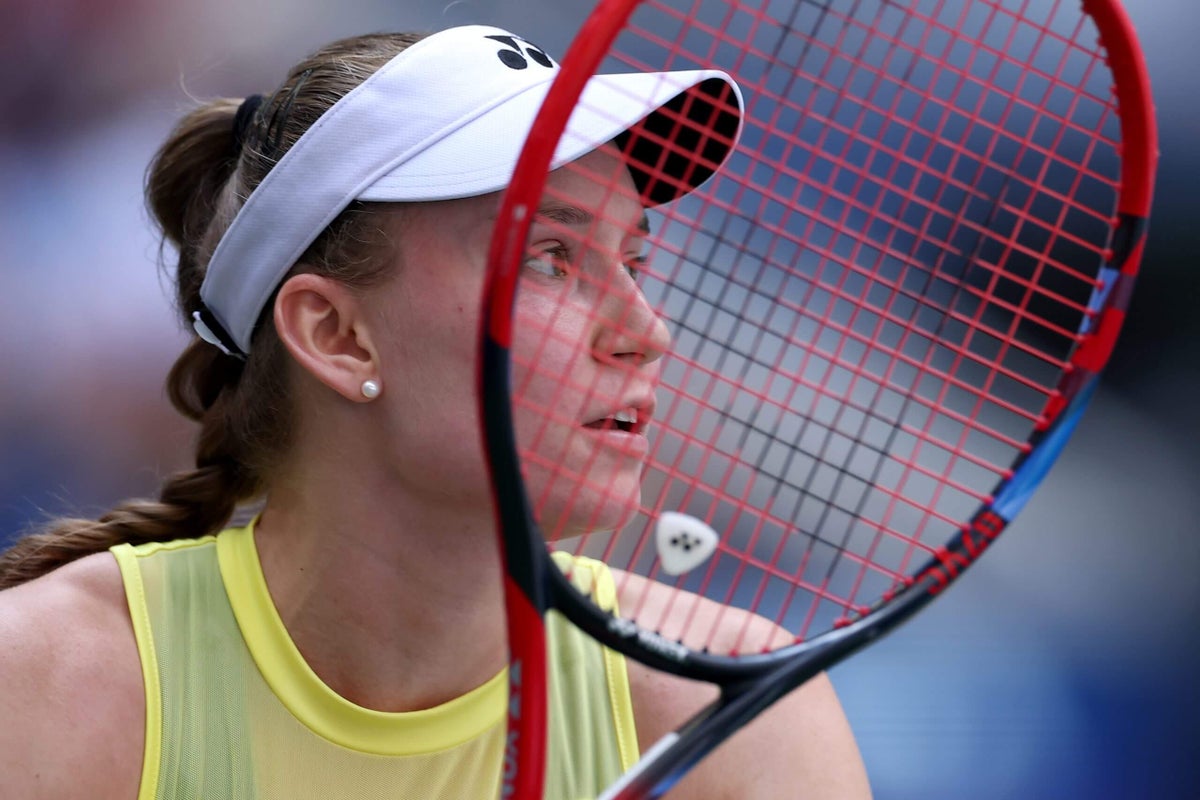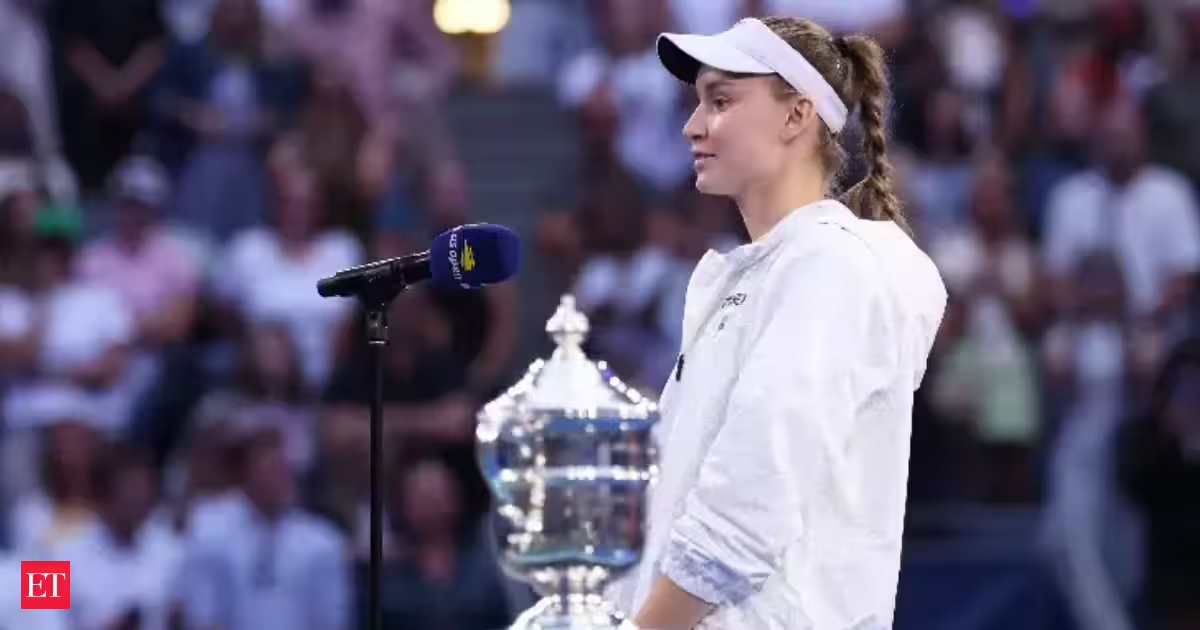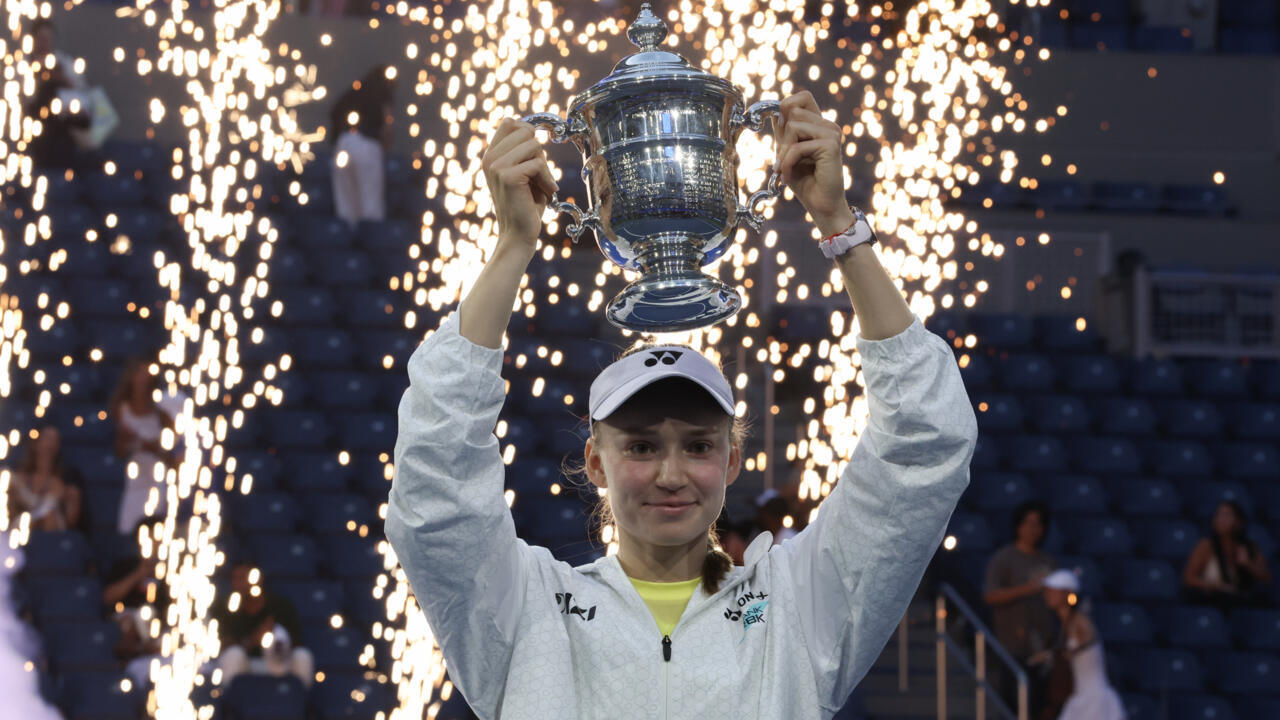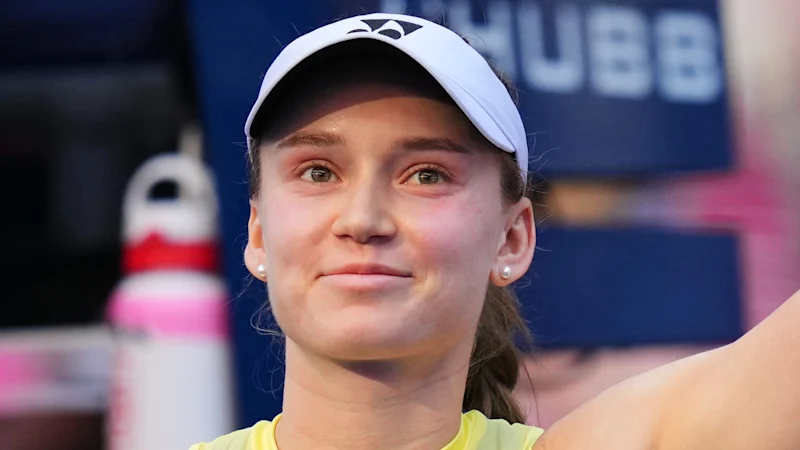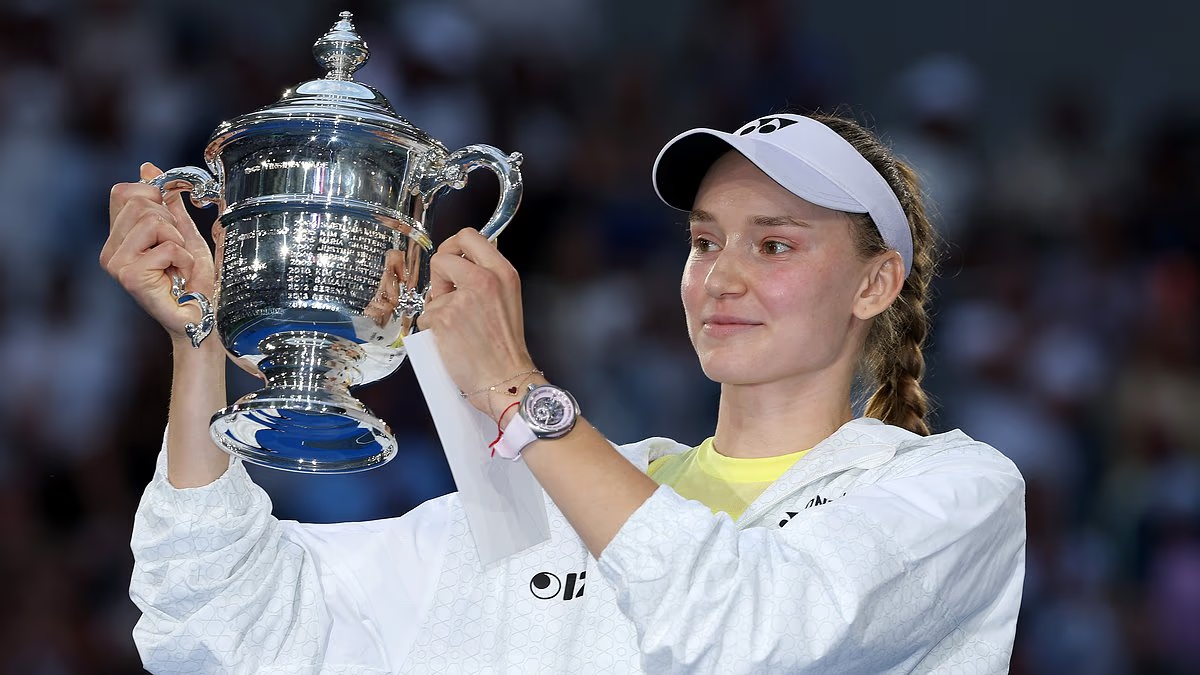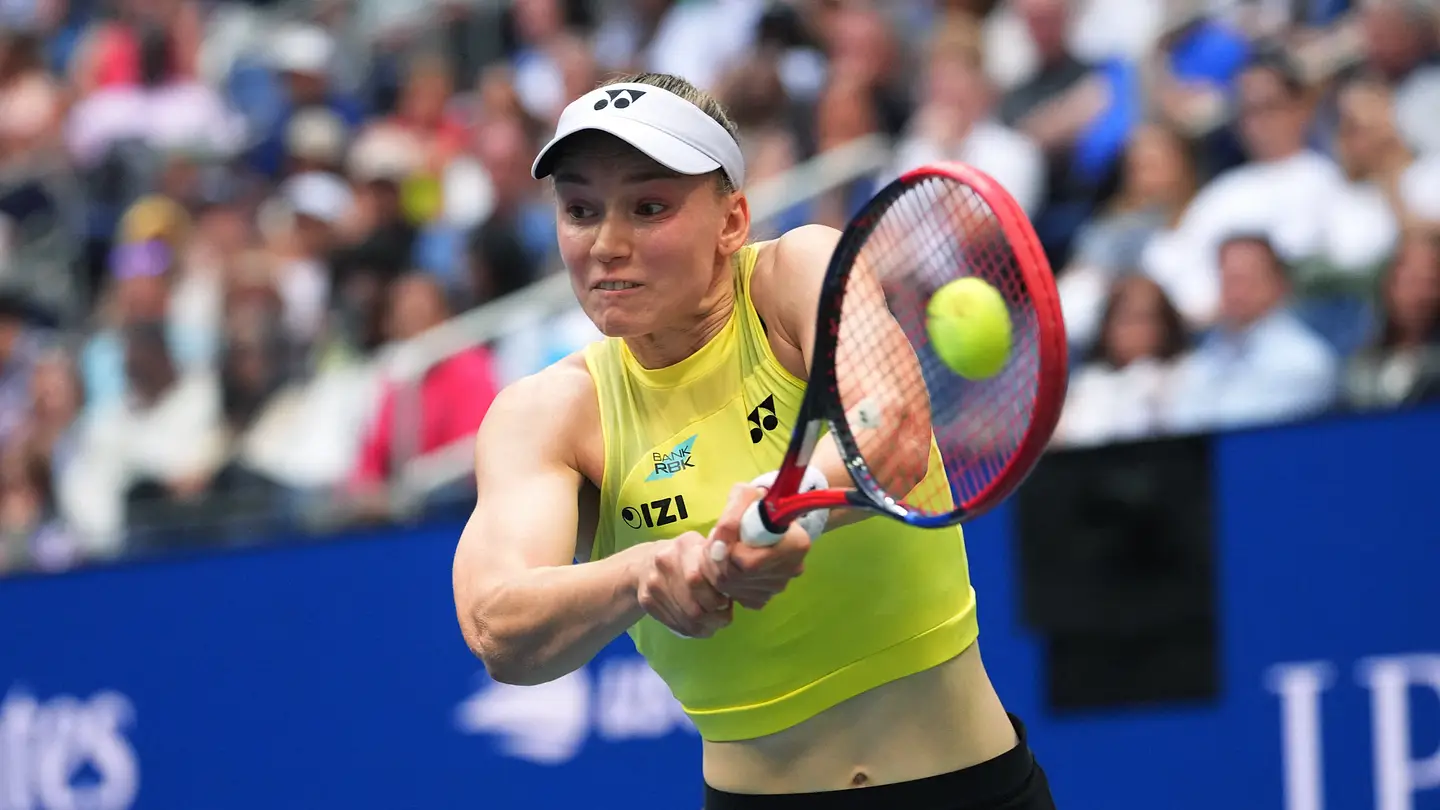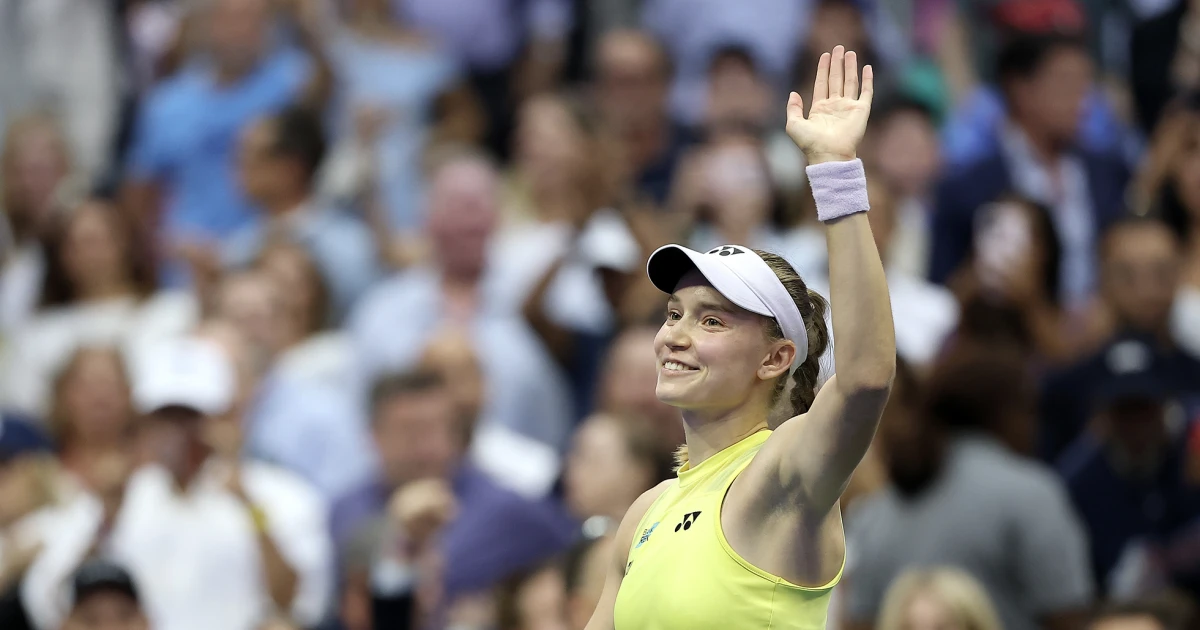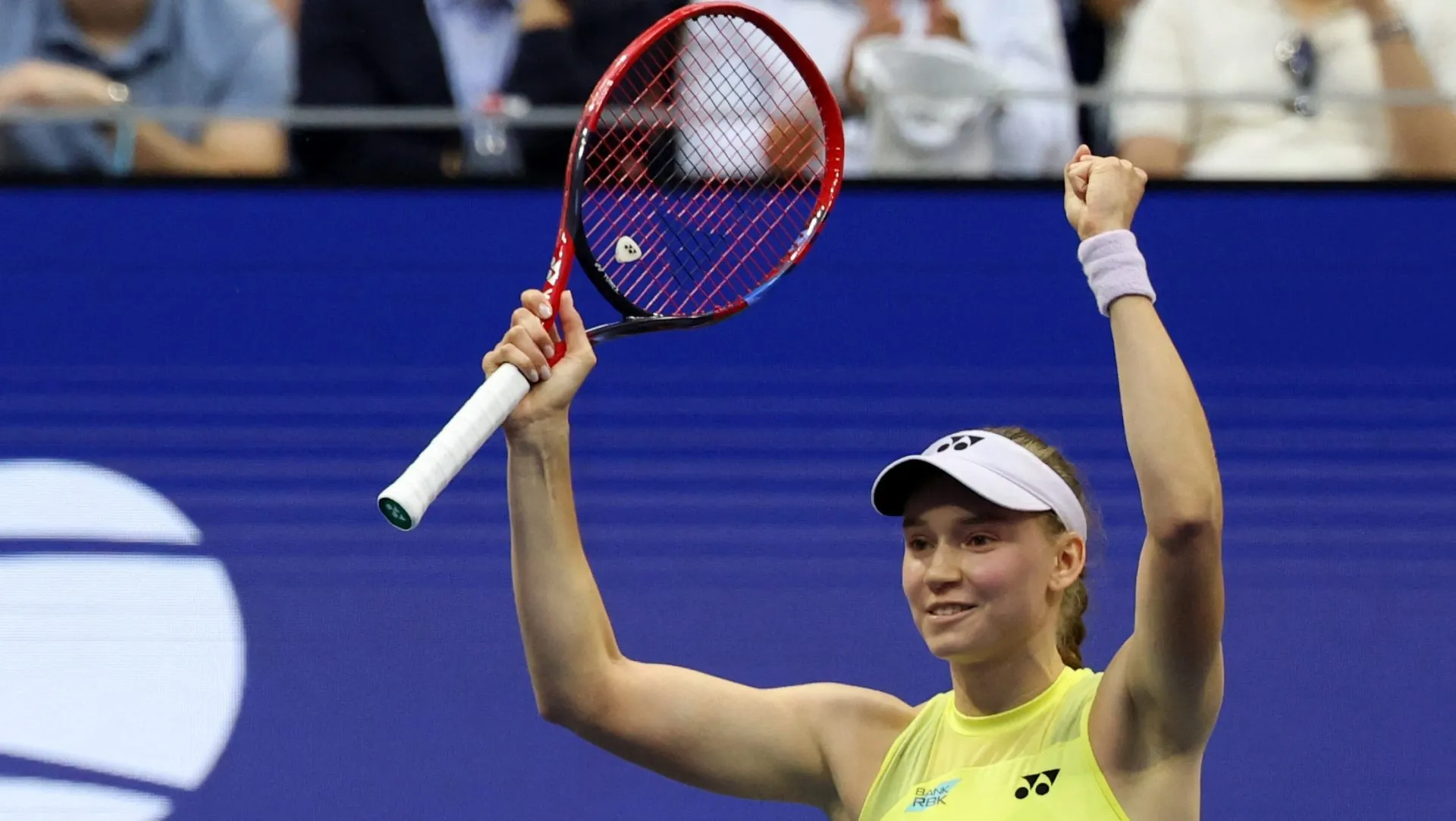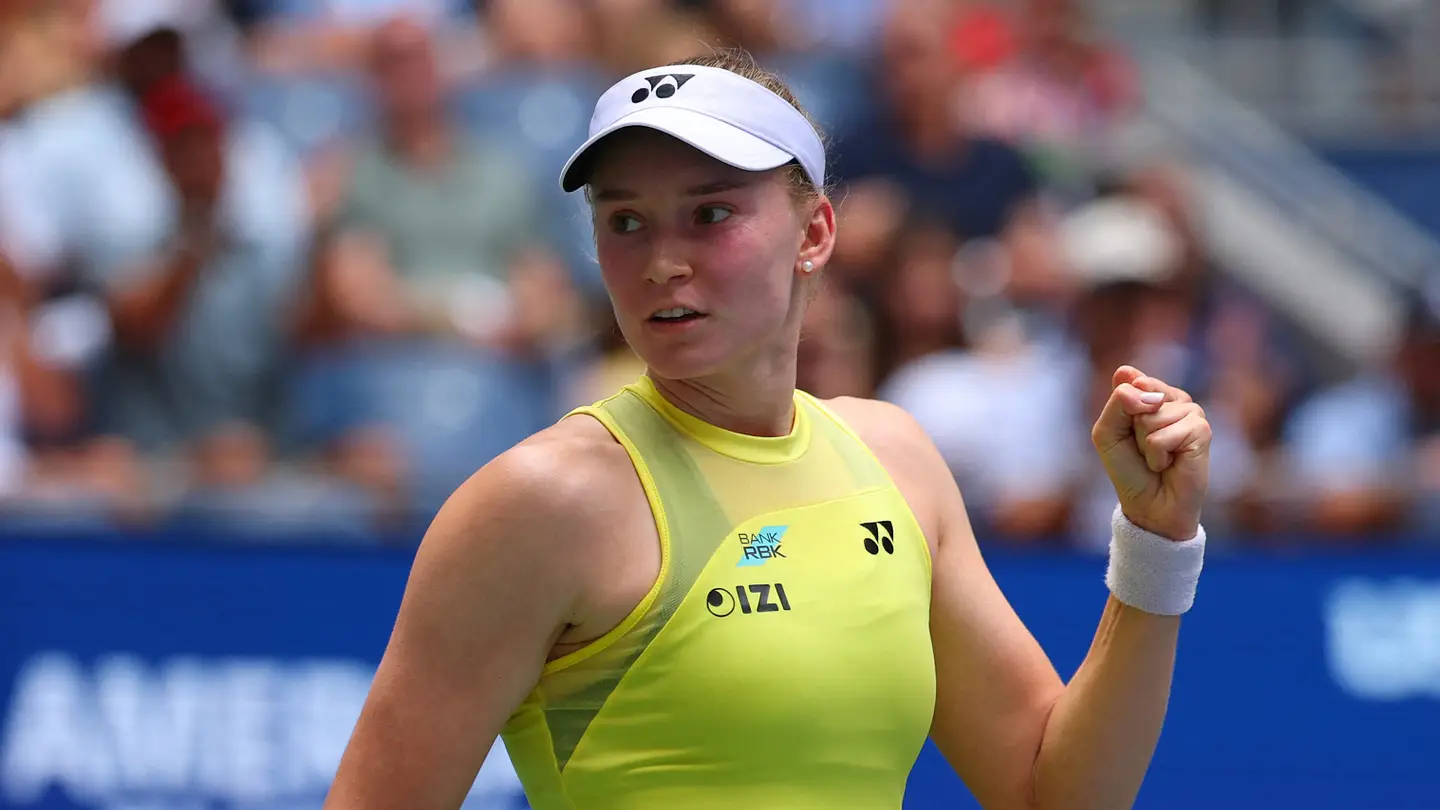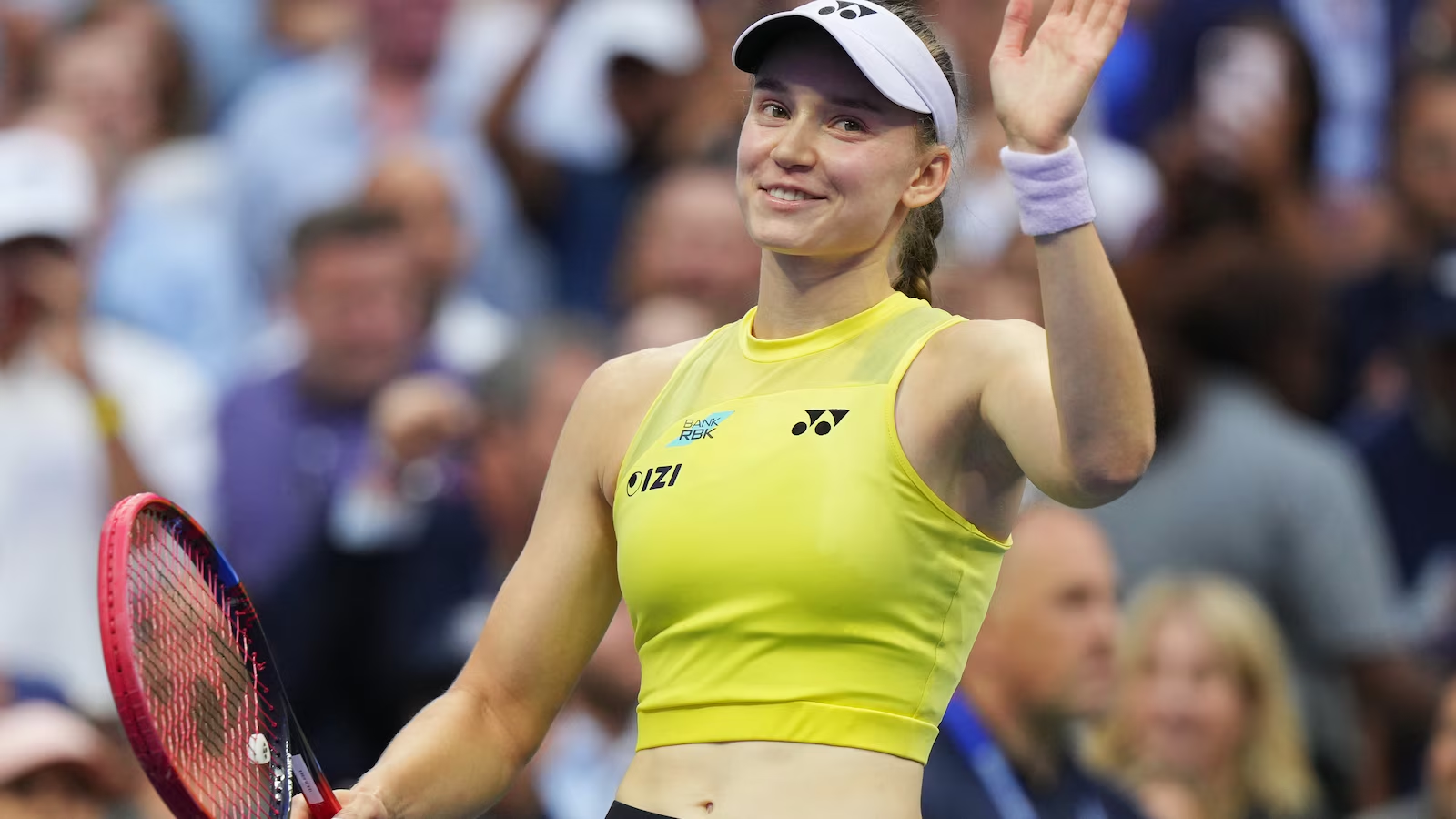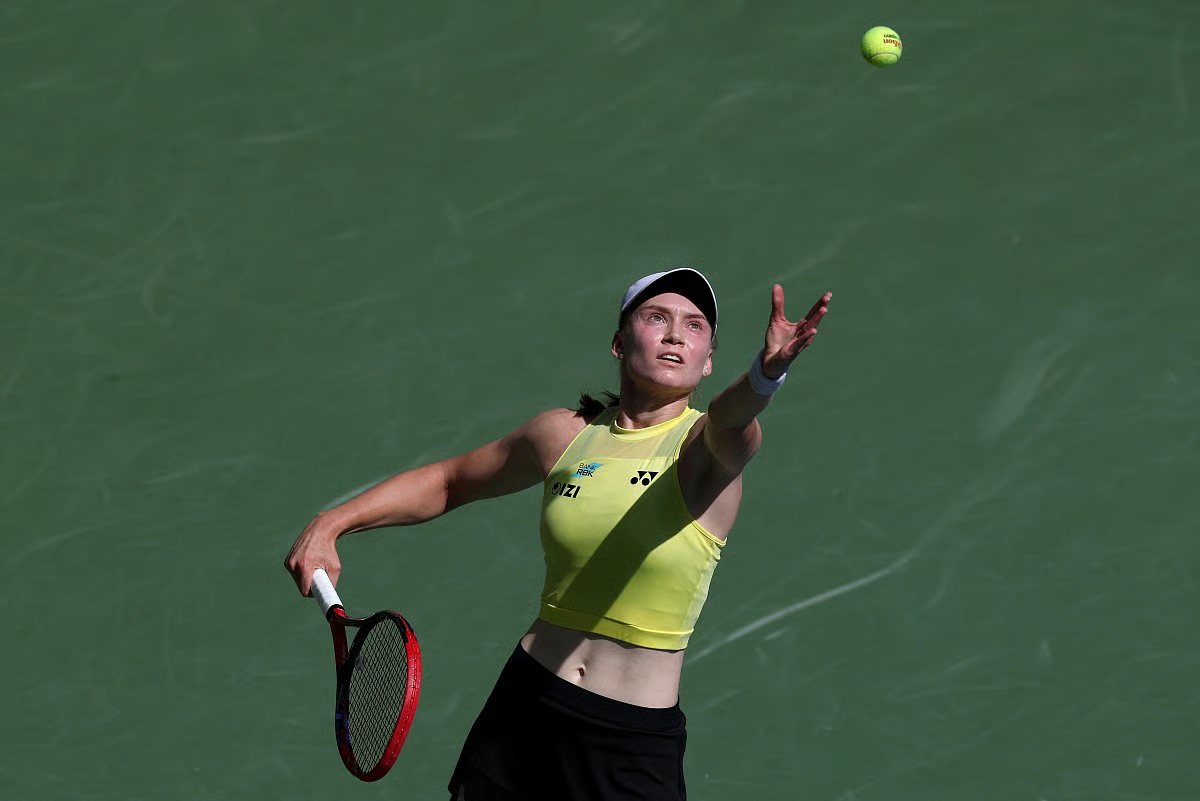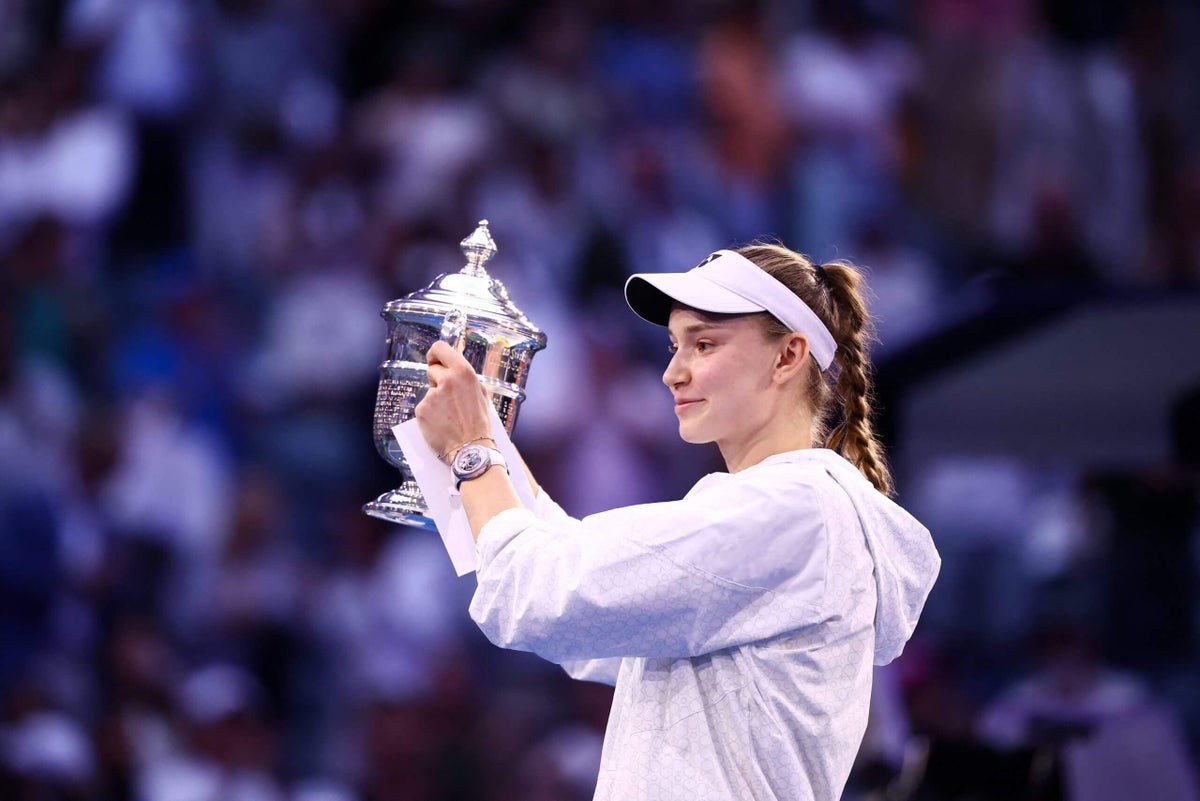
NEW YORK — A year ago, Elena Rybakina was on the outside looking in.She couldn’t get past the fourth round of any of the Grand Slams. She was doubtful to make the WTA Tour Finals in Riyadh, Saudia Arabia. She had to play a grueling series of tournaments in September and October just to squeak into the season-ending championship.Then, she won it. In the final, she handcuffed Aryna Sabalenka, using the laser serve, sweeping forehand and whip-crack backhand that she can windmill with her eyes closed. She left with a trophy and more than $5 million, at the time the biggest payday in the history of women’s tennis.Less than a year later, she did it all over again Saturday in Arthur Ashe Stadium. Again, she manacled Sabalenka. Again, she picked up a record-setting check, this time for $5.5 million. What’s new? She also collected the world No. 1 ranking, overtaking Sabalenka with a run that has also made her reigning champion at two of the four Grand Slams.For Rybakina, a 27-year-old native of Russia who has represented Kazakhstan the past nine years, her 10-month surge is a microcosm of her remarkable backstory and career.When Rybakina was in her late teens, the Russian tennis federation essentially gave up on her. It’s a huge country. There were other, promising juniors, more worthy of their money and coaching in the federation’s view. Rybakina’s parents could not afford to finance the training and travel necessary for a fledgling professional tennis career.Come inside Grand Central's hidden tennis courtRebecca TauberOn the verge of heading to the U.S. for college, Rybakina found another way.In 2007, Bulat Utemuratov, a billionaire industrialist from Kazakhstan and an avid tennis fan, embarked on a spending spree focused on building a development system for the country from scratch. Infrastructure was the easy part. That doesn’t make talent. Utemuratov looked to talented players from more established countries who were swimming upstream.One was Alexander Bublik. Rybakina was another. Kazakhstan’s tennis federation funded all the training and travel that Russia’s tennis federation wouldn’t and Rybakina’s parents couldn’t. In exchange, Rybakina represented Kazakhstan, serving as a role model for young players in a country that had little tennis culture and little history of tennis success.Four years later, in 2022, Rybakina was the Wimbledon champion. That win too was textured by her developmental journey. Had Rybakina not switched her nationality, she would have been prohibited from competing in that edition of the tournament. The All England Lawn Tennis Club had prohibited players from Russia and Belarus from participating in the event as punishment for Russia’s invasion of Ukraine, which Belarus supported.Instead, she played. She won. An ascension had begun.Elena Rybakina won the 2022 Wimbledon champion with Bulat Utemuratov in her box. (Julian Finney / Getty Images)By the end of last summer, it appeared to have reversed. In September 2024, she fired her coach, Stefano Vukov, but then brought him back. Ahead of the 2025 Australian Open, Vukov was provisionally suspended by the WTA Tour during a code of conduct investigation.Vukov denied the breach. Rybakina, at the time No. 6 in the world, had repeatedly stated that Vukov’s conduct towards her has never been abusive.That February, the WTA barred Vukov from coaching and obtaining credentials for a year. In a confidential summary of its investigation, then chief executive Portia Archer wrote that Vukov had engaged “in abuse of authority and abusive conduct” toward Rybakina.“Definitely never abused anyone,” Vukov said via text message last year.During the investigation and following the ban, Rybakina also maintained her position that Vukov had “never mistreated her.” The coach appealed the suspension ahead of the 2025 French Open and it was lifted that August, after Vukov and the WTA entered into private arbitration.August became September. Rybakina lost in New York. She went on her gauntlet run to qualify for the WTA Tour Finals. She won it, declining a photo with Archer during the trophy ceremony.Then she started this year by winning the Australian Open, defeating Sabalenka in the final. When the tournament was over, Rybakina had won 20 of her past 22 matches, going 10-0 against top-10 opponents.Seven months on, she has another major title, surprising no one more than herself, given she injured her left leg in the middle of last month and could barely walk as she retired from the Cincinnati Open quarterfinals.“I cannot find the words,” she said on the court during the trophy ceremony Saturday. “I didn’t expect anything like this coming into the tournament.”As Rybakina spoke, Utemuratov was receiving congratulations in one of the luxury suites inside Arthur Ashe Stadium.On Friday, in the hours after Rybakina had defeated Coco Gauff to make her first U.S. Open final, Utemuratov had boarded his Gulfstream jet in Almaty and flown 14 hours straight to New York.“People love her a lot in Kazakhstan,” Utemuratov said during an interview in a luxury suite an hour before the final began. “Not only her tennis but also her personality, her smile, her calm. She’s humble, intelligent.”As he spoke, Utemuratov flipped through a series of photos of billboards and other images of Rybakina all over Almaty. At the airport. On a scoreboard in a soccer stadium. Along the streets of the city. The U.S. open final was set to start at 2 a.m.“They won’t go to sleep,” Utemuratov said.He showed a video of children at tennis centers all over the country — many of them financed in part by his largesse — sending their congratulations and conveying their love for a player who only became their compatriot through a confluence of bad decision making by people who are paid to know better and the good fortune of being a solution to someone else’s problem.“We met and talked and discussed a partnership,” he said. They provided the resources for success. She set the course, trying to find the right people to surround herself with, and went to work.“We saw from the beginning that she was super-professional,” he said.Elena Rybakina served her way to the U.S. Open title in New York, protecting it on an off-day in the final. (Caleb Bowlin / Getty Images)It has hardly been the smoothest ride. The firing and rehiring of and investigation into Vukov coincided with a drop in her performance and difficulties with sleep and health. After she had fired Vukov, Rybakina hired Goran Ivanišević, the 2001 Wimbledon champion and former coach of Novak Djokovic. He quit in early 2025, when Rybakina announced that Vukov would rejoin her team, describing their time together as a “trial period.”Rybakina lives in Dubai. Much of her family remains in Russia. But each year, Utemuratov said, either before or after the fall swing of hard-court tournaments in China, Japan and South Korea, Rybakina visits Kazakhstan, where she has two charities. One funds young and gifted tennis players; another supports less advantaged people.It’s not the usual existence, but Rybakina has repeatedly found a way to make it work and roll with the ups and downs of a career.“No year is ever the same,” she said in a news conference. “It’s an amazing journey and hopefully I can continue to stay at the top.”Three weeks ago, just getting to the top seemed impossible. After a shellacking from Iga Świątek in the Canadian Open final, Rybakina had pulled out of her quarterfinal against the same player at the Cincinnati Open with pain in her Achilles tendon.Playing in New York seemed unlikely. She didn’t touch a racket for more than a week. Then she started again by winning in the first round and never stopped.“Every day was kind of a challenge, but I felt like in these situations I was more calm than when similar things were happening before,” she said.Some 6,400 miles away in Kazakhstan, Utemuratov was keeping tabs on her.In her last comments Saturday evening, standing on Arthur Ashe Stadium with the trophy and the top ranking hers, Rybakina had a message for her adopted, sort-of home.“A big thank you for all the support and belief,” she said. “I am planning to come and want to share this moment.”Apparently, so do they.
How Elena Rybakina, world No. 1 and U.S. Open champion, climbed the tennis mountain
Rybakina's surge to the world No. 1 ranking and a third Grand Slam title is a microcosm of her singular backstory.
1,343 words~6 min read