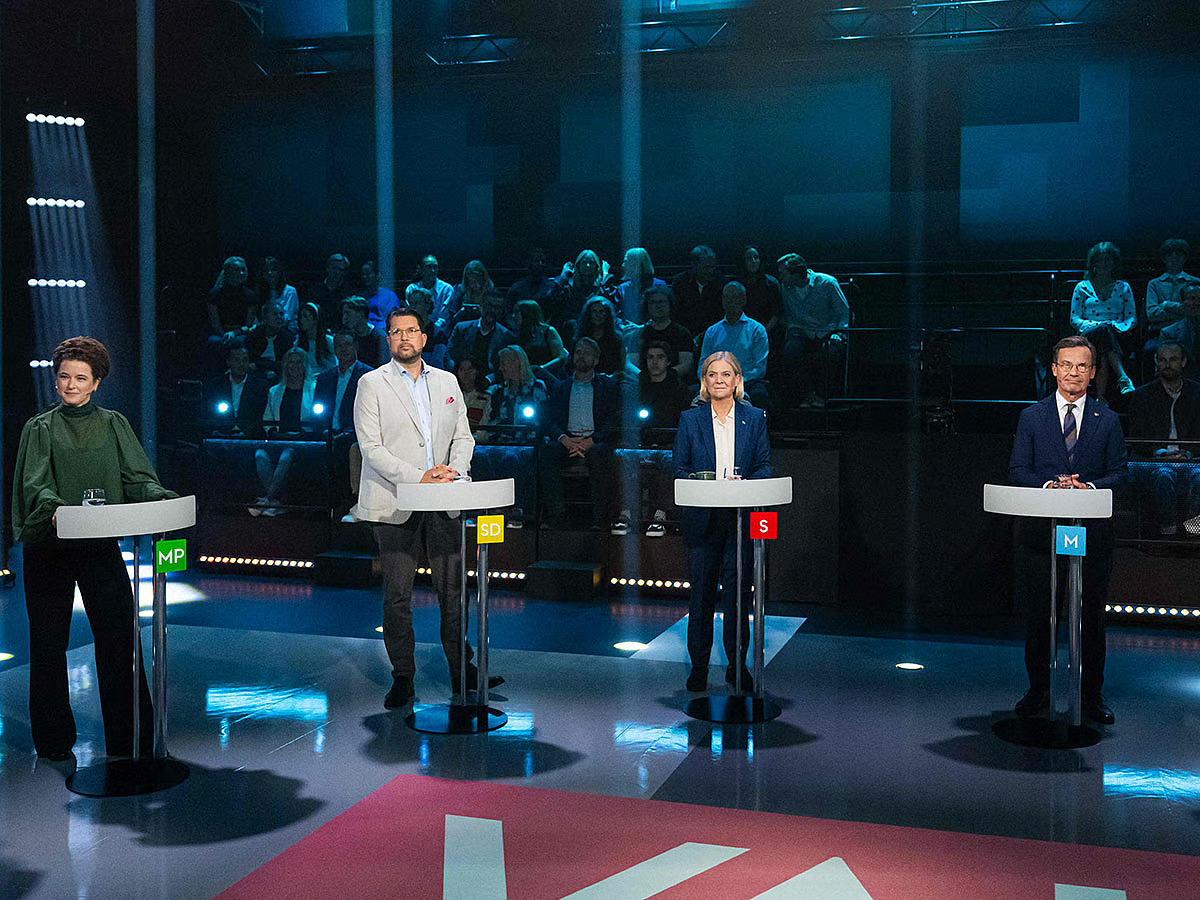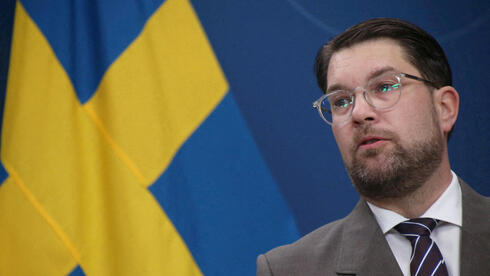
With Sweden’s election tightening, Jimmie Åkesson’s far-right Sweden Democrats could enter government for the first time, capping a two-decade rise from political isolation while pushing immigration, identity and Islam to the heart of the campaignUntil just a few weeks ago, Sweden’s election looked close to settled. The center-left bloc led by the Social Democrats held a polling advantage of around 10 points, and Prime Minister Ulf Kristersson appeared headed for defeat after a single term in office. But the final stretch of the campaign has changed the picture. The gap has narrowed sharply, the Liberal Party, which until recently appeared likely to disappear from parliament, has rebounded, and Swedes will vote Sunday in a race that is far more competitive than it looked only a month ago.At the center of that shift is a 47-year-old politician who plays keyboards in a Viking rock band, held a metal-themed wedding and has spent more than two decades leading one of Europe’s most successful and controversial political projects. Jimmie Åkesson is not expected to become Sweden’s next prime minister. But if the right wins, he could achieve something that would have seemed almost unthinkable two decades ago: bring his far-right Sweden Democrats into government for the first time in the party’s history.GalleryJimmie Åkesson, leader of the far-right Sweden Democrats (Photo: REUTERS/Tom Little/File Photo)On the eve of the vote, the race is extremely tight. An Ipsos poll published Friday, two days before the election, put the center-left bloc at 49.3% and the right-wing bloc led by Kristersson and Åkesson at 49%. If those numbers were reflected in Sweden’s 349-seat parliament, the Riksdag, the difference would be just one seat: 175 to 174. Other polls give the left a somewhat wider lead of between three and six points, but all point in the same direction. A center-left advantage that reached roughly 10 points in mid-August has narrowed dramatically, turning what once looked like a comfortable opposition victory into an open contest.Åkesson himself is not gaining much ground in the polls. The Sweden Democrats are currently at around 18% to 19%, slightly below the 20.5% they won in 2022. What has changed is the position of the other parties on the right, especially the Liberals, who have climbed back above the parliamentary threshold. Their recovery has brought Åkesson closer than ever to a goal he has pursued for more than two decades: moving his party from an outside supporter of government to a formal place inside it.To understand how far the Sweden Democrats have come, it helps to look at where they began. The party was founded in 1988 as a radical nationalist movement, and some of its founders came from neo-Nazi and white supremacist organizations. A historical review commissioned by the party itself found that antisemitism and support for Nazi ideas were widespread at party events and in its publications during the 1980s and 1990s. One of its founders had even served in the German SS during World War II. Last year, the party publicly apologized for that part of its past.Åkesson joined the Sweden Democrats in 1995, when the party had already begun trying to distance itself from its most extreme elements. In 2005, at the age of 25, he became leader and has remained in the job ever since. Under his leadership, extremists were expelled, Nazi symbols were banned at party events, local branches were built across the country and the party began a long effort to present itself as a legitimate force in mainstream Swedish politics. The strategy worked. The Sweden Democrats entered parliament for the first time in 2010. By 2022, they had won 20.5% of the vote and 73 of the Riksdag’s 349 seats, becoming the country’s second-largest party and a force without which it was increasingly difficult to form a government on the right.Åkesson has often recalled that when he took over the party in 2005, he predicted it would one day become a major political force, shape government policy and challenge the Social Democrats for first place. At the time, the prospect seemed remote. Today, much of that ambition has already been realized.Åkesson’s public persona has also played an important role in the party’s rise. He is one of Sweden’s longest-serving party leaders, but has deliberately cultivated an image that is more informal and accessible than that of many of his rivals. He still lives in the part of southern Sweden where he grew up and travels regularly to Stockholm. He plays keyboards in a Viking rock band, and when he married two years ago, the celebration had the feel of a metal festival, complete with karaoke and no formal dress code.At campaign rallies, Åkesson can appear more like a rock performer than a conventional politician, walking onstage to chants of “Jimmie, Jimmie” as supporters in the crowd wear shirts bearing his face. Jenny Madestam, a political scientist at Södertörn University, has described him as a politician with a talent for explaining complicated issues in simple terms while maintaining the image of an ordinary “guy next door.”But the easygoing image masks a hard-line agenda, particularly on immigration, national identity and Islam. The Sweden Democrats want to dismantle what they describe as multiculturalism, strengthen the position of the Swedish language and Swedish culture, increase deportations and further reduce immigration. Senior party figures say people who live in Sweden should embrace Swedish culture, language, laws, norms, values and traditions.Åkesson has made little effort to soften that message during the current campaign. Presenting his party’s platform this week, he declared that “the party in Sweden is over,” adding: “Sweden is no longer a free-for-all where you can come and live on benefits.” His party is promising to bring the number of residence permits issued by Sweden down to the lowest level in the European Union. “Now that asylum reception is close to zero, we will strive for immigration that is as limited as possible,” the platform says.Migrants and refugees at the Finland-Sweden border in Tornio (Photo: Reuters)The same rhetoric has run through the campaign. In a speech this summer, Åkesson declared that “the Sweden Democrats have taken the wheel” and said, “we are making Sweden Sweden again,” language clearly reminiscent of U.S. President Donald Trump’s political slogan. He also said it was now “the turn of ordinary, decent people,” accusing the Social Democrats of destroying what earlier generations had built and turning safe communities into “war zones.”Åkesson has been equally blunt about Islam. In a recent social media post, he wrote that people in Sweden were free to believe whatever they wanted, but that anyone who believed the words of gods or prophets should determine how society and its citizens live could find dozens of countries where such views would be more at home. “Sweden is not one of them,” he wrote.During a party leaders’ debate about a week ago, Åkesson went further while arguing against continued low-wage labor immigration. “Eventually Sweden will no longer be Sweden if the entire workforce comes from outside,” he warned. Elsewhere in the campaign, he rejected the idea that Swedish society should bear responsibility for integrating immigrants. “It is not my responsibility, yours or that of any other Swede that a person who comes here from another country integrates,” he said.In another debate held Friday, Åkesson attacked proposals to build public housing in affluent neighborhoods, calling them a policy of “forced mixing” and arguing that putting large apartment blocks in areas dominated by detached homes would simply shift social problems from one place to another rather than address segregation itself. The Sweden Democrats have also backed controversial proposals including restrictions on traditional Muslim clothing and the demolition of mosques where, the party says, extremist Islamist ideology is promoted. Critics say such proposals show that despite years of political rebranding, the party remains well outside Sweden’s traditional liberal mainstream.Even if his bloc loses Sunday, Åkesson can argue that he has already won a substantial part of the political battle he set out to fight. Since the 2022 election, the Sweden Democrats have provided the parliamentary support that has kept Kristersson’s minority government in office. The party received no Cabinet posts, but its 73 lawmakers supplied the votes needed for the government to survive and gave the Sweden Democrats significant influence over policy.During the past four years, Sweden has sharply tightened its immigration rules. The government has restricted routes to permanent residency for refugees, toughened welfare requirements and expanded its ability to deport people who do not have a legal right to remain in the country. The number of asylum seekers has fallen to its lowest level in about four decades. Since January, the government has also offered certain non-EU migrants up to 350,000 Swedish kronor, around $37,000, to leave Sweden voluntarily.The program has so far attracted limited interest, but it illustrates how much Sweden’s approach to immigration has changed since 2015, when the country accepted more asylum seekers per capita than any other EU member state. That shift may be Åkesson’s most important political achievement. He has not simply built up his own party; he has helped move the broader immigration debate in his direction.Policies once associated almost exclusively with the Sweden Democrats have been adopted, at least in part, by other parties, including the Social Democrats, who are campaigning this year on maintaining a restrictive immigration policy of their own. The central argument in Swedish politics is therefore no longer whether immigration rules should be tightened, but increasingly how restrictive they should become.For Åkesson, however, influencing government from the outside is no longer enough. He has made clear that if the right wins, the Sweden Democrats expect to become part of the next government. “Either we are in government or we are in opposition,” he has said. He has also argued that in the event of victory, his party should receive at least three of Sweden’s four most important ministries: finance, foreign affairs, defense and justice.Prime Minister Ulf Kristersson (Photo: Reuters)Åkesson has sounded less enthusiastic about becoming prime minister himself. He has indicated that he could accept Kristersson remaining in the job even if the Sweden Democrats once again finish ahead of the prime minister’s center-right Moderate Party. The international travel and ceremonial duties that come with the premiership, including meetings and handshakes with foreign leaders, can be left to Kristersson, Åkesson has suggested.That makes Åkesson’s definition of victory different from that of most party leaders. The polls do not suggest he is about to lead Sweden’s largest party, and they certainly do not point to him becoming prime minister. The Social Democrats remain ahead of the Sweden Democrats. But when it comes to determining which bloc governs and what the next coalition looks like, Åkesson could become the most influential figure on the Swedish right.Kristersson, who once opposed working with the Sweden Democrats, has already removed one of the final obstacles to that possibility. In April, he said all four parties in the right-wing bloc wanted to form a joint majority government after the election, signaling that he was prepared to bring the Sweden Democrats formally into government. It marked the end of one of the last major taboos surrounding the party.Sweden’s political system is now divided between two competing blocs. On the center-left, former prime minister Magdalena Andersson leads the Social Democrats, which remain the country’s largest party. She is the main candidate to replace Kristersson if her bloc wins. Kristersson, leader of the conservative Moderate Party, is seeking another term and has made clear that this time he is prepared to govern alongside the Sweden Democrats.The right also includes the Christian Democrats, led by Deputy Prime Minister Ebba Busch, and the Liberals, led by Simona Mohamsson. On the other side are the Left Party, led by Nooshi Dadgostar, and the Greens, jointly led by Amanda Lind and Daniel Helldén. The Center Party, led by Elisabeth Thand Ringqvist, also supports Andersson for prime minister but remains reluctant to work too closely with the Left Party. Differences within the center-left bloc over economic policy, taxation and energy could make coalition negotiations difficult even if Andersson’s side wins more seats.Former prime minister Magdalena Andersson (Photo: Reuters)Ironically, Åkesson’s chances of entering government may depend heavily on the smallest party in the right-wing bloc. Sweden has a 4% threshold for entering parliament, and for months the Liberals appeared likely to fall below it. If they were eliminated, a significant number of votes cast for the right would produce no seats, making it much harder for Kristersson and Åkesson to assemble a majority.But the final days of the campaign have brought a remarkable reversal. After polling at just 1.9% in August, the Liberals are now at between 5% and 5.8% in recent surveys, putting them above the threshold. The surge has been attributed largely to tactical voting by supporters of the right who want to ensure the party remains in parliament.Pollsters have described the recovery as highly unusual so close to an election. Some of the Liberals’ new support appears to have come from voters who would otherwise have backed the Sweden Democrats or the Moderates but have switched in an effort to preserve the bloc’s chances of securing a majority. If the Liberals clear the threshold Sunday, a right-wing victory becomes considerably more plausible. If they do not, Åkesson’s path into government becomes much narrower even if his own party performs strongly.Sweden’s election also has significance beyond its borders. Earlier this week, Germany’s far-right Alternative for Germany, or AfD, recorded a historic victory in the eastern state of Saxony-Anhalt with around 44% of the vote. It became the largest party in the state and came close to winning an outright parliamentary majority, an unprecedented result for the German far right in the postwar era.Germany’s mainstream parties continue to rule out cooperation with AfD, and the political “firewall” intended to keep it out of government remains in place. Sweden has taken a different path. The Sweden Democrats have already spent four years exercising considerable influence over national policy without formally joining the government. A right-wing victory Sunday could complete that transition and give the party Cabinet posts for the first time.Nationalist and far-right parties have also become major political forces or entered government elsewhere in Europe, including in Italy, Finland, Croatia and the Czech Republic, while their counterparts in France and Germany continue to challenge established parties. Sweden is especially significant because of its long association with social democracy, an expansive welfare state and relatively generous immigration policies. For decades, the idea that a party such as the Sweden Democrats might participate in government was considered beyond the bounds of mainstream politics.Sunday’s election will therefore determine more than who occupies the prime minister’s office. It will also show whether the transformation Åkesson has already helped bring about in Swedish politics will now be reflected in the composition of the government itself. Twenty-one years after taking charge of a small, ostracized party that much of the Swedish political establishment refused to engage with, Åkesson now leads a party polling above that of the sitting prime minister, while Kristersson openly says he is prepared to govern with him.If the right wins, Åkesson will have achieved the breakthrough he has pursued for more than two decades. If it loses, he can still point to a political landscape that looks very different from the one he entered, and to a national debate that has moved markedly toward positions his party once held almost alone.
‘The party in Sweden is over’: anti-Islam metal keyboardist Jimmie Åkesson closes in on power
With Sweden’s election tightening, Jimmie Åkesson’s far-right Sweden Democrats could enter government for the first time, capping a two-decade rise from political isolation while pushing immigration, identity and Islam to the heart of the campaign
2,572 words~12 min read