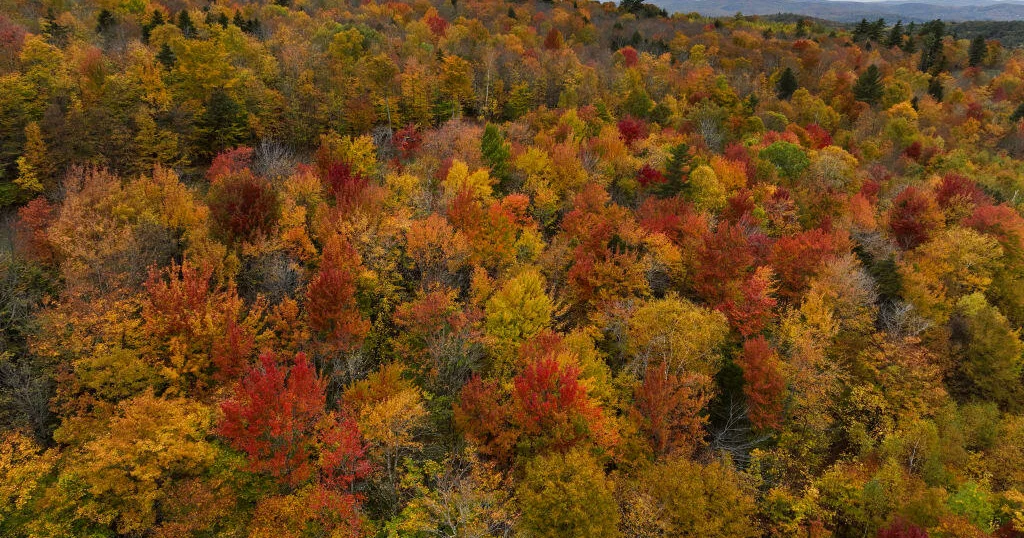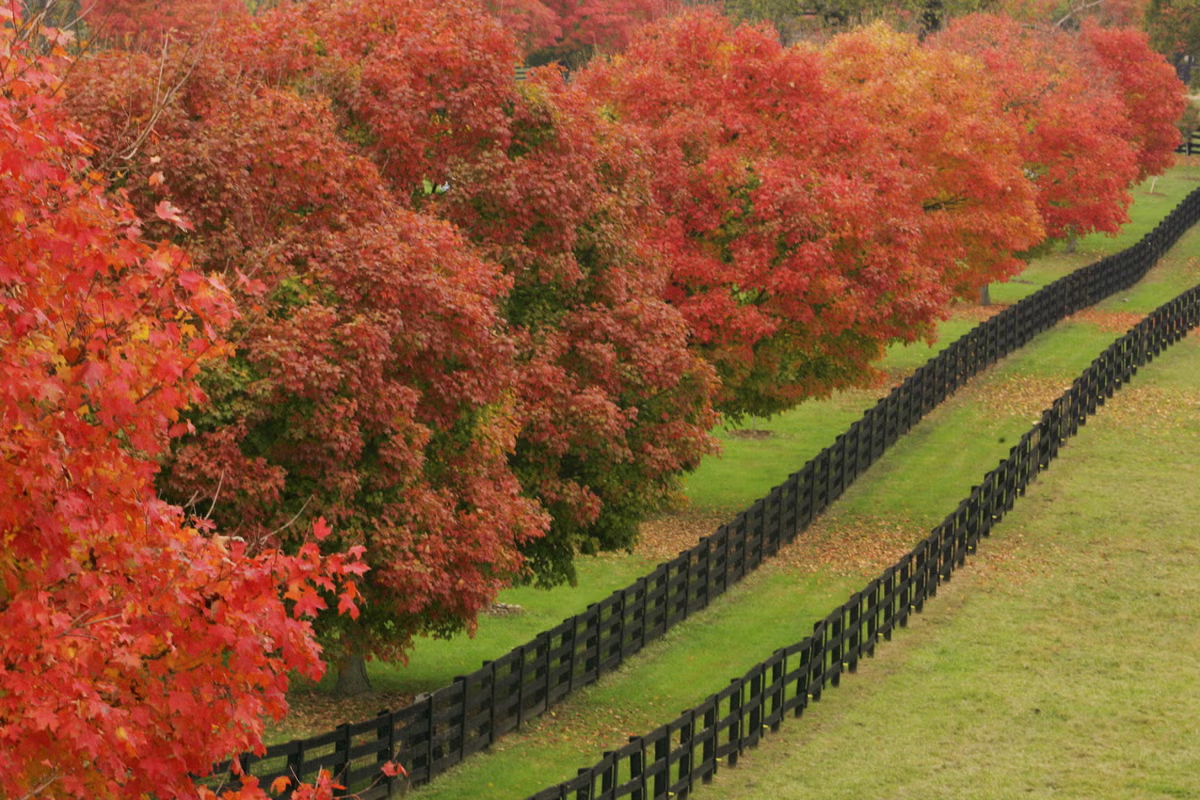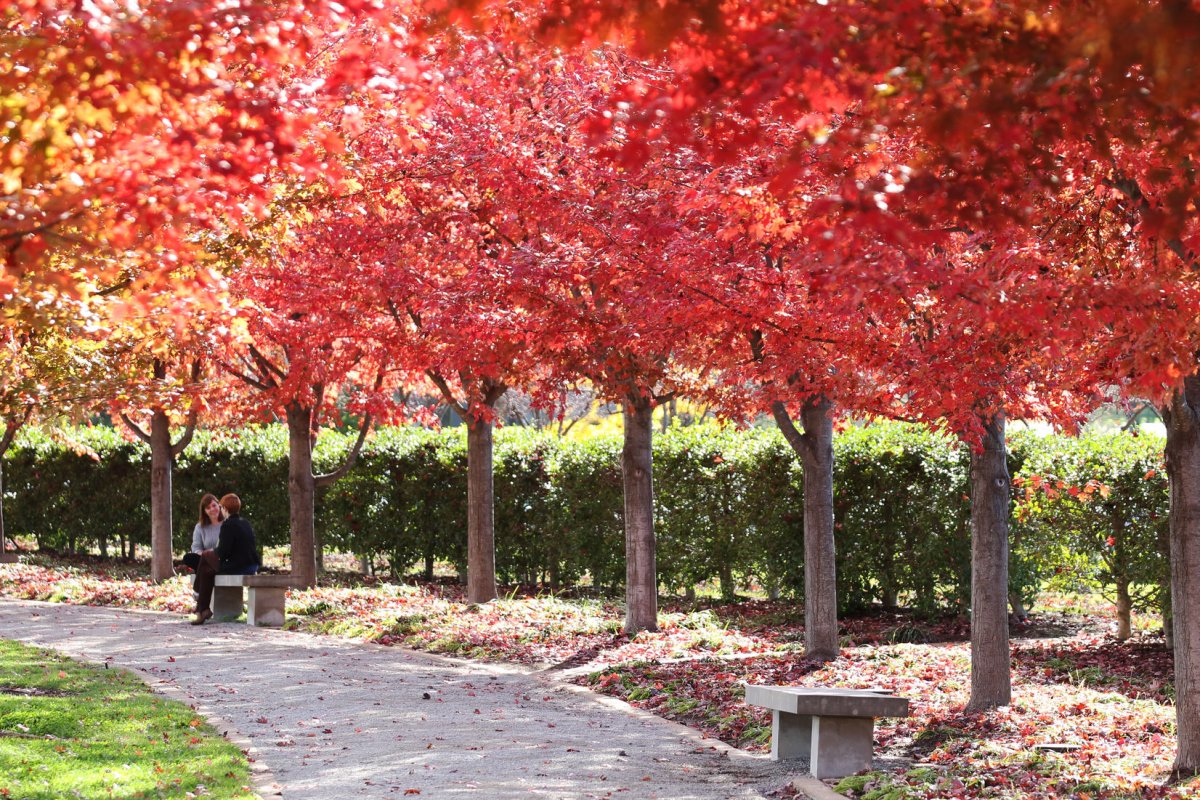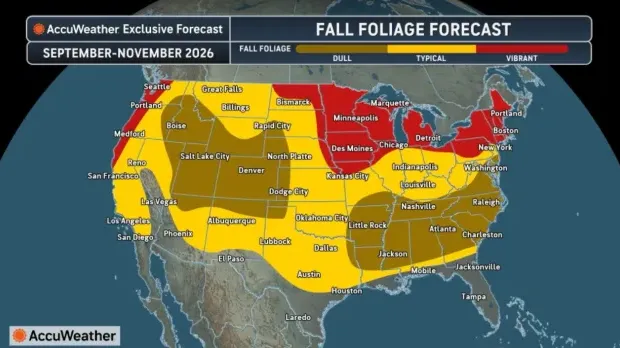
Most areas will have peak colors between late September and mid-October. Maps show when and where to see the best colors in fall 2026.Show Caption
As the first day of fall approaches on Sept. 22, attention turns to the vibrant and gorgeous colors that leaves will soon be sporting.Indeed, leaf-peeping season is almost here as the scorching heat of summer comes to a merciful close.Most areas of the U.S. will have peak colors between late September and mid-October, although the exact timing depends on location and varies from year to year based on the weather conditions leading up to autumn, according to AccuWeather.Where will the best leaf-peeping be?"We continue to think that the best fall viewing will be across portions of the Great Lakes region and upper Midwest along with northern Pennsylvania, northern New York and into northern New England," AccuWeather meteorologist Alex DaSilva told USA TODAY.He said that these areas, especially across interior portions of the Northeast, were able to escape the worst of the drought conditions this summer.Map shows forecast for when fall foliage colors will peak in USAn AccuWeather map shows how fall colors will peak in September in the North and move south as fall continues:Reason for optimism in New EnglandFor New England in particular, there is plenty of reason for optimism, according to Yankee magazine. Last year’s drought-stressed forests produced a brief and muted foliage season. But a cold and snowy winter, ample spring moisture, and timely summer rainfall have replenished soils and helped forests rebound, the magazine said.Trees across much of the region are entering late summer with lush, healthy canopies and relatively little widespread insect or fungal damage, according to longtime foliage expert Jim Salge of Yankee magazine.The result, Salge says, could be a very different season from 2025, with color arriving more gradually and lingering longer as it moves from the northern mountains to the southern New England coast.“Our early call for 2026: A slow start could set the stage for a long, spectacular foliage season,” Salge said in an e-mail to USA TODAY.Drought 'detrimental to vibrant colors'According to DaSilva, drought can put significant strain on trees, and long-term droughts can be detrimental to vibrant colors. "This is why we expect portions of the Southeast to be dull this year. More long-term drought especially across the Carolinas and Georgia have led to stressed trees," he told USA TODAY.Another area where the drought will likely cause more dull conditions will be across portions of the Rockies, DaSilva said. The drought is severe to extreme in this area, and that can lead to more stress on the trees."Another thing we will have to watch for is any fall windstorms," he said. "Strong windstorms can knock the leaves down early and can ruin vibrant viewing conditions."Where fall foliage could arrive early or lateThe timing of fall foliage could vary just as much as the quality of the colors, according to AccuWeather meteorologist Brian Lada, in an online report.Lada said that where trees are already stressed, they may shed their leaves earlier than normal, including areas from Georgia to New Jersey and across much of the Rockies. Tropical storms or systems packing gusty winds during late summer and early fall could also strip leaves from trees before the season reaches its typical peak."Meanwhile, warmer conditions could delay the seasonal change in other regions. Warm days across the Ohio Valley and portions of the Mississippi Valley may push leaf drop back by a couple of weeks, while warm days and nights in the Northwest could delay the change by about a week," Lada said.Peak fall foliage should arrive on schedule elsewhere in the country, including the Northeast, Great Lakes and northern Plains.Is climate change affecting fall foliage?How much of a role does the changing climate have on the timing of fall foliage? One expert has an answer:"Historical records, satellite observations, and experiments all tell us that the timing of fall foliage is generally getting later in response to the warming temperatures associated with climate change," Amanda Gallinat, assistant professor of environmental studies at Colby College, said in a 2024 e-mail to USA TODAY."Here in New England, peak foliage happens up to a week later, on average, than it did in the 1950s," she said.Doyle Rice is a national correspondent for USA TODAY, with a focus on weather and climate.