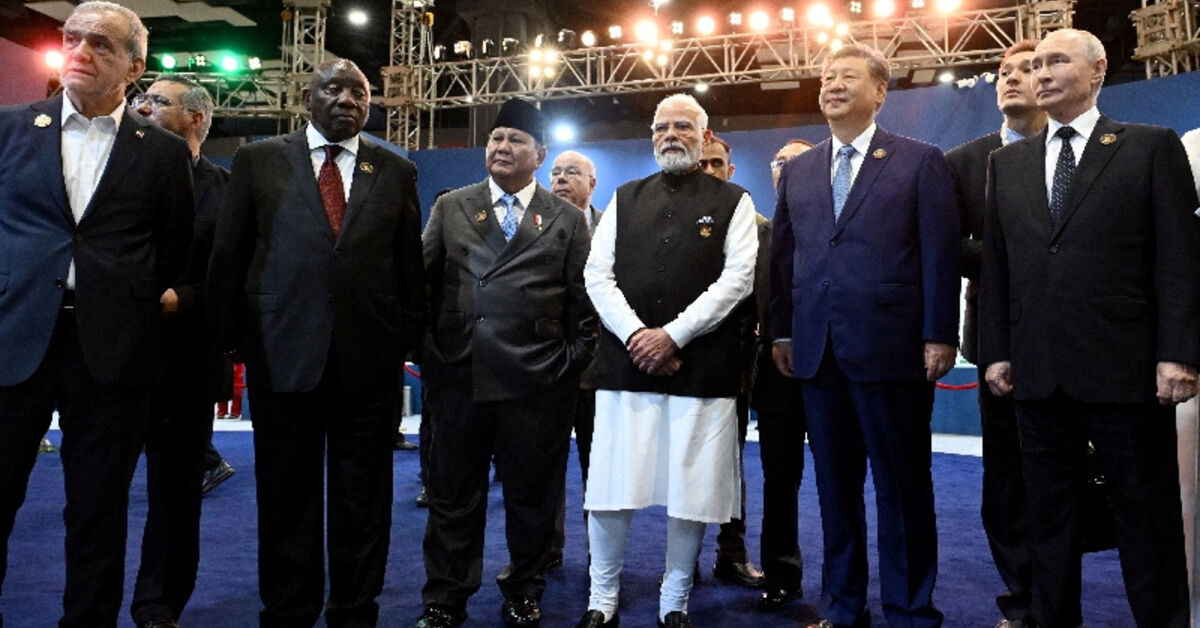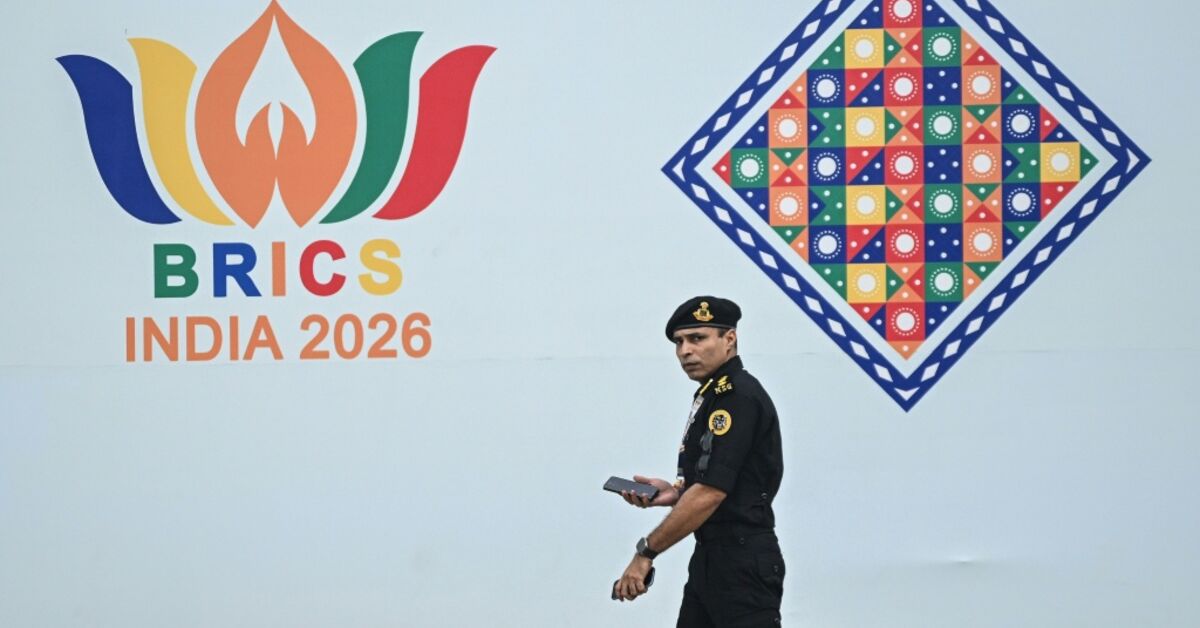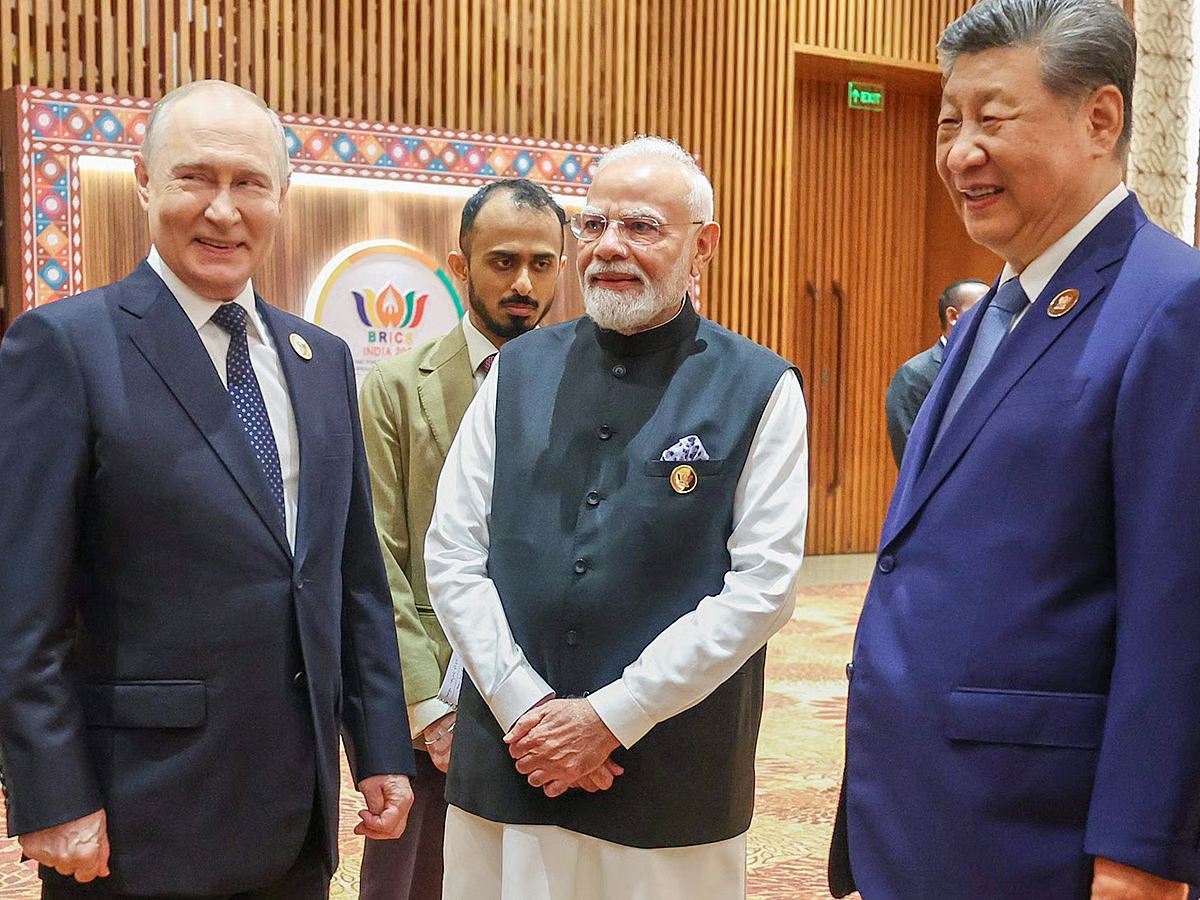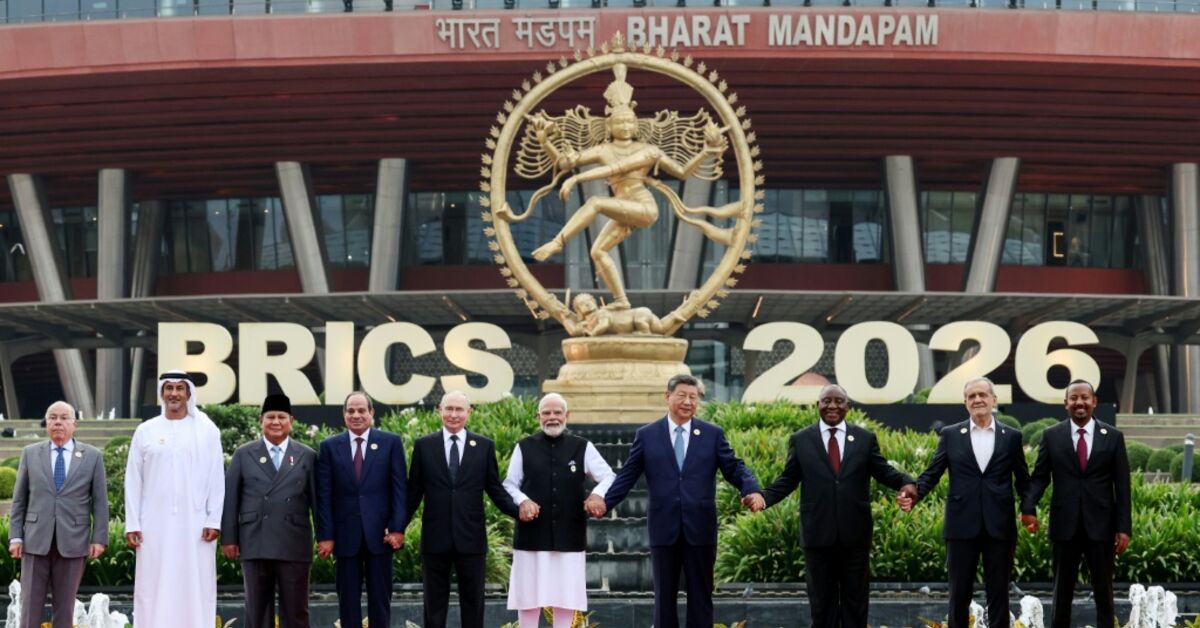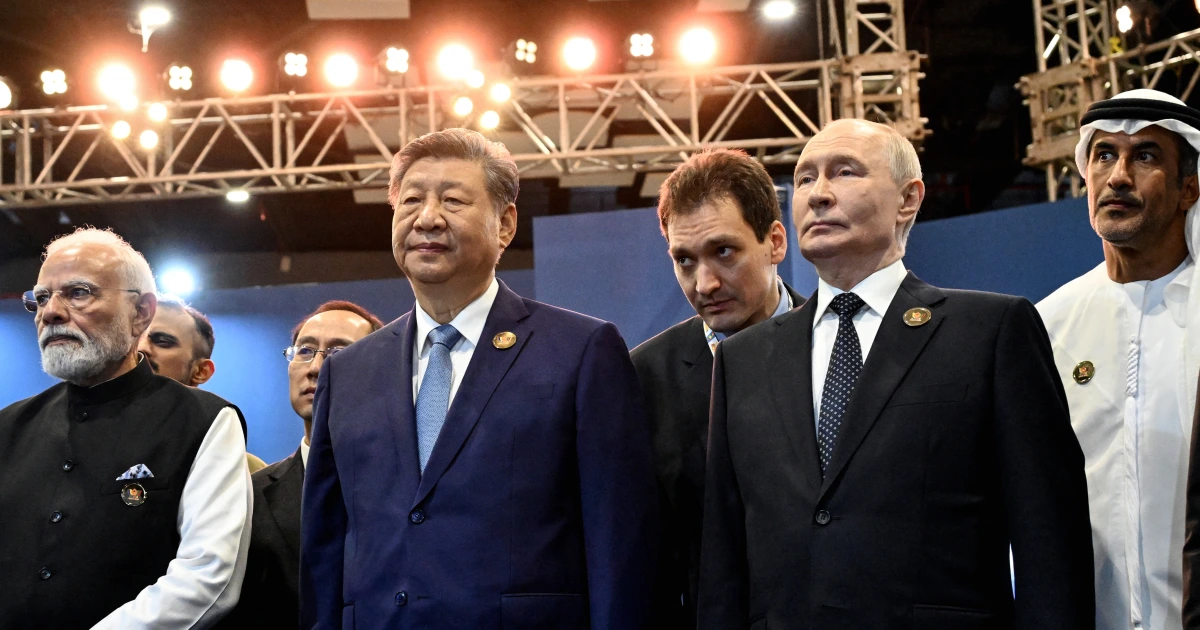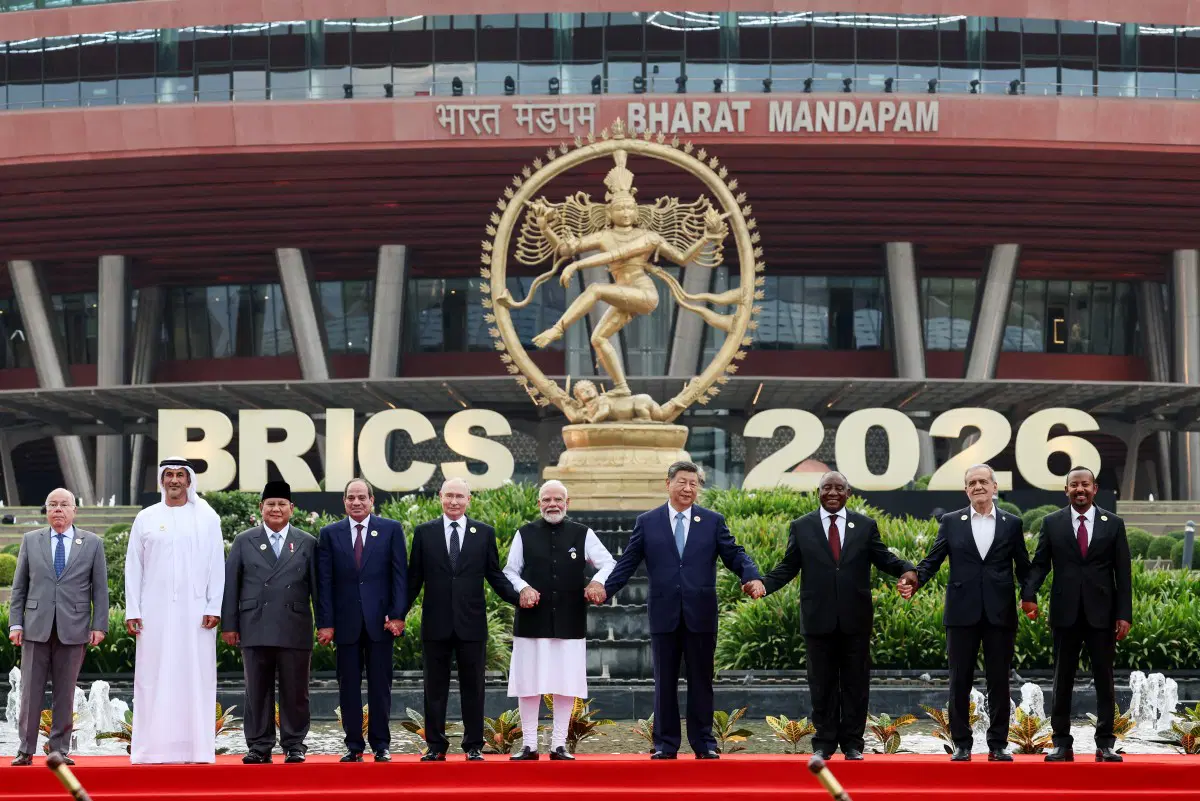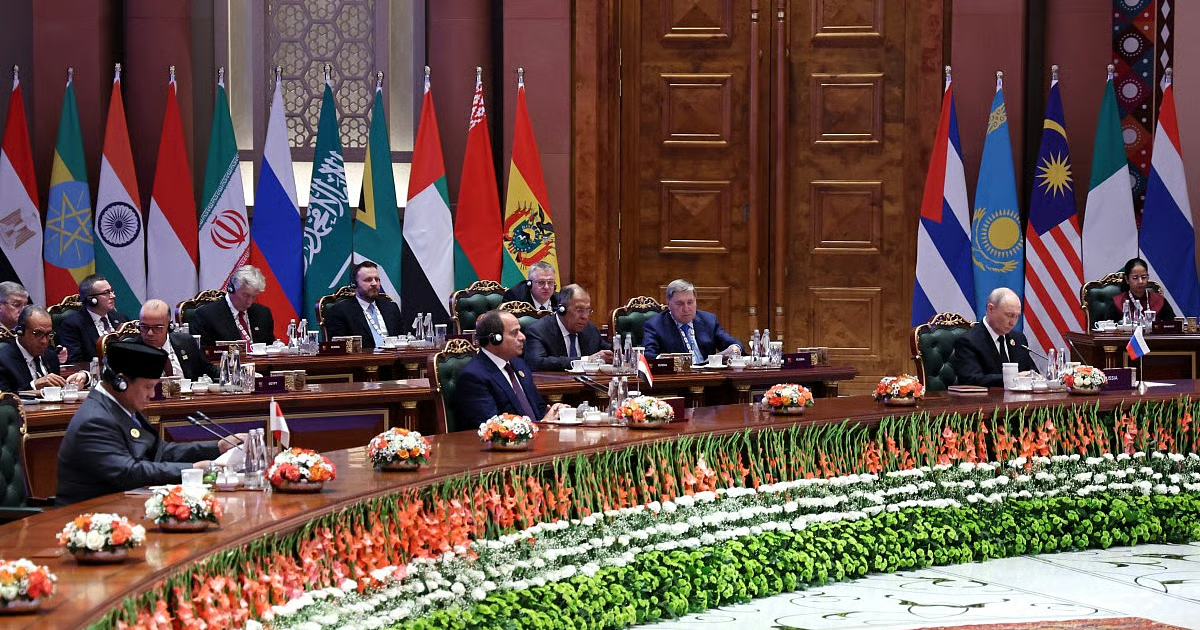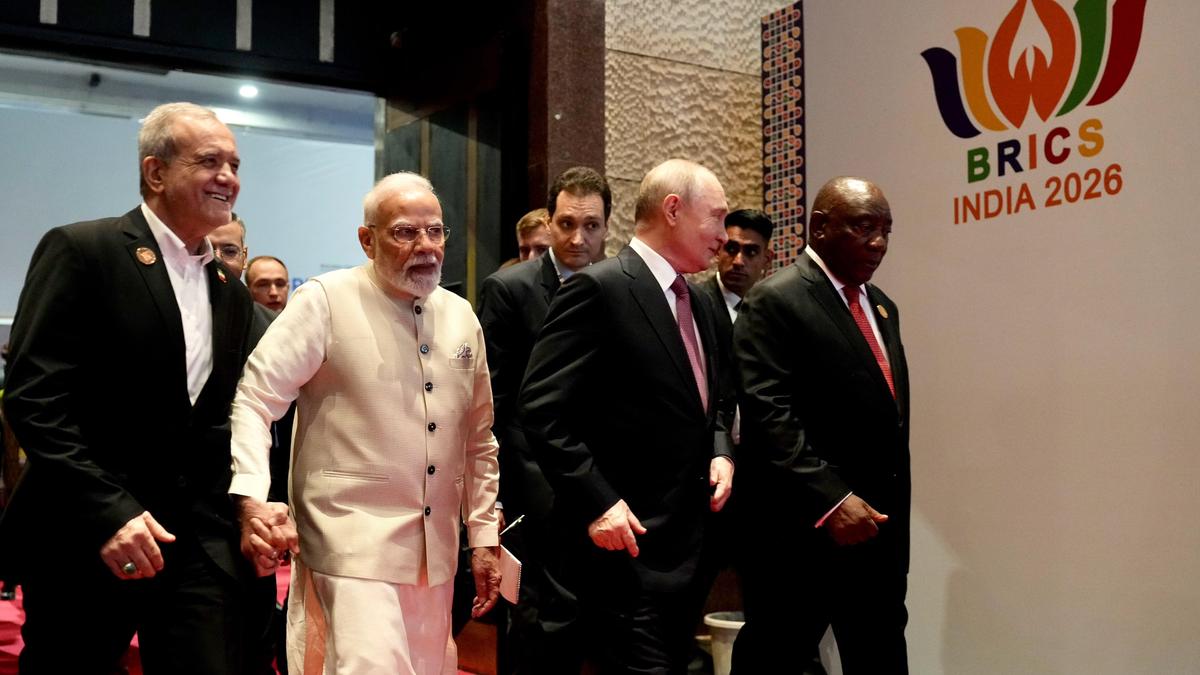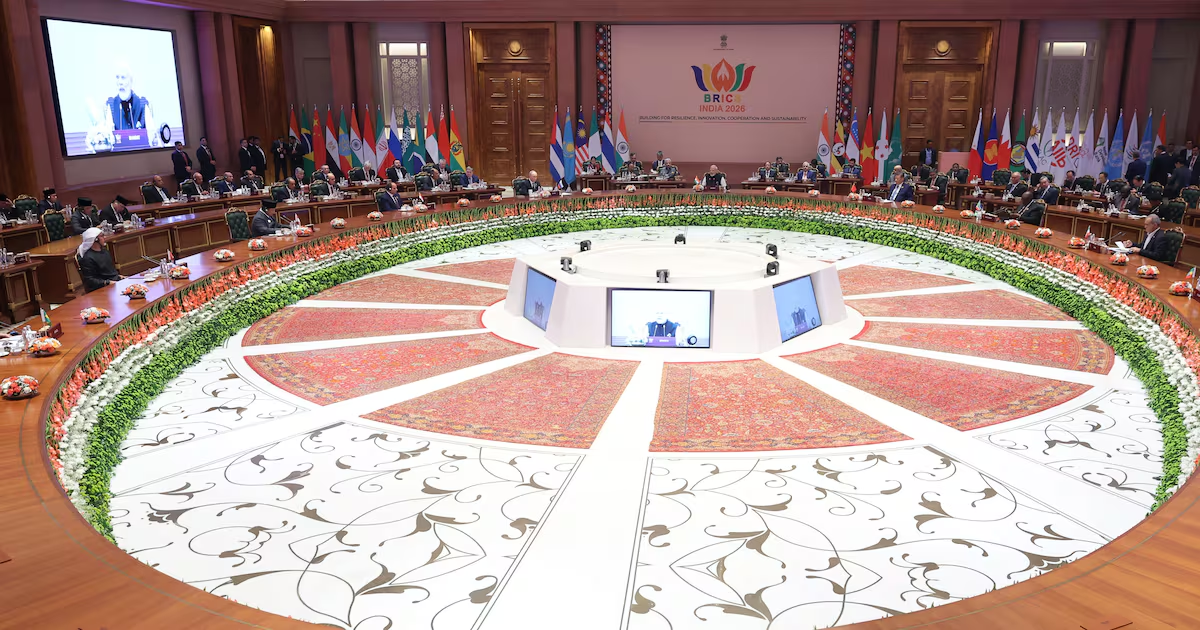
Brics leaders agreed on a joint declaration on Saturday calling for “maximum restraint” in the Middle East, overcoming divisions that had prevented the group from issuing a joint statement at a meeting of foreign ministers in May.The declaration comes as the six-month-old Iran war continues to reshape the region, with fighting disrupting energy supplies and trade routes. The US and Iran have resumed tit-for-tat strikes against each other, after a pause in fighting for much of August.Members of the 11-nation group urged all parties to exercise maximum restraint and avoid actions that could further escalate the situation, while stressing the need to protect civilians and civilian infrastructure and respect the sovereignty and territorial integrity of states, according to the declaration."We express deep concern over the continued escalation of tensions in Middle East/West Asia and, recalling our respective national positions, call for exercising maximum restraint, as well as avoiding actions that could further aggravate the situation," said the statement.The agreement was a significant diplomatic test for the expanded grouping, which includes the UAE, India, China, Russia, and Iran. The breakthrough came after negotiators worked to bridge differences before the leaders' summit in New Delhi. The statement also condemned attacks on civilian infrastructure and nuclear facilities."We express serious concern over deliberate attacks on civilian infrastructure and peaceful nuclear facilities under full safeguards of the International Atomic Energy Agency (IAEA), in violation of international law and relevant resolutions of the IAEA," it said."Nuclear safeguards, safety, and security must always be upheld, including in armed conflicts, to protect people and the environment from harm."Members of the 11-nation group urged all parties to exercise maximum restraint and avoid actions that could further escalate the situation. ReutersShow caption: Members of the 11-nation group urged all parties to exercise…The summit is being held as the war continues to affect one of the world's most important energy corridors, the Strait of Hormuz. The conflict has contributed to a virtual shutdown of shipping through the waterway, pushing oil prices above $100 a barrel.The declaration came despite the bloc's competing geopolitical interests. Chinese President Xi Jinping on Saturday called on Brics to play a peacemaking role in the Middle East, saying the war did not serve the interests of the international community."As the situation in the Middle East and the Gulf region continues to evolve, the war there has caused serious losses to people across the region," state news agency Xinhua quoted Mr Xi as saying. It "does not serve the common interests of the international community", he added.The grouping has sought to increase the influence of emerging and developing economies in global institutions and to push for changes to bodies including the UN Security Council, International Monetary Fund and World Bank.Indian Prime Minister Narendra Modi, who is hosting the two-day summit, has sought to portray Brics as a platform for the Global South rather than an alliance directed against the West. He said the bloc had “come of age” and should turn its unity and consensus into concrete results on the global stage."We respect each other’s perspectives and move forward through consensus. We strive to move ahead with an approach that is not against anyone but instead seeks to take everyone along," said Mr Modi."The Global South is today in the front row of global crises, but in the back row of decision-making. We must transform this 'pyramid of privilege' into a 'platform of partnership, where every country has a voice, every member has a stake, and the advancement of humanity remains at the heart of every endeavour," he added.Brics was founded in 2009 by Brazil, Russia, India and China, with South Africa joining later. The UAE, Egypt, Ethiopia, Iran, Saudi Arabia, and Indonesia subsequently joined, expanding the grouping to 11 members. Together, the members account for around a quarter of the world’s nominal GDP and roughly half its population. The bloc now includes some of the world’s largest energy producers and consumers.Sheikh Khaled bin Mohamed, Crown Prince of Abu Dhabi, Russian President Vladimir Putin, Iranian President Masoud Pezeshkian, Mr Xi and Mr Modi are all at the summit.
Brics agrees joint declaration calling for 'maximum restraint' in Middle East | The National
The agreement was a significant diplomatic test for the bloc
680 words~3 min read