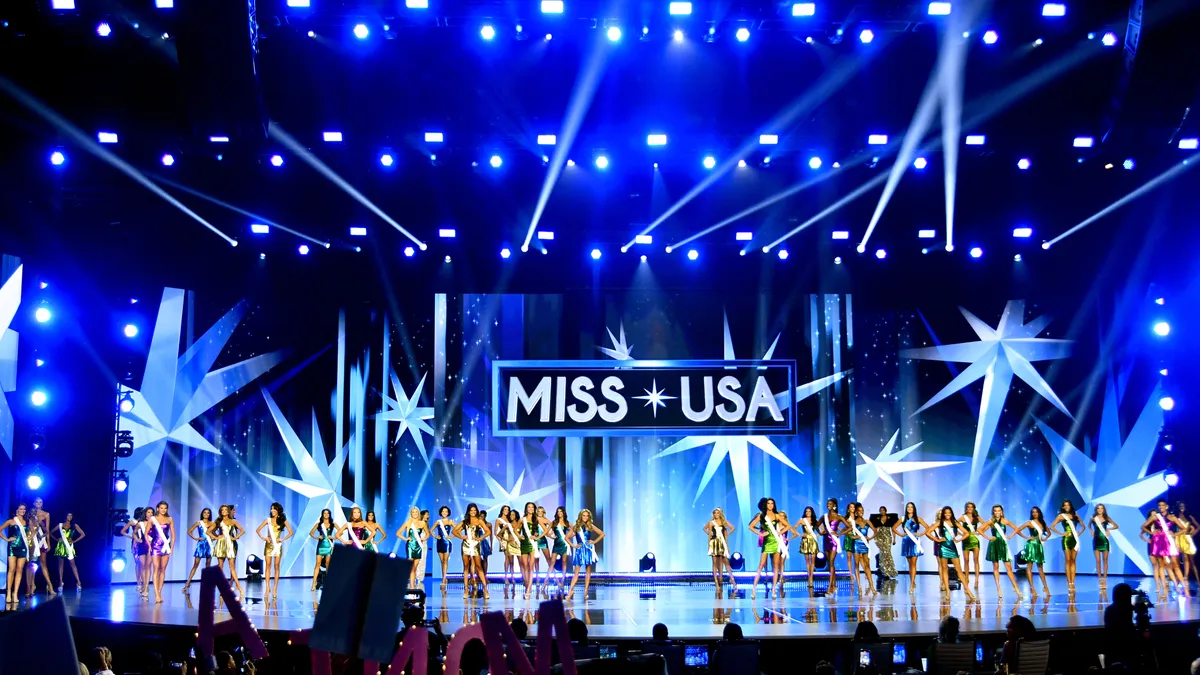
Contestants at the 2026 Miss USA pageant in Miami on August 27.
Ivan Apfel/Getty Images
The 2,400-seat Miami theater lit up like a Coldplay concert when the QR code dropped at the Miss USA pageant. A sea of phones — held up by supportive parents, partners, and past pageant queens — trained their cameras on the massive barcode being projected from center stage, ready to vote for their favored contestant.Twelve minutes on the clock: The countdown was on.Fingers tapped rapidly as the audience used their free vote or purchased more in bundles — $50 for 50, $250 for 250, $500 for 500 — alongside viewers at home. The top 20 contestants' headshots shifted around the leaderboard as the votes tallied live on the pageant's website, revealing exactly how far each woman was from the top spot.Two minutes left on the clock, a banner flashed across: Now, votes counted double. As the seconds ticked closer to zero, the votes burst in like a flash flood. The gap between first and second place was 1,794 votes at the 36-second mark. When the clock struck zero, it was more than 14,000.Fans have never had more of a say at Miss USA — especially if they're willing to pay. At last month's pageant, paid voting helped determine three top 20 spots, while a fourth went to the contestant who sold the most Westgate Resorts vacation packages, an unprecedented incentive that tied a contestant's placement to sales for a pageant sponsor. The winner was determined by a panel of six judges, including a mix of Miss USA and Miss Universe winners, but fans also had the opportunity to vote for the top 10 as the "seventh judge."Nearly a dozen of this year's Miss USA contestants spoke to Business Insider about the changes. Some believe it's a savvy strategy by CEO Thom Brodeur, who took over the pageant in September 2025, to keep the business afloat and increase fan engagement, especially at a time when pageants struggle to remain relevant. Others worry the competition is turning into what one called a "pay-to-play" model, making it less accessible to women who don't have money or big social media followings.Nobody is arguing with Beyoncé or Taylor Swift's teams over the standing-room ticket prices of four-figures and higher, and we're not going to apologize either.Miss USA CEO Thom Brodeur"There's a lot of fatigue," Miss Arizona Kaitlyn Humphrey told Business Insider. "It's an expensive sport already, and it breaks my heart that a lot of people can't compete purely because there's such a barrier to entry in the financial aspect of things. And then we're just adding layers to that."The bygone days of network TV