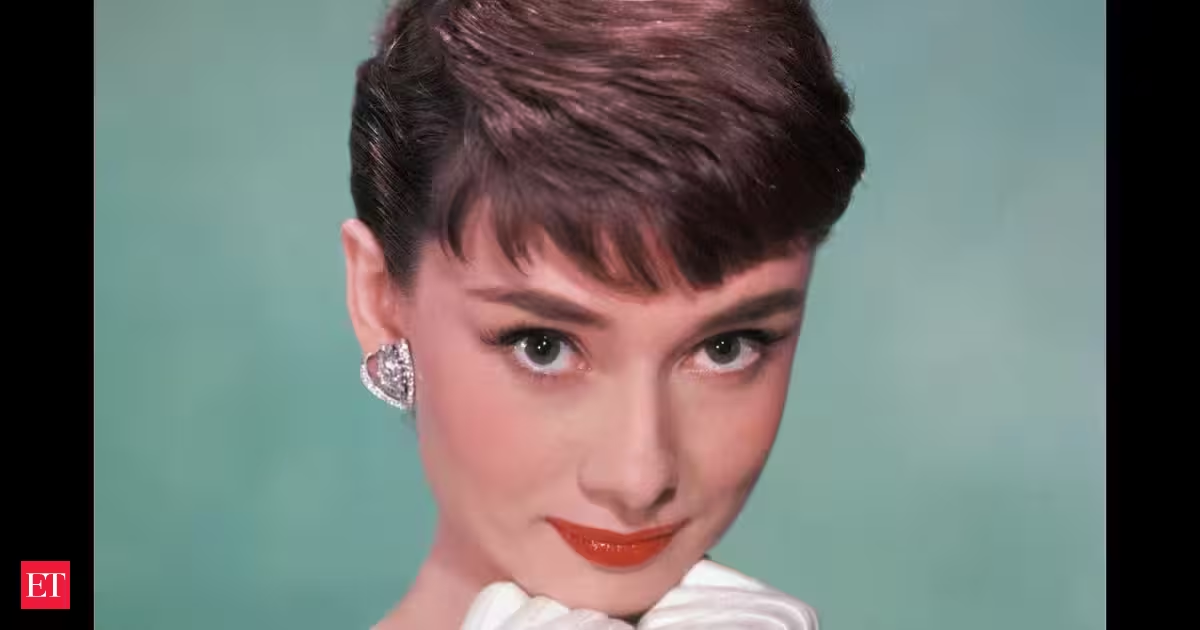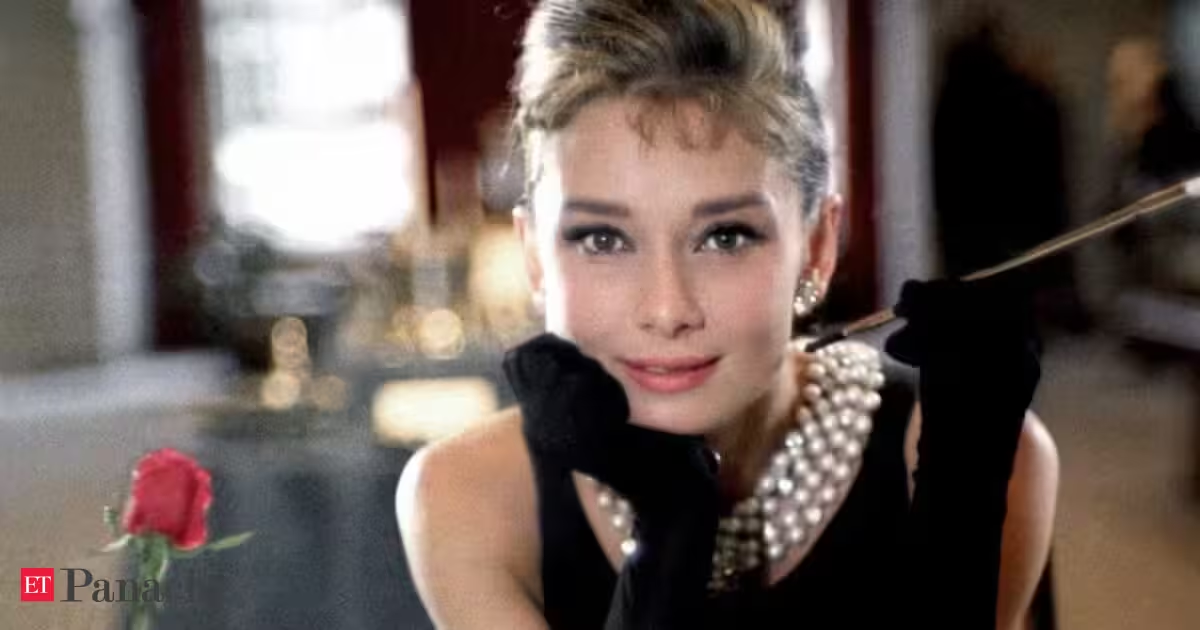
Loneliness does not always mean being alone. Sometimes, it is the feeling that there is no one waiting for you, no one to care for and no small reason to feel needed. Audrey Hepburn captured this quiet side of loneliness in one of her most poignant thoughts, linking the simplest act of making a cup of tea to love, purpose and human connection.Audrey Hepburn's iconic quote on lonelinessThe full quote of the day is: “When you have nobody you can make a cup of tea for, when nobody needs you, that’s when I think life is over.”At first, the words may sound extremely heavy. But Hepburn was using an everyday moment to describe something much larger. Making someone a cup of tea can be a tiny act, but it can also be a way of saying, “I thought of you.” It can mean caring for a partner after a long day, preparing something for a child, checking on a friend or simply doing something kind for another person.For Hepburn, the absence of these small moments could represent a much bigger sense of loneliness. When there is nobody to cook for, call, help or comfort, a person can begin to feel disconnected from the world around them.You Might Also Like:The quote also touches on the human need to feel useful. People often find meaning in knowing that their presence matters to somebody else. Being needed does not necessarily mean taking responsibility for another person's entire life. It can be as simple as having someone who appreciates your company, asks how your day was or looks forward to seeing you.Why feeling needed can give life a sense of purposeAudrey Hepburn's reference to a cup of tea makes the idea of purpose feel personal rather than grand. Purpose does not always come from a successful career, a major achievement or a life-changing accomplishment. Sometimes, it is found in the small responsibilities and gestures that become part of everyday life.A person may wake up knowing that someone needs their help, their advice, their affection or simply their presence. Those ordinary connections can give structure to the day. They can also make people feel that what they do has value.The quote therefore speaks about more than romantic relationships or family. A person can find this sense of connection through friendships, community, work, volunteering or caring for someone who depends on them. The important part is the feeling that there is a genuine human connection on the other side of your actions.You Might Also Like:At the same time, the quote does not suggest that a person has no value when they are alone. Loneliness and being alone are not always the same thing. Someone can enjoy their own company and still have meaningful relationships, while another person can feel deeply lonely even when surrounded by people.What Audrey Hepburn's words capture is the particular pain of feeling completely unneeded. When someone believes that nobody notices their absence or looks forward to their presence, everyday life can begin to feel hollow.Audrey Hepburn's life beyond HollywoodAccording to the Hollywood Walk of Fame, Audrey Hepburn was a British actress and humanitarian.Born in Ixelles, Belgium, as Audrey Kathleen Ruston, Hepburn spent much of her childhood in the Netherlands, including German-occupied Arnhem during the Second World War. She studied ballet in Arnhem before moving to London in 1948, where she continued her ballet training and worked as a photographer's model.She appeared in several European films before making her Broadway debut in Gigi in 1951. Her major breakthrough came with Roman Holiday, in which she played the lead female role. Her performance earned her an Academy Award, a Golden Globe and a BAFTA.Hepburn went on to become one of the world's most successful film actresses. She worked with some of the biggest stars of her era, including Gregory Peck, Rex Harrison, Humphrey Bogart, Gary Cooper, Cary Grant, Henry Fonda, William Holden, Fred Astaire, Peter O'Toole and Albert Finney.Her other acclaimed performances included The Nun's Story, Charade, Sabrina, Breakfast at Tiffany's and Wait Until Dark. She also played Eliza Doolittle in My Fair Lady and became only the third actor at the time to receive $1 million for a film role.She was also a member of the International Best Dressed List from 1961. However, her career was not limited to the screen. From 1968 to 1975, she stepped away from filmmaking to spend more time with her two sons.She returned to the screen in Robin and Marian in 1976, starring alongside Sean Connery. Her final film appearance came in Steven Spielberg's Always in 1989.Beyond acting and fashion, Hepburn became closely associated with humanitarian work later in her life. She dedicated herself to UNICEF, travelling and speaking about the needs of children around the world.
Quote of the day by Audrey Hepburn: ‘When you have nobody you can make a cup of tea for…’ A powerful reminder about loneliness and having someone who needs you
Audrey Hepburn's widely attributed quote talked about loneliness as a lack of connection. She linked making tea to caring and feeling needed by others. This simple act signifies thoughtfulness and human connection for Hepburn. Feeling useful and appreciated gives life a profound sense of purpose.
790 words~4 min read