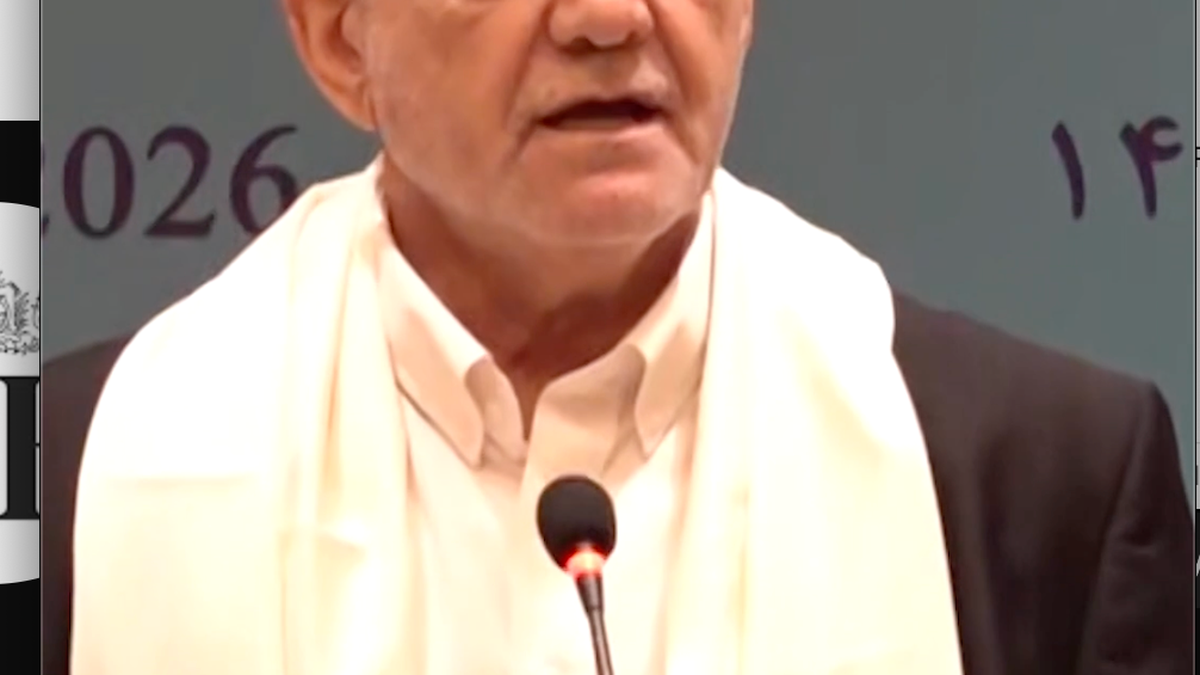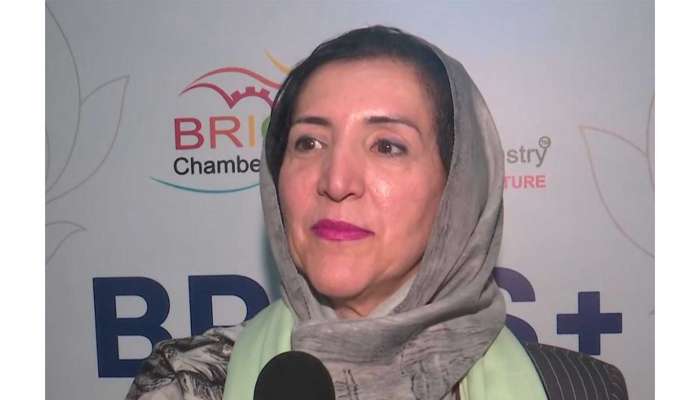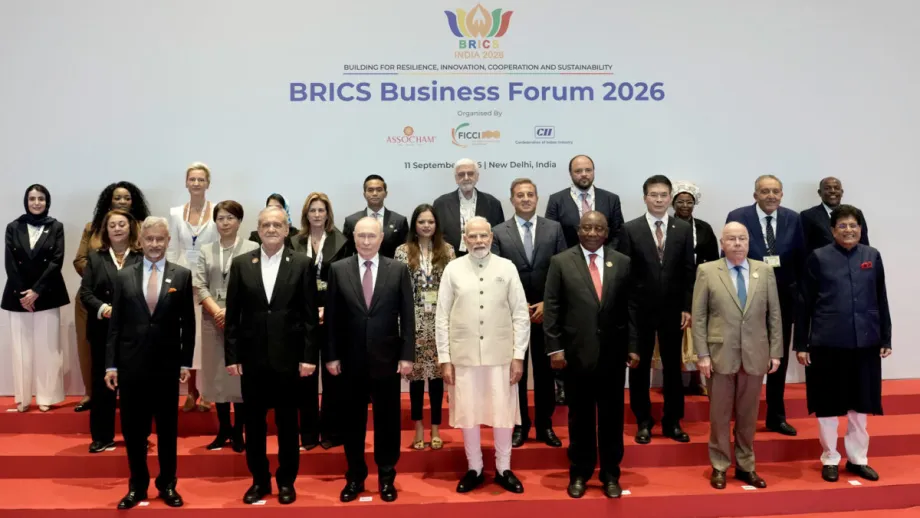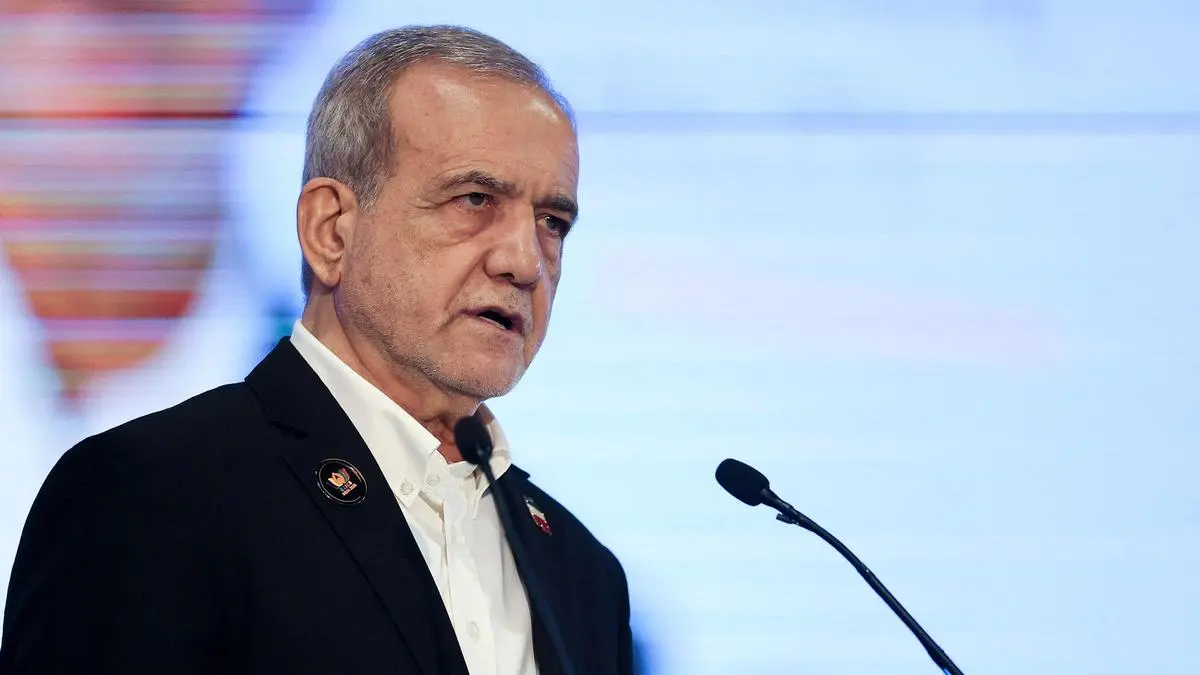
Iranian President Masoud Pezeshkian speaks during the BRICS Business Forum in New Delhi, India, September 11, 2026.
| Photo Credit:
Iran's Presidential website
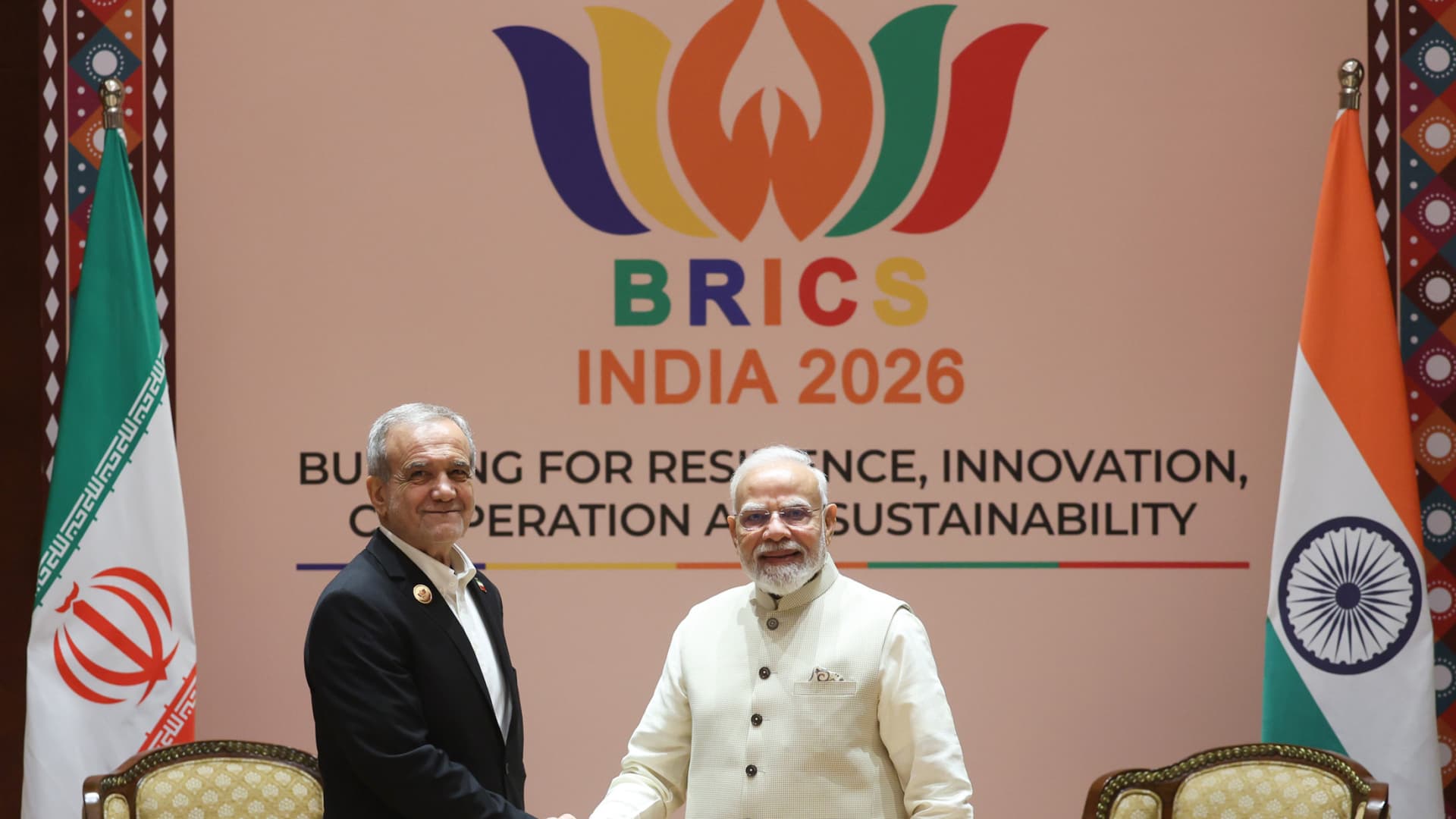
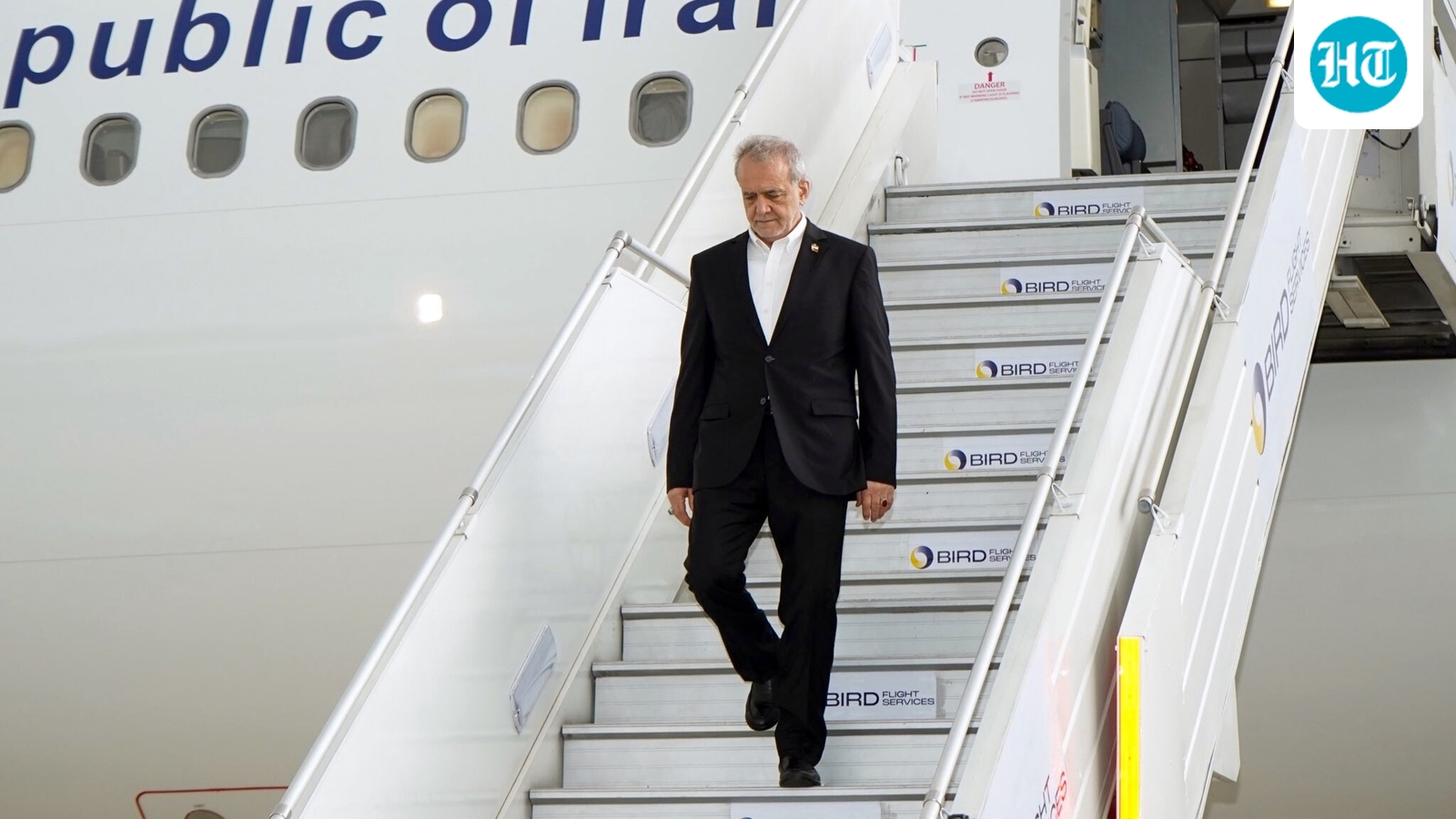
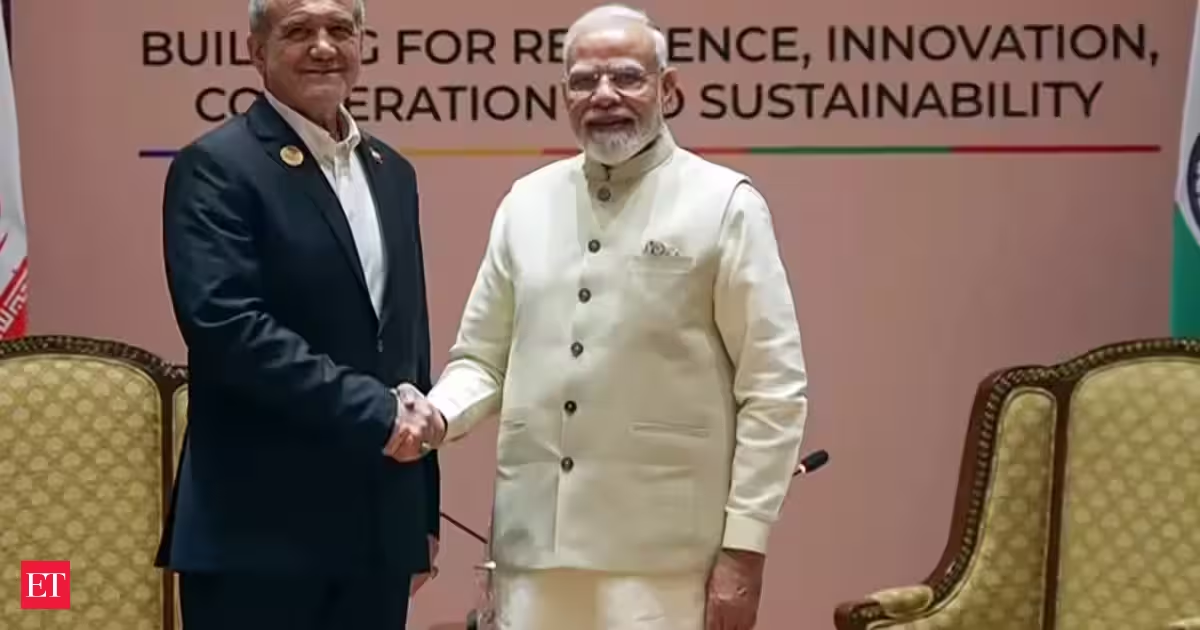
Iranian President Masoud Pezeshkian gave a defiant speech after arriving in India for a BRICS summit marked by deep divisions as the war involving Iran, the US and Israel enters a dangerous new phase.The people of Iran will not surrender, Pezeshkian told an audience of religious and business leaders in New Delhi, according to an Asian News International report. Iran has successfully stood against the US and Israel at the same time, he said. Pezeshkian is in India to shore up support among the world’s biggest emerging markets, with Chinese President Xi Jinping also expected to attend the gathering. Iran, subject to heavy US sanctions and more than six months of attacks, is among the BRICS members most interested in casting the grouping of emerging economies as a counterweight to the US-led economic and political order. But its escalating tensions with other members, particularly the United Arab Emirates, are complicating efforts to forge a common position at the New Delhi gathering. Fighting across the Middle East has intensified in recent weeks. The US stepped up strikes on Iranian oil tankers in recent days in response to Iranian missile attacks on US Navy vessels. Meanwhile, clashes between Iran-backed Houthi militants and Saudi-backed forces in Yemen have also picked up. The widening conflict has driven benchmark oil prices toward $107 a barrel. Pezeshkian held a one-on-one meeting with Indian Prime Minister Narendra Modi Friday ahead of this weekend’s summit. The two leaders discussed the US-Iran war, according to a statement from India’s Ministry of External Affairs. Modi reiterated New Delhi’s call for disputes to be resolved through dialogue, while stressing the need to preserve regional peace, freedom of navigation and commerce, and the safety of seafarers.The UAE, which joined BRICS alongside Iran in 2024, has been hit by repeated Iranian missile and drone attacks during the war that have damaged energy infrastructure and airports. The UAE responded in August by severing economic ties with Iran, its longtime trading partner.Those tensions were on display at a meeting of BRICS foreign ministers in May, when Iran clashed with the UAE and pressed the group to condemn the joint US-Israeli attack. The disagreement contributed to a deadlock that left the group unable to agree on a joint statement.In the run-up to the leaders’ meeting, differences persisted over language in the joint statement on the Middle East war, but the gaps have narrowed following constructive discussions, according to people familiar, who asked not to be identified because they were not authorized to speak publicly about the matter. Negotiations have also advanced in broader areas including health, education, culture and technology, these people said.India’s Ministry of External Affairs didn’t immediately respond to a request for comment.At this weekend’s summit, Iran is seeking to counter mounting economic pressure from the US by boosting non-dollar trade and shoring up diplomatic ties. Washington has blockaded Iran’s Persian Gulf ports, severely curtailing oil exports, and is pressuring other countries to cut their remaining trade ties with Tehran. The squeeze has contributed to shortages of products including gasoline, inflation of more than 80% and a currency that has repeatedly hit record lows.“Our goal in BRICS is to combat American unilateralism,” Pezeshkian said on state TV ahead of his departure from Tehran. “Investments in the New BRICS Development Bank will be made jointly, without reliance on the US dollar.”Isolated IranThe visit marks the first by an Iranian president to India in more than eight years. The two sides have long shared cordial ties, though the US-Israeli war launched against Iran in February has disrupted energy linkages and India’s longstanding access to supplies through the Strait of Hormuz.India and Iran are looking to diversify their trade ties, Modi said at a meeting with Pezeshkian on the sidelines of the Shanghai Cooperation Organization summit in Kyrgyzstan in August. Those efforts could be complicated by New Delhi’s push to repair its own strained ties with Washington after more than a year of tariff tensions.Iran has two natural allies within the grouping that are most likely to rally to its side: China and Russia. China, the group’s biggest economy by far, has emerged as an economic lifeline for Iran, buying large volumes of its oil exports. Russia, meanwhile, remains an important security partner for Tehran.--With assistance from Patrick Sykes, Simone Iglesias and James Mayger.(Updates with details of Pezeshkian’s speech.)More stories like this are available on bloomberg.com©2026 Bloomberg L.P.Published on September 12, 2026