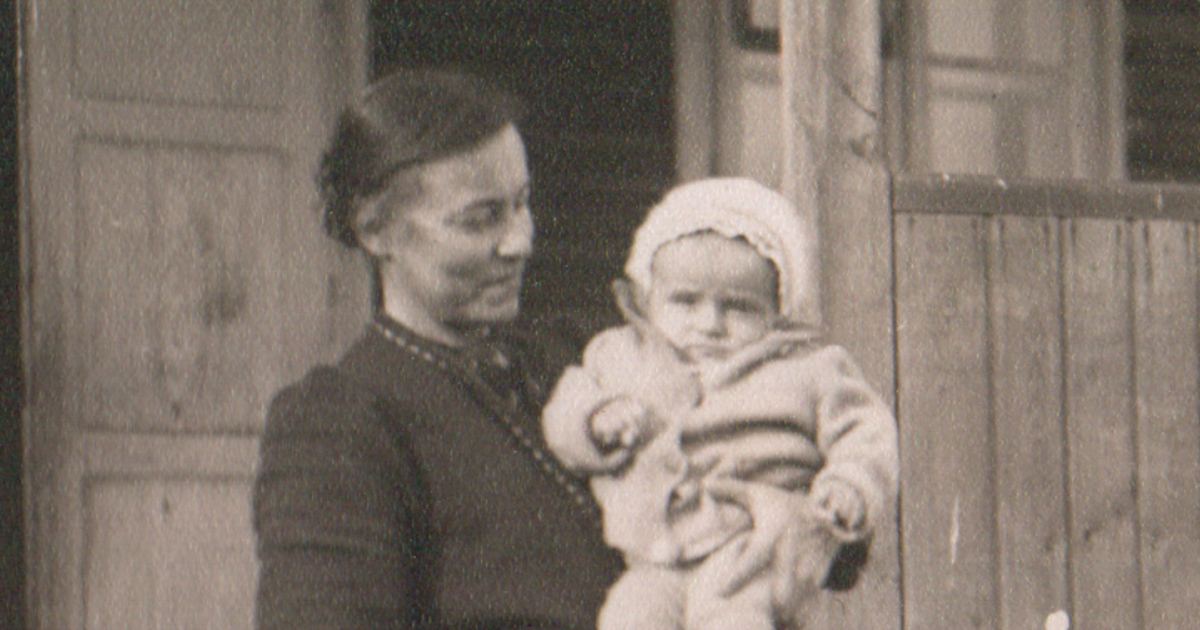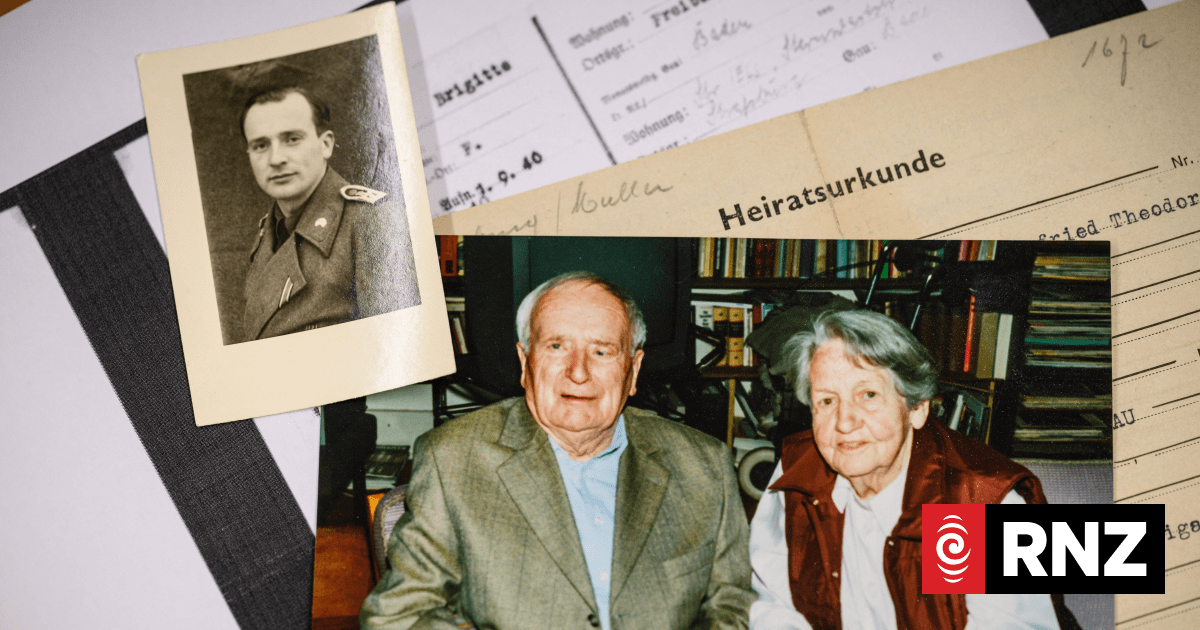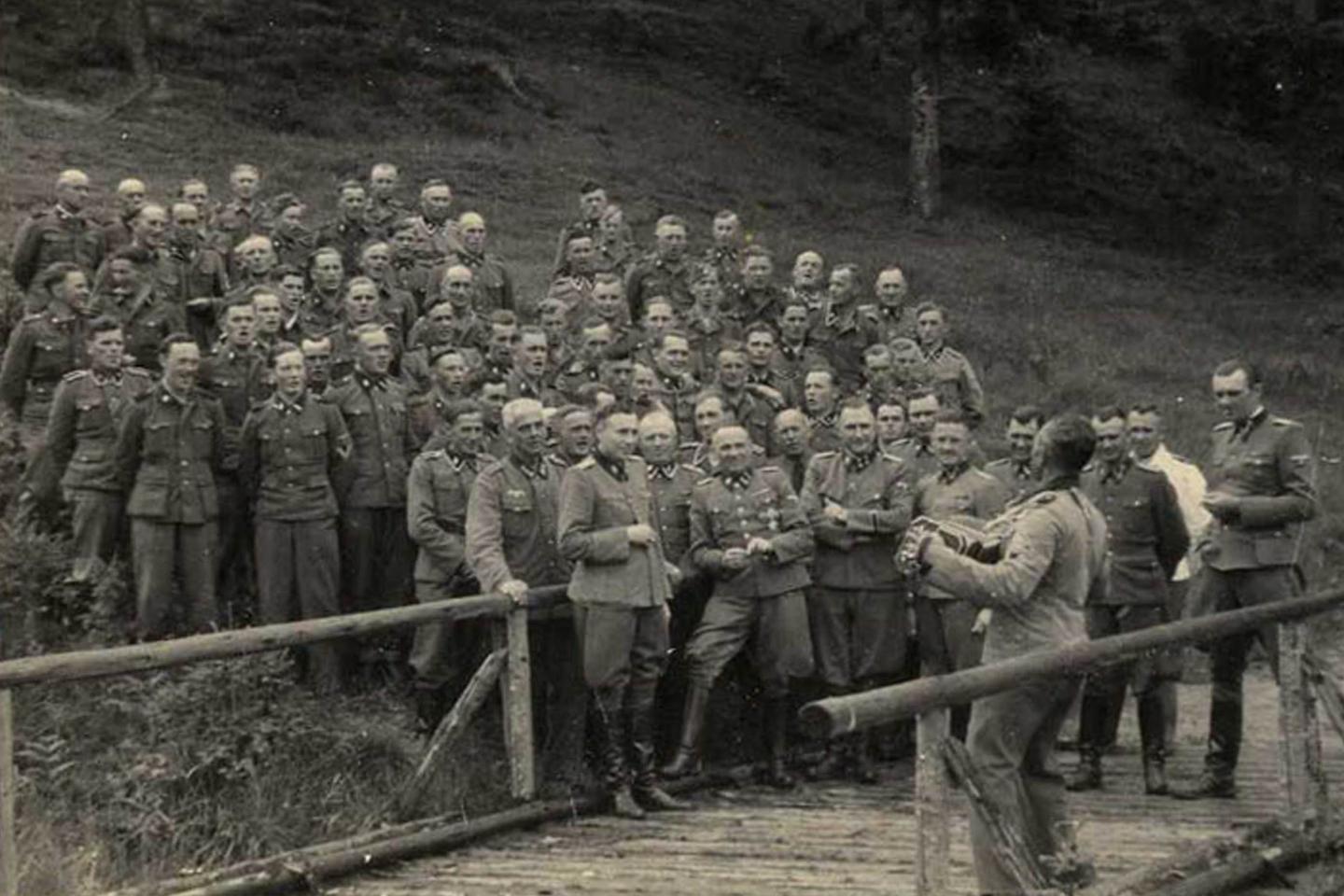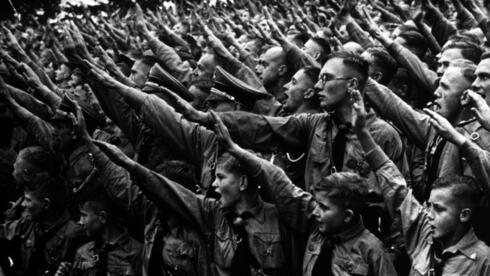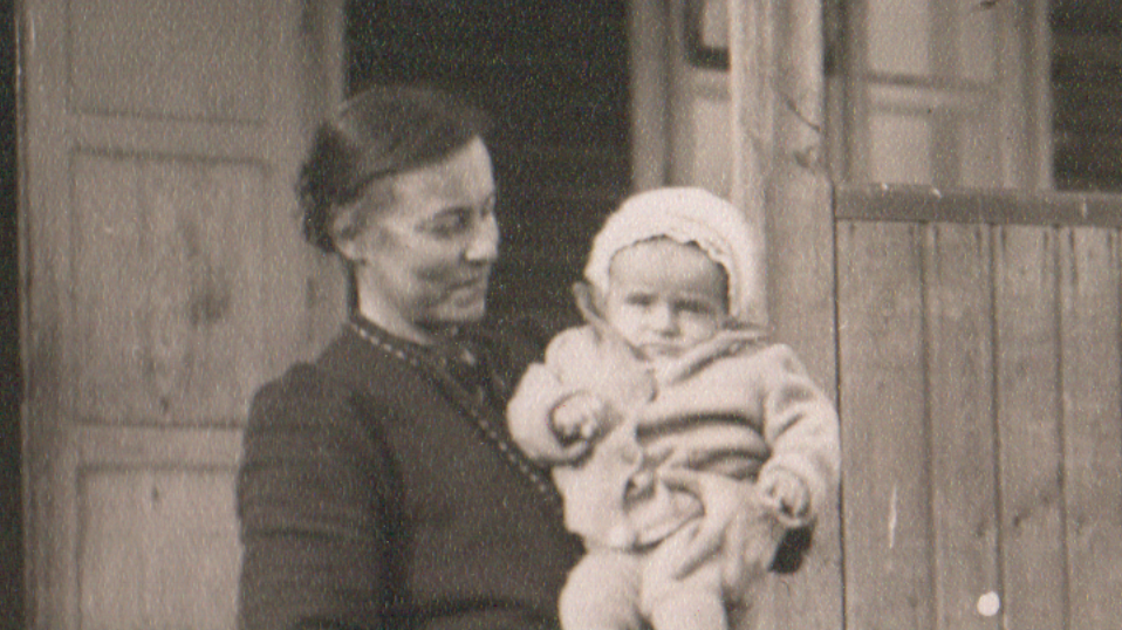
“I’m here to find an SS officer,” I told the uniformed guard outside the Berlin Archives. “He saved my mother,” I added in German. The guard handed me a visitor pass and a white plastic bag emblazoned with the German coat of arms — a black eagle with red talons — and directed me to a red brick building across a parade ground where thousands of SS officers once lined up.I registered inside. I explained to a librarian that I knew the officer was of Ukrainian background, but I did not know his name. I had already contacted archives in Poland, the U.S. and other parts of Germany in hopes of tracking down this man. Most of what I knew about the SS officer came from my grandmother, who, for much of her life, kept what happened to her during World War II hidden. I first asked about the blue-green numbers on her arm when I was 5, while watching her chop beets and onions for a soup. “It’s our phone number,” she said. “So I won’t forget it.”My grandmother continued to deflect my questions until she was in her 80s, when she finally let me interview her. But the gaps in her story alarmed me almost as much as her graphic descriptions, and after she died, I set out to fill them. To unravel her history. To understand how her experiences shaped her and my mother. To learn how a history I didn’t live ended up shaping me.My grandmother first encountered the SS officer in a prison in Radom in Nazi-occupied Poland. The Polish Blue Police had arrested my grandparents at a factory my grandfather managed after they’d spent four years ducking and hiding from the Nazis using false names that hid their Jewish identities.One policeman ordered my grandmother to leave my mother behind. She picked up the screaming toddler, grabbed a white teddy bear, burrowed it into my mother’s cheek, and left her in her bed.A policeman snapped cuffs on my grandparents’ wrists and led them outside. “Shoot us! Please shoot us!” My grandmother pleaded. She knew the Germans could kill her slowly as they attempted to learn how she’d obtained her fake papers. The policemen ignored her and bundled her and my grandfather into a car.The author's grandparents at their wedding in Warsaw, Poland, in 1938.Courtesy of Karen KirstenWeeks later, on a frigid January morning, her prison cell door swung open, and my grandmother saw the SS officer: eyes set low below a bulbous forehead, stubby fingers taut as cigars. He locked shackles around her ankles, snapped cuffs on her wrists, and led her from the cell to interrogate her at Gestapo headquarters a mile away. “He was a terrible fellow who was beating everyone,” my grandmother told me decades later. “A very famous, very cruel man, this fellow ... Ach! How he beat women!” But she said, “he was like an angel with us.” This unsettled me. When she told me this, I knew nothing about the interrogation procedures at Gestapo headquarters or the torture tactics prisoners who survived later recounted, particularly those they suspected of having connections to the resistance, like my grandfather. Because of the floggings, starvation, slave labor and dehumanizing treatment my grandmother endured in that prison and in Auschwitz and Ravensbrück, I doubt she was able to communicate the full picture of what they lived through. Maybe there was an even more horrific experience she needed to protect herself from reliving. Maybe the effects of whatever happened in that interrogation room were so devastating that she’d blocked the officer’s name from ever entering her mind again. She did not remember his name, but she would never forget him.The plot to save my mother was my grandmother’s idea. Using sympathetic Polish guards as messengers, she smuggled coded suggestions to my grandfather’s cell on pieces of paper rolled to the size of a pea and stuffed into tiny cubes of bread. If her scheme did not go according to plan, she figured at the very least she would get to see my grandfather one last time before they shot her.Two months after their arrests, in the basement of Gestapo headquarters, a guard pushed my grandmother to the floor and locked her cuffs to an overhead pipe, next to my grandfather. Eventually, someone led them into a room more office-like than the interrogation cells. A light bulb hummed and flickered. The SS officer was already there. My grandfather sized up his boomerang eyebrows and his woolen uniform that, in the damp, smelled of horse. He scanned the room for whips, butcher hooks, and pokers. "This photo of my mother was confiscated in Radom prison, returned and then smuggled through four concentration camps," the author writes. "It was taken in late 1943 before my grandparents were arrested."Courtesy of Karen KirstenMy grandmother sat by a desk beside my grandfather and rested her handcuffs on her thighs. She pulled awkwardly at her dress, which she’d been wearing since her arrest. She slid her fingers to the top of her stocking and fiddled and twisted. She unraveled the fabric wrapped around her upper leg and yanked hard. She pulled the corset off and kneaded slits in the fabric. Jewelry tumbled out. My grandmother had sewn her dead mother’s jewels into her clothing. Now she tilted the stones. They sparkled. She lowered gem-embellished earrings onto the desk. The diamonds in the rings were enormous.Although my grandmother did not know the officer had taken bribes before, she hoped her mother’s jewels would seduce him. “What do you want?” he asked. “We want you to promise to save our child,” she told him.My grandmother had clung to the possibility that someone had heard my young mother screaming, but she did not know if the child was alive. She had no idea that someone had indeed found her and, at great risk, watched over this Jewish child. However, to this day, no one knows who.The SS officer drove 29 miles, found my mother, and delivered her to a convent. She remained hidden there for the rest of the war and was cared for by the nuns. "This is my mother, Joasia, being held by Sister Stefania Sydry just after the SS officer delivered her to the convent in March 1944," the author writes.Courtesy of Karen KirstenThe officer’s superior ordered my grandparents to be sent to a nearby concentration camp instead of executing them. Later, they were forced — along with 3,300 others — to march 62 miles, and then they were loaded onto cattle cars bound for Auschwitz, where my grandmother was tattooed for slave labor. As the Soviets approached, the Germans transported my grandmother to Ravensbrück, where, from a sub-camp, she staggered, dizzy with hunger in -22 degrees Fahrenheit in her Auschwitz-issued wooden clogs with other “coat-hanger” women, as they called themselves, to an armaments factory to assemble bullets.Shortly before the war ended, Sweden’s Count Folk-Bernadotte made a deal with Heinrich Himmler, and the Red Cross evacuated my then 30-year-old grandmother. She arrived in Sweden on a stretcher. She weighed 59 pounds — unable to recall her name. My grandfather was sent from Auschwitz to Natzweiler, and then Dachau, where American soldiers eventually liberated him.I was obsessed with finding the “good” Nazi who had taken my grandmother’s bribe. I could not stop thinking about how a man who embraced the ideology of exterminating people like my mother was also capable of choosing mercy. How he saved her. How without him, I would not exist. His one deed propagated my need to understand the choices victims and perpetrators make in violent times. It shaped everything from how I understand history to how I see the world I live in, to how I understand myself. Before visiting Berlin, I’d lurked in online forums, throwing names of officers at Radom prison at war buffs and collectors of Nazi memorabilia, trying to match details with what my grandmother had told me. I’d pestered every historian I could contact. I felt an irrational responsibility to thank the officer’s family. I wondered how a man who whipped and disfigured women — and pledged loyalty to a group that did so many unthinkable things — would treat his own children. I thought that if they knew about this kind act, it might help them bear a past they did not want as their legacy.A woman I met in Berlin connected me to an organization that pairs descendants of Nazi perpetrators with survivors and their families — people on opposite sides of a shared history. One descendant combed German libraries and concentration camp archives for me. When I asked her why she was helping me, she told me she’d discovered later in life that her abusive father was a concentration camp commander. She said helping people broken by atrocities like the ones her father committed helped her grapple with a history she was born into. A history she did not choose. After leaving Berlin without the officer’s name, I arrived at the U.S. Holocaust Museum in Washington, D.C., with low expectations. A researcher flipped through a file as thick as a book: prisoner ledgers, survivor lists, concentration camp inmate questionnaires, repatriation requests and denials. On the very last page of my grandfather’s file, I saw it: two SS lightning bolts typed in blue carbon ink, the Radom Gestapo unit that interrogated him, and a name. Shock arced through my stomach. It matched the name of a Ukrainian officer a historian had emailed me.It didn’t surprise me at all that my grandfather had stored the Nazi’s name in his head through four concentration camps and a death march and then revealed it to the Allies when they interviewed him. He had been a lawyer before the war, and at night from his bunk he’d urged fellow prisoners to recite SS officers’ names and their crimes so one day they could be tried. After his liberation, the U.S. military established the Dachau Trials and hired him to help prosecute high-ranking Nazis. However, after emigrating, like many refugees who reinvent themselves to match the expectations of new countries— and to suppress the horrors they escaped––he never talked about his past, much less the officer’s name.A photo of the author's grandfather when he was working with the U.S. Army at Dachau in 1946.Courtesy of Karen KirstenI found the SS officer’s family tree on a genealogy website. His daughter was about the same age as my 74-year-old mother. Maybe when the SS officer handed her to the Mother Superior at the convent, he was thinking about his own little girl he’d left behind.“He said, ‘Pray to God that the war will be finished and we can all go home soon,’” my grandmother told me. “Over and over, he said it.”I mailed a letter to his daughter: I hope this letter does not come as too much of a shock for you... Your father did something good for my family in 1944, particularly for my mother. I would not be alive and writing to you if it were not for him.I omitted specifics. I intended to open a safe dialog, but a week later the SS officer’s photo disappeared from the genealogy site. His tree was changed to “private” and blocked from my view. I never received a response. I thought I’d be able to establish for the officer’s daughter that whatever she knew about her father’s past, on one occasion he’d done something good. But perhaps I confronted her with questions she did not want to consider. I don’t know exactly what I thought I’d gain if I knew more, but part of me couldn’t rest until I did. It had nothing to do with forgiveness — not after what the Reich did to my family and millions of other families. I thought if I had reached her, she might have shared details about her father that humanized him. Made him less of a monster. But why would that make any difference? The fact is that he inflicted horrible atrocities on Polish prisoners. Maybe I hoped even the most heinous among us were capable of good. But how would knowing that in a tangible way change anything? I was left with the same question I’d started with: how can a murderer and savior live in the same man?My grandmother believed there is evil inside all of us.“When the opportunity comes up, like during the war... it happens,” she said. To this day, I don’t understand completely why she chose me as her confidante. Perhaps she knew I’d search for evidence to round out her unbearable memories, like a dog digging for a buried bone, unearthing horrible truths that were too traumatic for her to recall. I will never know the full extent of what that Nazi took from her. I read about officers who coerced women into sexual acts in exchange for food, to defer executions, to save a husband, a mother, a son, or a daughter. But this particular officer could have taken my grandmother’s jewels and killed her. By all accounts, that officer should have killed my mother, too. Whatever his motivations were, he saved their lives.All my searching has taught me that truth, if we find it, can be ugly. The world isn’t straightforward — good or evil. Heroes can be repulsive, and the line between right or wrong, guilty or blameless, is not always clear. Despite this, whenever I find myself crediting the Nazi with decency, it feels like I’m betraying my grandmother. And the women he beat. And the millions of people the Nazis murdered.“You might forget the names,” my grandmother said. “But you don’t forget what happened.” The Holocaust didn’t start with gas chambers. It began when people decided a group of their fellow citizens was the enemy. My grandmother often said that when the societal norms of respect and decency collapse, we’re all capable of treating each other like animals. When we dehumanize others, we can find ways to justify the denial of rights and embrace all kinds of depravity and violence.The man whose name I found and chose not to make public for the sake of his daughter did unspeakable things. He is also the reason I exist. Karen Kirsten is the author of “Irena’s Gift,” a 2025 National Jewish Book Award Finalist, winner of Zibby Awards for Best Family Drama & Best Story of Overcoming, and Australian Jewish Book Award Finalist. An Australian-American, Karen has lived in five countries and now calls the USA home. You can find more info about her at www.karenkirsten.com.Do you have a compelling personal story you’d like to see published on HuffPost? Find out what we’re looking for here and send us a pitch at pitch@huffpost.com.
A Nazi Officer Saved My Mother’s Life. Here’s What Happened When I Tracked Down His Daughter.
“My grandmother had clung to the possibility that someone had heard my young mother screaming, but she did not know if the child was alive.”
2,455 words~11 min read