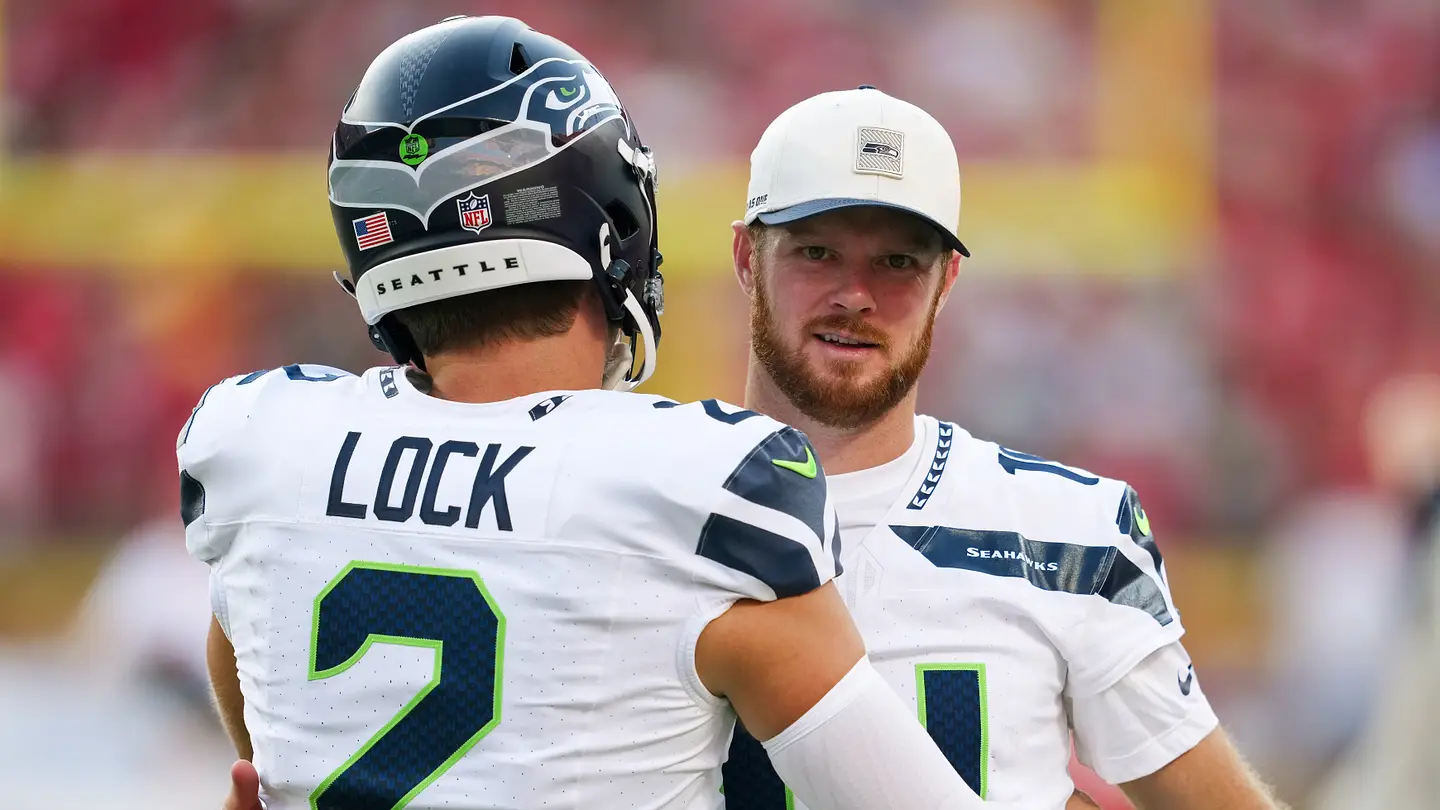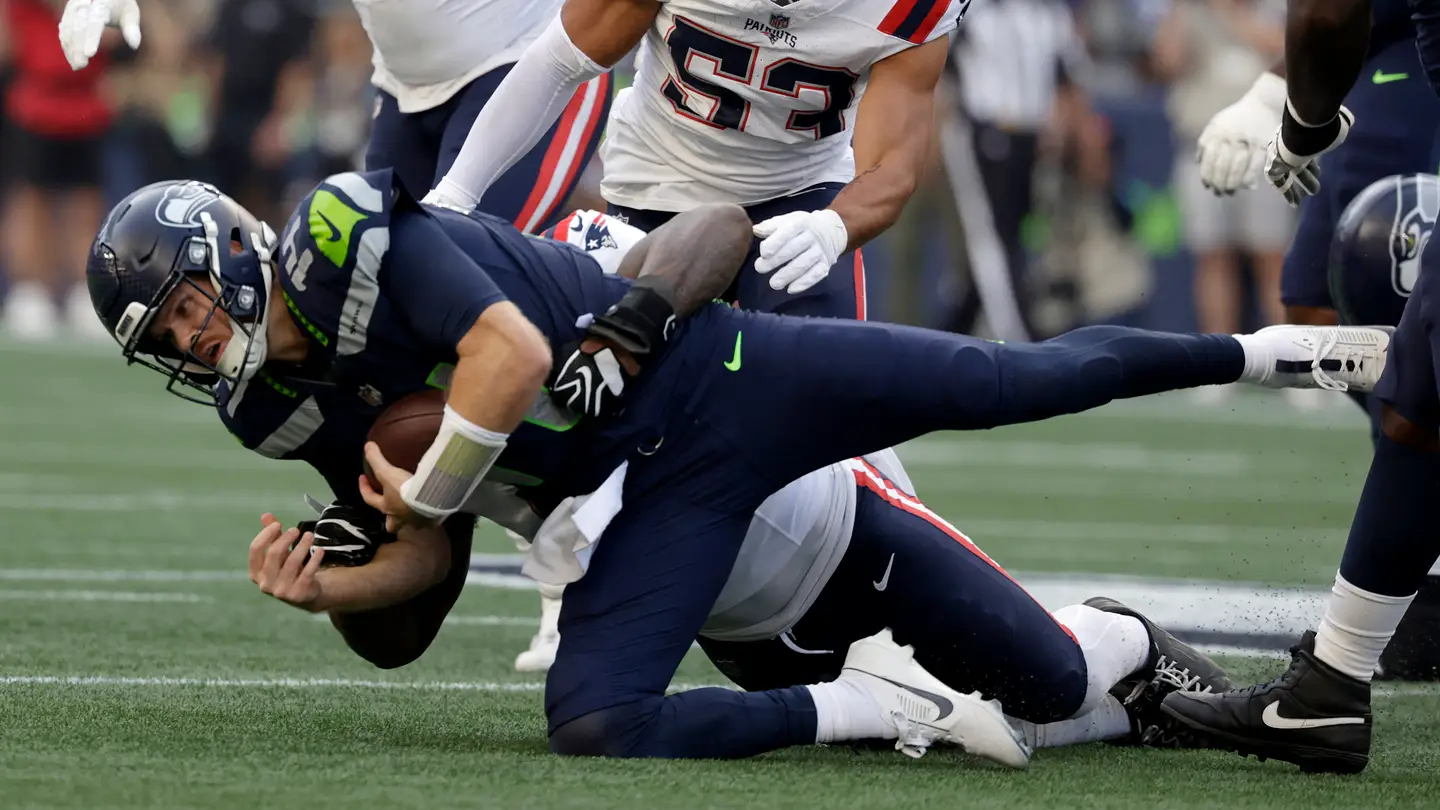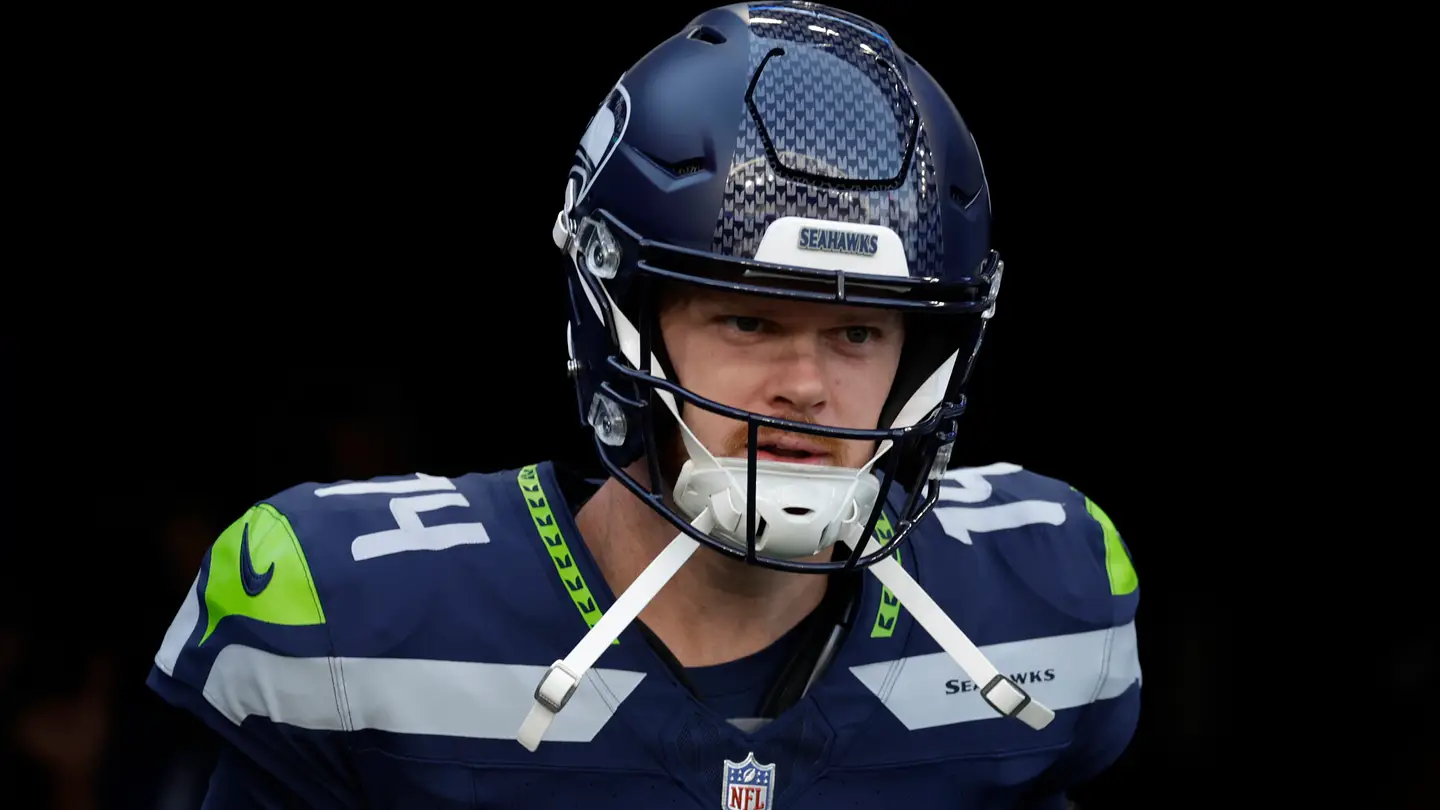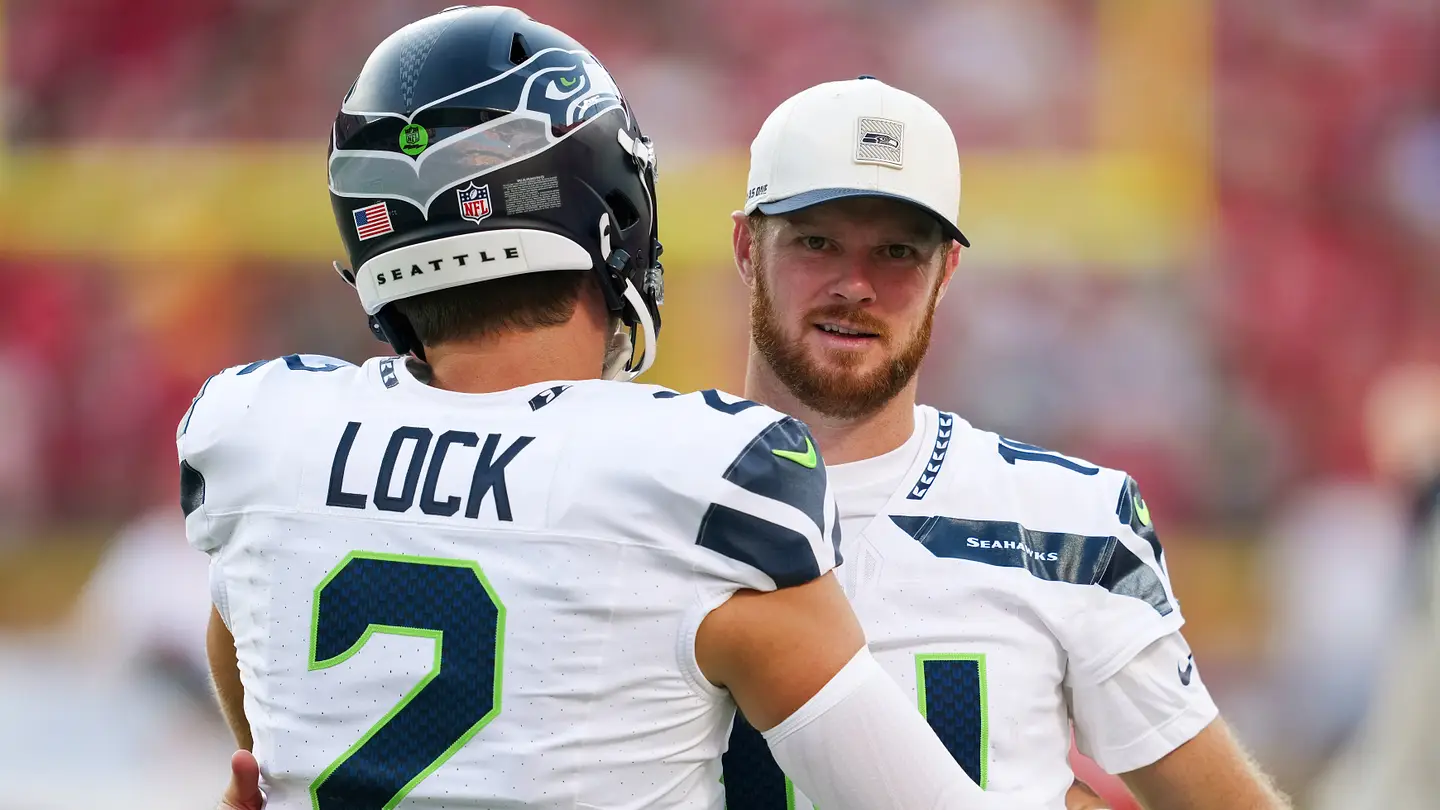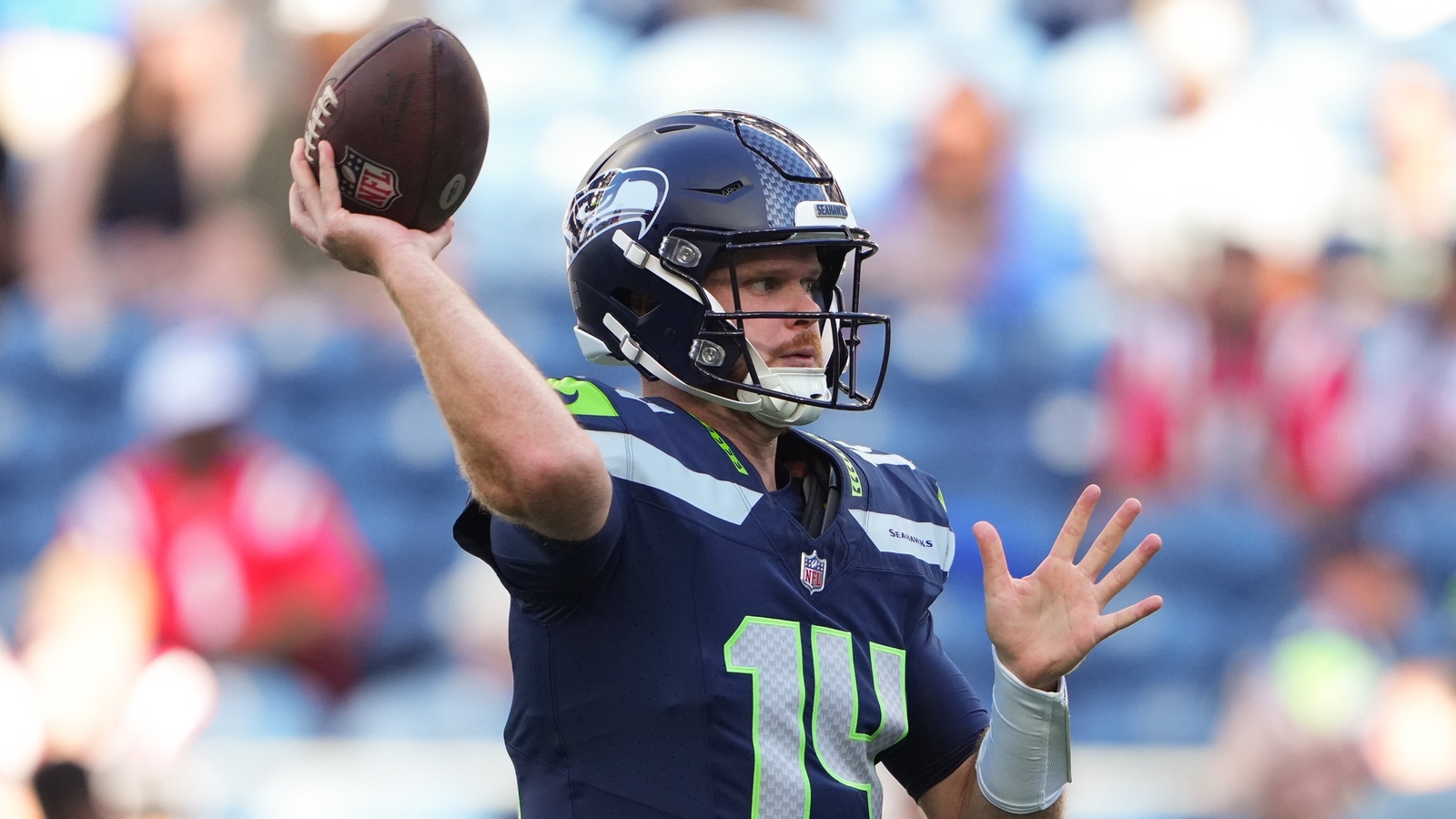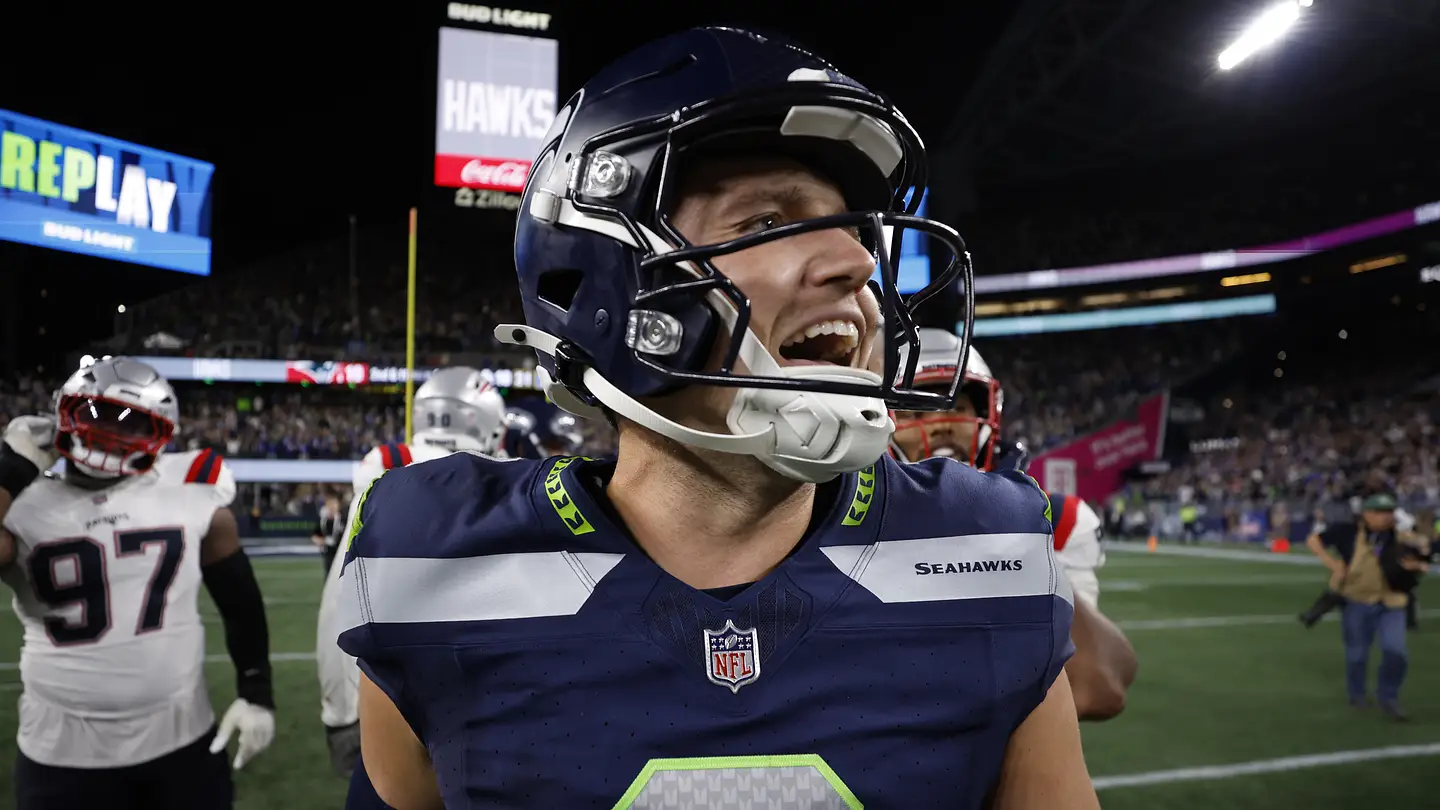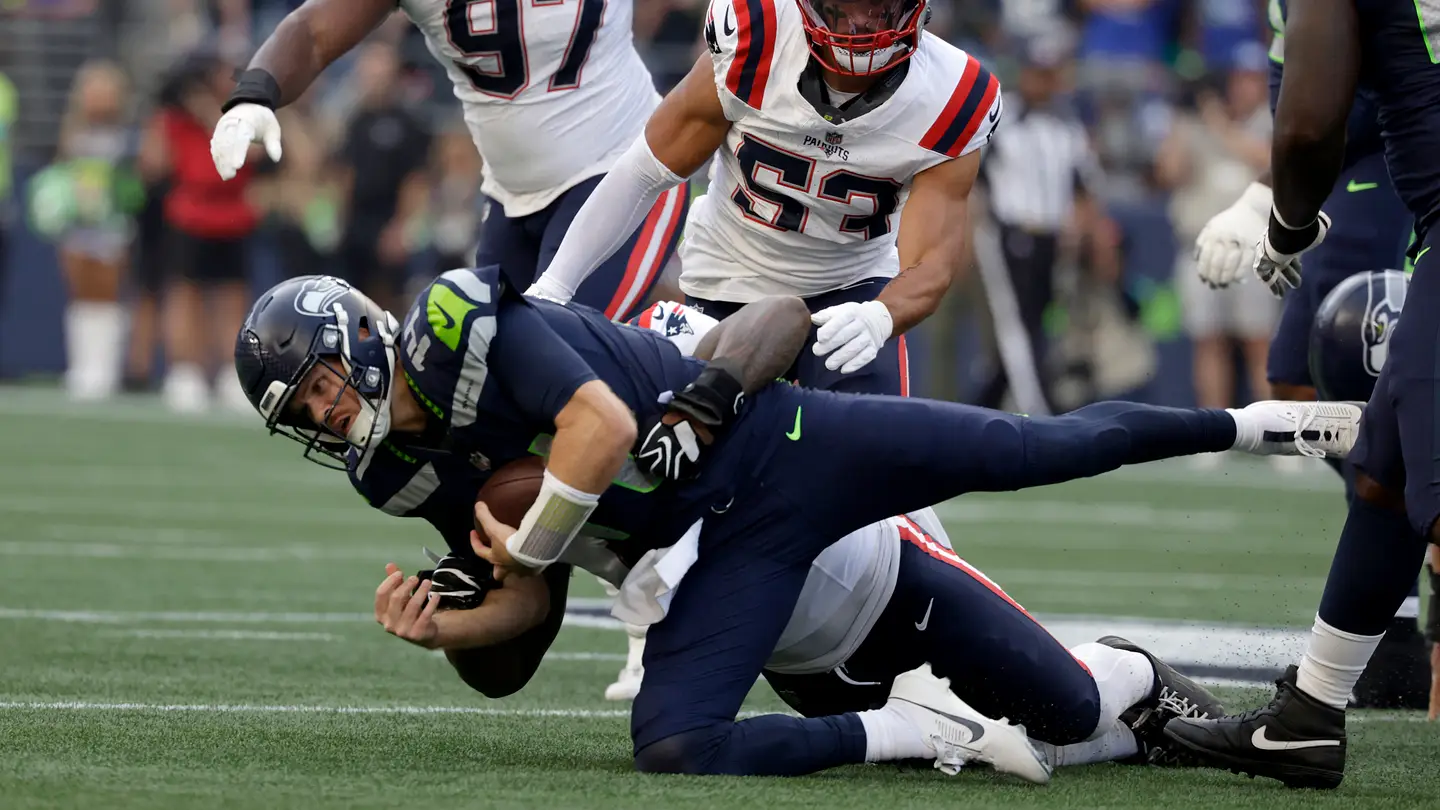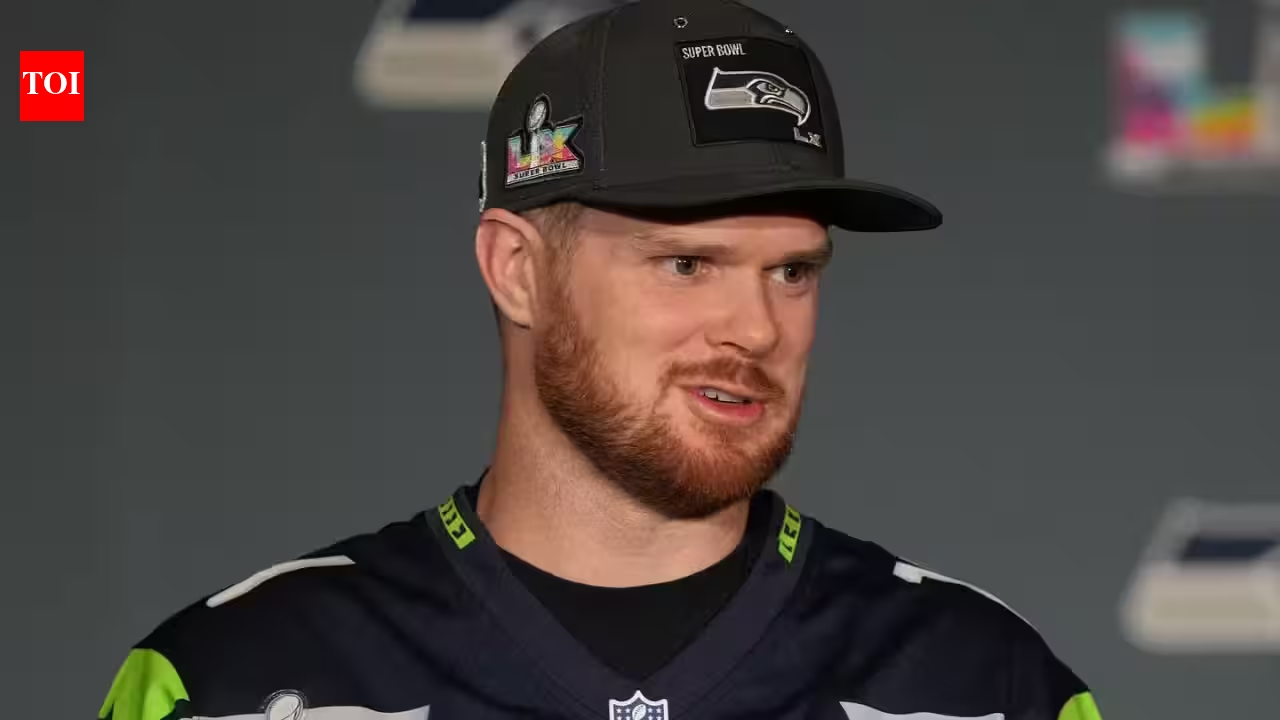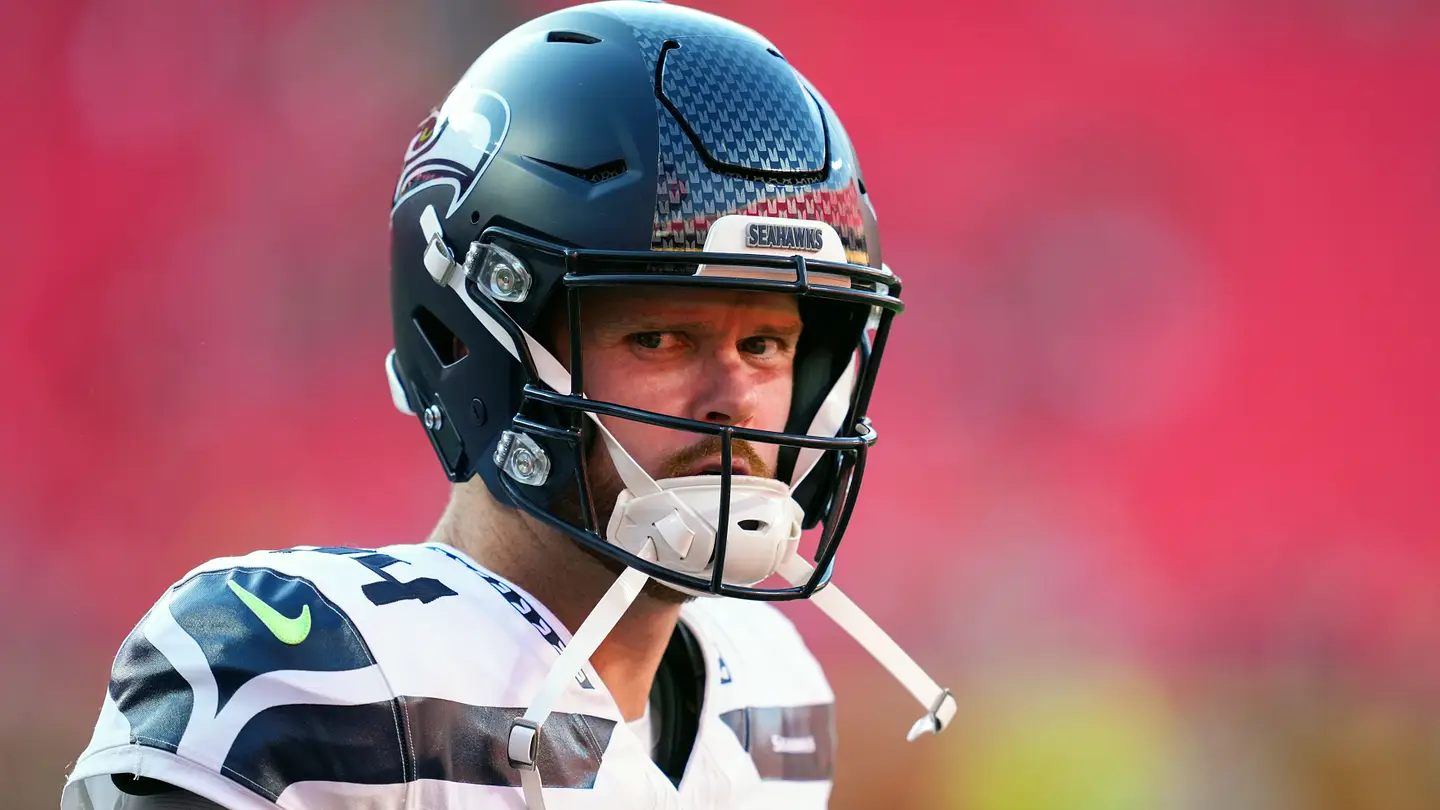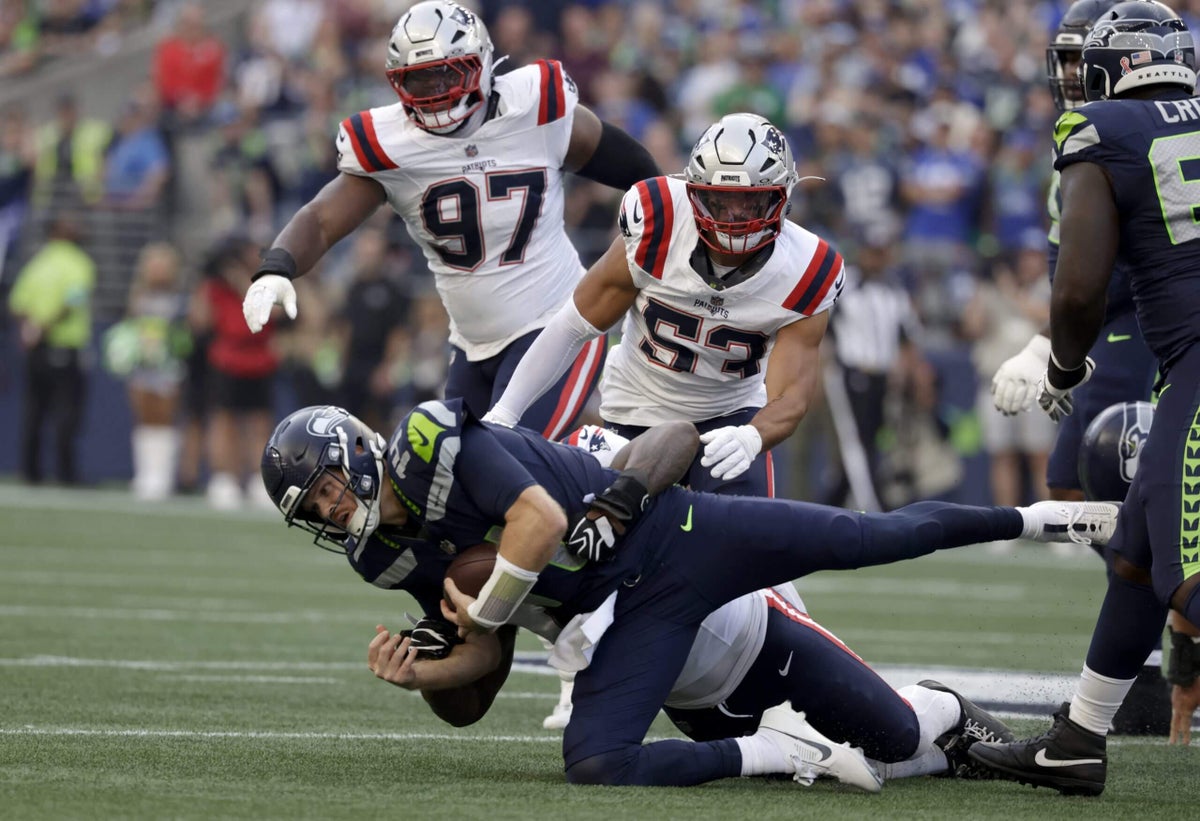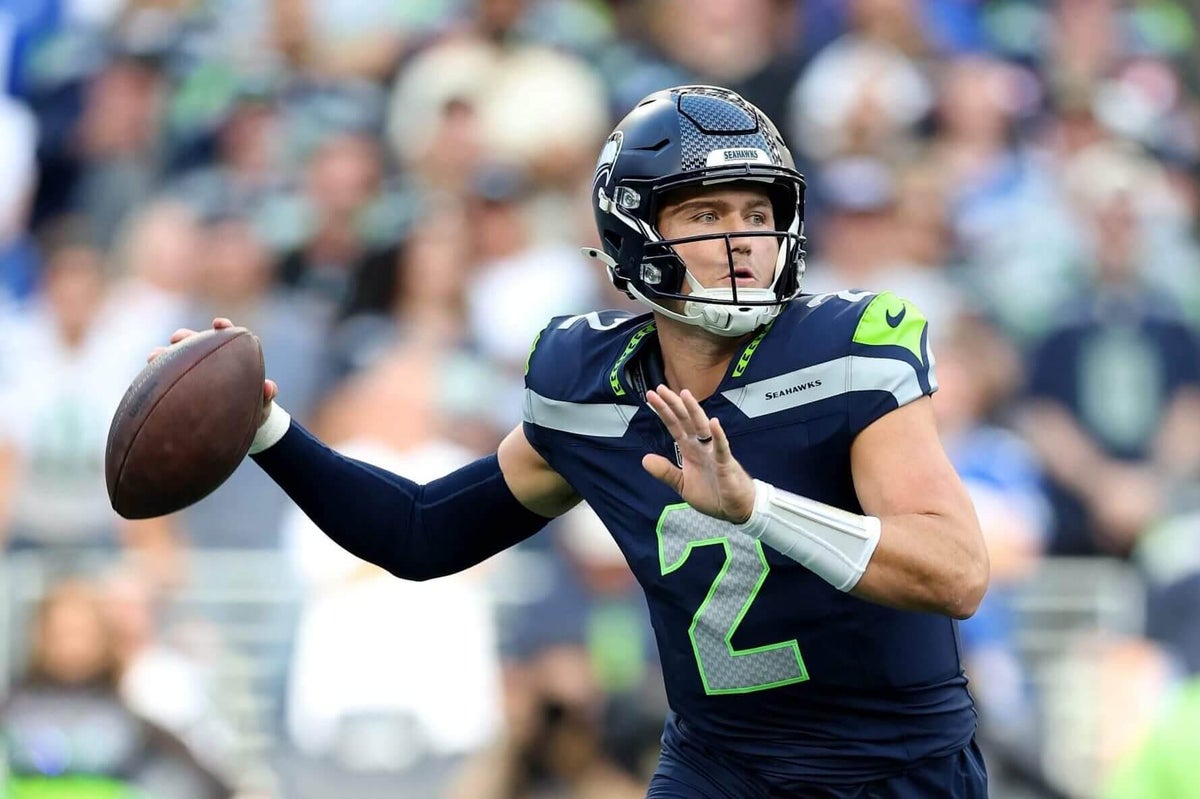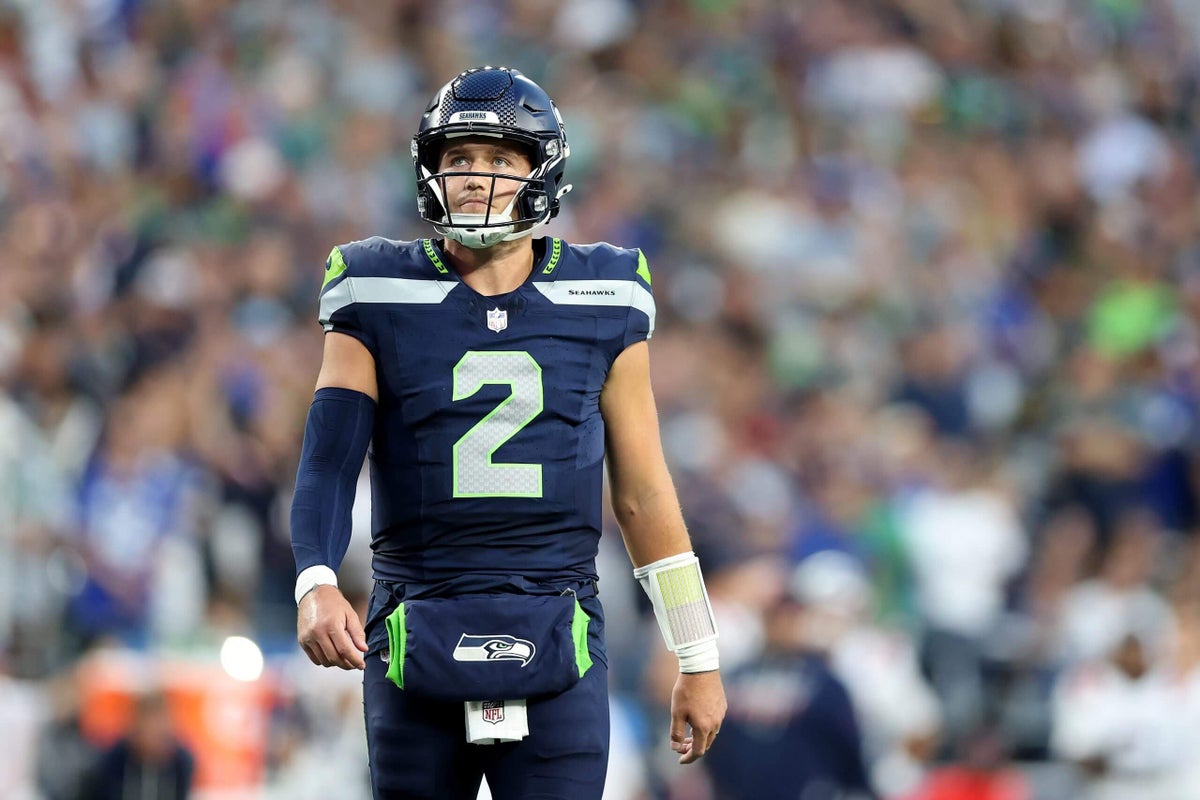
RENTON, Wash. — Less than 24 hours removed from losing his starting quarterback to injury, Seattle Seahawks coach Mike Macdonald was in a rather upbeat mood on Thursday.It is unclear how long quarterback Sam Darnold, who injured his hip during Wednesday night’s 13-10 win against the New England Patriots, will be out. But Macdonald said the Seahawks have received “positive news” about Darnold, who gave way to backup Drew Lock after just five plays.“Right now we’re working through the extent of the injury, and then putting a plan in place to get back rocking and rolling,” Macdonald said. “Silver lining is we have some extra time here.”Seahawks receive 'really, really good news' on Sam DarnoldAndrew DestinAfter kicking off the NFL season with the Patriots on a Wednesday, the Seahawks have 10 days between games, not playing again until Sept. 20, when they visit the division-rival Arizona Cardinals. That extended break will not only give Darnold more time to nurse his way back to health, but also provide Seattle’s coaching staff with a few extra days to dive into the film.It was an ugly season opener in many ways, despite the Seahawks emerging victorious. By scoring just 13 points, they tied their lowest offensive output from the 2025 season. Seattle also committed 10 penalties, including a handful of miscues at inopportune times for an offense that is still getting its bearings under first-year offensive coordinator Brian Fleury.Macdonald said this year’s offense will be a bit different from what Seattle rolled out in 2025 under Klint Kubiak, who is now head coach of the Las Vegas Raiders, in terms of what plays are called and what language the players use.At its core, though, Macdonald anticipates Seattle’s offense will be awfully similar to last year’s operation, which appeared to be the case Wednesday.“We have an expectation of how we want to play, and I thought you saw a lot of that last night,” Macdonald said. “I know we didn’t light the scoreboard up, but our offensive line had a really good game. They played physical. I thought the tight ends played physical. Receivers were decisive. We made some big plays when we needed (them).”Some of Seattle’s most impactful moments on offense came out of its less-frequently deployed personnel packages. For instance, the Seahawks lined up in 22 personnel — two backs (one fullback), two tight ends and one wide receiver — on Jaxon Smith-Njigba’s game-tying, 45-yard touchdown reception in the fourth quarter.Lock, who is in his eighth NFL season, calmly faked a handoff on fourth-and-1, jutted to his left and located Smith-Njigba, who did the rest with his legs.Seahawks beat Patriots to kick off 2026 NFL seasonThere were several other plays with noteworthy designs, too, albeit with varying results.Smith-Njigba lined up in the backfield twice, something he did periodically in Kubiak’s offense, catching one pass for 6 yards in the second quarter. Then in the fourth quarter, Fleury put wide receiver Rashid Shaheed in the backfield behind Lock, with rookie running back Jadarian Price lined up outside, though the play was nullified by a pre-snap penalty.The Seahawks used tight end AJ Barner under center in their familiar “Barnyard” package to sneak the ball on fourth-and-1 in the second quarter, but they were flagged for lining up offside. Fleury also employed an unbalanced formation on a toss play in the third quarter, putting left tackle Charles Cross in a two-point stance — at the point of a bunch with Barner and tight end Eric Saubert — in the right slot (and Smith-Njigba at left tackle!), though Cross didn’t land a clean block, and George Holani was stopped for 4 yards.At the very least, these designs showcased Fleury’s creativity, especially in his first regular-season game as an offensive play caller.Overall, the Seahawks’ personnel approach was very similar to 2025. Last season, Seattle used 11 personnel (one back, one tight end and three wide receivers) on 41.2 percent of snaps and 12 personnel (one back, two tight ends, two receivers) on 27.4 percent. On Wednesday night, those figures were 41.7 percent and 25 percent, respectively.The biggest difference came in 21 personnel (two backs, one tight end, two receivers), which Seattle used 27.1 percent of the time, about double its 2025 rate. However, that gap could be explained by semantics.Robbie Ouzts was the Seahawks’ primary fullback in 2025, averaging 16.9 snaps in 12 games, but he is out for the season with a neck injury. Brady Russell, who is also classified as a fullback but often plays as an inline tight end, took over Ouzts’ role. Russell played a career-high 17 offensive snaps, and six came at inline tight end, making those plays more like 12 personnel. Several other plays saw him in various forms of motion at the snap, much like how the San Francisco 49ers — Fleury’s former team — use fullback Kyle Juszczyk.Semantics aside, Fleury used plenty of heavy personnel, just as Kubiak prefers in his version of a modern West Coast offense. Those packages make it easier to lean on the run game and play-action passes to support the quarterback, tactics that become more important with a backup in the game.It is unclear how Fleury would have called the game had Darnold not been injured. Regardless, Macdonald was pleased with Fleury’s flexibility once Lock entered.“When things are going awry, the way we roll, we try to find solutions,” Macdonald said. “Find a play and go find another one and just keep rolling.”Generally speaking, Seattle had a decent amount of success on the ground, too, gaining 97 yards on 22 attempts (4.4 yards per carry). That total is more than the Seahawks posted in four of their first eight games in 2025.“I’m excited about our run game,” Macdonald said. “Our runners were decisive and got square and got the ball moving forward. We eliminated some negative runs, which is always a positive. We got off to a good start, and I expect us to get even better.”The ground attack was similar to how the Seahawks ran at their opponents last season. Price, who busted a 13-yard run on his first career NFL carry, finished with a game-high 52 rushing yards while patiently waiting for his blockers to open up holes in Fleury’s outside-zone scheme.Price, known as a downhill runner who is also capable of bouncing carries to the outside, demonstrated he can be an east-west runner as well. So long as he continues to handle the opportunities afforded to him in stride, the 22-year-old’s workload could increase as he becomes more familiar with Seattle’s playbook and the nuances of playing in the NFL.“We’ll see,” Macdonald said of Price. “The way the game played, that’s the way we deployed our people, and we’ll take it game-by-game. I thought he had a really good game.”Last season, Macdonald frequently lamented Seattle’s rushing production, especially during the first half of the year. Ultimately, the Seahawks wrapped up the 2025 season with the 10th-most rushing yards per game (123.3) in the league, but it took a while for the team to find its rhythm.With the way the Seahawks ran the ball Wednesday, it seems the offense as a whole might not require too much time to get acclimated to Fleury’s system. Of course, it would be to Seattle’s benefit if Darnold’s absence isn’t long and he can rack up plenty of game reps before the Seahawks face their more challenging foes from October onward.But if Darnold is sidelined for a few weeks, the Seahawks are confident not only in Lock, but also in Fleury’s offense. Though Lock and Fleury aren’t Darnold and Kubiak, Wednesday night’s game demonstrated that Seattle is not interested in making terribly many overarching changes from last year’s general offensive approach.Not to mention, the Seahawks left plenty of room for growth, whether that’s cleaning up pre-snap penalties or being more explosive as an offense.“What’s better than coming out of the game and being happy on style of play,” Macdonald said, “but also understanding there’s a lot of details and a lot of things we can improve to really take our offensive unit to another level?”
First impressions of Seahawks’ new offense, and how it might look if Sam Darnold misses time
Brian Fleury's scheme looked much like former OC Klint Kubiak's, although it's tough to know how much changed when Drew Lock entered.
1,349 words~6 min read