On 3 September 2026, ARC Prize published GPT-6 Astra's ARC-AGI-3 numbers. Greg Kamradt's post puts two scores on the same model. In the Standard harness at max reasoning, Astra hit 62.7% and the run cost $26,098. In OpenAI's Provider Adapter at high reasoning, it hit 99.9% and the run cost $18,817.
I am quoting the ARC Prize table, not a launch slide. The official results page lists twelve harness configurations. Both scores are real. They are not the same test.
The Standard harness is the shared interface. The model can keep notes it chooses to carry forward. The Provider Adapter keeps opaque reasoning state between requests and compact longer conversations, so the model can reuse work it already did. Same weights. Different memory rules. Different score.
The row I keep coming back to is reasoning none. Inside the adapter, Astra still scored 96.7% and cost $23,457. Inside the Standard harness at max, it scored 62.7% and cost $26,098. Turning the reasoning dial all the way up, under the shared rules, lost to leaving reasoning off and keeping OpenAI's context plumbing.
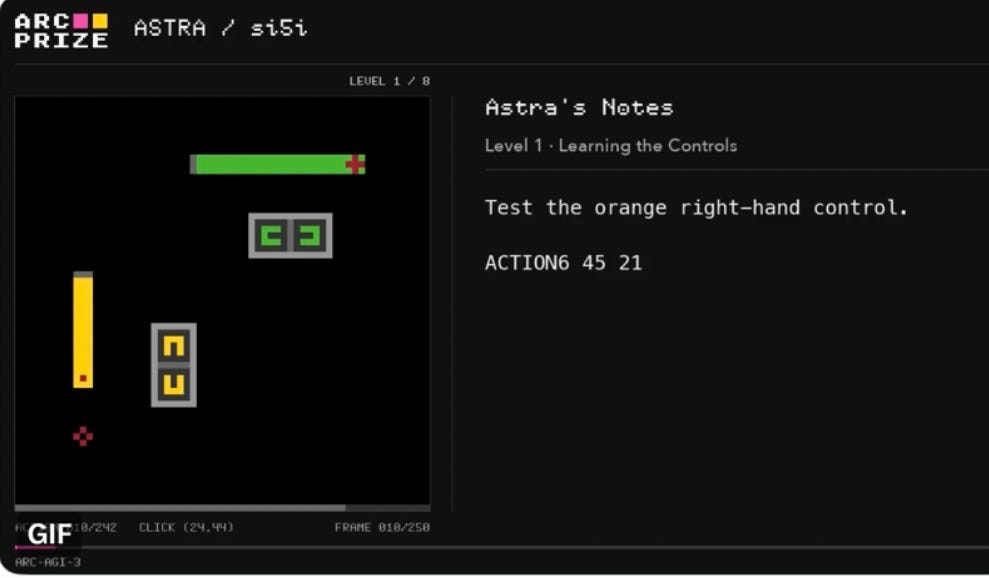
That is a 34-point gap from scaffolding, on a benchmark that is supposed to measure whether an agent can explore a new environment, infer the rules, and plan. ARC-AGI-3 is a set of novel turn-based games with no instruction sheet. Humans solve 100% of them in ARC's testing. The Standard number is still a large jump over GPT-5.6 Sol's 7.8% on that same shared harness. The number that travelled was 99.9% against 7.8%. Those two figures do not share a harness.