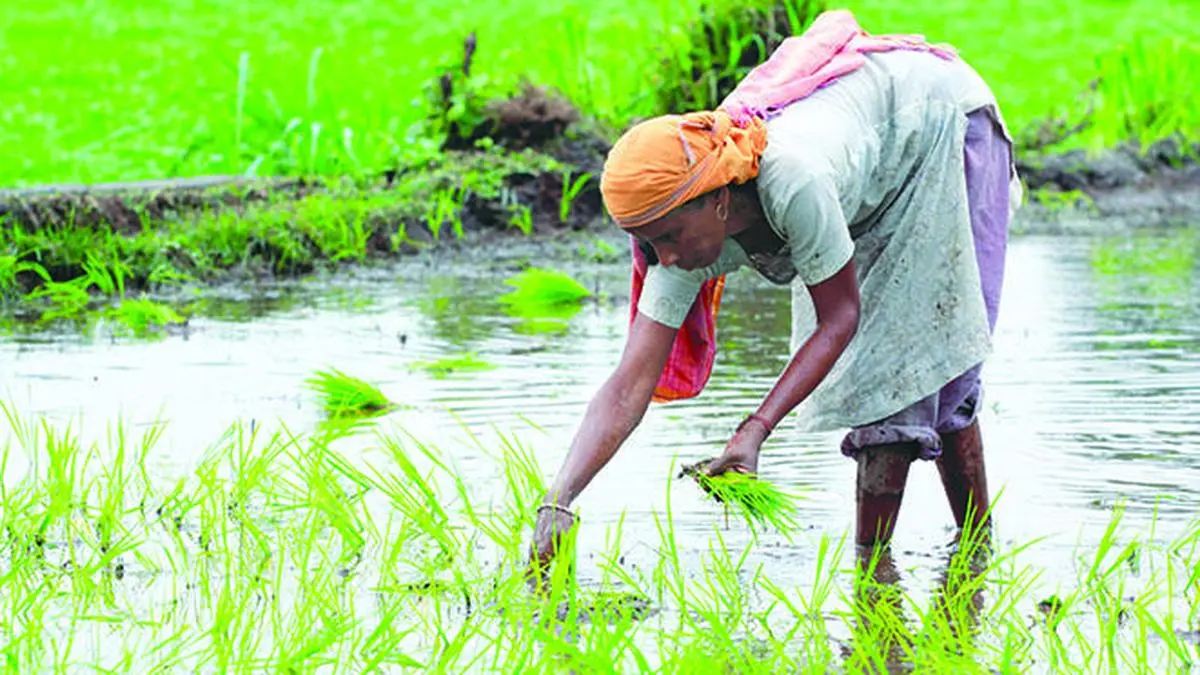
Rice planting
| Photo Credit:
ajaykampani
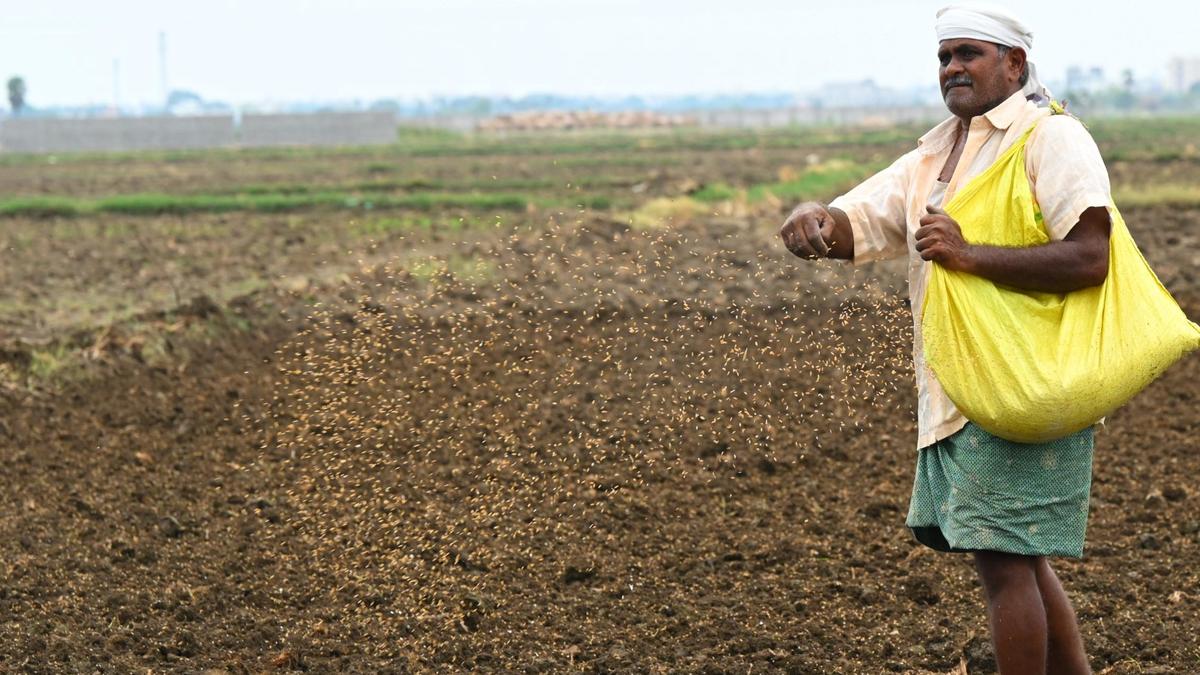
Even as El Niño casts its shadow on the current kharif season, some small farmers in Andhra Pradesh are showign the way to tackle low-rainfall conditions and promote sustainable agricultural practices such as pre-monsoon dry sowing (PMDS) and seed pelleting technology.PMDS involves broadcasting diverse seed varieties during hot summer months to maintain continuous green cover and build soil fertility before the monsoon. Seed pelleting coats seeds in protective natural layers, allowing them to lie dormant in dry soil until rainfall triggers germination without requiring initial soil moisture.“As of September 1, 2026, about 17 lakh farmers have practised PMDS across 7.70 lakh hectares in the State. Of these, about 4.80 lakh farmers have adopted the pelletized mode of seed sowing on 2.11 lakh hectares. As many as 30 crops, including millets, pulses and oilseeds, have been selected for this programme,” an RySS official said.Ensuring green coverT Vijay Kumar, Executive Vice-Chairman of RySS, said that the organisation began developing solutions for rainfed agriculture after anticipating the El Niño situation in February 2026. He said that over the past four years, RySS has implemented a series of innovations to ensure farmers can grow crops year-round, even in highly unpredictable rainfed areas.He claimed that this practice ensured a green cover over the soil from March through June, which builds soil fertility, provides farmers with sellable fodder during dry months, and significantly increases yields for the main Kharif crop. He added that it also builds resilience against floods and droughts. “The pelleted seeds survive dry spells and germinate once the rain arrives, saving farmers in dry districts like Anantapur and Kurnool from the financial burden of having to resow multiple times,” he said. While welcoming the government’s promotion of sustainable agricultural practices, which helps build farmer confidence, experts said the actual rollout and implementation would require closer scrutiny to assess its impact.Published on September 10, 2026