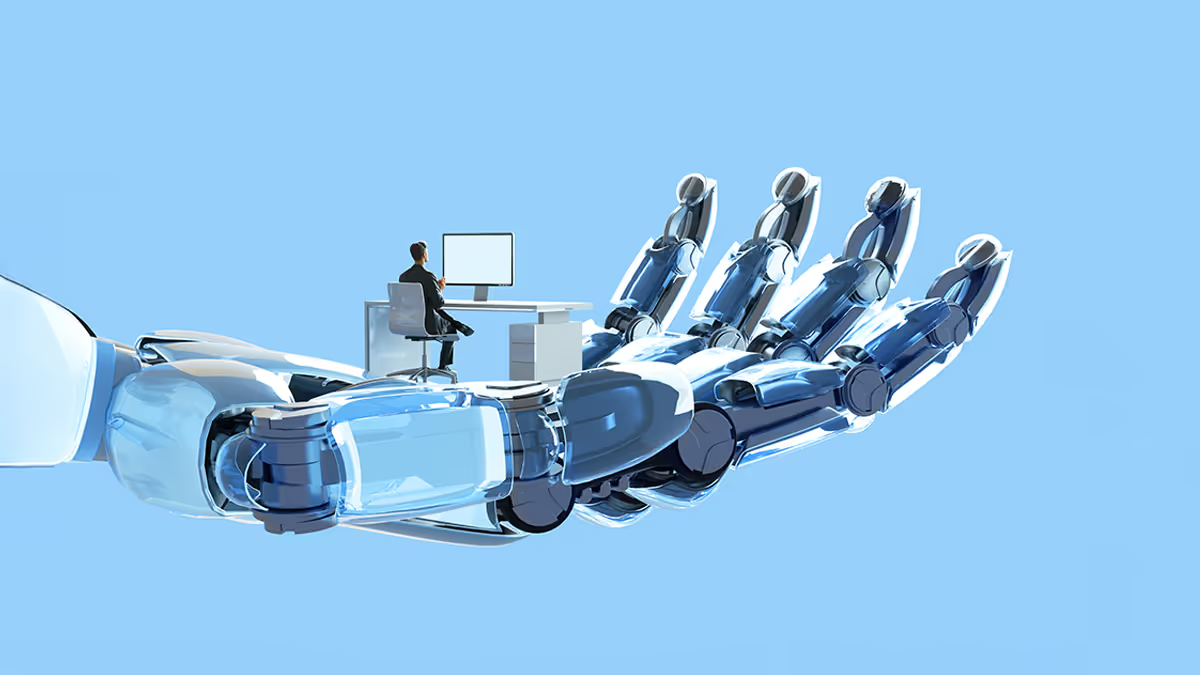
Tal Dagan, CPO at Atera, an AI platform for IT management.gettyAs a technology leader, I have watched AI move from hype to a fundamental part of how IT operates. Yet even as adoption accelerates, many organizations still frame AI as a tool designed for efficiency. It is treated as a quick fix for automation or a clever add-on that makes existing workflows smoother.This thinking is limiting. AI’s true promise lies not in marginal efficiency gains but in reshaping how people and systems work together. When IT leaders see AI as a teammate rather than a tool, they can unlock entirely new ways of working, defined by shared learning, continuous improvement and collective intelligence.According to a survey from my company, nearly two-thirds of the 1,000 U.S. IT leaders surveyed say their roles have evolved over the past three years specifically because of advances in AI. That shift reflects how profoundly AI is reshaping the function and strategic influence of IT. The Problem With The ‘Tool’ MindsetTreating AI purely as a tool keeps it in a box. It becomes another piece of software meant to generate content, summarize help tickets or automate password resets. While these functions are useful, they barely scratch the surface of AI’s full potential. This mindset also keeps IT trapped in a cost-cutting narrative. Leaders often ask, “How can AI help us do the same work with fewer people?” instead of, “How can AI help us achieve more with the same people?” The first question sees technology as a substitute, while the second sees it as an amplifier. When AI is confined to isolated tasks, its impact stays small. When it is integrated as a collaborator, its influence can grow exponentially. What Changes When You Treat AI As A TeammateA teammate brings more than task completion. They anticipate, adapt and contribute context. AI is capable of this, too, if leaders give it the space and conditions to evolve. This might look like an AI that learns from an organization’s unique environment, understands its network behavior and proactively suggests optimizations before issues escalate. Or AI that collaborates with IT professionals during complex troubleshooting, offering data-driven recommendations grounded in past incidents and best practices. Encouragingly, this kind of collaboration is already taking shape. Eighty percent of IT leaders say AI now goes beyond basic automations like ticket summaries or password resets and can fully resolve at least some Tier 1 support tasks, such as ticket triage and troubleshooting.This shift is important: Instead of simply assisting at the edges, AI is beginning to autonomously handle frontline issues the way a teammate would. This frees IT teams to focus on higher-value initiatives like business alignment, strategy and innovation, which signals a clear step toward AI as a partner that amplifies human expertise rather than a tool that replaces it. From a product perspective, innovation is not about automating every action but enabling better judgment. Real progress happens when AI can both surface options and take autonomous action on routine issues. It resolves straightforward tasks without human intervention, uncovers patterns people might miss and turns data into insights that drive outcomes. In this model, AI is not the assistant. It is the co-strategist that acts independently when the solution is clear and collaborates with people when nuance is needed. The Impact On IT ProfessionalsWhen AI is introduced as a teammate, it can help reshape how IT professionals see their roles. Rather than framing the implementation as simply using a new tool, this should be introduced as a collaboration with a system that evolves alongside them. This reframing helps change the emotional tone of technology adoption. While some may be curious and excited about the growth opportunities of AI, the fear of replacement is still a real concern. When IT professionals understand how AI can extend their expertise rather than erase it, they’re more likely to start focusing on strategic initiatives, system resilience and creative problem-solving rather than repetitive maintenance. Additionally, this approach holds the potential to influence retention, as professionals are drawn to environments that empower rather than replace them.A Leadership Call To Action Leaders are central to this transformation, especially those who embed AI into long-term technology strategy rather than treating it as an operational add-on. A strong first step is identifying where AI can deliver real value, such as high-volume routine tasks or recurring issues that drain time. Leaders should also work with their IT and security teams to select the right AI tools, ensure smooth integration with existing systems and set clear frameworks for oversight and accountability.Another important step is appointing internal champions who can guide adoption across teams. These are typically IT leaders or operational owners who understand both the technical landscape and the organization’s priorities. Their role is to help define use cases, facilitate training and ensure that AI is implemented with long-term strategic goals in mind. Treating AI as a partner in growth helps companies to more effectively scale with confidence. It can accelerate innovation and strengthen resilience in a market where uncertainty is constant. The real difference lies not in technology maturity, but in leadership maturity and the willingness to approach AI as a collaborative force. Redefining Collaboration For The AI Era I’ve found that the companies making the biggest strides with AI share one thing in common: They approach it as a partner in progress. They experiment, learn and adapt alongside it.For IT leaders, that means building teams where people use AI to its fullest potential while freeing IT professionals from the busywork that holds them back. When technology takes on repetitive tasks and surfaces meaningful insights, and people bring the context, creativity and care to act on them, the outcomes are likely to be far stronger. In this way, the future of IT will be shaped by leaders who shift their mindset from simply deploying AI to truly leveraging it as a catalyst that helps their teams reach their full potential. Forbes Technology Council is an invitation-only community for world-class CIOs, CTOs and technology executives. Do I qualify?
Why IT Leaders Should Treat AI As A Teammate Rather Than A Tool
When leaders see AI as a teammate rather than a tool, they can unlock new ways of working, defined by shared learning, continuous improvement and collective intelligence.
1,004 words~5 min read