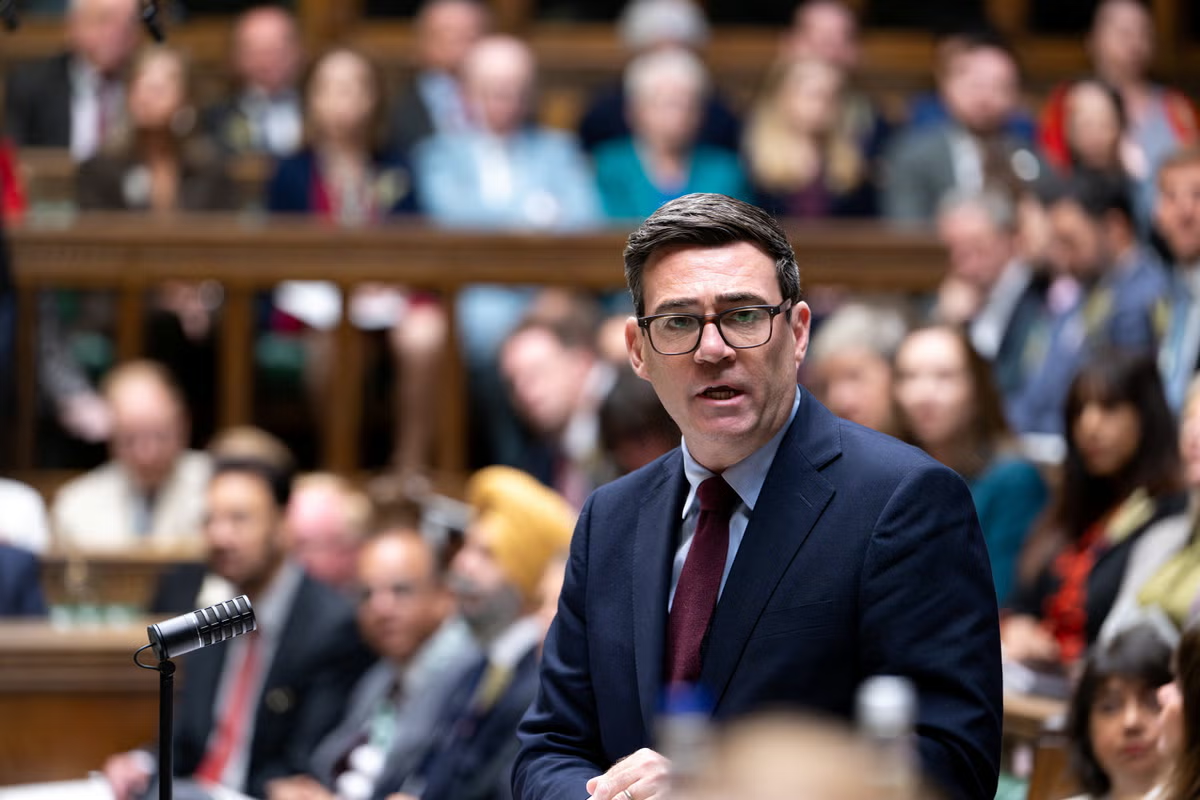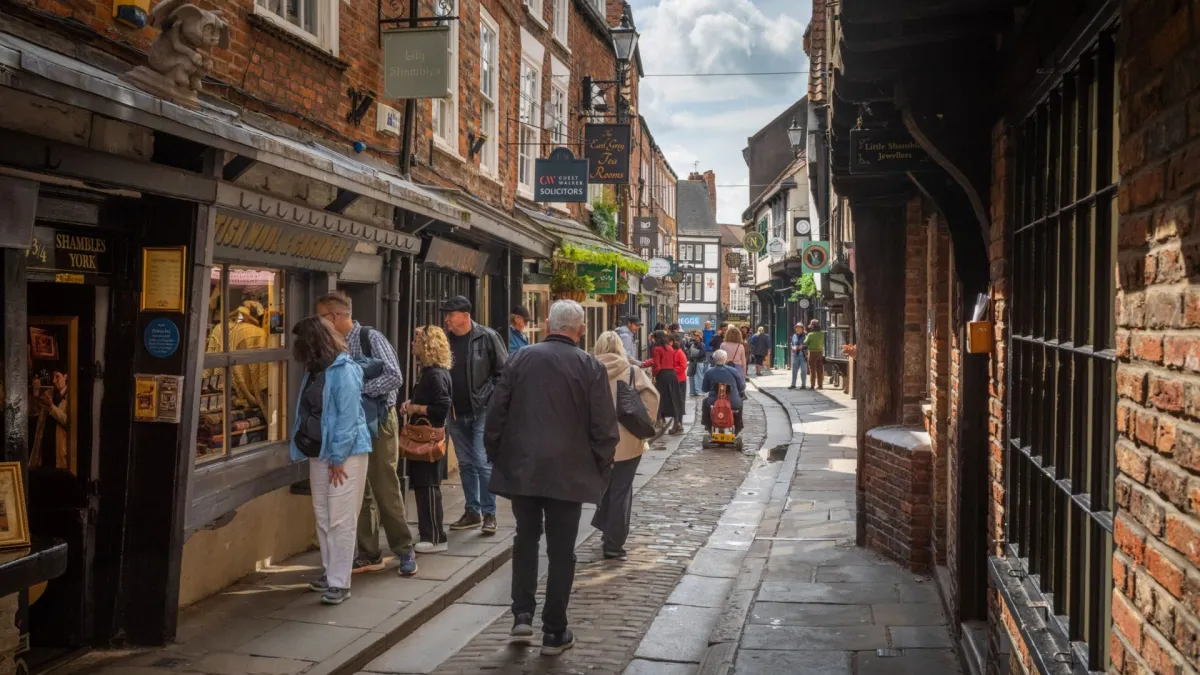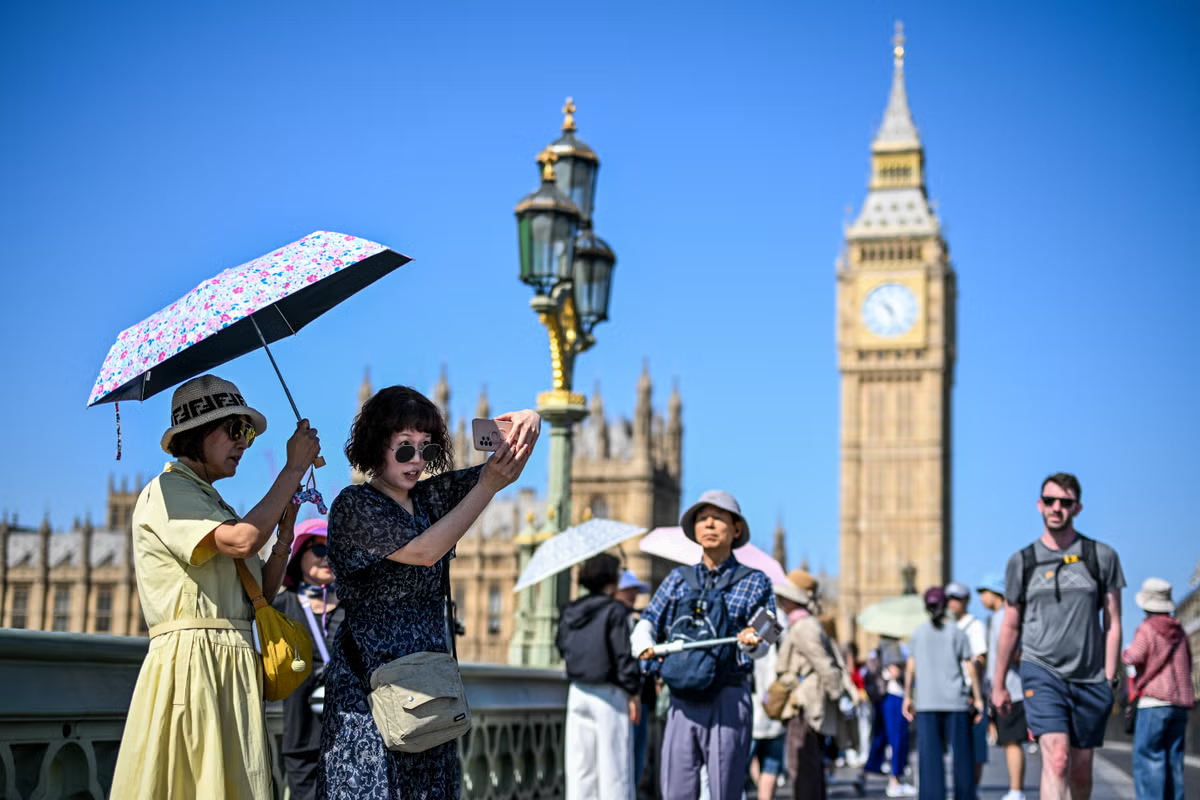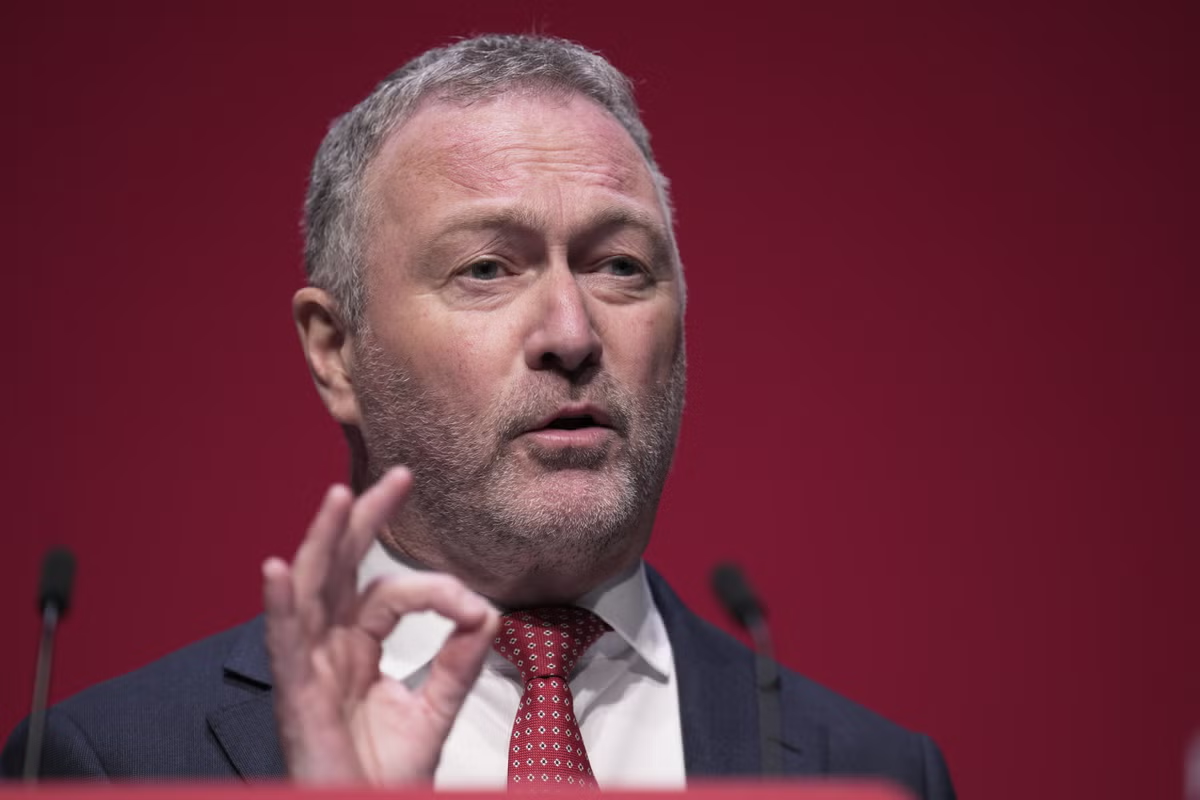
Jubilant Labour mayors hailed Andy Burnham's new 'tourist tax' today - as the hospitality industry warned of a jobs 'catastrophe'. Local leaders are to get powers to impose charges on accommodation in the PM's latest move to raise revenues.Previously a flat fee had been mooted – but it is now set to be a percentage of the cost of overnight stays, with no upper limit. That could add hundreds of pounds to the costs of family holidays, while businesses said it will put tens of thousands of roles at risk. London mayor Sadiq Khan is considering a charge of up to 5 per cent, potentially raising £580million a year for his coffers. Labour's mayors in Liverpool, the East Midlands, Yorkshire and the West of England also signalled they would be using the measures. Experts have estimated that the policy could bring in as much as £1.6billion in total.Angela Rayner chaired a meeting of mayors gathered in 'No10 North' today - although she was in London due to 'other diary commitments'. She said the money could help fund 'local services' and attractions.Plans for the tax were first announced by Sir Keir Starmer, after similar schemes were introduced by the devolved governments in Scotland and Wales. Jubilant mayors gathered at No10 North today for a meeting chaired by Angela Rayner, as the tourist tax policy was announced Plans for a 'tourist tax' appear to have been ramped up by Andy Burnham, who was previously Manchester mayor Counties like Cornwall attract huge numbers of tourists who could potentially face charges Angela Rayner will give more details of the proposals at a meeting with Mayors in 'No10 North' later todayBut they appear to have been ramped up by Andy Burnham.Charges of a similar nature already exist across Europe, with the revenue used to fund local services. Mayors would decide how to invest the money raised from the levy.Mr Burnham introduced a City Visitor Charge while mayor of Manchester in April 2023, at £1 per room per night.There have previously been estimates that a 3 per cent levy in London could raise £350million a year. But Lord Khan has now indicated the charge could be up to 5 per cent, which might bring in more than £580million. Tory Tees Valley mayor Lord Houchen has flatly rejected the idea of a tourist tax, while Kemi Badenoch has condemned the idea. Groups representing the tourism trade have warned about the impact of the levy and called for consistency in how the tax operates across different regions.Allen Simpson, chief executive of UK Hospitality, told BBC Radio 4's Today programme a new tourism tax in Edinburgh is 'already having damaging effects'.He said holidays in the UK are 'already more expensive' than they appear because of higher VAT, even before the tourist tax.Mr Simpson added: 'What we're talking about here is an open-ended power for mayors to set tourism taxes at any level they want.'And remember that if you go to Paris, if you go to Rome, if you go to Berlin, you're paying a small tourism tax, but it's capped.'He said residents in communities which rely on tourism and hospitality would see jobs put at risk.'I would say to those people in these communities that their jobs are now at risk,' Mr Simpson said.'It will be the case that you'll have holiday parks which can't open in the shoulder seasons and of course people who go on holiday will just have that little bit less money in their pocket.'Jon Hendry Pickup, boss of Butlin's, said the levy would 'hit those who can afford a holiday the least, the hardest'. 'Big cities may welcome these mayoral powers, but treating every destination and hospitality business the same will leave resorts like ours to shoulder the burden. 'We were concerned enough about the impact of a Holiday Tax when the discussion was around 5 per cent or £2 per person per night. 'Giving mayors the power to impose a levy without a national upper limit takes those concerns to another level and risks making family holidays less affordable, damaging demand and making it harder for businesses to hire young people.' There are estimates that a 3 per cent levy floated by Lord Khan in London could raise £350million a year The Mayor of Londom has welcomed proposals for a levy in the capital and added that it 'needs to happen sooner rather than later'Stephen Cassidy of Hilton UK & Ireland said: 'The announcement of a further and uncapped tax levy on our business, in addition to already high VAT, business rates and energy costs, will further stifle job creation and investment and is a catastrophic blow for the UK hotel sector that is already under significant pressure. 'With 85 per cent of hospitality leaders saying higher tax burdens are limiting their ability to recruit young or inexperienced workers, government should be looking at ways to reduce business and employment costs, not imposing an uncapped holiday tax that will make it even harder for our hotel owners and hospitality businesses to open the door to work for the next generation. 'Business needs the confidence to invest, expand and hire. We need policies that unlock growth and opportunity, not continue to hold the sector back.' Luke Petherbridge of travel association ABTA said the tax would 'further damage the competitiveness of our tourism sector' and it was 'disappointed the government has chosen to proceed with this policy'.'The decision to pursue a percentage-based model, which has already been recognised to be problematic in Scotland, is especially concerning and should be reviewed. It is critical that mayors now engage with the sector before they take decisions on the local level,' he said.'While we don't agree with this new tax, should mayors choose to introduce these levies, the money raised from visitors must be put back into improving the services they use and enhancing local tourism offerings.'However, Liverpool Metro Mayor Steve Rotheram said a 'modest' tax could bring in £18million a year and benefit the city.West Yorkshire Mayor Tracy Brabin, South Yorkshire Mayor Oliver Coppard, West of England Mayor Helen Godwin and York and North Yorkshire Mayor David Skaith also voiced support. Mr Burnham's successor as Manchester mayor Bev Craig was at the No10 North meeting today, but did not add an endorsement to the Government announcement. Lord Khan said he 'strongly welcomed' the Government's plan and added that it 'needs to happen sooner rather than later'. He continued: 'London's visitor economy is a huge success story, supporting jobs, businesses and investment across the capital and the wider country, and I have long argued that London should have the same flexibility as other major global cities to raise and invest funding locally.'A well-designed, modest levy has the potential to provide an important additional source of funding to support growth, strengthen London's offer to visitors and help us remain globally competitive. 'It would allow us to reinvest in the places, infrastructure, culture and experiences that make London one of the world's greatest cities to visit, while helping manage the pressures that come with welcoming tens of millions of visitors every year.'I will work closely with London's boroughs, accommodation providers, hospitality and tourism businesses and other partners, before final decisions are taken.'Speaking at The Times Future of London summit, Lord Khan said he could 'understand' the grievance of the hospitality industry about 'what they may perceive – in my view wrongly – as an attack'.But he added: 'Who has thought twice about going to New York because of a 40 per cent levy?'Lord Khan said he would speak to hotels, Airbnb and local authorities in the coming weeks and months 'to make sure we design the right scheme, with the right way of collecting the scheme, but also we need the reassurance that the money will be used to get more customers and more tourists, and to help their businesses, rather than just being another tax that they're paying that will be used elsewhere'.In a statement to MPs, Local Government minister Jim McMahon said: 'The visitor levy will be set as a percentage of the accommodation cost, ensuring that charges are proportionate to the price of the stay. 'A percentage rate model helps ensure that the levy is affordable and will mean a stay at a budget friendly hotel or guesthouse would attract a lower visitor levy than a luxury five-star hotel in London.'Mr McMahon said strategic authorities not run by mayors will also have powers to impose the 'Overnight Visitor Levy'. 'The levy will enable Mayors and other local leaders to invest revenues in support of the visitor economy, experience and important local priorities,' he added.'It will be for Mayors and other local leaders to decide if the visitor levy is the right decision for their areas, following a consultation. 'The Government will provide non-statutory guidance to support those leaders who are considering introducing a visitor levy. Mayors will be able to set out their spending plans by March 2028.'Downing Street said the Government would 'trust local leaders to make decisions for their areas'.A No10 spokeswoman said: 'That's why we're shifting power out of Whitehall and giving communities more control.'More than 42million international visitors came to the UK last year, spending more than £32billion.'So this levy is about ensuring more of the benefits of that tourism stay in local communities, with leaders able to reinvest funding in priorities such as transport to high streets and public spaces.'Shadow local government minister David Simmonds said: 'Labour's solution to every issue is always to hike taxes. This is just the latest method they've found to squeeze more money out of hardworking families and the economy.'The hospitality industry has already been hit by colossal business rates hikes thanks to Labour, on top of their Jobs Tax and employment red tape that have driven up costs. 'Now hotels and other businesses face another blow that will harm local economies and discourage local tourism. VAT is already charged at 20 per cent on hotels - much higher than in other countries - and now they'll pay VAT on this tourism tax too: a Labour double whammy.'Labour want families to have to pay more to take a break. The Conservatives want to cut taxes, back businesses and support the Great British Holiday.'
Labour mayors hail £1.6bn 'tourist tax' as businesses sound alarm
Local leaders are to get powers to impose charges on accommodation in the PM's latest move to raise revenues.
1,706 words~8 min read