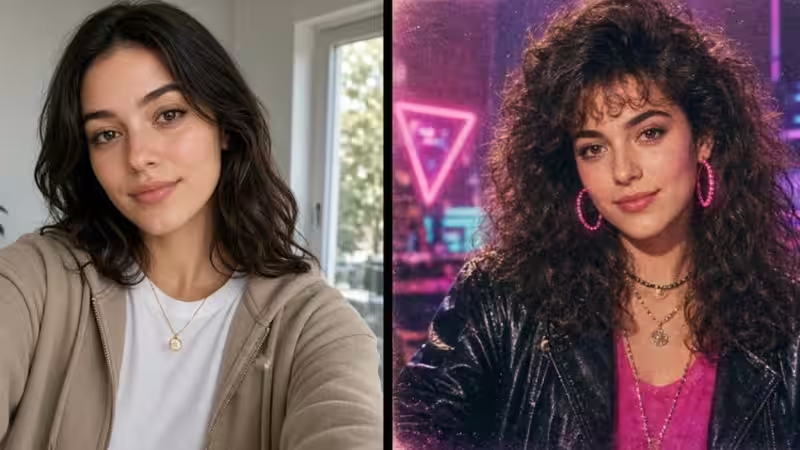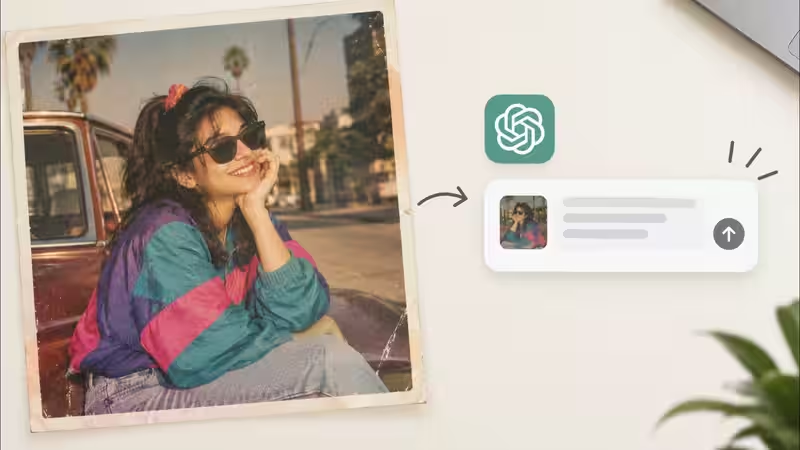
Bright colored shell jackets, mullets and blow-outs, double denim in a faux-oxidized yellow film photo. These are some of the distinctive features of the Chat-GPT 80s trend that has been sweeping social media over the past week. Millions of people are uploading a current selfie to Chat-GPT and asking it to turn them into a version of themselves from the 1980s.For all the latest headlines, follow our Google News channel online or via the app.This is the latest in a series of similar trends from putting yourself in a Studio Ghibli style to Bollywood Posters, the former so popular it overwhelmed OpenAI servers and culminated with threats of legal action on Intellectual property grounds. The Japanese Animator and co-founder of Studio Ghibli Hayao Miyazaki famously described AI replication of art as “an insult to life itself.”Nonetheless, the latest trend has spread across the globe and, with Google Trends listing it as a top search this week. But once again concerns are rising over a seemingly harmless bit of fun.Data privacy issues are among the primary concerns associated with giving AI companies images of your face. Faces contain unique traits that cannot be changed like a password, meaning the stakes of uploading photos are very high. By default, major AI systems use uploaded images to train future versions of their software, effectively baking visual data permanently into the technology. Once these images are stored in the cloud, they face ongoing risks of unauthorized access, security breaches, and secondary tracking entirely outside of your control. Because these platforms often retain chat history indefinitely, individuals lose the practical ability to delete their information once it has been processed and absorbed into the system's core memory.The leakage of a person’s facial biometric data, facial geometry, skin tones, eye spacing and other structural markers that make your face unique, carries serious risks. Stolen biometric data can be exploited to construct sophisticated digital replicas or deepfakes which can be weaponized to bypass security systems, authorize financial fraud or impersonate you in video scams.Biometric data can also function as a persistent digital identifier, raising concerns about mass surveillance. The Electronic Privacy Information Center lays out the potential for this to exacerbate protest policing, political repression, over-policing of minority communities and risk of wrongful identification and wrongful arrest.Another dimension is the environmental cost. AI images are generated in data centers that use huge amounts of energy and water. Energy use varies but a lower-end estimate puts energy needed for one AI image at 0.5 kWh. According to AI platform Morphed’s industry and market statistics, over 80 million images are generated daily in 2026. This totals 40 gigawatt-hours per day, enough to power around 3,700 US households for a year, according to the US EIA. Most of this energy is generated using hydrocarbon derived fuels which release carbon dioxide in to the atmosphere causing global heating which is associated with driving innumerable risks to lives and livelihoods worldwide.Generating basic images can consume up to 60 milliliters of water which would equal around 4 million liters per day globally, or around 1.6 Olympic swimming pools. This water use is significantly less than in many industrial or agricultural activities, however almost half of data centers are found in regions of water stress with that only expected to rise due to increasing data loads and rising global temperatures.Ultimately, while viral AI portrait trends offer fleeting amusement, they exact a heavy toll through permanent biometric harvesting and severe environmental strains that outlast the social media cycle.
ChatGPT’s viral 80s photo trend raises privacy and environmental questions
Bright colored shell jackets, mullets and blow-outs, double denim in a faux-oxidized yellow film photo. These are some of the distinctive features of the
583 words~3 min read